Most people who love watches have heard of Rolex or Omega, but far fewer know Edox, even though the brand has been making timepieces in Switzerland since 1884. That is a shame, because Edox has quietly built one of the deepest catalogs of dive watches, rally chronographs, and ocean-themed timepieces in the industry, all while staying independently owned and keeping prices well below the big luxury names. For anyone shopping for a first real Swiss watch, or simply curious why collectors keep mentioning this name, Edox has a genuinely interesting story and a lineup worth understanding.
The Story Behind Edox Watches
Edox was founded in 1884 in Biel/Bienne, Switzerland, by a watchmaker named Christian Ruefli-Flury. The name itself comes from an old Greek word meaning “the measure of time,” and since around 1900 the brand has used a stylized hourglass as its logo. Ruefli-Flury was also one of the first watchmakers to shift his focus away from pocket watches and toward the wristwatch, which was still a fairly new idea at the start of the 20th century.
By 1953, the company had grown into one of the largest players in the Swiss watch industry, building a new factory to house hundreds of employees. Everything changed in 1961 with the release of the Delfin, a tough little dive watch that used a patented double-crown seal and a reinforced case back to survive underwater far better than most watches of the era. That single model earned Edox the nickname “the water champion” and set the direction the brand has followed ever since. Around 1970, Edox doubled down on technical ambition with the Geoscope, an early and distinctive world-timer wristwatch that displayed all 24 time zones at once through a rotating world map dial.
Like almost every Swiss brand, Edox had to survive the Quartz Crisis of the 1970s, when cheap, accurate Japanese quartz watches nearly wiped out traditional Swiss watchmaking. Edox got through it by becoming an affiliate of the General Watch Company, a group that also included brands like Certina and Technos. The company kept innovating afterward too, introducing the Les Bémonts Ultra Slim in 1998, built around an in-house movement only 1.4mm thick, which made it one of the slimmest calendar watches on the market at the time.
In the decades since, Edox has leaned hard into motorsport and watersport timing. The brand became the official timekeeper of the Dakar Rally in 2012, partnered with the FIA World Rallycross Championship, and has worked with BMW M Motorsport on its racing teams. Today Edox remains one of the few mid-size Swiss watch companies that is still independently owned, headquartered in the small town of Les Genevez in the Jura mountains, not far from where it all started.
Edox has forged a reputation as the “water champion” of the watch world, thanks to decades of work on water-resistant dive watches.
Why Collectors Like Edox
Edox’s pitch is simple: Swiss-made build quality and genuine water-resistance engineering at prices closer to a mainstream watch than a luxury one. Most of Edox’s mechanical watches run on movements supplied by ETA, a major Swiss movement maker that has been producing calibers since 1793, with some collections using Edox’s own in-house modules for extra functions like GMT or chronograph complications.
The brand does not have the marketing budget of the giants, so it leans on specs and real-world partnerships instead of celebrity ambassadors and flagship boutiques. Notable wearers and partners over the years have included Olympic swimmer Mireia Belmonte and motorsport drivers across rally, circuit, and offshore powerboat racing, which lines up neatly with the brand’s own obsession with water and speed. That combination makes Edox a favorite among buyers who care more about what a watch can actually do than what name is printed on the dial.
Best Edox Watch Collections
Edox organizes its lineup into a handful of core families, each with its own personality and purpose.
Edox Delfin
The Delfin is Edox’s original and most important watch, first released in 1961 as a rugged dive piece built around a patented double-crown seal. “Delfin” means dolphin, and the name was chosen to signal the watch’s underwater ambitions right from the start. Engineering details from the period point to a notably reinforced case back, roughly a third sturdier than a typical watch of the era, along with an internal shock-absorbing ring built to protect the movement from impact.
Modern Delfin models keep that vintage dive-watch look, with cushion-shaped cases around 43mm, bold numerals, and water resistance typically in the 200 to 300 meter range. Some versions are simple three-hand watches, while others add a chronograph, and the “Mecano” line goes a step further with a skeletonized dial that shows off the gear train and movement underneath, sometimes finished in materials like Damascus steel for limited editions. It remains the most historically important watch in the Edox catalog, and also the most affordable entry point into the brand.
Edox SkyDiver
The SkyDiver line started in 1973, originally built at the request of a Swiss military colonel who wanted a tough, legible field-and-dive watch. That military background still shows up in the design today: big luminous markers, domed crystals, and cases that lean more “tool watch” than “dress watch,” typically in the 42 to 44mm range. Many current models use Super-LumiNova X1, a high-performance lume coating that keeps the dial readable long after the sun goes down.
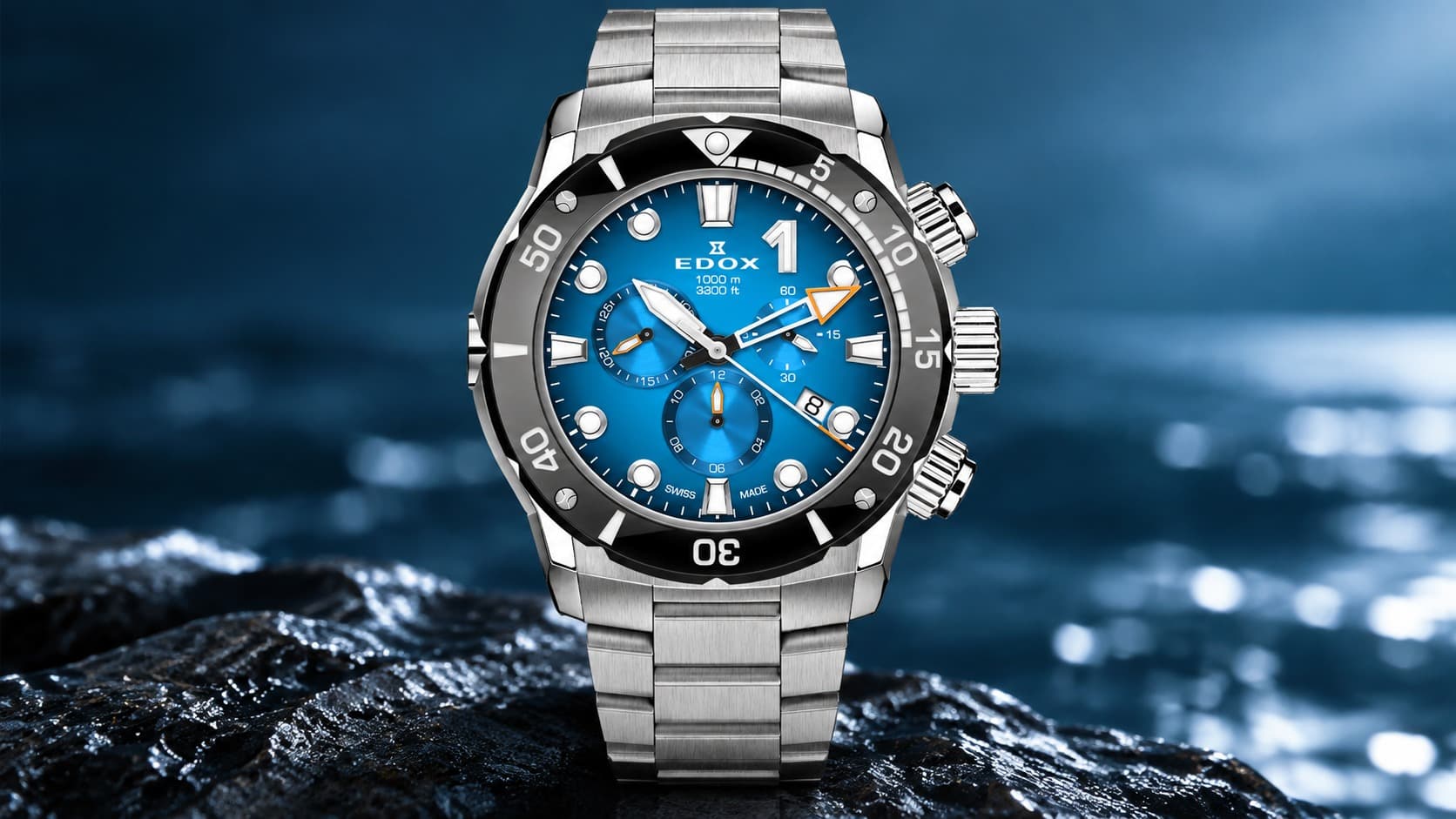
Within the SkyDiver family, the Neptunian versions push water resistance to extreme depths, with some rated to 1,000 meters, which is far deeper than almost any diver will ever actually go. These are built more for bragging rights and genuine overengineering than everyday necessity, similar to how a sports car might be built to hit speeds a driver will never use on public roads. Heritage-driven versions like the SkyDiver 70s lean even harder into the vintage military look, with bronze case options and retro color schemes borrowed directly from the 1973 original.
Edox CO-1 (Chronoffshore-1)
The CO-1, sometimes called Chronoffshore-1, grew directly out of Edox’s motorsport connections. The collection was born when Edox became the official timekeeper of the F1 Powerboat World Championship in 2006, a sport involving boats that race across open water at well over 200 kilometers per hour. Early development on the line is tied to Norwegian powerboat racer Pal Vilrik Nilsen, whose feedback helped shape how tough these watches needed to be.
Because of that racing pedigree, CO-1 watches are built heavy and tough, with cases around 42mm, chronograph functions for timing laps, and water resistance rated well beyond what offshore powerboat racing actually demands, built-in headroom that reflects how seriously Edox treats water resistance across its whole catalog. Certain special editions have also used carbon fiber or titanium cases to cut down on weight without sacrificing strength.
Edox Grand Ocean
Grand Ocean launched in 2008, timed to Edox’s early work timing international sailing regattas. It sits in an interesting middle ground: tough enough for watersports, but styled cleanly enough to wear with a blazer, with case sizes generally around 43mm.
Where the Delfin and SkyDiver lean vintage and the CO-1 leans industrial, Grand Ocean is the most versatile of the group. It offers ceramic bezels, solid water resistance around 300 meters, and both automatic and quartz chronograph versions depending on the model, along with smaller, dressier sizes built for anyone who wants Edox’s durability without the bulk of a dedicated dive watch.
Edox Chronorally
Chronorally is Edox’s answer to the classic racing chronograph, built with oversized pushers, tachymeter scales for calculating speed, and dial layouts clearly inspired by old-school rally dashboards, typically on cases in the 44 to 45mm range. It connects back to the brand’s long motorsport sponsorships, including its ties to rally and rallycross racing, rather than its underwater history.
These watches are less about diving and more about looking the part of a timekeeper standing trackside with a stopwatch in hand. The sporty, mechanical look of a rally chronograph sets it apart from the rest of the Edox lineup, which otherwise leans heavily on dive watch design.
How Much Does an Edox Watch Cost?
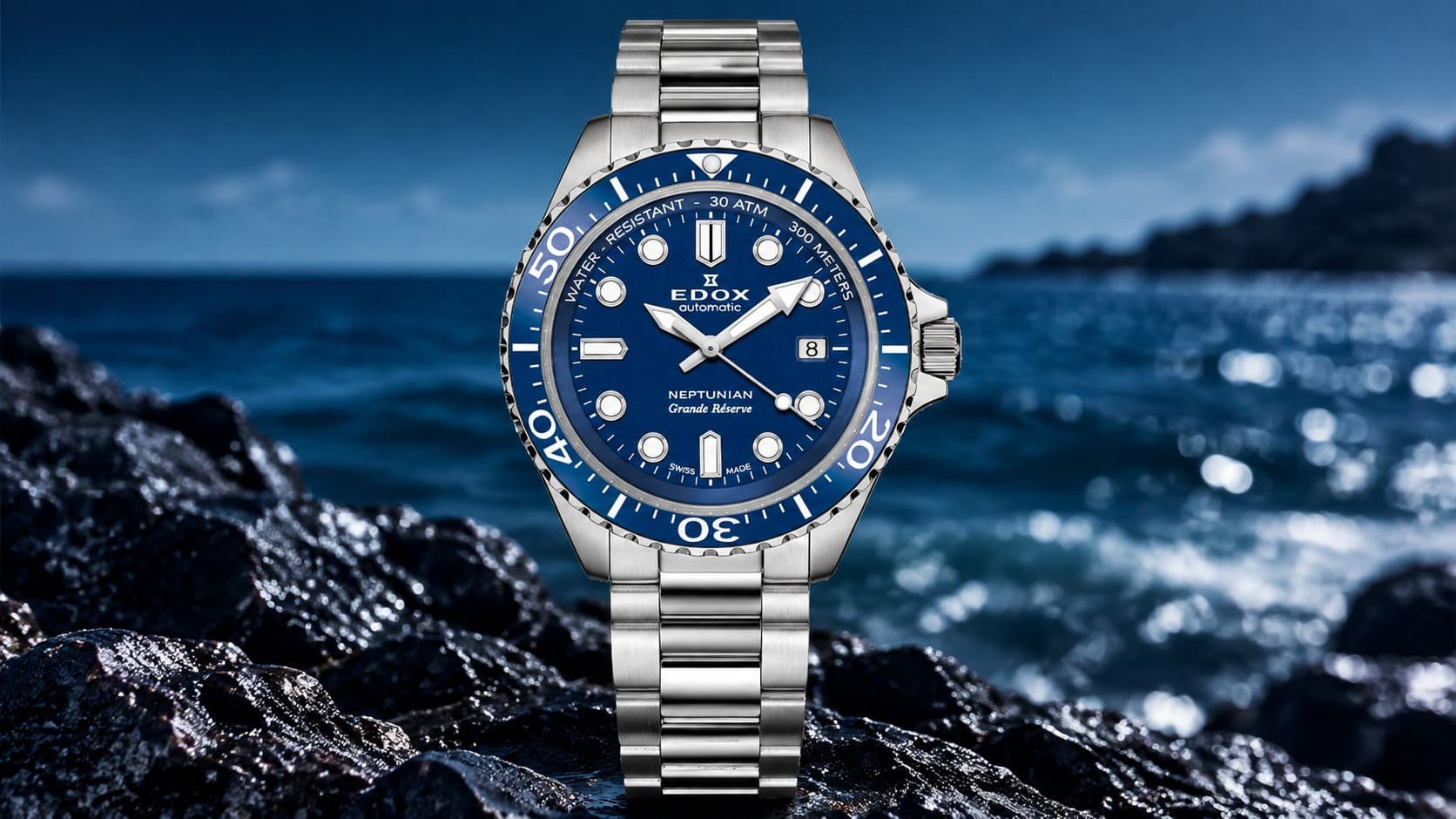
Edox generally runs from the mid-hundreds to the mid-thousands in price, depending on the collection and complication. On the low end, a simple three-hand quartz Delfin runs around $800 at authorized retailers. From there, Edox’s own pricing for its flagship pieces shows a Delfin Mecano automatic around $1,775, a Neptunian automatic around $1,525, and a Chronorally automatic climbing to about $3,310, with the CO-1 Carbon Chronograph Automatic topping the lineup at around $3,560.
That spread holds up across most of the current catalog: simple quartz models in the Delfin or Grand Ocean lines sit at the low end, while automatic divers, chronographs, and carbon or titanium limited editions push toward the top. Exact pricing shifts by retailer, country, and currency, and authorized dealers often sell below the official list price, so these figures work best as a general guide rather than a fixed number, with current pricing confirmed against a dealer at the time of any purchase.
Edox vs Other Affordable Swiss Watches
Edox often gets mentioned in the same breath as other accessible Swiss names, each with a distinct angle on affordable Swiss watchmaking.
| Brand | Known For | Typical Strength |
|---|---|---|
| Edox | Dive watches and motorsport chronographs | Extreme water resistance for the price |
| Tissot | Broad, varied catalog | Wide range of styles and price points |
| Certina | Sport watches with DS case concept | Shock resistance and durability |
| Mido | Architecture-inspired dress and sport pieces | Automatic movements at accessible prices |
What separates Edox from this list is its narrower focus. While brands like Tissot cover almost every category of watch, Edox has stayed mostly loyal to water resistance and motorsport themes for over sixty years, which gives its lineup a clearer identity than some of its broader competitors. It also remains independently owned, while Tissot, Certina, and Mido are all part of the much larger Swatch Group, which can mean more corporate backing but less individual brand personality.
Finding the Right Edox Collection
Each Edox collection answers a slightly different priority, which makes the lineup easier to navigate once the differences are clear.
- History and value: the Delfin three-hand or chronograph is the collection that built Edox’s reputation, and it remains the most affordable entry point into the brand.
- Vintage military styling: the SkyDiver 70s and Neptunian models pair oversized lume with a retro dial layout borrowed directly from the original 1973 design.
- Maximum toughness: the CO-1 was built for offshore powerboat racing conditions, and its highest-spec versions represent the most extreme water-resistance option in the lineup.
- Versatility: Grand Ocean works equally well with a blazer or a wetsuit, pairing real water resistance with a dressier case.
- Motorsport styling: Chronorally leans furthest into the rally-timer aesthetic, with oversized pushers and tachymeter scales.
How to Verify an Edox Watch Is Genuine
Buying a pre-owned or secondhand Edox calls for the same checks that apply to any Swiss watch: clean, evenly spaced case back engravings, a serial number that matches any paperwork or box, a weight and fit that feels solid rather than hollow, and a price that isn’t suspiciously far below similar listings elsewhere. A full step-by-step walkthrough that applies across brands is covered in the guide to authenticating watches and avoiding counterfeits.
A price far below comparable listings, or missing documentation, is usually a sign that something is wrong with a listing.
Edox Maintenance Basics
Because so much of the Edox lineup is built around water resistance, the two habits that matter most are rinsing the case and bracelet with fresh water after exposure to salt water or chlorine, and having the water resistance gaskets checked every one to two years for anyone who swims or dives with the watch regularly, since rubber seals degrade even when a watch still looks fine. The full range of day-to-day watch care, from storage to cleaning to battery and movement servicing, is covered in the complete watch maintenance guide.
Frequently Asked Questions
Is Edox a good watch brand?
Yes. Edox has been making watches in Switzerland since 1884 and is especially respected for water resistance and build quality relative to its price, making it a solid choice for buyers who want genuine Swiss engineering without luxury-brand pricing.
Where are Edox watches made?
Edox watches are made in Switzerland, at the brand’s headquarters in Les Genevez in the Jura region, which is also home to many other Swiss watchmaking companies.
What movements do Edox watches use?
Most Edox mechanical watches use movements supplied by ETA, one of Switzerland’s largest movement makers, sometimes paired with Edox’s own in-house modules for added functions like GMT displays or chronograph timing. Some collections, like the Les Bémonts Ultra Slim, use fully Edox-developed calibers.
What is Edox most famous for?
Edox is most famous for its dive watches, especially the Delfin collection launched in 1961, which established the brand’s long-running reputation as a “water champion” known for extreme water resistance.
Is Edox owned by a larger watch group?
No. Unlike many mid-size Swiss brands that have been absorbed by large conglomerates, Edox remains an independently owned and operated company, which is relatively rare in today’s watch industry.
Are Edox watches a good investment?
Edox watches are generally bought to be worn rather than as a financial investment. Unlike a handful of blue-chip luxury brands, Edox pieces are not widely known for significant resale appreciation, so they are best chosen for their design, durability, and value rather than for future returns.
The Bottom Line
Edox has spent over 140 years building a reputation around one simple idea: making Swiss watches that can take a beating, especially underwater, without charging luxury-brand prices to do it. From the original 1961 Delfin and the groundbreaking 1970 Geoscope to the motorsport-driven CO-1 and Chronorally lines, the brand’s identity has stayed remarkably consistent even as styles have changed around it. For buyers who want a genuine Swiss-made watch with real engineering behind its water resistance, and would rather pay for specs than for a famous logo, Edox’s dive and sport collections remain some of the smartest places in the current market to look.