Salvatore Ferragamo is a name most people connect with shoes, not watches, and that makes sense given the brand spent its first six decades building a reputation as one of Italy’s finest shoemakers before watches entered the picture at all. But since the 1990s, and especially after 2008, Ferragamo has quietly built a watch collection that mixes Florentine design with genuine Swiss manufacturing. These watches won’t compete with old-school watchmaking houses on mechanical pedigree, but they offer something different: bold color, recognizable design cues borrowed straight from the brand’s fashion archive, and prices that sit well below most luxury watch competitors. If you’re curious whether a Ferragamo watch is worth wearing or buying as a gift, here’s everything you need to know.
The Story Behind Ferragamo
Ferragamo carries a long and fairly remarkable history, even though almost none of it originally involved watches. The story starts with a boy, not a company. Salvatore Ferragamo was born in 1898 in Bonito, a small farming town in southern Italy, one of fourteen children in a family with very little money. According to accounts of his life, he made his first pair of shoes at around age nine, using white canvas and borrowed tools, because his family couldn’t afford to buy shoes for his sister’s first communion. That early moment set the direction for the rest of his life.
As a teenager, Salvatore emigrated to the United States, eventually settling in Santa Barbara and then Hollywood, where he opened a boot shop in the early 1920s. He briefly studied anatomy at the University of Southern California because he wanted to understand how the human foot actually worked, and used that knowledge to design shoes that were both stylish and genuinely comfortable, something footwear at the time often wasn’t. His clients during this period included major Hollywood names of the silent-film era, and that clientele earned him the nickname “shoemaker to the stars.” Over his career he was credited with more than 350 patents, including innovations like the cage heel and the now-famous wedge heel.
In 1927, Salvatore returned to Italy and set up shop in Florence, the city the company still calls home. He built the business back up through the difficult years of the Great Depression and World War II, eventually opening a flagship showroom in the Palazzo Spini Feroni, a medieval palace that today houses the Salvatore Ferragamo Museum. His client list by this point included Audrey Hepburn, Marilyn Monroe, and Eva Perón, among others. He published an autobiography called “Shoemaker of Dreams” in 1957, and died unexpectedly in 1960 at age 62, leaving behind his wife, Wanda Miletti Ferragamo, and six children.
Wanda took over the company at 39 years old with no formal business training and ran it for decades, expanding Ferragamo from shoes into leather goods, ready-to-wear clothing, fragrances, eyewear, and eventually watches. The company stayed privately controlled by the Ferragamo family for decades before listing a portion of its shares on the Milan Stock Exchange in 2011, though the family still holds a controlling stake through a private holding company today. That long, mostly unbroken family ownership is fairly rare in luxury fashion and is part of why the brand is often cited as a rare example of Italian independence in an industry dominated by a handful of huge conglomerates.
Watches entered this story late and slowly. Ferragamo released its first wristwatch in the 1990s as a fashion accessory, not a serious horological product. The real turning point came in 2008, when Salvatore Ferragamo S.p.A. partnered with Timex Group to launch a dedicated timepieces division. That collaboration between the Florence-based fashion house and Timex Group formally established Ferragamo Timepieces as a brand in its own right, with the watches designed in Italy but engineered and assembled in Switzerland, which is why every dial carries the “Swiss Made” marking. Gevril Group later took on distribution duties for Ferragamo watches in the United States and Caribbean, handling logistics while Ferragamo and Timex Group manage design and production.
Ferragamo Watch Design Features
Ferragamo watches are known for putting the house’s fashion signatures directly on the wrist, which is what sets them apart from most other accessible watch brands. Two design elements show up again and again across the collection: the Gancino (sometimes spelled Gancini), a hook-shaped clasp originally used on Ferragamo bags and shoes, and the Vara bow, borrowed from one of the brand’s most famous shoe designs. Seeing these details on a dial, case, or clasp works the same way a screw motif works for Cartier or a rotating bezel works for a dive watch brand: it’s an instant identifier of who made the piece.
Color is another calling card, and arguably the thing Ferragamo does most differently from other watchmakers. The brand leans hard into what’s often called “Ferragamo Red,” along with unexpected greens, blues, and metallics that most conservative watch brands avoid entirely. Many models also use guilloché dial patterns, a decorative engraved texture, along with alligator-embossed leather straps and interchangeable bands, letting one watch head work with several different looks depending on the strap attached. This traces back to Salvatore Ferragamo’s original obsession with combining engineering and beauty; he treated shoes as a design problem to be solved, and that same instinct shows up in how the watch division mixes material experimentation with recognizable branding.
It’s also worth being upfront about what these watches are not. They’re fashion watches built primarily around quartz movements, with automatic mechanical options in select collections, not haute horlogerie from a specialist manufacture. With fashion-driven brands generally, a meaningful part of what you’re paying for is the label, design, and heritage story rather than deep in-house mechanical engineering, and Ferragamo fits that pattern. The brand’s real strength is translating nearly a century of Italian design language, colorful, glamorous, rooted in genuine craftsmanship history, into a wearable, mostly affordable watch collection backed by real Swiss manufacturing.
Top 10 Best Ferragamo Watches
The Ferragamo catalog spans everything from delicate jewelry-style pieces to sporty automatics, so the list below covers the models most worth knowing about, whether you want something bold and mechanical or subtle and dressy. Specs below are approximate and can vary by specific reference number, strap choice, and dial color, so always check the exact model page before buying.
1. F-80 Skeleton
The F-80 Skeleton is Ferragamo’s flagship men’s watch and the closest thing the brand has to genuine mechanical showmanship. It uses an automatic movement visible through both the dial and an exhibition case back, so you can actually watch the gears turn as you wear it. The double Gancini logo sits proudly on the skeletonized dial, and Ferragamo has released several eco-conscious versions of this model using bio-based ceramics and recycled strap materials, which is unusual for a fashion watch brand and shows some genuine investment in sustainable manufacturing.
| Spec | Details |
|---|---|
| Case size | ~41mm |
| Movement | Swiss automatic (skeletonized) |
| Water resistance | Up to 50–100m depending on version |
| Strap | Rubber, sustainable fabric, or bracelet |
| Price range (new) | Roughly $1,600–$2,500 |
2. F-80 Automatic
The standard F-80 Automatic strips things back to a cleaner dial while keeping the same integrated-lug case shape that makes the F-80 line instantly recognizable. It’s a sportier, more everyday-wearable option than the Skeleton version, with the visible screws at 12 and 6 o’clock acting as a subtle design signature across the whole F-80 family. This is generally the most affordable entry point into the automatic side of the collection.
| Spec | Details |
|---|---|
| Case size | ~40–44mm |
| Movement | Swiss automatic |
| Water resistance | Around 50m |
| Strap | Leather, rubber, or steel bracelet |
| Price range (new) | Roughly $900–$1,300 |
3. Gancino
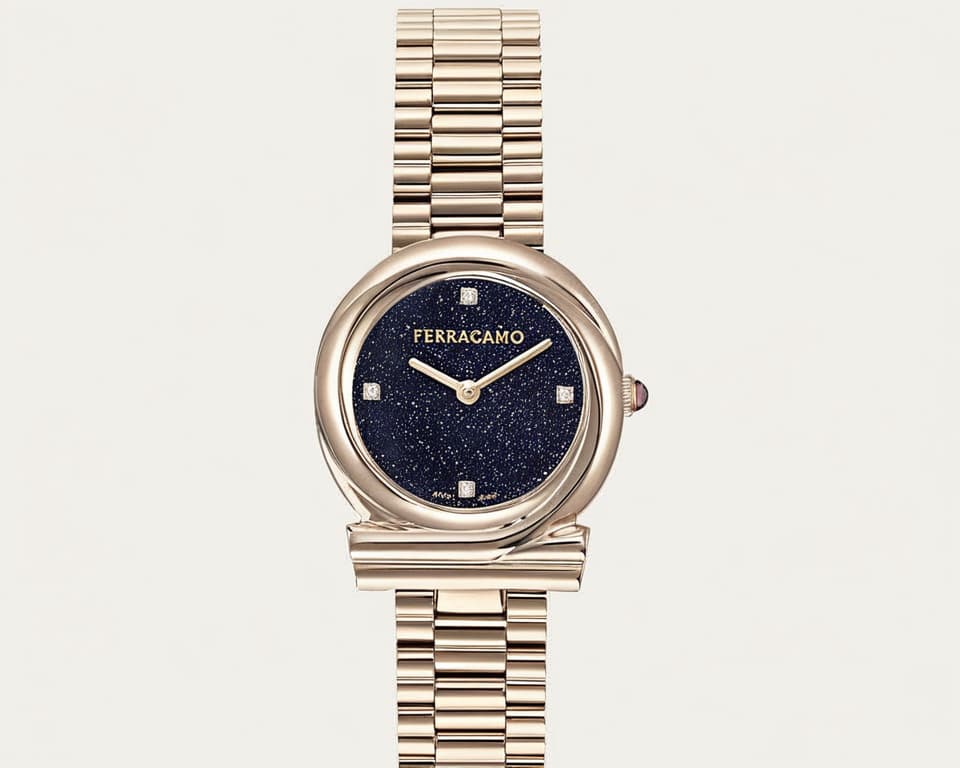
The Gancino watch is where Ferragamo’s fashion DNA is most obvious, since the hook-shaped Gancino clasp isn’t just decoration here, it’s structurally part of the case and strap design. Aimed primarily at women, it ranges from simple stainless steel versions to gold models set with diamonds, so there’s a wide spread of prices within one collection. It reads more like a piece of jewelry than a traditional watch, which is exactly the point.
| Spec | Details |
|---|---|
| Case size | ~24–30mm |
| Movement | Swiss quartz |
| Water resistance | Around 30m |
| Strap | Leather, steel, or gold-tone bracelet |
| Price range (new) | Roughly $900–$2,000 |
4. Double Gancini
The Double Gancini takes the same hook motif and doubles it, usually appearing as a decorative element on the dial or bracelet. These tend to run smaller and more delicate than the standard Gancino, aimed at buyers who want the recognizable Ferragamo detail without a large case. Quartz movements keep these models simple to live with day to day.
| Spec | Details |
|---|---|
| Case size | ~22–26mm |
| Movement | Swiss quartz |
| Water resistance | Around 30m |
| Strap | Leather or metal bracelet |
| Price range (new) | Roughly $900–$1,300 |
5. Salvatore 1898
Named for the year of the founder’s birth, the Salvatore 1898 collection covers Ferragamo’s more classic dress watches, including chronograph versions with a sunray or guilloché dial and a date window. These lean formal, with cleaner cases that work well under a shirt cuff, and they’re a good option for someone who wants a Ferragamo without the bold sporty look of the F-80 line.
| Spec | Details |
|---|---|
| Case size | ~40mm |
| Movement | Swiss quartz, some chronograph |
| Water resistance | Around 30–50m |
| Strap | Calf leather |
| Price range (new) | Roughly $900–$1,400 |
6. 1898 Sport
The 1898 Sport takes the same collection name into a more rugged direction, with an iconic Gancino-shaped case, gold IP coating options, and water resistance suited to more active use. Chronograph versions add a stopwatch function on top of standard timekeeping, and rubber strap options make it easier to wear in wet conditions than the dressier 1898 models.
| Spec | Details |
|---|---|
| Case size | ~43–44mm |
| Movement | Swiss quartz, chronograph |
| Water resistance | Around 50–100m |
| Strap | Rubber or calf leather |
| Price range (new) | Roughly $1,000–$1,500 |
7. Vara
The Vara watch borrows its name and design cues from one of Ferragamo’s best-known shoe styles, translating the shoe’s signature buckle into a wristwatch case. What makes this collection distinctive is the strap system: most Vara watches come with three interchangeable straps, so one watch head can be restyled for different outfits or occasions without buying multiple watches.
| Spec | Details |
|---|---|
| Case size | ~28–36mm |
| Movement | Swiss quartz |
| Water resistance | Around 30m |
| Strap | Interchangeable leather (set of three) |
| Price range (new) | Roughly $1,000–$1,600 |
8. Tondo Gancino
The Tondo Gancino keeps things simple with a round case and the Gancino hook worked subtly into the design rather than as the dominant feature. It’s a good middle ground for people who like the brand’s signature but want something understated enough for daily office wear.
| Spec | Details |
|---|---|
| Case size | ~36mm |
| Movement | Swiss quartz |
| Water resistance | Around 30m |
| Strap | Leather or steel bracelet |
| Price range (new) | Roughly $900–$1,300 |
9. Curve
The Curve collection is built around a distinctly rounded, ergonomic case shape rather than a traditional round or rectangular silhouette. It’s one of the more modern-looking Ferragamo lines, often paired with mesh or leather straps, and tends to appeal to buyers who want something that doesn’t look like every other fashion watch on the market.
| Spec | Details |
|---|---|
| Case size | ~33–37mm |
| Movement | Swiss quartz |
| Water resistance | Around 30–50m |
| Strap | Mesh, leather, or steel |
| Price range (new) | Roughly $1,000–$1,200 |
10. Logomania Moon Phase
The Logomania Moon Phase adds a genuine complication to the fashion-watch formula, tracking the moon’s cycle on the dial alongside Ferragamo’s branded elements. Moon phase functions are unusual at this price point, and the model tends to draw attention specifically because it offers a bit more mechanical interest than most of the rest of the collection.
| Spec | Details |
|---|---|
| Case size | ~36mm |
| Movement | Swiss quartz with moon phase complication |
| Water resistance | Around 30m |
| Strap | Leather or steel bracelet |
| Price range (new) | Roughly $950–$1,100 |
Ferragamo Watch Buying Tips
Buying a Ferragamo watch mostly comes down to matching the collection to how you actually want to wear it, since the lineup ranges from delicate jewelry-style pieces to sportier automatics with real mechanical presence. Start by deciding whether you want a statement piece built around the Gancino or Vara motifs, or something closer to a conventional dress or sport watch that just happens to carry the Ferragamo name. This matters more with a fashion-driven brand than with a specialist watchmaker, since the design language changes noticeably from collection to collection.
Movement type is the next thing to check, and it’s easy to get wrong if you’re skimming a listing. Most of the collection runs on quartz movements, which means better everyday accuracy and no winding required, while the F-80 Skeleton and a handful of other models use automatic movements that need regular wrist time or a watch winder to stay running. If mechanical movement matters to you, look up the exact reference number rather than assuming, since it genuinely varies collection to collection and even within a single collection depending on the specific model.
Budget and occasion should guide you too. The Double Gancini and Tondo Gancino sit at a lower price point and work well as an everyday accessory, while gold or diamond-set Gancino pieces and the F-80 Skeleton sit higher and read more as a special-occasion or gift purchase. Think honestly about how often you’ll actually wear it; a bold red or green dial is fun to buy but only worth the money if it fits your existing wardrobe and habits.
Pay close attention to case size and strap material before buying, especially with older or discontinued models. Vintage Ferragamo watches from the 1990s and early 2000s can differ noticeably in proportions and materials from the current Timex Group-era pieces, since the design language changed after the 2008 relaunch.
Finally, think about water resistance if you plan to wear the watch daily. Sport-oriented models like the 1898 Sport and F-80 tend to offer higher resistance ratings than the dressier Gancino or Vara pieces, which are better suited to light daily wear than swimming or diving. And whatever model you’re considering, confirm the warranty terms before buying, since coverage and length can differ depending on whether the watch is new, pre-owned, or bought through an authorized channel versus a private reseller.
Where to Buy Ferragamo Watches
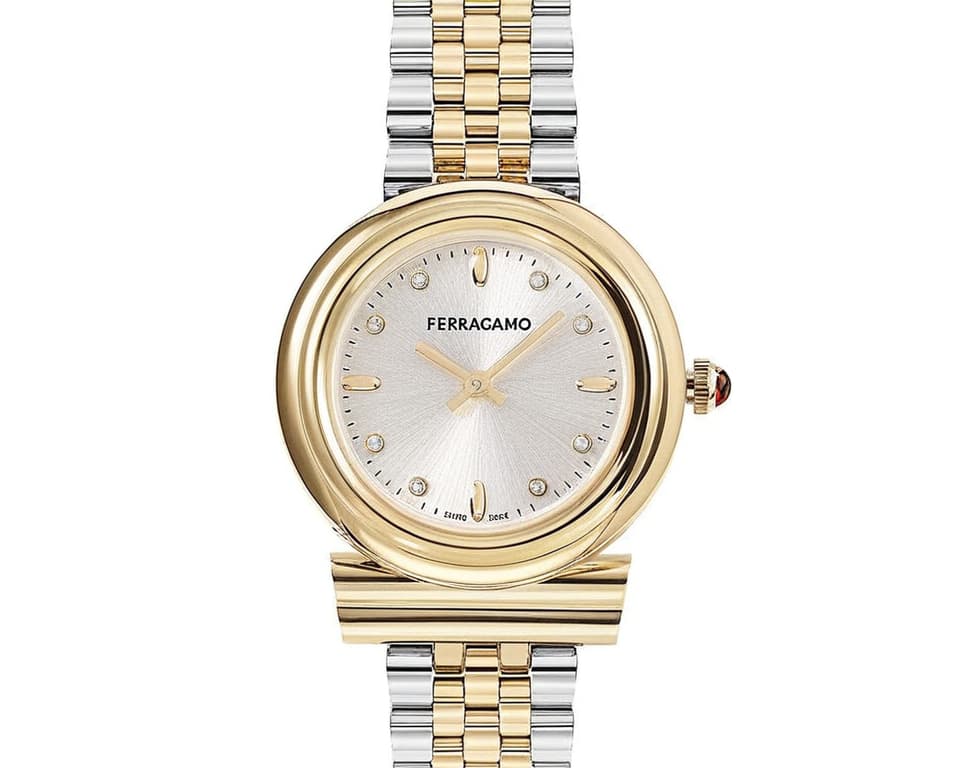
Ferragamo watches are sold through the brand’s own boutiques, its official website, and a network of authorized jewelers and department stores that carry the Ferragamo timepieces line. Because the watches are produced through the Timex Group partnership, authorized retail channels typically carry current-season pieces along with warranty support backed by that partnership, which is the safest way to guarantee an accurate warranty period and a watch that hasn’t been altered or repaired with non-original parts.
For older or discontinued models, the secondhand and pre-owned market is the more realistic option, since Ferragamo doesn’t keep every past design in continuous production the way some larger watch brands do. When buying pre-owned, ask for the original box and papers if possible, confirm the reference number matches what’s actually being sold, and have the watch’s authenticity and working condition checked before paying, the same way you would with any pre-owned luxury item.
Ferragamo Watch Resale Value
Ferragamo watches should be bought for how they look and feel on the wrist, not as a financial investment. As a fashion-driven brand rather than a specialized watchmaker building its own in-house movements, Ferragamo doesn’t carry the kind of resale demand or price appreciation associated with established Swiss manufactures. Resale platforms and consignment shops generally list used Ferragamo watches at a fraction of their original retail price, commonly somewhere around a quarter to a third of what they cost new, which is fairly typical for fashion watch brands broadly rather than something unique to Ferragamo.
Limited-edition pieces, like the sustainability-focused F-80 Skeleton releases made with bio-based materials, may attract a bit more interest from collectors who specifically follow eco-conscious watchmaking, but that’s a niche market and shouldn’t be counted on for meaningful resale value. If you want a watch that’s genuinely likely to hold or grow in value over time, that’s a different shopping list entirely, built around specialist manufactures with long in-house movement histories. If you want a watch that looks distinctive, carries real design pedigree, and costs less than most Swiss luxury alternatives, Ferragamo remains a reasonable choice, just one to buy for enjoyment rather than appreciation.
Caring for Your Ferragamo Watch
Keeping a Ferragamo watch in good shape starts with the basics: avoid extreme temperature changes, keep it away from strong chemicals like perfume, hairspray, or cleaning products, and wipe it down with a soft microfiber cloth after wearing it to remove sweat and skin oils before they build up around the case and clasp. A cloth marketed for eyeglasses or camera lenses works just as well as one sold specifically for watches, since it’s really just about using something lint-free and non-abrasive.
Leather straps, which show up across several Ferragamo collections, should be kept dry and out of prolonged direct sunlight, since heat and moisture will crack and fade leather over time. A basic leather conditioner, the same kind used on shoes or handbags, can help keep the strap supple if you notice it starting to stiffen, though it’s worth testing on a small hidden area first.
Quartz models need a battery replacement every one to two years depending on use, and this should be done by a qualified watchmaker to avoid damaging the case seals and losing water resistance. Automatic models like the F-80 Skeleton benefit from regular wear, since the movement is powered by wrist motion, but if you own more than one automatic watch and rotate between them, a basic single or double watch winder can keep an unworn automatic running and ready to wear without needing to manually reset the time and date every time you pick it up. Because Ferragamo timepieces are produced through the Timex Group partnership, servicing and parts availability generally run through that network rather than independent Swiss ateliers, so it’s worth contacting an authorized service center directly if a repair is needed.
Frequently Asked Questions About Ferragamo Watches
The questions below come up most often among people researching Ferragamo watches for the first time.
Are Ferragamo watches made in Switzerland?
Yes. Every current Ferragamo watch is produced through the brand’s partnership with Timex Group and carries the “Swiss Made” designation on the dial, meaning the movement and assembly meet Switzerland’s legal requirements for that label.
Is Ferragamo a luxury watch brand?
How much do Ferragamo watches cost?
Most Ferragamo watches retail somewhere between about $900 and $2,500, depending on the collection, case material, and whether the model uses a quartz or automatic movement. Gold and diamond-set pieces from collections like the Gancino sit at the higher end of that range.
Does Ferragamo make automatic watches?
Yes, though most of the collection runs on quartz movements. The F-80 Skeleton is the best-known automatic model, using a visible mechanical movement that’s wound by the natural motion of the wearer’s wrist.
Who owns Ferragamo watches today?
The watches are designed by Salvatore Ferragamo S.p.A. and produced through a long-running licensing partnership with Timex Group, which handles Swiss manufacturing. Gevril Group distributes the watches in the United States and Caribbean, while the wider Ferragamo company itself remains majority-owned by the founding family.
Conclusion
Ferragamo watches make the most sense for someone who wants a recognizable piece of Italian fashion history on their wrist rather than a mechanical showpiece from a specialist watchmaker. The brand’s century-long story, from a nine-year-old shoemaker in southern Italy to a Hollywood favorite to a family-run global fashion house, gives the watches a genuine design heritage that most accessible watch brands can’t claim. The Gancino hook, the Vara bow, and the brand’s confident use of color are what set this collection apart, and models like the F-80 Skeleton prove Ferragamo can offer real mechanical interest when it wants to. Buy one for the design, take care of it the way you would any Swiss-made accessory, and don’t expect it to hold its value the way a specialist watch brand would; that trade-off is exactly what makes Ferragamo an approachable way into design-forward Swiss watchmaking.