Glashütte Original makes some of the most carefully built watches in Germany, but far fewer people know the name than know Rolex or Omega. That is a shame, because this brand does almost everything itself. It builds its own movements, cuts its own gears, and even makes many of its own dials in a separate workshop. For anyone drawn to real craftsmanship over mass production, Glashütte Original deserves a close look, and its standout models reveal exactly what this brand does best.
The Craftsmanship Behind Glashütte Original
Glashütte Original builds nearly all of its own parts in-house, which is rare even among expensive watch brands. Most watch companies buy movements, or at least major parts of them, from outside suppliers. Glashütte Original does the opposite. The brand makes close to 95% of its components itself, including gears, balance springs, and dials, inside its own workshops in the small German town of Glashütte, Saxony.
This matters because it means the brand controls quality at every single step. A Glashütte Original watch usually reveals a few signature details on close inspection. There is the three-quarter plate, a large single piece of German silver that covers most of the movement instead of several smaller bridges. There is the swan-neck fine adjustment, a delicate spring-like part shaped like a bird’s neck that lets watchmakers fine-tune accuracy by hand. And there is the Glashütte stripe finish, a pattern of fine parallel lines polished into the metal. These are old techniques, some going back to the 1800s, and Glashütte Original still uses them today instead of cutting corners with machines alone.
Even the dials get special treatment. Glashütte Original runs its own dial-making workshop in Pforzheim, a town roughly 300 miles from Glashütte itself, where many of the brand’s colored and textured dials are produced using old tools and methods rather than bought from an outside supplier. The brand also stamps a unique four-digit number onto every completed watch, a holdover from an era when records were kept by hand and a reminder that output here is still measured in the thousands rather than the millions.
The History of Glashütte Original
Watchmaking in the town of Glashütte started in 1845, almost 180 years before today, when a watchmaker named Ferdinand Adolph Lange moved there with government support to build a local watch industry. Lange was soon joined by fellow craftsmen Moritz Grossmann, Julius Assmann, and Adolf Schneider, and the group set up workshops to produce watch parts and pocket watches right there in town. Within a few decades, watches made in this one small town had earned a reputation for precision that spread across the world.
The 20th century was hard on Glashütte. World War II damaged the town, and in the years that followed, under East Germany’s communist economic system, the independent watchmaking businesses were consolidated into a single state enterprise known by the abbreviation GUB. It was only after Germany reunified in 1990 that private ownership became possible again. The brand name “Glashütte Original” is itself only three decades old. When the company privatized in 1994, its new owners chose that name to honor the entire history of watchmaking in the town, rather than reviving any single old brand name alone. In 2000, the Swatch Group bought Glashütte Original, and it remains part of that group today, alongside names like Breguet, Blancpain, and Omega.
The town never stopped treating watchmaking as something worth teaching. Back in 1878, local watchmakers opened the German School of Watchmaking in Glashütte to pass down their skills to the next generation, and that same mission continues today through the Alfred Helwig School of Watchmaking, which Glashütte Original runs to train new watchmakers in traditional techniques. Glashütte also houses the German Watch Museum, located close enough to the factory grounds that visitors regularly combine a museum trip with a look at the manufacture itself; Glashütte Original contributed funding toward the museum together with the local city government.
Senator Excellence: Glashütte Original’s Top Dress Watch
The Senator Excellence stands as the brand’s best all-around choice, the one watch that does almost everything well. Launched in 2016, it combines a classic three-hand dress watch look with a movement built for real, everyday accuracy. The base steel model runs about $8,600, while versions with a moon phase and large date display climb toward $12,000 or more, and a solid gold version can reach the mid-teens in thousands of euros.
What sets the Senator Excellence apart is its Calibre 36 movement, which offers 100 hours of power reserve. That means the watch can sit on a shelf from Friday night to Monday morning and still be running, something most automatic watches in this price range cannot manage. The movement also uses a silicon balance spring, a modern material that resists magnetic fields and temperature swings far better than traditional metal springs. Combined with a silver or black dial, a slim stainless steel case around 40mm wide, and individually tested chronometer-level accuracy, the result is a watch equally suited to the office, a wedding, or daily wear.
The Senator Excellence proves that a dress watch does not need to sacrifice technical substance for elegance. It carries a 100-hour power reserve inside a case that still looks at home under a dress shirt cuff.
Before any Senator Excellence leaves the factory, it goes through roughly 24 days of in-house testing and adjustment to confirm its accuracy, a step most watches at this price never go through. The collection also stretches well beyond the basic three-hand model. At the top end sits the Senator Excellence Perpetual Calendar, a far more complicated watch that tracks the date, month, and leap year automatically for decades without needing correction, priced at around €38,700. That range, from a reliable everyday watch to a serious perpetual calendar, is part of what makes Senator Excellence feel less like one watch and more like a full family built around the same dependable foundation.
PanoMaticLunar: Glashütte Original’s Most Iconic Design
The PanoMaticLunar is probably the single watch people picture first when they think of Glashütte Original, thanks to its unusual off-center dial. Instead of placing the hour and minute hands in the middle like almost every other watch, the PanoMaticLunar pushes them to the left side, balanced by a large date window and a moon phase display on the right. First introduced in 2003, this layout follows a design principle based on the golden ratio, which is why the dial feels balanced even though nothing sits in the center.
Prices for a steel PanoMaticLunar typically start around $9,000 to $12,400 depending on the dial color and strap, with gold versions running considerably higher. The watch uses the in-house Calibre 90-02, a micro-rotor automatic movement that offers 42 hours of power reserve and beats at a steady 28,800 vibrations per hour. A micro-rotor sits flush inside the movement rather than on top of it, which lets the whole watch sit thinner on the wrist than many comparable automatics. For 2025, Glashütte Original introduced an anniversary edition with a new movement, suggesting the PanoMaticLunar will keep evolving rather than staying frozen in its original form.
The same off-center layout also appears at the very top of the brand’s catalog in the PanoLunar Tourbillon, a far more expensive piece in red gold that adds a tourbillon, a rotating cage that helps counter the effects of gravity on tiny moving parts, alongside the moon phase and large date. It sells for roughly $83,000, which shows just how far Glashütte Original can stretch a single design idea, from an everyday steel watch to a serious high-horology piece, without changing the dial layout that makes it recognizable in the first place.
SeaQ: Glashütte Original’s Dive Watch
The SeaQ represents German watchmaking with real sporting credentials. Introduced in 2019, it brought Glashütte Original into a category the brand had mostly stayed away from: true dive watches built to recognized safety standards. Every model in the line has passed independent testing under two separate standards: ISO 6425, the international benchmark for dive watches, and DIN 8306, a stricter national requirement specific to Germany. In practice, that distinguishes the SeaQ from watches that merely borrow dive-watch looks without the underlying certification.
The standard 39.5mm SeaQ model is water-resistant to 200 meters and starts around $8,500 to $9,900 depending on the strap or bracelet chosen, while the larger 43.2mm SeaQ Panorama Date pushes water resistance to 300 meters and adds Glashütte Original’s signature large date window, priced from roughly $11,000 upward. The case shape and proportions pay direct homage to the Spezimatic Type RP TS 200, a dive watch built in Glashütte toward the end of the 1960s, so the SeaQ carries real historical roots rather than being an invented throwback. A SeaQ Chronograph version, added in 2022, brings a sophisticated flyback chronograph movement into the same tough, water-ready case for anyone who wants timing functions alongside dive capability.
Every SeaQ also uses a unidirectional rotating bezel with a black ceramic inlay, a material that resists scratches far better than the aluminum bezels found on many cheaper dive watches. For buyers who want the dive-watch shape but in a dressier material, Glashütte Original also offers the SeaQ in 5N red gold, priced around €23,000, which trades some of the tool-watch ruggedness for a more luxurious, special-occasion feel while keeping the same 200-meter water resistance underneath.
Sixties: Vintage Style at a Lower Price
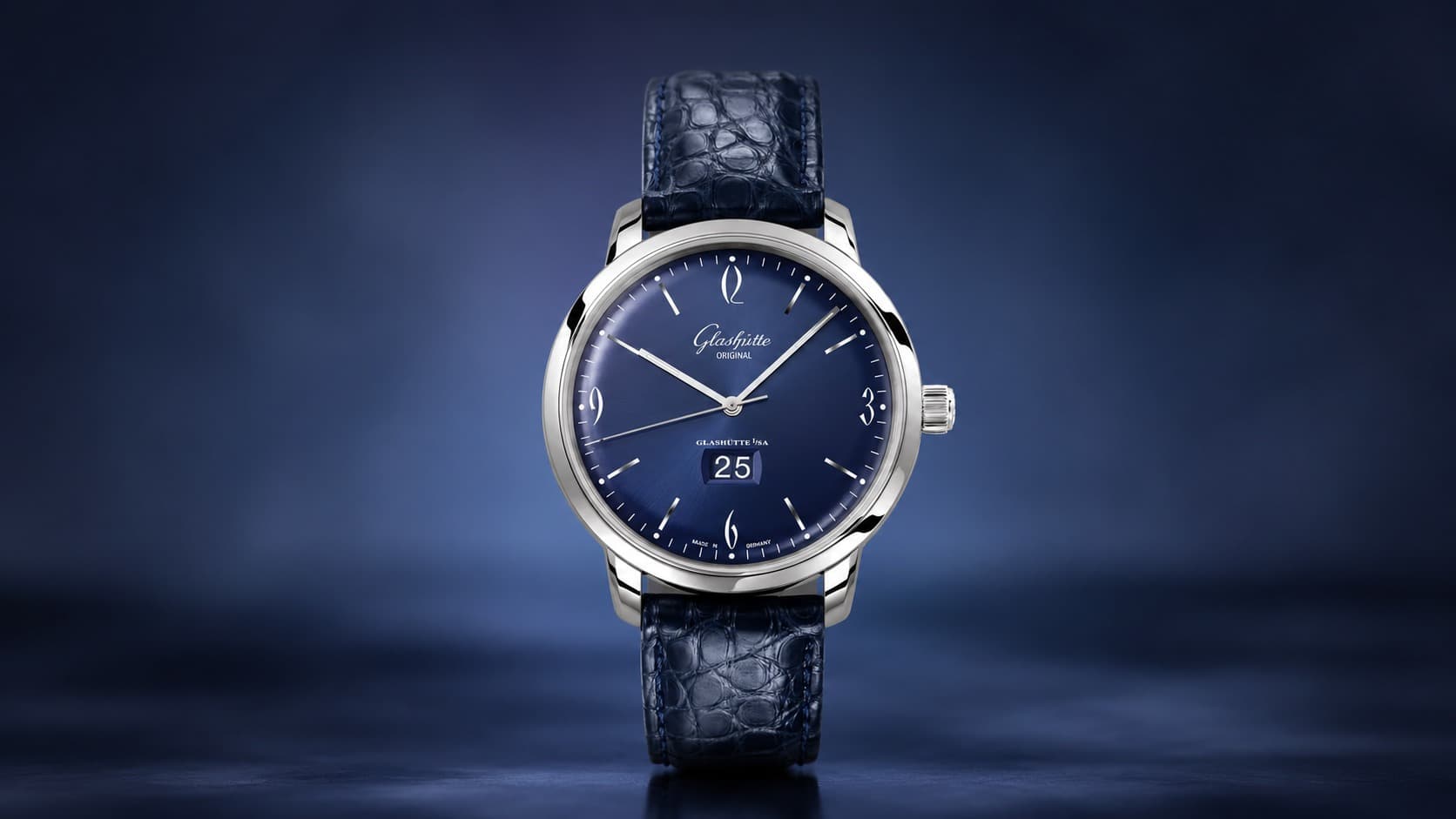
The Sixties collection is the easiest entry point into Glashütte Original without spending five figures. The design traces back to 2007, when Glashütte Original first reissued a modern take on an old East German watch and called it, at the time, the Senator Sixties. The source of inspiration was the Spezimatic, a watch the state-owned GUB introduced in 1964 and kept producing in dozens of colorful dial variations until 1979.
The basic steel Sixties model starts around $6,700, which makes it the most affordable true in-house Glashütte Original watch available new. It keeps the dégradé dial effect from the original, a gradient color that darkens toward the outer edge, produced using original tooling and techniques from the 1960s in the brand’s own dial workshop. The Sixties Iconic Collection, with colorful dials in shades like red, gold, and turquoise, and the square-cased Sixties Iconic Square models push prices up to roughly $7,500 to $9,700, but they bring more personality for collectors who want a watch that stands out rather than blends in.
The Sixties collection also comes in 18-karat rose gold, priced around €12,600, roughly double the steel version, for buyers who want the same vintage dial design in a more precious case. There is a Sixties Chronograph too, which adds stopwatch functions to the vintage styling and typically runs close to €9,800. Taken together, the lineup lets a shopper pick almost any budget level and still end up with the same dégradé dial and 1960s silhouette that defines the whole collection.
Pavonina: Glashütte Original’s Women’s Collection
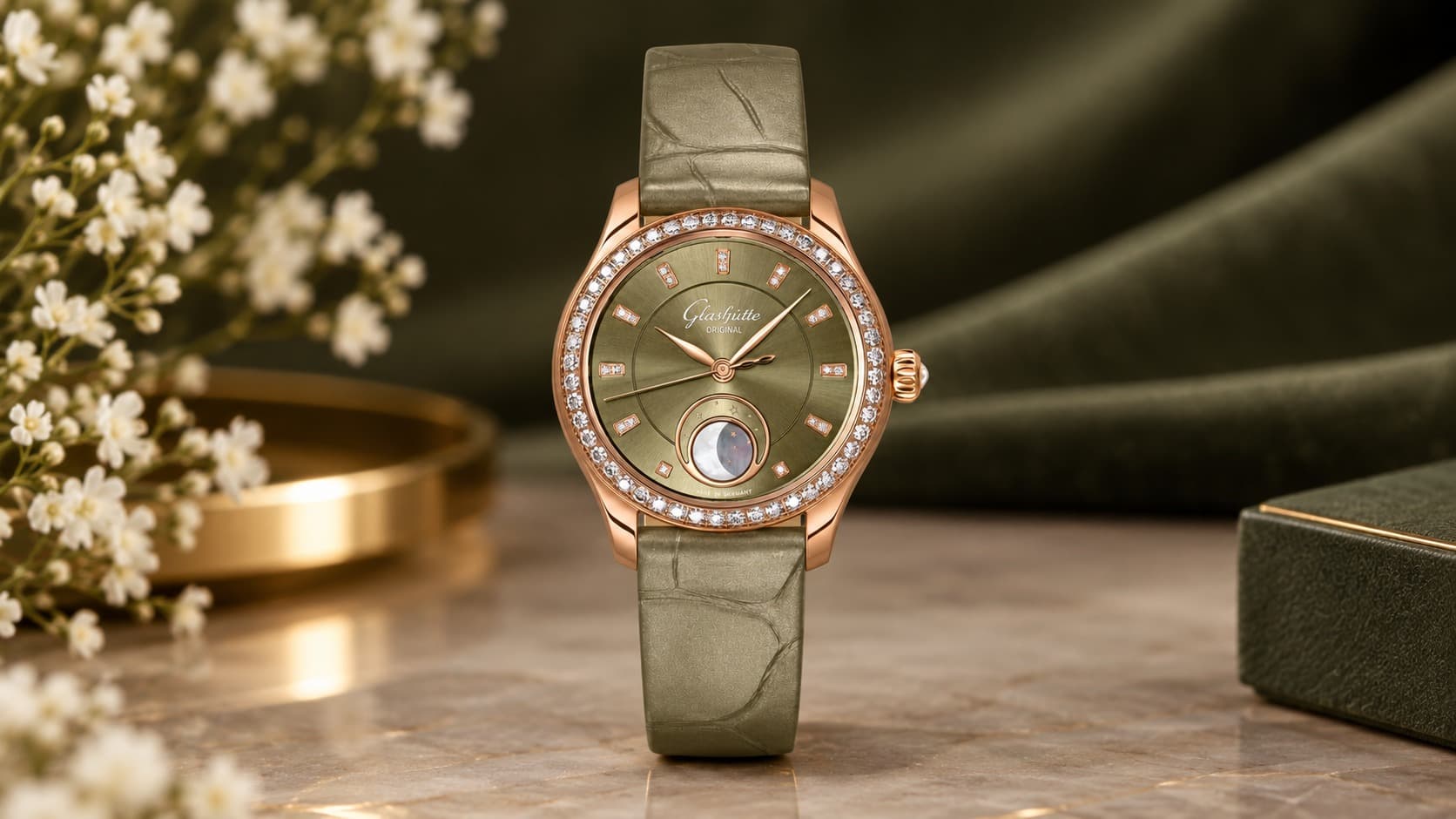
The Pavonina is Glashütte Original’s dedicated women’s collection, and it looks nothing like the brand’s other watches. Launched in 2013, it was designed specifically for women, by women on the brand’s own design team, with a distinctive cushion-shaped case that revives a style popular on wristwatches back in the 1920s. The case measures a compact 31mm and uses flexible lugs, a detail the brand patented, so the watch curves more comfortably around the wrist than a rigid case would.
Unlike the brand’s other collections, the Pavonina runs on an in-house quartz movement rather than a mechanical one, a deliberate choice aimed at women who want effortless daily reliability over winding and servicing a mechanical watch. Dials range from simple silver or mother-of-pearl finishes to versions set with diamonds, and cases come in stainless steel, two-tone steel and red gold, or full red gold. Pre-owned steel models tend to resell for a bit over $3,000, which gives a rough sense of where the line sits price-wise, though new pricing varies by dial and gem-setting choices.
Glashütte Original Watches Compared
| Collection | Starting Price (approx.) | Best For | Signature Feature |
|---|---|---|---|
| Senator Excellence | $8,600 | Everyday dress wear | 100-hour power reserve |
| PanoMaticLunar | $9,000 | Distinctive design lovers | Off-center dial, moon phase |
| SeaQ | $8,500 | Sports and water activities | ISO 6425 dive certification |
| Sixties | $6,700 | First-time buyers | Vintage dégradé dial |
| Pavonina | ~$3,000+ (pre-owned) | Women’s everyday wear | Patented flexible-lug case |
Frequently Asked Questions
Who owns Glashütte Original?
Glashütte Original has been owned by the Swatch Group since 2000. The Swatch Group also owns other well-known high-end names such as Breguet and Blancpain, and Glashütte Original continues to operate largely on its own, making nearly all of its components in-house despite being part of a larger group.
Why is the brand called Glashütte Original if it was only founded in 1994?
The name honors the town rather than any single historical company. When the company privatized in 1994, its owners deliberately chose not to resurrect any single old brand name, and instead picked a name that honored the whole history of watchmaking in the town. The watchmaking traditions themselves, though, genuinely stretch back to 1845.
Is Glashütte Original as good as Swiss luxury watch brands?
Yes, in terms of build quality and in-house manufacturing, Glashütte Original competes directly with top Swiss brands. It uses the same level of hand-finishing, in-house movement production, and quality testing found in Switzerland’s best manufactures, just rooted in German rather than Swiss watchmaking traditions.
What is the most affordable Glashütte Original watch?
The base steel Sixties model is generally the most affordable new Glashütte Original watch, starting around $6,700. It still uses an in-house automatic movement and the brand’s signature finishing touches, just without the extra complications found in pricier collections.
How many watches does Glashütte Original make each year?
Glashütte Original produces around 15,000 watches annually across all its collections combined. That is a small number compared to mass-market brands, which helps explain why the watches feel more individually crafted.
Are Glashütte Original watches actually made in Glashütte?
Yes, movement production and final assembly happen in the town of Glashütte, Saxony, at the same site the brand has operated from since the 1990s. The main exception is many of the colored and textured dials, which are produced at the brand’s dedicated dial workshop in Pforzheim, a separate German town known for precision dial-making.
How long is the warranty on a new Glashütte Original watch?
New Glashütte Original watches now carry a five-year international warranty from the date of purchase, a policy the brand put in place starting February 2026 and applied retroactively to any watch bought from January 2025 onward. That warranty covers material and manufacturing defects, and it requires a correctly completed warranty card stamped by an authorized dealer to stay valid.
The Bottom Line
Glashütte Original earns its reputation by doing almost everything itself, from cutting movement parts to painting dials, inside one small German town. The Senator Excellence delivers a refined, long-lasting dress watch, the PanoMaticLunar offers one of watchmaking’s most recognizable dial designs, the SeaQ proves the brand can build genuinely capable sports watches, the Sixties collection opens the door at a lower price without skipping the in-house quality, and the Pavonina rounds things out with a dedicated line built specifically for women. Whichever model a buyer settles on, it represents nearly 180 years of watchmaking history concentrated in one of the few brands that still builds almost the entire watch under its own roof.