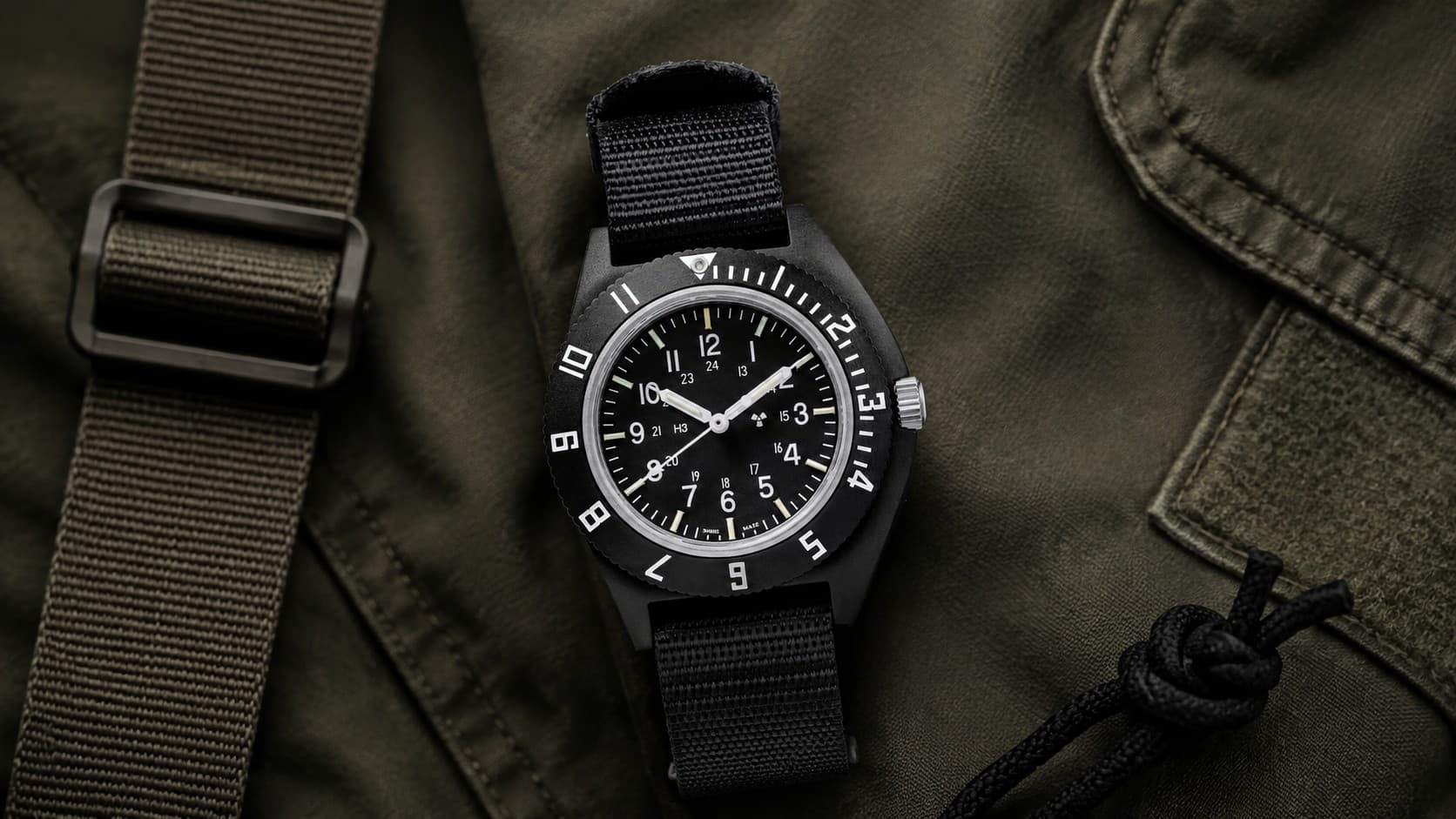
Best Marathon Watches: The US Military’s Official Supplier

Marathon military watches feature authentic DOD-qualified specifications, tritium illumination, Swiss movements, and proven field durability for professionals.

We include products we think are useful for our readers. If you buy through links on this page, we may earn a small commission.

Read more

Affiliate Disclosure: This post may contain affiliate links, which means we may receive a commission if you click a link and purchase something that we have recommended. While clicking these links won't cost you any extra money, they help us keep this site up and running. We only recommend products or services that we genuinely believe will add value to our readers. Thank you for supporting us!

Transparency: We are a participant in various affiliate programs, including the Amazon Services LLC Associates Program, an affiliate advertising program designed to provide a means for us to earn fees by linking to Amazon.com and affiliated sites. Our editorial content is not influenced by affiliate partnerships, and we strive to provide honest and unbiased reviews and recommendations.

To learn more about our vetting process, please visit our Affiliate Disclosure Statement

Article Content

Marathon white dial dive watch with black rotating bezel and red second hand showing Arctic edition design for extreme weather operations

Marathon watches represent the only Department of Defense-qualified military timepieces available to civilian markets, combining authentic military specifications with Swiss manufacturing precision. Founded in 1939 and currently serving as the sole active military watch contractor to the U.S. Government, Marathon has transformed from an exclusive military supplier into a brand that offers identical military-specification watches to both government and civilian customers. With their signature tritium gas tube illumination technology and proven field durability across 85+ years of military service, Marathon watches prioritize function over fashion while maintaining genuine military heritage that competitors simply cannot match.

Marathon Watch History: From WWII to Modern Military Contracts

Marathon’s evolution from wartime contractor to today’s exclusive military watch supplier reveals how genuine military requirements shaped every aspect of their design philosophy. The company’s unbroken chain of government contracts across multiple conflicts and peacetime operations demonstrates their commitment to field-proven reliability over commercial trends. This military foundation explains why Marathon watches prioritize function and durability in ways that purely civilian brands cannot replicate.

  • Morris Wein established Marathon Watch Company in Montreal during 1939 as World War II erupted across Europe, initially focusing on precision timing instruments for Royal Canadian Air Force pilots who needed reliable navigation equipment in combat aircraft. The company’s first products included cockpit chronometers and timing devices that could function accurately despite engine vibrations, temperature extremes, and the physical demands of aerial combat missions.
  • Post-war expansion brought contracts with various Canadian military branches throughout the 1950s and 1960s, as Marathon developed expertise in creating timepieces that could withstand harsh field conditions while maintaining precise timekeeping. The company’s reputation for reliability spread through military networks, leading to requests for specialized timing equipment from allied forces and establishing Marathon’s focus on military specifications rather than commercial watch trends.
  • American military contracts began in the 1970s when U.S. forces required timing equipment that met stricter durability standards than commercially available watches could provide. Marathon’s existing military experience made them ideal partners for developing watches that could survive combat conditions while providing the accuracy needed for military operations requiring precise coordination and timing.
  • The pivotal 1999 MIL-PRF-46374G qualification established Marathon as the sole manufacturer meeting the Department of Defense’s updated military watch requirements. This comprehensive specification covers shock resistance testing, temperature range performance from -40°F to 160°F, antimagnetic properties, water resistance standards, and tritium illumination requirements that must function for years without maintenance or charging.
  • Swiss manufacturing partnerships developed in the early 1990s when Marathon moved production to La Chaux-de-Fonds while maintaining Canadian design and engineering operations. This arrangement provided access to premium Swiss movements from ETA and Sellita while preserving the North American military focus that distinguishes Marathon from traditional Swiss luxury brands focused on civilian markets.
  • Civilian market entry occurred gradually over the past 10-15 years as Marathon began offering identical military-specification watches to private customers through authorized dealers. This transition required no changes to manufacturing processes or specifications, since the same watches issued to special forces units could serve civilian users who needed similar durability and reliability for demanding professions or outdoor activities.
  • Current military relationships span elite units worldwide, including U.S. Navy EOD teams who defuse underwater explosives, Air Force Pararescue jumpers who perform combat search and rescue missions, Army Special Forces operators conducting extended field operations, and Canadian SAR Technicians who work in extreme Arctic conditions. These real-world applications continuously test and validate Marathon’s design decisions.
  • Fourth-generation leadership under Mitchell Wein maintains the family’s commitment to military specifications and authentic functionality rather than pursuing luxury market trends or fashion-oriented designs. The company deliberately produces 90% of watches for government contracts to ensure military requirements remain the primary design influence, preventing the specification compromises that often occur when military suppliers shift focus to civilian markets.

Marathon’s journey from wartime necessity to today’s Swiss-manufactured military timepieces illustrates how authentic military requirements drive innovation in ways that commercial market demands cannot replicate. The company’s exclusive Department of Defense qualification status validates eight decades of continuous improvement in extreme-condition timekeeping, while their recent civilian availability provides unprecedented access to genuinely military-specification watches rather than marketing-inspired imitations. This unique position allows Marathon to offer civilian customers the same field-proven durability and reliability that special operations forces depend on during life-or-death missions, backed by the longest continuous military watch manufacturing heritage in North America.

Marathon Watch Features

Marathon’s distinctive features stem directly from military operational requirements that demand performance capabilities far beyond typical civilian timepieces. The company’s exclusive use of tritium gas tube illumination technology and adherence to genuine military specifications create functional advantages that serve both tactical professionals and civilian users who need reliable timekeeping in challenging conditions. These technical innovations represent decades of field testing and refinement driven by real-world military feedback rather than marketing considerations.

  • Tritium gas tube illumination provides continuous 24-hour visibility without requiring external light charging or battery power for the luminous elements. Each tube contains tritium gas paired with phosphorous coating inside sealed borosilicate glass, creating a self-powered light source that glows consistently for over a decade. This system eliminates the fading issues common with traditional luminous paint that requires light exposure to charge and loses brightness within hours of darkness.
  • Military specification MIL-PRF-46374G compliance involves rigorous testing protocols that verify each watch can survive extreme operational conditions including 5,000G shock impacts, temperature ranges from -40°F to 160°F, antimagnetic exposure up to 4,800 A/m, and submersion testing at specified depths. Marathon maintains the only active qualification for this specification, meaning their watches undergo the same testing and certification processes required for military procurement.
  • Swiss movement integration combines proven reliability with precision timekeeping through partnerships with established manufacturers like ETA, Sellita, and Ronda. Quartz movements achieve ±10 seconds per year accuracy with 4-5 year battery life, while automatic movements feature Incabloc shock protection and 38-42 hour power reserves. These movements receive additional modifications to meet military shock and temperature requirements beyond standard Swiss specifications.
  • Case construction utilizes 316L surgical-grade stainless steel with specialized surface treatments including Parkerized finishes for corrosion resistance and reduced light reflection. Composite fibershell cases on select models provide lighter weight while maintaining impact resistance, with both materials tested for salt water exposure, chemical resistance, and extreme temperature cycling that exceeds civilian watch standards.
  • Sapphire crystal protection features 3mm thickness on many models compared to the 1-2mm typical of civilian watches, providing superior scratch resistance and pressure tolerance for high-altitude operations. The crystals receive anti-reflective coatings optimized for tactical use, reducing glare that could compromise operational security while maintaining maximum clarity for dial reading.
  • Water resistance ratings reflect genuine testing rather than theoretical calculations, with 300-meter ratings on SAR models verified through actual pressure testing and ISO 6425 dive watch certification. The testing protocols include thermal shock tests where watches move between extreme temperatures while submerged, simulating real-world conditions that recreational dive watches rarely encounter.
  • Tritium tube placement covers all time-indicating elements including hour markers, hands, and bezel markings where applicable, ensuring complete dial legibility in total darkness. The tubes maintain consistent brightness output regardless of prior light exposure, altitude changes, or temperature variations, providing reliable visibility during extended operations without access to artificial lighting.
  • Shock resistance capabilities exceed civilian requirements through reinforced movement mounting systems and case designs that distribute impact forces across multiple structural elements. The military specification testing includes drop tests from specified heights onto concrete surfaces and vibration testing that simulates transportation in military vehicles across rough terrain.
  • Temperature performance spans operational ranges that most civilian watches cannot survive, with movement lubrication and materials selected specifically for function in Arctic and desert conditions. The watches maintain accuracy specifications across the full temperature range, preventing the timekeeping variations that affect standard watches in extreme environments.
  • Antimagnetic protection shields the movement from magnetic fields generated by military equipment, aircraft instruments, and electronic warfare systems that could disrupt timekeeping accuracy. This protection level significantly exceeds the antimagnetic capabilities of typical civilian watches, ensuring reliable operation in electromagnetic environments common to military operations.

These technical capabilities reflect Marathon’s focus on operational functionality rather than aesthetic appeal, creating watches that excel in demanding conditions where reliability directly impacts mission success and personal safety. The combination of tritium illumination, military-specification construction, and Swiss movement precision provides performance advantages that serve military professionals, emergency responders, and civilian users who need dependable timekeeping in challenging environments. Marathon’s commitment to maintaining identical specifications between military and civilian models ensures that private customers receive the same field-proven capabilities trusted by special operations forces worldwide, without compromises made for cost reduction or mass market appeal.

Top 10 Best Marathon Watches

Marathon’s current lineup serves distinct operational requirements through specialized collections designed for diving, aviation, and general military use. Each model maintains identical military specifications whether sold to government agencies or civilian customers, with variations in size, movement type, and specific features tailored to different mission profiles. The following models represent Marathon’s most significant offerings across price ranges and functional capabilities.

  • Marathon GSAR (Government Search and Rescue) stands as the flagship automatic dive watch featuring a 41mm stainless steel case, Sellita SW200-1 movement with 38-hour power reserve, unidirectional rotating bezel, and 300-meter water resistance with ISO 6425 certification. The sapphire crystal measures 3mm thick for impact resistance, while tritium tubes illuminate all time-indicating elements including the rotating bezel for underwater navigation. This model serves as the standard issue watch for many special operations units and represents Marathon’s most popular civilian offering.
  • Marathon TSAR (Tactical Search and Rescue) – provides identical specifications to the GSAR with ETA F06.412 quartz movement delivering ±10 seconds per year accuracy and 4-5 year battery life. The quartz movement offers advantages for users who prefer set-and-forget operation without daily winding requirements, while maintaining the same 300-meter water resistance, sapphire crystal protection, and tritium illumination found in the automatic version. Military users often prefer quartz for extended operations where movement maintenance is impractical.
  • Marathon Navigatortargets aviation applications with bidirectional 12-hour GMT bezel allowing simultaneous display of two time zones critical for flight operations and international missions. Available in both composite fibershell and stainless steel cases, the Navigator features either quartz or automatic movements depending on specific model variations. The aviation-focused design includes enhanced legibility features and reduced magnetic susceptibility important for aircraft cockpit environments.
  • Marathon MSAR (Medium Search and Rescue) offers the same 300-meter dive capabilities as larger SAR models in a 36mm case suitable for smaller wrists or users preferring more discreet sizing. Despite the reduced case diameter, the MSAR maintains full military specifications including sapphire crystal protection, tritium illumination, and either automatic or quartz movement options. This model proves popular among female military personnel and civilian users who find 41mm cases too large for comfortable daily wear.
  • Marathon JSAR (Jumbo Search and Rescue) – maximizes visibility through enlarged case dimensions and oversized tritium tubes that provide enhanced legibility in extreme low-light conditions. The 46mm case accommodates larger tritium installations while maintaining 300-meter water resistance and full military specifications. Special operations forces and emergency responders favor this model when maximum visibility takes priority over wrist comfort during critical operations.
  • Marathon ADANAC – celebrates Canadian heritage through special edition models featuring red maple leaf accents and Canadian-themed designs while maintaining standard Navigator functionality. These limited production models often commemorate specific anniversaries or Canadian military units, with some variations including unique dial colors or case finishes not available in standard production models. Collectors particularly value government-issued ADANAC models with unit-specific markings.
  • Marathon Arctic MSAR – optimizes performance for extreme cold weather operations through specialized movement lubrication and enhanced tritium tube brightness designed for Arctic conditions where standard illumination may appear dimmer. The white dial reduces snow glare while maintaining tritium visibility, and the movement receives additional cold weather testing beyond standard military specifications. Canadian SAR Technicians and Arctic researchers rely on this model for operations in sub-zero environments.
  • Marathon CSAR (Coast Guard Search and Rescue) – represents the premium chronograph offering with ETA Valjoux 7750 movement, 46mm case, and enhanced water resistance for maritime operations. The chronograph function provides precise timing capabilities for search and rescue operations, while the larger case accommodates additional tritium tubes for maximum visibility. This model targets professional users who need chronograph functionality combined with military durability specifications.
  • Marathon TSAR Large – bridges the gap between standard TSAR and JSAR models with enhanced case dimensions for improved visibility while maintaining comfortable wearability. The quartz movement provides reliable operation for extended missions, while the enlarged tritium tubes offer better legibility than standard TSAR models without reaching JSAR proportions. Military personnel often choose this model as a compromise between visibility and practicality.
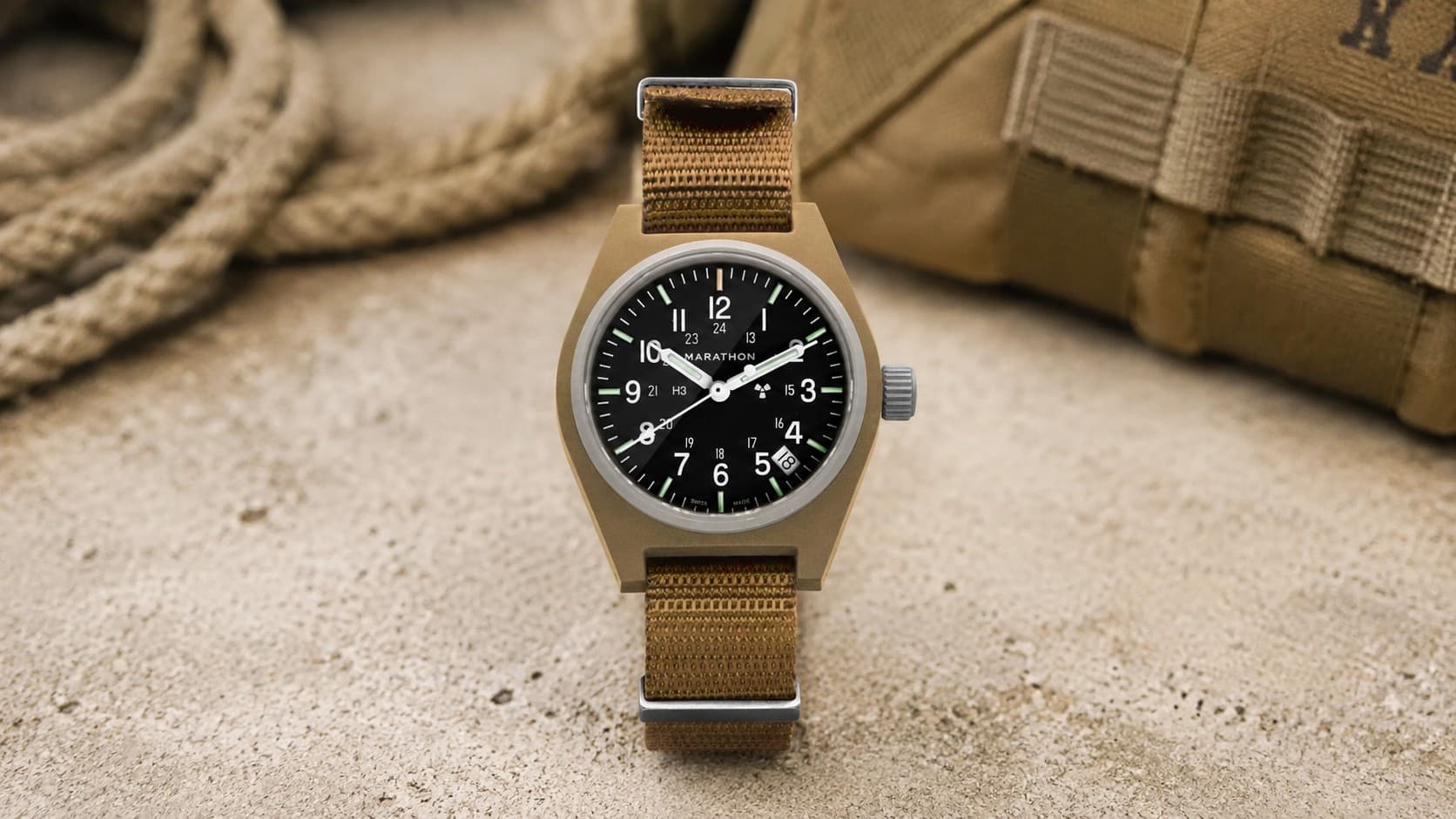
  • Marathon General Purpose Quartz (GPQ) provides entry-level access to military specifications through smaller 34-36mm cases with essential features including tritium illumination, shock resistance, and water resistance appropriate for field use. Available in both black composite and stainless steel cases, GPQ models offer the most affordable way to experience Marathon’s military heritage while maintaining MIL-PRF-46374G compliance for basic operational requirements.

This model range demonstrates Marathon’s commitment to serving diverse operational needs while maintaining consistent military specifications across all price points. The progression from basic GPQ models to premium CSAR chronographs reflects different mission requirements rather than quality variations, with each watch receiving identical attention to military standards regardless of retail price. Current availability varies by model due to production schedules focused primarily on government contracts, with civilian models often experiencing wait times of several weeks to months depending on specific configurations and dealer inventory levels.

How to Choose the Right Marathon Watch for Your Needs

Selecting the right Marathon watch requires evaluating your specific needs against the unique characteristics of military-specification timepieces that differ significantly from conventional watches. Marathon’s focus on operational functionality rather than luxury aesthetics means buyers should prioritize practical considerations like intended use, size requirements, and movement preferences over traditional watch buying criteria. The military heritage and specialized features create both advantages and limitations that potential owners must weigh carefully.

  • Case sizing considerations become critical with Marathon’s military-focused proportions that tend toward larger dimensions than typical dress or casual watches. The 41mm GSAR and TSAR models work well for wrist sizes 7 inches and larger, while the 36mm MSAR accommodates smaller wrists down to 6.5 inches comfortably. The 46mm JSAR and CSAR models require 7.5+ inch wrists to avoid overwhelming proportions, though some users accept larger sizing for maximum tritium visibility in professional applications.
  • Movement selection between quartz and automatic involves practical trade-offs that affect daily use and maintenance requirements. Quartz movements provide set-and-forget operation with 4-5 year battery life and superior accuracy, making them ideal for users who want reliable timekeeping without daily interaction. Automatic movements require regular wearing or winder use to maintain power reserves but eliminate battery replacement needs and appeal to users who appreciate mechanical complexity.
  • Intended use scenarios significantly influence model selection, with diving applications requiring 300-meter rated SAR models while general outdoor activities can utilize lower water resistance GP models effectively. Professional users in military, law enforcement, or emergency services benefit from maximum tritium illumination found in larger models, while civilian users may prioritize comfort and discretion through smaller case options that still maintain military specifications.
  • Budget considerations extend beyond initial purchase price to include long-term ownership costs like tritium tube replacement every 10-20 years at $200-300, regular servicing requirements, and potential warranty repairs. Entry-level GPQ models at $240-600 provide military specifications affordably, while premium CSAR chronographs at $5,900+ target professional users who need specific functionality and can justify higher costs through operational requirements.
  • Tritium illumination expectations require realistic planning since the continuous glow capability comes with replacement costs and gradual brightness reduction over time. New tritium tubes provide excellent visibility for 5-8 years before noticeable dimming begins, with practical replacement timing around 10-15 years depending on usage requirements. Users who need maximum brightness should factor replacement costs into total ownership expenses.
  • Water resistance requirements vary dramatically between models and should match actual use rather than theoretical capabilities. The 30-meter rating on GP models suits daily wear and incidental water exposure, while 300-meter SAR specifications target serious diving or water sports activities. Over-specifying water resistance increases costs without providing practical benefits for users who rarely encounter significant water exposure.
  • Case material choices between stainless steel and composite fibershell affect weight, durability, and appearance in ways that matter for daily wear comfort. Steel cases provide traditional watch aesthetics and superior scratch resistance but add weight that becomes noticeable during extended wear. Composite cases reduce weight significantly while maintaining impact resistance, though they show wear differently and may not appeal to users expecting conventional watch materials.
  • Availability and delivery timelines reflect Marathon’s military production priorities, with civilian orders often experiencing weeks to months of wait time depending on specific model configurations. Popular models like GSAR frequently show backorder status, while less common variants may require special ordering through authorized dealers. Buyers should plan purchases well ahead of gift-giving occasions or specific need dates.
  • Dealer selection and authenticity verification becomes crucial given Marathon’s growing popularity and the emergence of counterfeit products in secondary markets. Authorized dealers provide warranty coverage and authentic products, while private sales require careful verification of correct fonts, finishing quality, and serial number validation. The significant price differences between authentic and counterfeit models make authentication worth the additional effort and cost.
  • Professional discounts and military pricing offer substantial savings for qualified buyers including active military, law enforcement, emergency medical services, healthcare workers, and education personnel. These discounts typically range from 10-20% off retail pricing and require verification through platforms like ID.me or GovX. Military personnel should explore government procurement options that may provide additional savings or unit-specific customization options.

Marathon’s unique position as authentic military timepieces means buyers should approach selection differently than conventional watch purchases, with greater emphasis on functional requirements and long-term ownership considerations. The military specifications provide genuine performance advantages for users who need extreme durability and reliability, while the specialized features like tritium illumination create ongoing maintenance requirements that purely civilian watches avoid. Potential owners should carefully evaluate whether Marathon’s military heritage and technical capabilities align with their actual needs and usage patterns, since the premium pricing reflects operational capabilities that many civilian users may never fully utilize.

Where to Buy Authentic Marathon Watches

Marathon digital sports watch with orange accents and multiple function displays showing modern digital timepiece design

Purchasing Marathon watches requires navigating a distribution network designed primarily around military procurement channels, with civilian access provided through select authorized dealers and direct sales. The company’s focus on government contracts means retail availability can be limited compared to mainstream watch brands, while the emergence of counterfeit products makes dealer selection critical for authenticity and warranty coverage. Buyers must balance convenience, pricing, and verification needs when choosing purchase channels.

  • Marathon’s official website serves as the primary direct-to-consumer channel offering the complete current lineup with secure payment processing, custom engraving services, and international shipping capabilities. Direct purchases include full manufacturer warranty coverage, authentic documentation, and access to limited edition models not always available through retail partners. The website frequently shows inventory constraints due to military production priorities, with popular models experiencing extended backorder periods.
  • Authorized watch retailers provide verified authentic products with full warranty support through established dealers who specialize in military and tool watches, premium watch retailers with extensive service networks, and outdoor lifestyle retailers who understand the tactical market. These dealers often maintain better inventory levels than direct sales and may offer financing options or promotional pricing during specific periods.
  • International authorized dealers extend global access through specialized retailers in major markets across Asia, Europe, and the Pacific region who handle customs, duties, and local warranty service while providing region-specific pricing and payment methods. These dealers ensure authentic products with proper warranty coverage while offering more convenient purchasing options than direct imports for international customers.
  • Military exchange systems offer special pricing for active duty personnel, veterans, and their families through base exchanges and military clothing stores that carry select Marathon models. These channels provide significant discounts below civilian retail pricing while ensuring authentic products backed by military procurement standards. Availability varies by location and may focus on basic models rather than premium or limited edition variants.
  • Specialized military watch dealers maintain extensive Marathon expertise and inventory while offering repair services and vintage model sourcing. These dealers often stock discontinued models, provide authentication services for secondary market purchases, and maintain relationships with collectors seeking specific variants or military-issued pieces with unit markings.
  • Government procurement channels serve military units, law enforcement agencies, and emergency services through GSA schedules and government contracts that provide bulk pricing and customization options. Individual government employees may access these channels for personal purchases depending on agency policies, though most require official purchase orders rather than personal credit card transactions.
  • Secondary market platforms include online auction sites, watch trading forums, and collector marketplaces where authentic Marathon watches change hands, though buyers must exercise extreme caution regarding authenticity verification. Established collectors and specialized dealers actively work to identify and remove counterfeit listings while providing authentication guidance for prospective buyers.
  • Authentication requirements become critical given the increasing sophistication of counterfeit Marathon watches that copy packaging, documentation, and even serial numbers. Authentic watches feature specific font characteristics, finishing details, movement markings, and tritium tube installations that trained eyes can verify, while Marathon’s customer service can confirm serial number validity for questionable pieces.
  • Warranty considerations vary significantly between purchase channels, with authorized dealers providing full manufacturer warranty coverage and service coordination, while private sales typically transfer remaining warranty periods if properly documented. Direct purchases from Marathon include complete warranty protection, while unauthorized dealers or international grey market sources may void warranty coverage entirely.
  • Pricing variations reflect different dealer margins, promotional activities, and market positioning, with direct sales typically matching MSRP while authorized dealers may offer competitive pricing during sales events. Military discount programs provide the most significant savings for qualified buyers, while secondary market pricing varies widely based on model rarity, condition, and included accessories.
  • Stock availability and delivery timelines fluctuate based on Marathon’s military production schedules, with civilian orders often experiencing delays during periods of high government demand. Popular models like GSAR and TSAR show frequent backorder status, while less common variants may require special orders with extended wait times. Buyers should expect delivery periods of 2-8 weeks for in-stock items and potentially months for backordered models.
  • Customer service and support quality varies between purchase channels, with direct sales providing manufacturer support and authorized dealers offering local service coordination. Specialized Marathon dealers often provide superior product knowledge and service expertise compared to general watch retailers, while international dealers handle regional warranty service and parts availability.

The complexity of Marathon’s distribution network reflects their military-first business model, where civilian sales represent secondary priorities behind government contracts. Buyers benefit from researching multiple authorized sources to compare availability and pricing, while maintaining focus on authenticity verification and warranty coverage that protect the significant investment these watches represent. The specialized nature of Marathon’s military specifications means that proper dealer support becomes more valuable than simple price comparisons, particularly for first-time buyers who need guidance on model selection and long-term ownership requirements.

Marathon Watches as Investments: Value Retention

Marathon watches occupy a unique position in the resale market due to their authentic military heritage and limited civilian production, though they function primarily as tool watches rather than luxury investments. The company’s focus on government contracts creates scarcity in civilian markets while their military specifications appeal to collectors seeking functional timepieces with genuine operational history. Value retention reflects this specialized positioning, with certain models maintaining stronger resale performance based on military significance and production limitations.

  • Overall value retention averages 50-70% of original retail price for well-maintained examples, placing Marathon watches in the middle range of tool watch depreciation patterns. Popular models like GSAR typically retain 60-70% of retail value in excellent condition, while entry-level GPQ models may drop to 40-50% due to lower initial pricing and broader availability. The military specification authenticity helps Marathon watches maintain value better than similarly priced civilian tool watches without genuine military credentials.
  • GSAR models demonstrate the strongest resale performance due to flagship status, collector recognition, and consistent demand from both military and civilian users. Used GSAR watches in excellent condition with complete documentation typically sell for $800-$1,200 depending on specific variant and market conditions. Limited editions like Arctic White dials or discontinued color combinations command 10-20% premiums over standard black dial versions.
  • Military-issued pieces with government markings represent the most valuable segment of the Marathon resale market, often commanding 20-50% premiums over identical civilian models. Watches with unit-specific engravings, government issue numbers, or special operation markings appeal to military collectors and history enthusiasts willing to pay significantly more for documented service history. Authentication becomes critical since these markings can be counterfeited.
  • Condition factors heavily influence resale values with excellent condition examples commanding full market pricing while worn pieces face significant discounts. Scratched cases, worn bezels, dim tritium tubes, or missing documentation can reduce values by 20-40% compared to pristine examples. The military tool watch nature means many examples show heavy use that affects collectible appeal despite maintaining functional reliability.
  • Complete documentation and accessories add 15-25% value compared to watch-only sales, with original boxes, papers, NATO straps, and any included tools increasing buyer confidence and collector appeal. Marathon’s relatively recent civilian availability means most examples include complete packaging, though military-issued pieces often lack retail documentation while including government paperwork that may have equal or greater collector value.
  • Model rarity and production limitations create value variations within the Marathon lineup, with discontinued models or limited editions appreciating above standard production pieces. The original SAR models from pre-2006 production show particular collector interest, while certain error pieces like DSAR models with incorrect markings have achieved significant premiums among specialized collectors who value manufacturing anomalies.
  • Tritium tube condition significantly affects resale pricing since replacement costs of $200-300 represent substantial percentages of used watch values. Bright, functional tritium commands full market pricing while noticeably dim tubes require disclosure and price adjustment. Buyers often factor replacement timing into purchase decisions, preferring recently manufactured examples or recently serviced pieces with fresh tritium installations.
  • Market timing influences pricing patterns with military-themed collecting showing cyclical interest that affects Marathon values. Veterans Day, military anniversaries, and conflicts involving units known to use Marathon watches can temporarily increase demand and pricing. Conversely, broader economic downturns typically affect tool watch values more than luxury timepieces since buyers prioritize essential purchases over functional upgrades.
  • Comparison to competitor resale values shows Marathon performing competitively within the military tool watch segment, typically holding value better than Swiss tritium watch brands due to superior build quality while trailing German tool watch manufacturers which offer stronger collector followings. Against mainstream tool watches from Japanese manufacturers, Marathon’s military authenticity provides value support that mass market brands cannot match.
  • Geographic market variations affect resale pricing with stronger demand in regions with significant military presence or outdoor recreation cultures. North American markets typically show the highest prices due to Marathon’s military heritage and brand awareness, while European markets may discount Marathon pieces compared to local Swiss or German tool watch brands with stronger regional recognition.
  • Future appreciation potential appears limited by Marathon’s tool watch positioning and increasing production volumes as civilian sales expand. While certain limited editions or historically significant pieces may appreciate, most Marathon watches should be purchased for personal use rather than investment purposes. The authentic military heritage provides value stability rather than growth potential, making them better choices for users than speculators.
  • Selling platforms and market efficiency vary significantly in terms of pricing realization and buyer reach, with specialized watch forums often yielding higher prices due to knowledgeable buyers who appreciate Marathon’s military significance. General platforms provide broader exposure but may attract buyers unfamiliar with Marathon’s unique positioning, potentially affecting final sale prices negatively.

Marathon watches serve the resale market as functional collectibles rather than luxury investments, with value retention reflecting their authentic military heritage and proven durability rather than brand prestige or fashion appeal. Buyers should approach Marathon purchases primarily for personal use and military interest, viewing any value retention as a secondary benefit rather than a primary motivation. The specialized nature of Marathon’s appeal means that patient sellers who properly market the military significance often achieve better pricing than quick sales through general watch markets, while buyers benefit from the relatively efficient pricing that reflects functional value over speculative premium.

Marathon Watch Maintenance: Service and Care Tips

Marathon watches require minimal daily maintenance due to their military-specification construction, though their unique features like tritium illumination and extreme environment capabilities benefit from specific care approaches. The robust build quality that enables survival in combat conditions translates to excellent durability in civilian use, while routine maintenance practices ensure optimal performance throughout the watch’s service life. Professional servicing requirements differ between quartz and automatic models but remain reasonable compared to luxury timepieces.

  • Daily care routines focus on basic cleaning and protection rather than complex maintenance procedures, with simple rinses after saltwater exposure preventing corrosion buildup on cases and bracelets. Soap and water cleaning removes accumulated dirt, oils, and environmental contaminants that could affect water resistance seals or crown operation. Avoiding extreme temperature changes helps prevent thermal shock to internal components, while proper crown operation prevents seizing that could require professional repair.
  • Water resistance preservation requires attention to crown position and seal integrity, with crowns fully screwed down before any water exposure and periodic inspection of gaskets for wear or damage. Despite high water resistance ratings, users should avoid operating crowns or pushers while submerged and rinse thoroughly after saltwater exposure to prevent mineral buildup. Temperature cycling between hot and cold water can stress seals beyond normal wear patterns.
  • Tritium tube longevity depends on avoiding physical impacts that could crack glass tubes and monitoring brightness levels that indicate replacement timing. While tritium provides continuous illumination without maintenance, the tubes remain fragile compared to dial printing and require gentle handling during cleaning or strap changes. Brightness reduction occurs gradually over 10-20 years, with replacement becoming practical when visibility drops below useful levels for intended applications.
  • Movement maintenance schedules vary significantly between quartz and automatic models, with quartz versions requiring battery replacement every 4-5 years plus complete service every 10-15 years including seal replacement and movement cleaning. Automatic models need full service every 5-8 years involving movement disassembly, cleaning, lubrication, and regulation to maintain accuracy specifications. Extended storage requires proper winding for automatics or battery removal for long-term quartz storage.
  • Professional service requirements center on Marathon’s in-house capabilities at their Canadian headquarters, though qualified watchmakers can handle routine maintenance like battery replacement and basic repairs. Complete overhauls benefit from Marathon’s specific knowledge of military-specification requirements and access to original parts, while local service may suffice for routine maintenance between major services. Service timing typically runs 8-12 weeks during busy periods.
  • Storage considerations emphasize avoiding magnetic fields, extreme temperatures, and impact damage during periods of non-use, with automatic models benefiting from watch winders to maintain movement lubrication and power reserves. Proper storage containers protect against moisture, dust, and accidental damage while allowing air circulation around rubber or leather strap materials that could deteriorate in sealed environments. Temperature stability prevents condensation formation inside cases.
  • Strap and bracelet maintenance varies by material type, with NATO straps requiring replacement every 1-2 years under heavy use while stainless steel bracelets need periodic cleaning and link adjustment. Leather straps deteriorate faster in humid or wet conditions, while rubber straps resist environmental damage but show wear patterns that affect appearance before function. Regular inspection identifies wear points before failures occur during critical use.
  • Crown and bezel operation requires periodic lubrication and cleaning to maintain smooth function, with rotating bezels needing attention to prevent seizing from salt, sand, or debris accumulation. Crown threading should operate smoothly without forcing, while pushers on chronograph models need gentle operation and protection from impacts that could damage internal mechanisms. Forced operation often indicates service needs rather than user technique problems.
  • Common maintenance issues include crown seizing from lack of use, bezel stiffness from environmental contamination, and crystal scratching from impacts that sapphire normally resists. Battery compartment corrosion can occur in quartz models stored in humid conditions, while automatic models may develop timekeeping irregularities that indicate service needs. Early attention to minor issues prevents expensive repairs later.
  • Service cost expectations range from $50-100 for battery replacement and basic cleaning to $300-500 for complete overhauls including movement service and tritium tube replacement. Marathon’s in-house service provides warranty coverage on completed work while maintaining original specifications, though costs typically exceed local watchmaker charges. Service scheduling around military priorities may affect civilian service timelines.
  • Warranty coverage and limitations include two years standard coverage extendable to three years with online registration, covering manufacturing defects but excluding damage from impacts, water infiltration from improper use, or normal wear items like gaskets and tritium tubes. Unauthorized service or modification voids warranty coverage, while proper documentation and authorized dealer purchases ensure full warranty protection.
  • Troubleshooting common problems helps users identify issues requiring professional attention versus normal operation characteristics, with automatic winding irregularities often indicating movement service needs while quartz timing problems suggest battery replacement requirements. Crown operation difficulties typically result from environmental contamination rather than mechanical failure, while bezel action problems often respond to cleaning and lubrication.

Marathon’s maintenance requirements reflect their military tool watch heritage through emphasis on reliability and field serviceability rather than complex luxury watch protocols. The robust construction minimizes maintenance needs while specialized features like tritium illumination create unique service requirements that distinguish Marathon ownership from conventional watches. Users who follow basic care practices and schedule appropriate professional service typically enjoy decades of reliable operation with minimal intervention, though the military specifications mean that proper service becomes more important than with simpler civilian timepieces when major maintenance becomes necessary.

Frequently Asked Questions About Marathon Military Watches

Marathon watches generate frequent questions from prospective buyers due to their unique military heritage, specialized tritium technology, and positioning between tool watches and luxury timepieces. These common inquiries reflect the learning curve associated with authentic military-specification watches that operate differently from conventional civilian timepieces. The following questions address the most frequent concerns and misconceptions about Marathon ownership and capabilities.

  • Are Marathon watches worth the money? Yes, if you need authentic military specifications and tritium illumination for professional or outdoor use. The value depends on whether you’ll actually use the extreme durability and continuous glow features that set Marathon apart from regular watches. For desk jobs or casual wear, you might find better value elsewhere.
  • How long do tritium tubes actually last? Tritium tubes glow continuously but dim over time due to radioactive decay. Expect 50% brightness after 12 years and 25% after 25 years. Most people replace tubes around 10-15 years when visibility becomes inadequate, costing $200-300 including installation.
  • Can civilians buy the same watches used by military units? Yes, Marathon sells identical specifications to both military and civilian customers with no functional differences. Military units may get custom engravings or unit markings, but the underlying watch construction remains exactly the same.
  • Are Marathon watches actually made in Switzerland? Yes, production occurs in La Chaux-de-Fonds, Switzerland since the early 1990s, qualifying for “Swiss Made” designation. However, design and company headquarters remain in Canada, creating a Canadian-Swiss hybrid heritage.
  • Do Marathon watches need batteries in automatic models? No, automatic models run on wrist movement and maintain 38-42 hour power reserves. Only quartz models need batteries, which last 4-5 years. The tritium illumination works independently and never needs charging or batteries.
  • How accurate are Marathon quartz movements? Marathon quartz watches achieve ±10 seconds per year accuracy through high-quality ETA movements, which exceeds most automatic watches and rivals premium quartz timepieces.
  • Can Marathon watches be serviced anywhere? Basic maintenance like battery replacement can be done locally, but complete overhauls should go to Marathon or authorized service centers to maintain military specifications and warranty coverage.
  • What’s the difference between GSAR and TSAR models? GSAR has automatic movement requiring daily winding, while TSAR uses quartz for set-and-forget operation. Both share identical cases, water resistance, and features – just different movement types with GSAR costing $300-400 more.
  • Are Marathon watches good for diving? SAR series models excel for diving with 300-meter water resistance, ISO 6425 certification, and underwater-visible tritium illumination. GP series models work for surface water activities but aren’t dive-certified.
  • Do Marathon watches come with warranties? Yes, two years standard warranty extendable to three years with registration. Coverage includes manufacturing defects but excludes impact damage or water infiltration from misuse. Must buy from authorized dealers for full warranty.
  • Why are Marathon prices increasing so dramatically? Multiple factors including Swiss manufacturing costs, material inflation, increased civilian demand, and Marathon’s strategy to move upmarket. Prices nearly doubled from 2022-2025, causing concern among longtime fans.
  • Can tritium tubes be replaced with different colors? Yes, replacement allows color options including green, blue, white, orange, and yellow through specialized services. Costs are similar to standard replacement but may affect resale value since original green is most authentic.

These frequently asked questions address the practical realities of Marathon ownership while highlighting features that distinguish these watches from conventional timepieces. Understanding these basics helps buyers make informed decisions about whether Marathon’s military heritage and specialized capabilities match their actual needs and usage patterns.

Conclusion

Marathon watches represent a unique opportunity to own authentic military-specification timepieces that serve genuine operational requirements rather than marketing-inspired military aesthetics. The company’s exclusive Department of Defense qualification status and 85+ years of continuous military contracts validate their technical capabilities and field-proven durability in ways that civilian tool watch manufacturers cannot replicate. From the flagship GSAR dive watch to entry-level General Purpose models, Marathon’s lineup provides identical specifications to both military units and civilian customers, ensuring that private buyers receive the same extreme durability and tritium illumination technology trusted by special operations forces worldwide.

However, significant price increases from 2022-2025 have challenged Marathon’s value proposition, with popular models nearly doubling in cost while specifications remain unchanged. Quality control concerns and mixed customer service experiences require careful dealer selection and realistic expectations about long-term ownership costs including tritium tube replacement every 10-20 years. The specialized nature of military specifications creates both advantages for users needing extreme durability and limitations for buyers seeking luxury finishing or brand prestige typical of Swiss timepieces at comparable prices.

For buyers seeking authentic military heritage, proven field performance, and unique tritium illumination technology, Marathon delivers unmatched credentials despite current pricing pressures. The decision ultimately balances appreciation for genuine military specifications and demonstrated reliability against available alternatives in the crowded tool watch market. Marathon’s position as the sole civilian-accessible military watch manufacturer ensures their continued relevance for professionals and enthusiasts who prioritize function over fashion, while their recent market expansion provides unprecedented access to timepieces that previously required government procurement channels.

Nobbier logo

Subscribe To Our Weekly Newsletter

Get notified about new articles