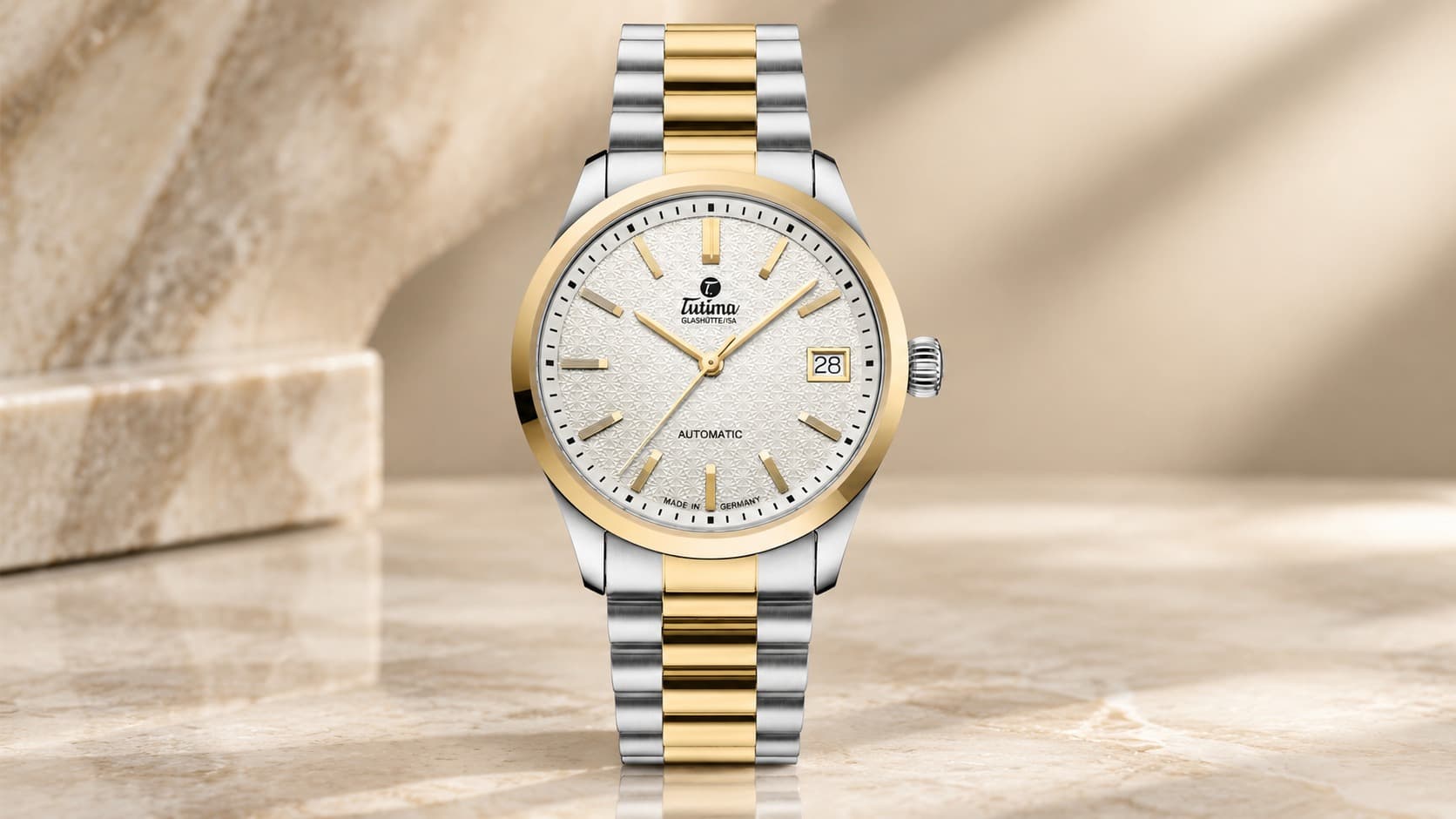
Tutima Glashütte is one of the few watch brands that can trace its roots straight back to the birthplace of German watchmaking, and it has lived through nearly every chapter of that town’s dramatic history. Founded in Glashütte in 1927, the brand built a legendary pilot’s chronograph for the German air force, survived the bombing and seizure of its original factory, rebuilt itself in the west, and eventually returned home to Glashütte decades later. Today it sits in an interesting spot in the watch world: not as famous as Glashütte Original or A. Lange & Söhne, but respected by collectors who know the brand for tough, well-built tool watches and a small handful of genuinely impressive in-house movements.
The History of Tutima Glashütte Watches
Tutima began life in 1927 as the brand name used by two Glashütte companies, Urofa and Ufag, for their best wristwatches. The name comes from the Latin word “tutus,” meaning safe or secure, which the founders chose because their watches had a reputation for being especially reliable. By 1941, Tutima had built the first German pilot’s chronograph with a flyback function, a watch that let pilots reset the chronograph hand instantly without stopping it first. That watch became legendary among collectors and still shapes the brand’s pilot watches today.
The company’s fortunes changed sharply after that. Allied bombing destroyed the original Glashütte factory just hours before the end of World War II, and Soviet forces later took over what remained of the East German watch industry. Tutima’s founder, the lawyer Dr. Ernst Kurtz, moved operations west to Ganderkesee in Lower Saxony, where the brand kept making watches through the decades that followed. In 1984, a Tutima chronograph, reference 798, was chosen as the official pilot’s watch of NATO forces, a contract that put the brand back in military cockpits and rebuilt its reputation after years of struggle.
After German reunification in 1990, the Delecate family, who still own Tutima today, set a long-term goal of returning the brand to its original home. That took longer than expected, since Tutima had already built a solid business in the west and needed the right site and building in Glashütte to become available. That finally happened in 2011, when Tutima opened its own manufacturing facility in a converted historic building near the original factory site and marked the occasion with the Hommage, the first minute-repeater wristwatch built entirely in Germany.
Tutima vs Other Glashütte Watchmakers
Tutima stands out because it builds genuinely tough sports and pilot watches alongside serious in-house dress watches, rather than focusing on one or the other. Glashütte is home to several famous names, including A. Lange & Söhne and Glashütte Original, and it’s easy to lump them all together. But Tutima’s identity grew out of military contracts and aviation instruments, not court jewelry or pocket watches for royalty. That history still shows up in the brand’s catalog.
Most Tutima watches fall into one of two camps. The first is rugged, mission-driven pieces like the Grand Flieger and M2 lines, which use modified Swiss base movements (often from ETA or Valjoux) finished and regulated to Tutima’s own standards. The second is the Patria collection, which uses a hand-wound, fully in-house caliber built from scratch at the Glashütte manufacture. That split explains most of the price gaps across the catalog, because an in-house caliber costs far more to produce than a modified Swiss movement, and Tutima’s pricing reflects that gap clearly.
Tutima was the first watch brand to design, develop, and build a minute-repeater wristwatch entirely in Germany, a complication so difficult that no other Glashütte brand had managed it without outside Swiss help.
Best Tutima Glashütte Watches
Tutima Grand Flieger Classic Automatic
The Grand Flieger Classic Automatic is the most direct modern link to Tutima’s famous 1941 pilot’s watch, and it’s the easiest entry point into the brand. It wears at 43mm across and 13mm thick, with a black dial, oversized luminous Arabic numerals, and a bidirectional rotating bezel that nods to the original wartime piece. Inside sits the Tutima Caliber 330, a modified ETA 2836-2 movement with a 38-hour power reserve, finished with the brand’s own rotor and 18-karat gold seal.
This watch sells for around $2,500 on a leather strap and roughly $2,900 on the steel bracelet, making it one of Tutima’s more attainable options. It’s a good pick for someone who wants real German watchmaking heritage and a genuinely wearable size, without stepping up to chronograph pricing.
Tutima Grand Flieger Classic Chronograph
The chronograph version of the Grand Flieger takes the same pilot’s watch DNA and adds a stopwatch function built around a modified Valjoux 7750 movement, known internally as the Tutima Caliber 320. The movement carries German chronometer certification under the DIN 8319 standard, which is roughly the German equivalent of the Swiss COSC certification and requires the movement to keep time within a tight tolerance across different positions and temperatures. The case grows to 16mm thick to accommodate the chronograph mechanism, with a 44-hour power reserve and 200 meters of water resistance.
Pricing for this model runs from about $5,100 on a strap to $5,500 on the matching steel bracelet. For that money, buyers get a chronometer-certified chronograph with real historical ties to one of the most recognized pilot’s watches of the 1940s, rather than a design that simply borrows the aesthetic.
Tutima Saxon One
The Saxon One is Tutima’s everyday, modern-dress-meets-sport collection, built around a distinctive pyramid-cut bezel that makes it easy to spot on the wrist. It launched in 2013 as one of four completely new collections Tutima introduced after moving its design and development work back to Glashütte, and it remains the brand’s most accessible entry point. The smaller Saxon One M version starts at around $2,000 to $2,200, while chronograph versions in the line run closer to $4,000.
Dial colors in this collection lean toward deep blues, maroons, and chocolate browns rather than the plain black most tool watches default to, which gives it more personality for daily wear. It still uses a modified automatic movement rather than an in-house caliber, so buyers are paying mainly for design, finishing, and the Tutima name rather than movement complexity.
Tutima M2
The M2 is Tutima’s modern take on the NATO-issued chronograph that the brand supplied to military pilots in the 1980s, built in a larger 44 to 46mm titanium case for genuine tool-watch durability. Some references in this line use Tutima’s own in-house chronograph movement rather than a modified Swiss base, which is part of why M2 chronographs sit at a noticeably higher price than comparable Grand Flieger or Saxon One models. Expect to pay from roughly $1,500 for simpler three-hand M2 models up to around $4,600 for a chronograph with the in-house movement.
Titanium keeps the watch lighter than steel despite its larger size, which matters given how big these watches run. The collection also includes a diving-focused variant called the M2 Seven Seas, which trades the chronograph pushers for a rotating dive bezel and leans on bold dial colors like yellow for underwater legibility. Between the chronograph and the diver, the M2 line is the clearest example of Tutima building watches for actual field use rather than for looking rugged on a desk.
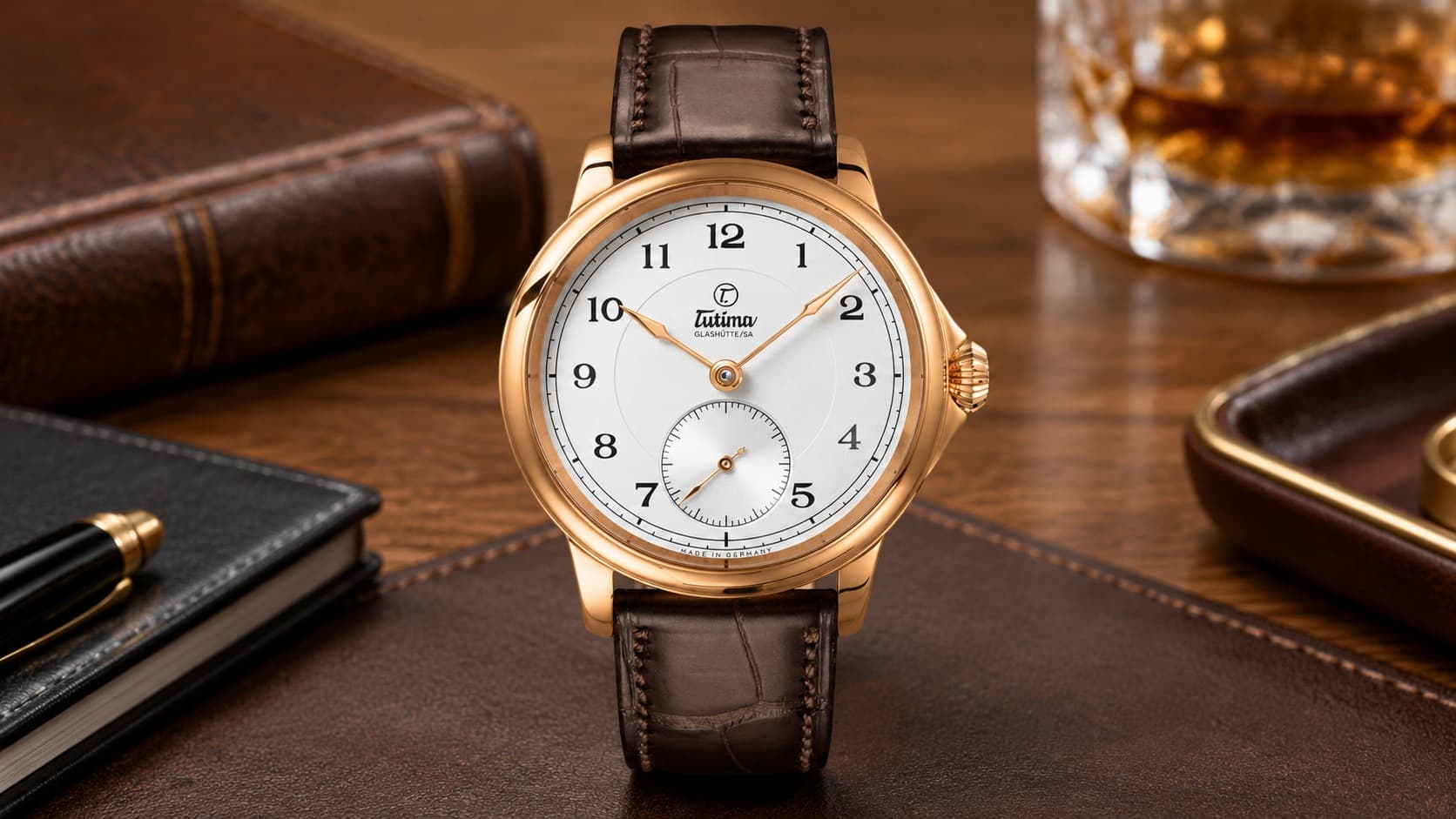
Tutima Patria
The Patria is where Tutima shows what it can do without leaning on Swiss suppliers at all. Every Patria watch runs on an in-house, hand-wound movement developed at the Glashütte manufacture, most commonly the caliber 617 for the simple small-seconds version or the caliber 619 for the dual-time GMT model. Both movements run at 21,600 vibrations per hour, deliver an unusually long 65-hour power reserve, and are finished with an openworked cock and a Breguet hairspring, details normally reserved for far more expensive haute horlogerie brands.
Prices for the Patria collection start around $13,800 to $15,000 for the base small-seconds model and climb from there for gold cases or added complications like the power reserve indicator, which uses an even more complex caliber 618 with 34 extra components. This is the collection to look at if the goal is owning a genuinely in-house German movement rather than a well-finished Swiss one.
Tutima Hommage Minute Repeater
The Hommage sits at the very top of Tutima’s lineup and represents the brand’s biggest technical achievement: the first minute-repeater wristwatch designed, developed, and built entirely in Germany. A minute repeater chimes the time out loud on tiny gongs when the wearer activates a slide on the case, a complication that very few watchmakers in the world attempt because of how difficult it is to get the sound and mechanism right. The watch runs on the hand-wound caliber 800, a 550-part in-house movement with a frosted three-quarter plate and a hand-engraved balance cock, finished entirely at the Glashütte manufacture. Tutima introduced the Hommage in 2011 to mark the brand’s official return to Glashütte, and production was limited to just 25 pieces.
Because so few were made, exact current pricing varies and isn’t something buyers will find listed at a fixed rate the way the Grand Flieger or Saxon One are. It’s best understood as a statement piece that proves Tutima can compete with any Glashütte manufacture on pure watchmaking skill, even if most buyers will never own one.
How Much Do Tutima Watches Cost
| Collection | Starting Price (Approx.) | Movement Type | Case Material |
|---|---|---|---|
| Saxon One | $2,000–$2,200 | Modified automatic | Steel |
| Grand Flieger Automatic | $2,500 | Modified automatic | Steel |
| M2 | $1,500 | Modified or in-house | Titanium |
| Grand Flieger Chronograph | $5,100 | Modified chronometer-certified | Steel |
| Patria | $13,800+ | In-house, hand-wound | Rose gold |
These figures move around with currency exchange rates, dial options, and bracelet versus strap choices, so they serve best as a starting point rather than a fixed price list. The gap between the sport-oriented collections and the Patria line sums up Tutima’s whole catalog: one side pays for durability and design, the other pays for in-house engineering.
What to Know Before You Buy Tutima
Tutima has a dedicated U.S. subsidiary, Tutima USA, based in Torrance, California, which operates separately from the German parent company. This matters for American buyers because it means warranty service and support don’t require shipping a watch overseas to Glashütte, unlike some smaller independent German brands.
Tutima is also a much smaller name than Rolex, Omega, or even Glashütte Original, which affects resale down the line. Original box and papers tend to matter more for a niche brand like this, since there are fewer buyers competing for any given watch and documentation helps prove it’s genuine and complete. Anyone buying secondhand should expect a smaller pool of listings to choose from, and a bit more patience finding the exact reference and condition they want.
Frequently Asked Questions
Is Tutima actually made in Glashütte?
Yes. Tutima was founded in Glashütte in 1927, moved production west after the town was bombed and seized at the end of World War II, and returned home in 2011 when the Delecate family opened a new manufacturing facility there. The brand’s in-house movements and top-tier watches are built at that Glashütte location today.
Is Tutima a luxury watch brand?
Tutima sits in the accessible luxury category for most of its lineup, with entry prices starting around $1,500 to $2,500 for the Saxon One, M2, and Grand Flieger collections. The Patria collection, which uses fully in-house movements, moves into true luxury territory starting around $13,800.
What movement does Tutima use?
It depends on the collection. The Grand Flieger, Saxon One, and most M2 models use modified Swiss base movements from ETA or Valjoux that Tutima finishes and regulates in-house. The Patria collection uses fully in-house calibers, such as the 617 and 619, developed and built entirely at the Glashütte manufacture.
How does Tutima compare to A. Lange & Söhne or Glashütte Original?
Tutima is priced well below both brands for most of its catalog and focuses more on sport and pilot’s watches than formal dress pieces. A. Lange & Söhne and Glashütte Original compete at the very top end of German watchmaking with movements that start in the tens of thousands of dollars, while Tutima offers a more affordable way into Glashütte craftsmanship, with its own in-house Patria line as the exception that competes more directly on pure watchmaking skill.
Why is the Tutima pilot’s watch from 1941 so important?
The 1941 pilot’s chronograph was the first German watch with a flyback function, which let pilots reset the chronograph hand instantly mid-flight instead of stopping, resetting, and restarting it. That watch earned a strong reputation during the war and became the design that Tutima’s modern Grand Flieger collection is still based on today.
The Bottom Line
Tutima’s story is really two stories in one: a tough, military-rooted brand that makes genuinely durable pilot and sport watches at reasonable prices, and a small but serious manufacture capable of building minute repeaters and hand-wound calibers entirely in-house. The Grand Flieger and Saxon One lines are where most buyers should start, since they capture the brand’s history and design language without the price jump of the Patria collection. For anyone who wants proof that Tutima belongs in the same conversation as Glashütte’s bigger names, the Patria and Hommage lines are where that case gets made.