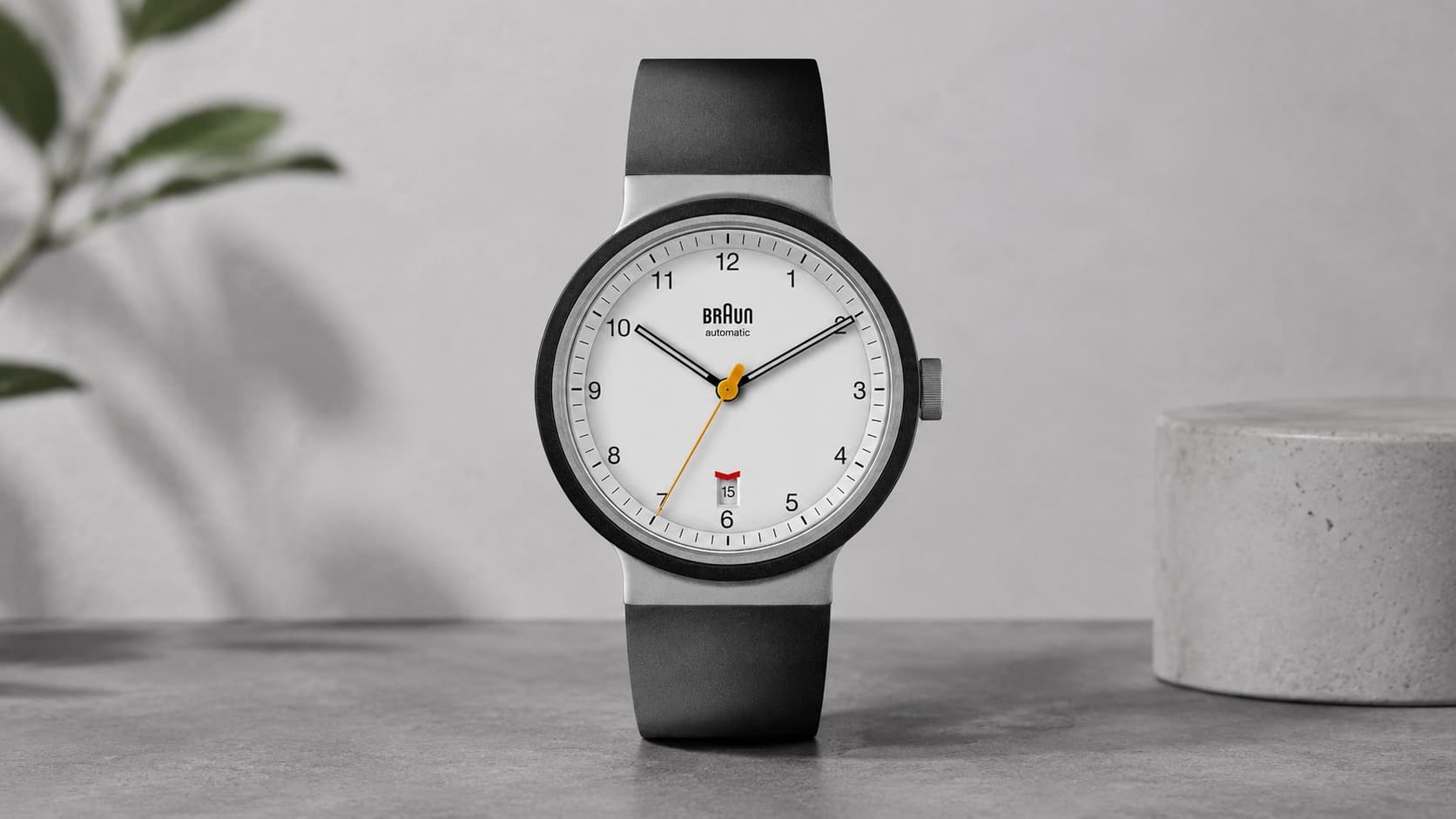
Best Braun Watches: Authentic Affordable Bauhaus Design

Best Braun watches featuring German Bauhaus design, top 10 models, buying tips, pricing $99-$950, and authentic minimalist timepieces with lasting appeal.

We include products we think are useful for our readers. If you buy through links on this page, we may earn a small commission.

Read more

Affiliate Disclosure: This post may contain affiliate links, which means we may receive a commission if you click a link and purchase something that we have recommended. While clicking these links won't cost you any extra money, they help us keep this site up and running. We only recommend products or services that we genuinely believe will add value to our readers. Thank you for supporting us!

Transparency: We are a participant in various affiliate programs, including the Amazon Services LLC Associates Program, an affiliate advertising program designed to provide a means for us to earn fees by linking to Amazon.com and affiliated sites. Our editorial content is not influenced by affiliate partnerships, and we strive to provide honest and unbiased reviews and recommendations.

To learn more about our vetting process, please visit our Affiliate Disclosure Statement

Article Content

Braun watch with black dial featuring signature yellow seconds hand, white numerals, and black leather strap showcasing German minimalist design

Braun watches represent more than timekeeping instruments—they embody a design philosophy that has influenced everything from smartphones to furniture. Born from German engineering precision and Bauhaus principles, these timepieces translate Dieter Rams’ “10 Principles of Good Design” into functional wrist wear that transcends fashion cycles. The brand prioritizes legibility, durability, and timeless appeal over complications or luxury materials, creating daily tools rather than status symbols. Every element from the signature yellow seconds hand to geometric case proportions serves both aesthetic and functional purposes. This article explores the complete Braun watch ecosystem, from vintage collectibles to current models, providing essential information for navigating, purchasing, and maintaining these distinctive German timepieces.

How Braun Started Making Watches

Braun’s journey from electronic appliances to iconic timepieces began with entrepreneurial vision and evolved through design revolution, ultimately creating watches that changed how people think about wrist-worn accessories. The company’s path reveals how consistent philosophy can transform multiple industries.

  • Max Braun established his Frankfurt workshop in 1921, initially focusing on radio components before expanding into consumer electronics as Germany rebuilt after World War I. The small operation gained reputation for reliable products, laying groundwork for future design innovations.
  • Brothers Artur and Erwin Braun inherited the company in 1951 after their father’s death, immediately recognizing that success required more than just functional products—they needed distinctive visual identity. Their decision to prioritize design marked the beginning of Braun’s transformation from manufacturer to cultural influencer.
  • Dieter Rams joined Braun in 1955 as an architect tasked with redesigning the company’s Frankfurt headquarters, but his influence quickly expanded to product development. His appointment as design director in 1961 formalized his role in creating what would become one of the most copied design languages in modern history.
  • The famous “10 Principles of Good Design” emerged from Rams’ work at Braun, establishing criteria that good design should be innovative, useful, aesthetic, understandable, unobtrusive, honest, long-lasting, thorough, environmentally-friendly, and involve as little design as possible. These principles became the foundation for evaluating every Braun product.
  • Dietrich Lubs arrived in 1962 to work alongside Rams, bringing expertise in mechanical systems that perfectly complemented Rams’ architectural background. Their partnership produced the design framework that would later guide Braun’s entry into timekeeping products.
  • The path to watchmaking started unexpectedly in 1971 when Braun executives met clock movement manufacturers during a business flight, leading to discussions about applying Braun’s design approach to timekeeping devices. This conversation resulted in the Analog Digital Phase 1 clock, proving that Braun’s aesthetic could work for time display.
  • Braun’s first wristwatch attempt, the DW 20 from 1977, featured digital display technology in a round case that housed a square LCD screen. While innovative for its time, the design team later acknowledged this as aesthetically problematic because the circular and rectangular elements fought each other visually.
  • The DW 30 launched in 1978 with improved design coherence, featuring a rectangular case that matched the rectangular LCD display inside. This model demonstrated how form and function could align properly, selling approximately 10,000 units and establishing Braun as a legitimate watch brand.
  • Development of the AW 10 analog watch in 1989 came from internal frustration when Lubs complained about cheap promotional watches being given to Braun clients. Rams challenged him to design a proper analog Braun watch, resulting in the model that became the template for all future analog designs.
  • Corporate ownership shifted significantly when Gillette purchased majority control in 1967, seeking to expand beyond razors into consumer electronics. Gillette became sole owner by 1984, providing resources for international expansion while maintaining design independence.
  • Procter & Gamble acquired Braun through their 2005 Gillette purchase, initially continuing watch production before deciding to focus on core personal care products. In 2009, P&G licensed the Braun name for timepieces to Zeon Ltd, a UK-based company specializing in design-focused consumer products.
  • Current production operates under strict licensing agreements requiring approval from the original Braun design team in Kronberg, Germany, for all new models. This arrangement preserves design integrity while allowing Zeon Ltd to handle manufacturing and distribution globally.
  • Modern Braun watches maintain connection to their heritage through continued involvement of original designers, with Dietrich Lubs personally overseeing reissues of classic models like the AW 10. This ensures that contemporary pieces reflect authentic Braun DNA rather than commercial interpretations.

The transformation from radio workshop to globally recognized design brand illustrates how commitment to principles can create lasting influence across multiple product categories. Braun’s watch success stems not from traditional horological expertise, but from applying rigorous design thinking to timekeeping, resulting in pieces that function as both tools and cultural artifacts. The brand’s ability to maintain aesthetic consistency across ownership changes demonstrates the power of well-established design principles.

Braun Watch Design Philosophy

Braun timepieces distinguish themselves through unwavering commitment to functional minimalism rather than luxury materials or mechanical complications. The brand’s uniqueness lies in treating watches as tools first and fashion accessories second, creating designs that remain relevant decades after their initial release.

  • The signature yellow seconds hand traces its origins to Braun’s 1975 AB 20 travel clock, becoming the sole color accent on otherwise monochromatic dials. This yellow element serves dual purposes: providing visual hierarchy for quick time reading and creating brand recognition across the entire product line. The specific shade was chosen for maximum contrast against both white and black dial backgrounds.
  • Typography follows mathematical precision using carefully proportioned numerals that prioritize legibility over decorative appeal. Hour markers utilize simple geometric shapes—dots, lines, or basic numerals—positioned according to golden ratio principles. The typeface selection emphasizes clarity at various lighting conditions rather than stylistic flourishes.
  • Red chevron date indicators appear on models featuring calendar complications, offering functional visibility while maintaining design restraint. The chevron shape was selected because it clearly points to the current date without adding visual noise to the dial layout. This element demonstrates how Braun incorporates necessary functions without compromising aesthetic purity.
  • Case designs follow strict geometric principles with rational shapes that eliminate unnecessary ornamentation. Circular cases feature consistent proportional relationships between diameter, thickness, and lug width. Rectangular models maintain mathematical ratios that create visual harmony while accommodating movement requirements.
  • Dial layouts prioritize information hierarchy through strategic placement of elements and careful spacing relationships. Primary time display receives prominence through size and positioning, while secondary information like date windows are integrated without disrupting the overall composition. Every element serves a specific function rather than existing for decoration.
  • Surface finishes emphasize tactile quality through brushed and matte treatments that reduce reflections and fingerprint visibility. Polished surfaces appear only where they serve functional purposes, such as crystal edges or crown details. This approach creates watches that age gracefully through daily wear.
  • Strap and bracelet designs integrate seamlessly with case architecture through carefully calculated proportions and matching surface treatments. Leather options feature minimal stitching and simple buckles that don’t compete with the watch face for attention. Metal bracelets utilize links that echo the case geometry.
  • Color palettes remain deliberately restricted to black, white, and gray as primary elements, with yellow and red reserved for functional accents. This limitation forces designers to achieve visual interest through proportions and textures rather than color variety. The restrained approach ensures that Braun watches coordinate with any wardrobe choice.
  • Material selection prioritizes durability and aging characteristics over luxury perception. Stainless steel receives preference for its maintenance properties and consistent appearance over time. Ceramic models utilize the material’s scratch resistance and color stability rather than its premium associations.
  • Movement choices focus on reliability and accuracy rather than mechanical complexity or prestige. Japanese and Swiss quartz movements are selected for their proven performance and serviceability. The few automatic models use established calibers known for dependable operation rather than exotic complications.
  • Water resistance ratings remain practical rather than aspirational, with most models rated for daily activities like hand washing and rain exposure. Braun avoids over-engineering water resistance because most users never need diving capabilities, preferring to optimize for everyday durability.
  • Packaging and presentation maintain the same minimalist approach as the watches themselves, using simple materials and geometric layouts. Documentation emphasizes functionality over marketing language, providing clear instructions and technical specifications without promotional excess.
  • Quality control focuses on precision assembly and consistent finishing rather than hand-crafted luxury details. Each watch must meet specific tolerances for case alignment, dial printing, and hand positioning. This industrial approach ensures consistent results across production runs.
  • Design approval processes require consensus from the original Braun design team in Germany, maintaining aesthetic continuity across all new models. Every element from case proportions to packaging design must align with established principles before receiving production approval.

The combination of these elements creates watches that transcend typical fashion cycles because they’re based on functional requirements rather than stylistic trends. Braun’s approach proves that restraint and purpose can produce more lasting appeal than ornamental complexity or luxury positioning. These timepieces succeed by doing less, but doing it significantly better than conventional watch design approaches.

Top 10 Best Braun Watches

The current Braun collection showcases design consistency across diverse price points and complications, with each model reflecting the brand’s core philosophy while serving different user needs. These ten watches represent the essential range from entry-level classics to premium complications.

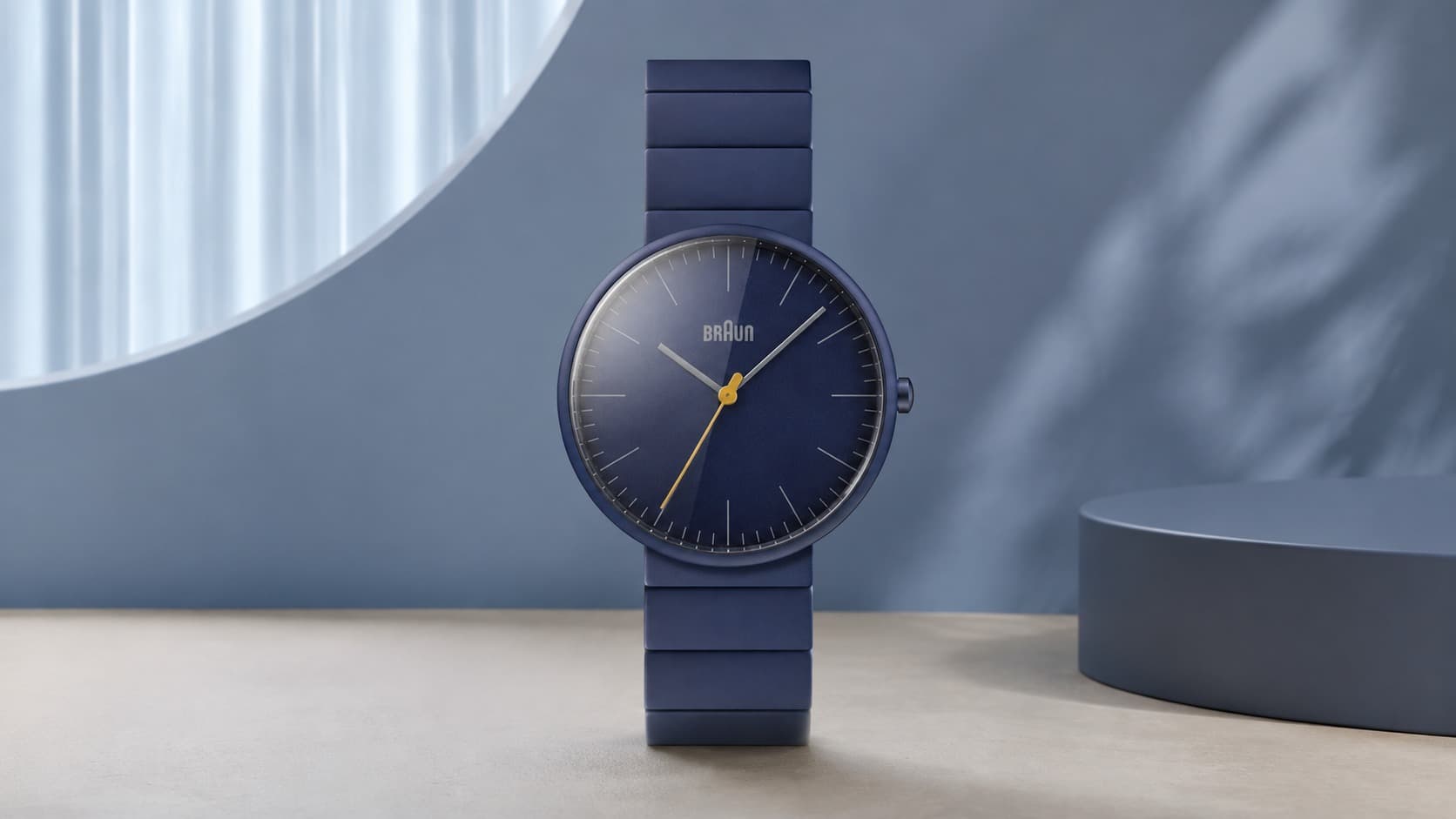
  • BN0021 serves as the perfect entry point into Braun’s design world, featuring a 38mm case that suits most wrist sizes without overwhelming smaller arms. The watch utilizes a reliable Japanese quartz movement with 5 ATM water resistance for daily shower and rain protection. Available in white dial with brown leather strap or black dial with black leather configuration, both versions maintain the clean aesthetic that defines the brand. The 22mm strap width allows for easy replacement, while mineral crystal provides scratch resistance for everyday wear. Pricing typically ranges $99-120, making this the most accessible authentic Braun timepiece.
  • BN0032 represents Braun’s most popular model, combining 40mm contemporary sizing with versatile strap options including stainless steel Milanese mesh or genuine leather bands. The three-hand date configuration uses a Swiss Ronda movement for enhanced accuracy and longer battery life compared to standard quartz calibers. Water resistance reaches 50 meters, suitable for swimming and water sports. The mesh bracelet variant offers sophisticated appearance while the leather versions provide classic appeal. Market pricing sits around $200-250 depending on strap selection and retailer.
  • AW10 carries special significance as a direct reissue of the 1989 original design, maintaining authentic proportions with a compact 33mm case that reflects vintage sizing preferences. German assembly preserves the heritage connection while Swiss three-hand quartz movement ensures reliable timekeeping. The 3 ATM water resistance rating limits exposure to light rain and hand washing but prevents swimming activities. Leather strap options include black or brown configurations with signed buckles. Current pricing approaches $300, reflecting the premium positioning and limited production numbers.
  • BN0142 introduces dual-time functionality through GMT complication while maintaining visual simplicity characteristic of Braun design. The rectangular case echoes the iconic AW24 inspiration with contemporary 5 ATM water resistance for enhanced practicality. Swiss Ronda movement powers both local and home time displays without cluttering the dial layout. Strap options span multiple leather colors including blue, brown, and black variations. Pricing ranges $235-250 across different configurations and retailers.
  • BN0159 breaks new ground as Braun’s first dual analog-digital combination, featuring traditional hands alongside LCD display for enhanced functionality. The design incorporates day, date, alarm, chronograph, and electroluminescent backlight capabilities within a cohesive aesthetic framework. Specially designed rubber strap complements the technical features while maintaining comfort during extended wear. This model represents Braun’s approach to modern smartwatch alternatives without sacrificing design principles.
  • BN0171 showcases advanced ceramic construction in both case and bracelet, offering superior scratch resistance and color stability compared to metal alternatives. Available in classic black or contemporary stone beige, both versions utilize full ceramic integration for seamless appearance. The 3 ATM water resistance reflects ceramic construction limitations while Miyota 2035 movement provides reliable timekeeping. Pricing reaches $440, positioning this as a premium design statement that emphasizes material innovation over mechanical complexity.
  • BN0035 brings chronograph functionality to the collection through clean three-register layout that maintains dial legibility despite added complications. Swiss quartz movement ensures precise timing measurement while 50-meter water resistance supports active lifestyles. Multiple colorway options allow personal preference expression within Braun’s restrained palette. The chronograph pushers utilize signed design that integrates with overall case architecture rather than appearing as afterthoughts.
  • BN0095 represents the pinnacle of Braun’s Prestige line, carved from single steel blocks rather than assembled from separate components. This construction method eliminates traditional case backs, creating unique structural integrity and visual cleanliness. Swiss quartz chronograph movement features sapphire crystal protection and choice between stainless steel bracelet or rubber strap configurations. The manufacturing complexity justifies premium positioning within the collection.
  • BN0265 combines award-winning design recognition with innovative meca-quartz movement technology that delivers mechanical chronograph feel through quartz accuracy. Winner of both iF Design Award 2019 and Red Dot Design Award 2020, this model features concave dial construction with double-domed lens for enhanced depth perception. The movement hybrid approach satisfies users wanting tactile feedback without mechanical maintenance requirements.
  • BN0106 demonstrates Braun’s digital expertise through premium LED-backlit LCD screen controlled by innovative EasySkroll wheel system. K1 mineral crystal protects the display while maintaining excellent visibility across varying light conditions. Winner of 2012 Red Dot Design Award, this model appeals to users preferring digital time display with enhanced functionality. The digital approach allows for multiple time zones, alarms, and timing functions within Braun’s clean visual framework.

Each model maintains connection to Braun’s design DNA while serving specific user preferences and price points. The collection demonstrates how consistent principles can adapt to different complications and materials without losing aesthetic coherence. From the accessible BN0021 to the premium BN0106, every watch reflects the same commitment to functional beauty that has defined Braun since the 1950s.

What to Consider When Buying Braun Watches

Selecting the right Braun watch requires evaluating multiple factors beyond aesthetic appeal, as the brand’s diverse manufacturing tiers and technical specifications significantly impact long-term satisfaction and ownership experience. Smart purchasing decisions balance design preferences with practical requirements.

  • Movement types span three distinct categories within the current collection, each offering different benefits and maintenance requirements. Japanese Miyota 2035 movements power most entry-level and ceramic models, providing 3-5 year battery life with monthly accuracy of ±15 seconds. Swiss Ronda 714/715 calibers appear in German-assembled heritage models like the AW10, offering extended 10-year battery capacity and enhanced precision. Limited automatic options include Swiss ETA 2892A2 movements in premium models, featuring 40-47 hour power reserves and 28,800 vibrations per hour for smooth seconds hand motion.
  • Water resistance ratings remain deliberately modest across the entire collection due to snap-back case construction limitations that prioritize design over diving capabilities. Most models offer 3 ATM (30 meters) protection suitable for rain exposure and hand washing but not swimming or showering. Select models like BN0032 and BN0035 provide 5 ATM (50 meters) rating appropriate for swimming and water sports. No Braun watches offer diving-grade water resistance, reflecting the brand’s focus on daily utility rather than extreme sports applications.
  • Size considerations accommodate different wrist preferences through carefully planned proportions that maintain design integrity across dimensions. Vintage-inspired models like AW10 and AW50 feature compact 33mm cases reflecting 1980s sizing standards that suit smaller wrists but may appear dated to contemporary preferences. Modern 38mm options like BN0021 and BN0171 provide balanced proportions for most users without overwhelming feminine wrists. Contemporary 40mm sizing in BN0032 and GMT models meets current market expectations while 43mm chronographs offer substantial presence for larger wrists.
  • Strap compatibility varies significantly between models, with some offering interchangeable options while others feature integrated designs that limit customization. Standard models use 20mm or 22mm strap widths compatible with aftermarket replacements, though genuine Braun straps maintain proper proportional relationships with case designs. Ceramic models typically feature integrated bracelets that cannot be replaced with alternative materials. Mesh bracelet variants offer sophisticated appearance but may require professional adjustment for proper fit.
  • Manufacturing quality tiers create important distinctions in finishing, assembly precision, and long-term durability that justify significant price differences. German-assembled models like heritage reissues demonstrate superior dial printing, hand alignment, and case finishing compared to entry-level Chinese production. Swiss movement models maintain higher accuracy standards and enhanced serviceability. Premium Prestige line pieces show exceptional manufacturing quality through single-block case construction and sapphire crystal protection.
  • Authentication challenges require careful verification due to widespread counterfeiting and gray market distribution that can compromise warranty coverage and resale value. Genuine models include specific packaging with consistent typography, proper serial number placement, and documentation quality that counterfeit versions cannot replicate accurately. Authorized dealer purchases provide warranty registration and customer service access while gray market sources may offer legitimate products without support coverage.
  • Budget planning should account for total ownership costs beyond initial purchase price, including potential strap replacements, battery changes, and service requirements over typical 5-10 year ownership periods. Entry-level models around $100-200 offer excellent design value but may require more frequent service. Premium models approaching $500-1000 justify higher initial investment through enhanced durability and movement quality that reduces long-term maintenance costs.
  • Design longevity represents Braun’s primary strength, as the minimalist aesthetic transcends fashion trends that quickly date other watch brands. Classic models like BN0032 and AW10 maintain relevance across decades due to functional design principles rather than stylistic elements. Buyers can purchase confidently knowing that Braun watches will remain visually current regardless of changing fashion preferences.
  • Functionality requirements should align with actual usage patterns rather than aspirational features that add complexity without practical benefit. Simple three-hand models suit users prioritizing clean aesthetics and reliable timekeeping. GMT complications serve frequent travelers while chronographs appeal to users timing activities regularly. Digital models offer enhanced functionality for users preferring multiple alarms, time zones, and timing functions.
  • Resale considerations reflect limited secondary market demand that makes Braun watches poor financial investments despite strong design credentials. Most models depreciate significantly from retail pricing, though rare vintage pieces from the 1970s maintain collector interest. Buyers should prioritize personal satisfaction over potential resale value when selecting models.
  • Service availability varies considerably based on location and model complexity, with basic battery replacement widely available while movement repairs may require factory service. Authorized service centers provide proper parts and expertise but may have limited geographic coverage. Independent watchmakers can handle routine maintenance but may lack specific Braun knowledge for complex repairs.
  • Personal style compatibility requires honest assessment of daily wardrobe and lifestyle preferences, as Braun’s minimalist aesthetic works best with similarly restrained clothing choices. The clean design complements business casual and contemporary styles while potentially clashing with ornate or traditional fashion preferences. Color-restricted palette limits coordination options compared to more decorative watch brands.

Successful Braun watch ownership depends on appreciating the brand’s design philosophy while accepting practical limitations in water resistance, complications, and investment potential. The purchasing decision should prioritize long-term satisfaction with the aesthetic and functional qualities that make these timepieces distinctive.

Best Places to Buy Braun Watches

Braun watch with white dial and brown leather strap displaying yellow seconds hand and numbered markers in authentic Bauhaus style

Purchasing authentic Braun watches requires careful navigation due to the brand’s complex ownership structure and widespread counterfeiting, making dealer verification essential for warranty coverage and genuine products. The market offers multiple legitimate channels alongside questionable sources that require careful evaluation.

  • braun-clocks.com operates as the primary official website globally, managed by Zeon Ltd under Procter & Gamble licensing agreements. The site offers complete model availability with detailed specifications, warranty registration, and direct customer service support. Regional versions include us.braun-clocks.com for American customers and separate European portals for local currency and shipping options. New subscriber promotions frequently offer 25% discount vouchers, making official purchase competitively priced against unauthorized dealers.
  • AMEICO serves as the official United States distributor, providing warranty service and authorized dealer network coordination across North America. Their website maintains current inventory with competitive pricing and frequently runs promotional campaigns. Customer service includes technical support and repair coordination through their network of certified service centers. AMEICO also supplies authorized retailers throughout the US with genuine products and proper documentation.
  • Authorized watch retailers in the UK and Europe maintain comprehensive selections with established reputations for authentic luxury timepieces. These dealers include detailed product descriptions, high-quality imagery, and customer reviews from verified purchases. Many offer international shipping with proper customs documentation and provide warranty registration assistance for overseas customers.
  • Specialty watch stores maintain multiple Braun models in current inventory with competitive pricing and frequent sale events. Their product pages include detailed specifications, multiple viewing angles, and customer service support for technical questions. These retailers offer both domestic and international shipping with tracking and insurance options for valuable purchases.
  • Regional European dealers include established watch retailers that maintain authorized dealer agreements with proper warranty support. These dealers often provide better customer service and product knowledge compared to general electronics retailers. Pricing remains competitive with official channels while offering local language support and faster shipping within Europe.
  • Major online marketplaces present mixed authenticity risks despite carrying legitimate Braun inventory from authorized sellers alongside questionable third-party vendors. Genuine products typically show clear seller designation with proper warranty documentation included. Pricing ranges dramatically with frequent “limited stock” indicators suggesting supply chain challenges or artificial scarcity marketing.
  • Boutique design stores sometimes carry Braun watches as part of curated collections focusing on German design heritage or Bauhaus aesthetics. These retailers typically offer excellent product knowledge and can provide context about Braun’s design significance alongside other related products. Inventory may be limited to popular models but pricing often matches official channels.
  • Department stores occasionally stock Braun watches in their watch sections, though selection tends toward entry-level models rather than premium or limited editions. Major retail chains may carry basic inventory with standard return policies but limited technical support compared to specialized watch dealers.
  • Gray market dealers offer genuine Braun watches without authorized dealer status, often at discounted prices but without warranty coverage or customer support. These sources may sell legitimate products obtained through parallel import channels but cannot provide official service or warranty claims. Buyers should verify authenticity carefully and accept responsibility for future service needs.
  • Secondary market platforms contain both authentic vintage models and current production pieces alongside counterfeit products requiring careful evaluation. Vintage 1970s digital models command premium prices when authentic, while current models typically sell below retail pricing due to limited collector interest. Buyer protection policies vary significantly across platforms.
  • Counterfeit indicators include suspiciously low pricing, unclear product photography, sellers without established reputation, missing serial numbers, poor packaging quality, and lack of proper documentation. Authentic Braun watches include specific packaging, warranty cards, and instruction manuals with consistent typography and printing quality.
  • Authentication verification requires checking serial numbers against manufacturer databases, confirming proper packaging and documentation, evaluating build quality and finishing consistency, and verifying seller authorization status through official channels. When purchasing expensive models, third-party authentication services can provide additional security for high-value transactions.
  • Warranty considerations apply only to purchases from authorized dealers with proper documentation and registration procedures completed within specified timeframes. Gray market purchases typically void warranty coverage while counterfeit products offer no protection or service options whatsoever. Official warranty terms typically cover manufacturing defects for two years from purchase date.
  • Price comparison strategies involve checking multiple authorized dealers for promotional pricing while avoiding suspiciously low offers that suggest counterfeit products. Seasonal sales events often provide legitimate discounts from authorized sources without compromising warranty coverage or authenticity guarantees.

The fragmented retail landscape reflects Braun’s transition from major brand to licensed operation, creating opportunities for both legitimate savings and fraudulent exploitation. Buyers benefit from researching seller reputation, comparing prices across multiple sources, and prioritizing warranty coverage over minimal savings from questionable dealers.

Do Braun Watches Hold Their Value?

Braun watches operate in a completely different market segment from luxury timepieces, functioning as design collectibles rather than appreciating assets that require realistic expectations about financial performance. The secondary market reflects their positioning as accessible design objects rather than investment vehicles.

  • Vintage market performance shows genuine appreciation only for extremely rare 1970s digital models, particularly the DW20 from 1977 and DW30 from 1978 that originally retailed for 340-510 Deutsche Marks. These pioneering LED watches now command €500-600 in excellent condition, representing significant percentage gains but modest absolute values compared to luxury watch appreciation. The ultra-rare black DW30 variants with approximately 100 pieces produced represent the most collectible Braun timepieces ever made.
  • Production rarity factors support vintage values through documented scarcity, with total DW20/DW30 combined production estimated around 10,000 pieces across both models. The limited quantities resulted from high manufacturing costs and niche market appeal during the late 1970s when digital watches competed against established mechanical traditions. Museum recognition through MoMA collections adds cultural significance that supports collector interest beyond pure market dynamics.
  • Contemporary model depreciation reveals poor value retention across all current production pieces, with popular models like BN0032 selling for $80-100 on secondary markets despite $200-250 retail pricing. Limited edition releases like BN0278 appear at $180 compared to original $400+ pricing, while even premium ceramic models show substantial markdowns. The rapid depreciation reflects fashion watch category dynamics rather than luxury timepiece market behavior.
  • Comparative luxury performance demonstrates the investment gap between Braun and traditional high-end brands, with established manufacturers showing strong appreciation trends over 2019-2024 periods. Audemars Piguet gained 64.85%, Vacheron Constantin rose 52.27%, Cartier increased 39.06%, and even Rolex appreciated 27.59% during the same timeframe when Braun models declined significantly from retail pricing.
  • Market infrastructure limitations prevent efficient price discovery and liquidity that investment-grade watches require for stable appreciation. No specialized dealers focus exclusively on Braun watches, auction houses rarely feature modern pieces, and price tracking databases ignore the brand entirely. The lack of market infrastructure means buyers and sellers struggle to establish fair values for transactions.
  • Collector base analysis reveals a small enthusiast community focused on design heritage rather than investment potential, with most interest concentrated among industrial design professionals and Bauhaus architecture fans. The narrow collector focus limits demand expansion while the academic rather than commercial interest prevents speculative pricing that drives luxury watch appreciation.
  • Design watch category positioning places Braun alongside Scandinavian brands like Skagen, Georg Jensen, and Nordgreen in the $75-500 price range where design aesthetics matter more than investment potential. This category emphasizes accessibility and functional beauty over exclusivity and artificial scarcity that support luxury market pricing dynamics.
  • Limited edition performance shows disappointing results even for numbered pieces with restricted production runs, as recent collaborations with Hodinkee and Paul Smith fail to maintain retail pricing on secondary markets. The 150-piece standard runs and 100-piece collaboration editions create artificial scarcity without corresponding demand to support premium valuations.
  • Authentication complications reduce secondary market confidence through widespread counterfeiting and complex ownership history that makes verification challenging for average buyers. The transition from German production to Chinese manufacturing under UK licensing creates confusion about authenticity and quality standards that affects resale demand negatively.
  • Regional market variations show stronger vintage interest in European markets where Braun’s design heritage receives greater recognition, while American secondary markets focus primarily on contemporary pieces with limited collector premium. Japanese markets demonstrate appreciation for 1970s digital models but insufficient volume to establish consistent pricing trends.
  • Condition sensitivity significantly impacts values for vintage pieces, with original packaging, documentation, and functioning displays commanding substantial premiums over worn examples. The electronic components in 1970s models often fail after decades, making fully operational pieces increasingly rare and valuable to collectors willing to pay for restoration services.
  • Professional assessment from multiple watch industry experts consistently advises against purchasing Braun watches for investment purposes, citing limited liquidity, modest absolute values, unclear price discovery mechanisms, and small collector base as fundamental barriers to appreciation. The consensus recommendation focuses on design appreciation and personal enjoyment rather than financial returns.
  • Exception opportunities exist exclusively for pristine vintage 1970s models with complete documentation, particularly the ultra-rare black DW30 variants that represent genuine scarcity in the design collectibles market. These pieces appeal to serious industrial design collectors willing to pay premiums for historically significant examples of early digital watch development.
  • Future outlook suggests continued weak performance for contemporary models due to licensing arrangement uncertainties, manufacturing quality variations, and limited brand awareness outside design communities. Vintage pieces may maintain current valuations through scarcity but lack catalysts for significant appreciation without broader collector interest expansion.

The investment analysis clearly positions Braun watches as design purchases rather than financial vehicles, with buying decisions based on aesthetic appreciation and personal satisfaction rather than return expectations. The brand’s strength lies in offering authentic design heritage at accessible prices, not in providing investment opportunities for portfolio diversification.

Braun Watch Service and Care

Proper maintenance of Braun watches requires adapting care routines to their diverse materials and construction methods, with specific attention to preserving the clean aesthetic that defines the brand’s appeal. Regular maintenance extends functionality while protecting the minimalist design elements that make these timepieces distinctive.

  • Battery replacement schedules vary significantly between movement types, with most Japanese Miyota 2035 calibers requiring replacement every 2-4 years under normal usage conditions. Swiss Ronda movements in heritage models like the AW10 can achieve 7-10 year battery life due to more efficient power management systems. End-of-life warning signs include second hand jumping in 4-second intervals on some models or complete timekeeping stoppage in others. Professional replacement maintains water resistance integrity and prevents potential damage from battery leakage.
  • Water resistance maintenance demands careful attention since most Braun watches offer limited protection that degrades over time through seal deterioration and crystal loosening. Models rated 3 ATM should never be exposed to swimming, showering, or submersion despite their water resistance claims. The 30-meter rating represents static pressure testing that doesn’t account for dynamic forces from arm movement during water activities. Annual pressure testing ensures continued protection against moisture infiltration.
  • Leather strap care requires specific techniques to preserve appearance and prevent premature cracking that compromises the clean aesthetic. Remove straps before any water exposure since leather deteriorates rapidly when wet and dried repeatedly. Clean with slightly damp cloth using minimal soap, avoiding soaking that causes color bleeding and texture changes. Apply leather conditioner quarterly to maintain flexibility, but avoid products containing oils that darken natural leather colors permanently.
  • Metal bracelet maintenance involves regular cleaning to remove skin oils, soap residue, and environmental contaminants that dull the brushed finishes characteristic of Braun designs. Use soft brush with warm soapy water to clean between links, followed by thorough rinsing and complete drying with soft cloth. Ultrasonic cleaning works well for deeply embedded dirt but requires professional equipment to avoid damage to electronic components or water resistance seals.
  • Ceramic component care offers advantages through superior scratch resistance and chemical stability, but requires caution during impacts that can cause chipping or cracking. Clean ceramic cases and bracelets with any household cleaners since the material resists chemical damage and staining. Avoid dropping ceramic watches on hard surfaces as the material exhibits brittleness despite excellent wear resistance. Professional repair of ceramic damage typically requires complete component replacement rather than refinishing.
  • Crystal protection varies between mineral glass on standard models and sapphire crystal on premium pieces, each requiring different maintenance approaches. Mineral crystals scratch more easily but can be polished to remove minor damage using specialized compounds. Sapphire crystals resist scratching from normal wear but chip along edges when impacted, requiring professional replacement rather than repair. Clean all crystals with microfiber cloth to avoid introducing scratches during routine maintenance.
  • Movement service intervals depend on usage patterns and environmental exposure, with quartz movements requiring minimal intervention beyond battery replacement every few years. Automatic models need professional service every 3-5 years including cleaning, lubrication, and regulation to maintain accuracy standards. Chronograph complications require more frequent attention due to additional moving parts that accumulate wear over time. Factory service ensures proper parts availability and expertise specific to Braun movements.
  • Storage recommendations include keeping watches in consistent temperature environments away from magnetic fields that can affect electronic movements. Drawer storage works well for daily rotation pieces while watch boxes provide protection for occasional wear models. Avoid storing in bathrooms or other high-humidity areas that promote condensation inside cases. Remove batteries during extended storage periods to prevent leakage damage to movement components.
  • Professional service options include authorized service centers accessible through braun-clocks.com customer service for warranty work and complex repairs requiring factory parts. Independent watchmakers can handle routine maintenance like battery replacement and strap changes but may lack specific Braun expertise for movement repairs. Specialized vintage watch services understand 1970s digital models that require unique repair knowledge and obsolete components.
  • Cleaning frequency should match usage patterns, with daily wear pieces benefiting from weekly basic cleaning while occasional wear models need only monthly attention. Remove accumulated debris from case joints and crown areas using soft brush and minimal moisture. Avoid harsh chemicals including alcohol-based cleaners that can damage printed dial markings or discolor rubber components.
  • Common damage prevention focuses on avoiding impacts to vulnerable areas like crowns, crystals, and bracelet links that concentrate stress during normal wear. Remove watches before physical activities that involve repeated impacts or exposure to chemicals. Store separately to prevent scratching between multiple timepieces, particularly when ceramic models contact metal pieces.
  • Warranty service procedures require retaining purchase documentation and registering products within specified timeframes through authorized dealers. Warranty coverage typically includes movement defects and manufacturing flaws but excludes damage from normal wear, water exposure beyond rated limits, or unauthorized repairs. Keep original packaging for warranty service shipments that require secure protection during transit.
  • DIY maintenance limitations should respect the complexity of modern watch construction, with battery replacement representing the maximum recommended home service for most users. Crown and stem adjustments require specialized tools and expertise that inexperienced users often damage permanently. Attempt only external cleaning and strap changes while leaving internal work to qualified professionals.

Successful long-term ownership depends on balancing regular care with realistic expectations about maintenance requirements and costs. The minimalist design philosophy extends to maintenance needs, with simple care routines preserving both function and appearance better than complex procedures that risk introducing damage.

Frequently Asked Questions About Braun Watches

Common questions about Braun watches reflect both the brand’s unique positioning and the confusion surrounding ownership changes, manufacturing locations, and design philosophy that differs from traditional watchmaking approaches.

  • Are Braun watches worth the money? Braun timepieces deliver excellent value for buyers prioritizing design heritage and minimalist aesthetics over luxury materials or mechanical complications. The $99-950 price range provides authentic Bauhaus design principles at accessible costs compared to luxury alternatives. Quality varies significantly across manufacturing tiers, with German-assembled heritage models justifying premium pricing while entry-level Chinese production offers basic functionality at competitive rates. Purchase decisions should focus on design appreciation rather than investment potential or luxury status.
  • How long do Braun watch batteries last? Battery life depends heavily on movement type and usage patterns, with most Japanese Miyota 2035 calibers providing 2-4 years of operation under normal conditions. Swiss Ronda movements in premium models can achieve 7-10 years due to superior power management systems. Chronograph functions significantly reduce battery life when used frequently, while basic three-hand models maximize longevity. End-of-life indicators include second hand jumping in 4-second intervals or complete stoppage requiring immediate replacement.
  • Are Braun watches waterproof? No Braun watches are truly waterproof, with most models offering limited water resistance suitable for daily activities rather than swimming or water sports. Standard 3 ATM rating protects against rain and hand washing but not showering or submersion. Select models like BN0032 provide 5 ATM protection appropriate for swimming but not diving. The snap-back case construction prioritizes design aesthetics over maximum water resistance, requiring careful attention to exposure limits.
  • Where are Braun watches made? Current production occurs across multiple locations depending on model tier and complexity. Entry-level models are manufactured in China under Zeon Ltd supervision with quality control varying between production runs. Heritage models like AW10 maintain German assembly for authenticity and superior finishing. Premium automatic pieces use Swiss movements with final assembly in various locations. All designs require approval from the original Braun design team in Kronberg, Germany, regardless of manufacturing location.
  • What warranty comes with Braun watches? Authorized dealer purchases include 2-year international warranty covering manufacturing defects and movement failures but excluding damage from normal wear, water exposure beyond rated limits, or unauthorized repairs. Warranty registration must occur within 30 days of purchase through official channels with proper documentation. Gray market purchases typically void warranty coverage while counterfeit products offer no protection. Service requires returning watches to authorized repair centers with original packaging and documentation.
  • How do I authenticate a Braun watch? Genuine Braun watches include specific packaging with consistent typography and printing quality that counterfeit versions cannot replicate accurately. Serial numbers appear in designated locations with proper font and spacing characteristics. Authorized dealer purchases provide warranty cards and instruction manuals with correct language and formatting. Build quality shows consistent case finishing, proper dial printing alignment, and smooth crown operation. Suspiciously low pricing often indicates counterfeit products requiring careful verification.
  • Can I replace the strap myself? Most Braun watches use standard spring bar systems allowing easy strap replacement with basic tools, though some ceramic models feature integrated bracelets that cannot be changed. Standard 20mm and 22mm widths accommodate aftermarket options, but genuine Braun straps maintain proper proportional relationships with case designs. Quick-release systems on newer models eliminate tools entirely for strap changes. Ceramic and mesh bracelet adjustments typically require professional service due to specialized link removal procedures.
  • Are vintage Braun watches reliable? 1970s digital models like DW20 and DW30 suffer from electronic component aging that often causes display failures requiring specialized repair services. Analog models from the 1980s onward generally maintain reliable operation with proper maintenance and battery replacement. Original movements may need service after decades of use, but basic functionality usually continues with appropriate care. Restoration services exist for valuable vintage pieces, though costs often exceed current market values except for ultra-rare variants.
  • Do Braun watches hold their value? Contemporary Braun watches depreciate significantly from retail pricing due to limited collector interest and secondary market infrastructure. Most current models sell for 40-60% of original pricing within 2-3 years of purchase. Only vintage 1970s digital models show appreciation potential, particularly ultra-rare black DW30 variants with documented provenance. Purchase decisions should prioritize personal satisfaction over investment considerations since resale values remain consistently disappointing.
  • What makes Braun different from other watch brands? Braun applies industrial design principles to timekeeping rather than traditional horological approaches, creating tools that prioritize function over ornamentation. The brand maintains consistency across all products through Dieter Rams’ “10 Principles of Good Design” that emphasize clarity, simplicity, and honest construction. Unlike luxury brands focusing on craftsmanship or fashion brands chasing trends, Braun creates timeless designs based on functional requirements that transcend style cycles.
  • Can I swim with my Braun watch? Only models rated 5 ATM or higher are suitable for swimming activities, including BN0032 and select chronograph models. Standard 3 ATM pieces like AW10 and BN0171 should avoid all water submersion including showers and swimming pools. Water resistance degrades over time through seal deterioration requiring annual testing for active users. Dynamic pressure from arm movement during swimming exceeds static test conditions, making conservative interpretation of ratings essential for protection.
  • How often should I service my Braun watch? Quartz models require minimal service beyond battery replacement every 2-4 years and occasional cleaning to maintain appearance. Automatic pieces need professional service every 3-5 years including movement cleaning, lubrication, and regulation for optimal performance. Chronograph complications require more frequent attention due to additional moving parts that accumulate wear. Annual water resistance testing provides protection assurance for active users while basic cleaning maintains aesthetic appeal.

These frequently asked questions reflect the practical concerns of potential buyers navigating Braun’s unique market position between design objects and functional timepieces. The answers emphasize realistic expectations about performance, value, and maintenance requirements that ensure satisfactory ownership experiences.

Conclusion

Braun watches occupy a distinctive niche in the timepiece market by successfully translating Bauhaus design principles into accessible, functional accessories that prioritize clarity over complexity. The brand’s journey from 1970s innovation to current licensed production demonstrates how consistent design philosophy can maintain relevance across decades of ownership changes and manufacturing shifts. While not luxury timepieces in the traditional sense, these watches offer authentic design heritage at democratic price points, making influential industrial design available to anyone who appreciates functional beauty over ornamental excess.

The purchasing decision requires balancing design appreciation with practical considerations including manufacturing quality tiers, limited water resistance, and modest investment potential. Entry-level models provide genuine Braun aesthetic at accessible pricing, while premium pieces justify higher costs through superior materials and construction. The brand succeeds by doing less but doing it significantly better than conventional approaches, creating timepieces that age gracefully and remain visually current regardless of changing fashion trends.

For buyers seeking minimalist design values rooted in German engineering tradition, Braun watches deliver exactly what they promise—honest, functional timepieces that serve as daily tools rather than status symbols. The collection proves that when design principles are truly timeless, they transcend both manufacturing locations and corporate ownership to remain perpetually relevant. These watches represent one of the few authentic pathways to owning a piece of design history that continues to influence everything from smartphones to architecture, making them valuable cultural artifacts disguised as practical accessories.

Nobbier logo

Subscribe To Our Weekly Newsletter

Get notified about new articles