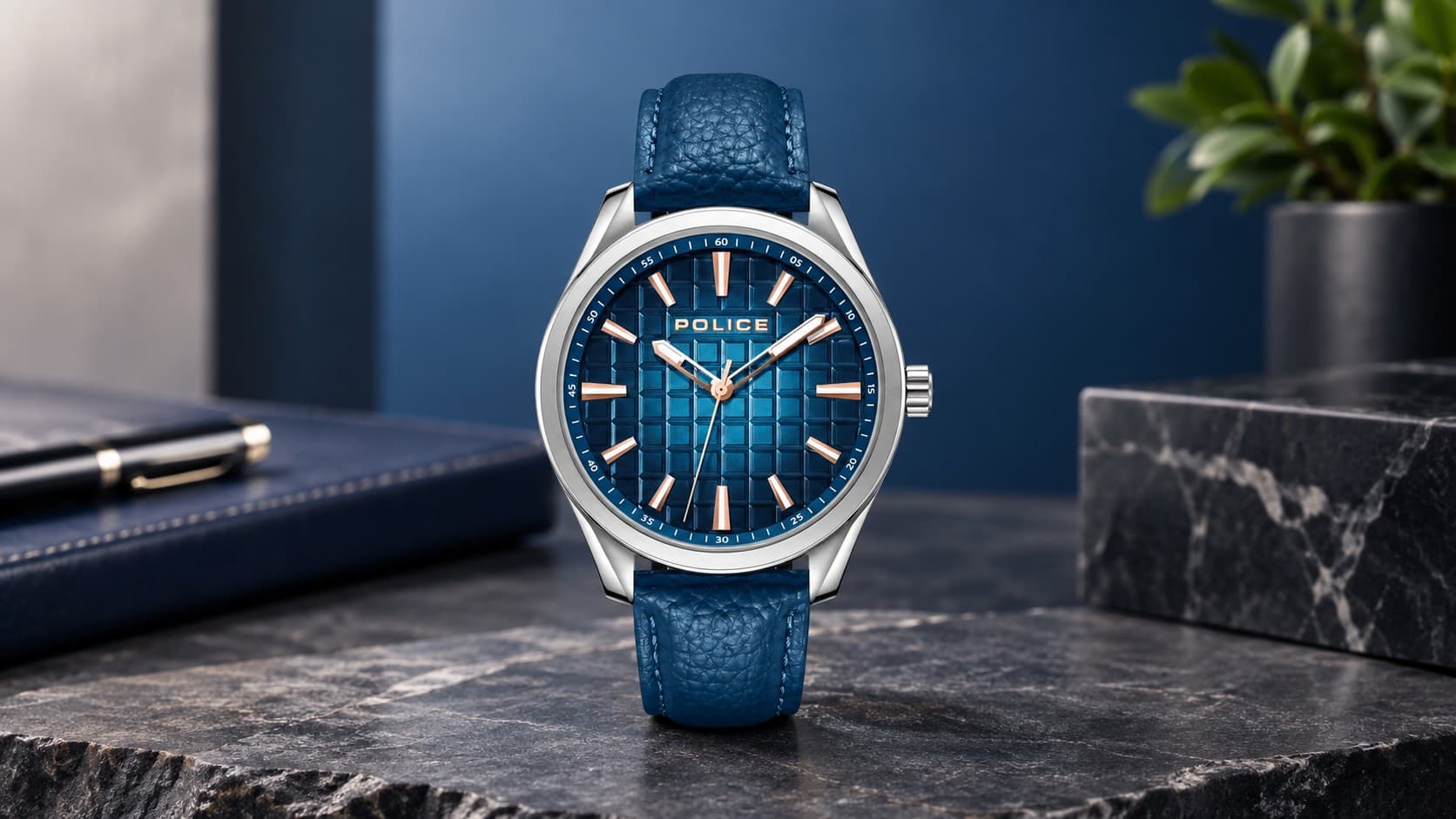
Police is one of the most recognizable fashion watch brands in the world, known for oversized cases, dark dials, and a rebellious streak that borrows its attitude from law enforcement without any actual connection to it. The brand started as a sunglasses manufacturer in Italy and only later grew into watches, jewelry, and perfume. For anyone shopping for a bold, budget-friendly watch that stands out on the wrist, understanding what Police actually offers — and what it doesn’t — makes the difference between a happy purchase and a disappointing one.
Who Makes Police Watches?
Police is an Italian fashion accessories brand, not a traditional watchmaker, and it belongs to the De Rigo Group. It was launched in 1983 by the De Rigo brothers as the first brand of their company Charme Lunettes, which initially specialized in manufacturing sunglasses for third parties. Today, the Police brand operates as a business unit within the De Rigo group of brands and companies, a group that also manufactures eyewear for several other fashion houses.
That eyewear background matters. Charme Lunettes, the company behind Police, was founded in Limana, in the Belluno province of Italy, a region long associated with Italian eyewear manufacturing. Because Police grew out of a sunglasses business rather than a watch workshop, its watches share the same design philosophy as its glasses: big, expressive, and built to be noticed rather than to compete with Swiss horology.
The History of Police Watches
Police didn’t sell a single watch for its first two decades. The brand built its identity entirely around eyewear before expanding, step by step, into a full lifestyle label. The rollout followed a clear order: sunglasses in 1983, perfumes in 1997, watches in 2003, jewelry in 2005, small leather goods in 2011, and apparel arriving last.
The name itself carries a message. Police chose a word associated with authority and law enforcement to represent freedom, confidence, and individuality instead, positioning the brand as something worn by people who set their own rules rather than follow trends. That framing has nothing to do with an actual partnership with police departments or law enforcement organizations anywhere in the world — it’s purely a branding choice built around what the word suggests.
Marketing played a huge role in building that image once watches joined the lineup. Over the years, Police has run campaigns fronted by celebrities including David Beckham, George Clooney, Bruce Willis, Antonio Banderas, Neymar, and footballer Paolo Maldini, using their star power to reinforce the brand’s confident, unconventional attitude. Police has also been a partner and team supplier of the Mercedes-AMG Petronas Formula One team, putting its logo on driver helmets and pit garage branding, which places the brand inside a much bigger arena than fashion watch counters alone.
Key Features of Police Watches
Police watches answer a simple need: they look expensive without costing a lot. The design, the movement, and the price together define what sets the brand apart.
Bold, Oversized Designs
The first thing people notice is size. Police cases tend to run large, often paired with heavy stainless steel bracelets, layered dials, and details like the skull and eagle motifs the brand has used across several collections. This is a watch meant to be seen from across the room, not admired quietly up close.
Reliable Japanese Movements
Police doesn’t build its own watch movements, relying instead on Japanese quartz mechanisms known for keeping accurate time with almost no upkeep, since a single battery can run the watch for a year or more before needing a swap. Case construction relies on stainless steel, chosen for its resistance to rust and everyday surface wear, and finished in either a polished silver tone or a matte black coating depending on the model. Most dials sit under mineral glass, a crystal that shrugs off everyday scratches but doesn’t match the harder sapphire crystal used on higher-end watches.
Accessible Price Points
Police watches are made to be affordable. Retail prices for most current models sit somewhere between $100 and $300 in most Western markets, and specific collections vary within that range depending on materials and features.
A Police watch and a Swiss automatic costing thousands of dollars are two different products built for two different jobs. Police is designed for style and affordability, not mechanical prestige.
Are Police Watches Waterproof?
Most Police watches can handle rain and splashes, but not swimming or diving. Water resistance generally falls between 3 ATM (30 meters) and 5 ATM (50 meters), which is enough for everyday accidents like getting caught in the rain, but not enough for submerging the watch or diving with it.
The exact ATM rating appears on the case back or in the product listing, and it determines whether a watch can handle more than an accidental splash. A 3 ATM watch and a 5 ATM watch look identical from the outside, but only one is built to go near a pool.
Are Police Watches Worth the Price?
Expect to pay somewhere between $100 and $300 USD for most current Police models, though pricing shifts by collection, region, and retailer discounts. Women’s models sold through some regional retailers list even lower starting prices, often in the equivalent of $50 to $150 depending on the market and materials.
Given the stainless steel construction, Japanese quartz movement, and multi-year warranty, that price range lines up fairly with other fashion watch brands in the same category, rather than with entry-level luxury watchmakers.
Is Police a Quality Watch Brand?
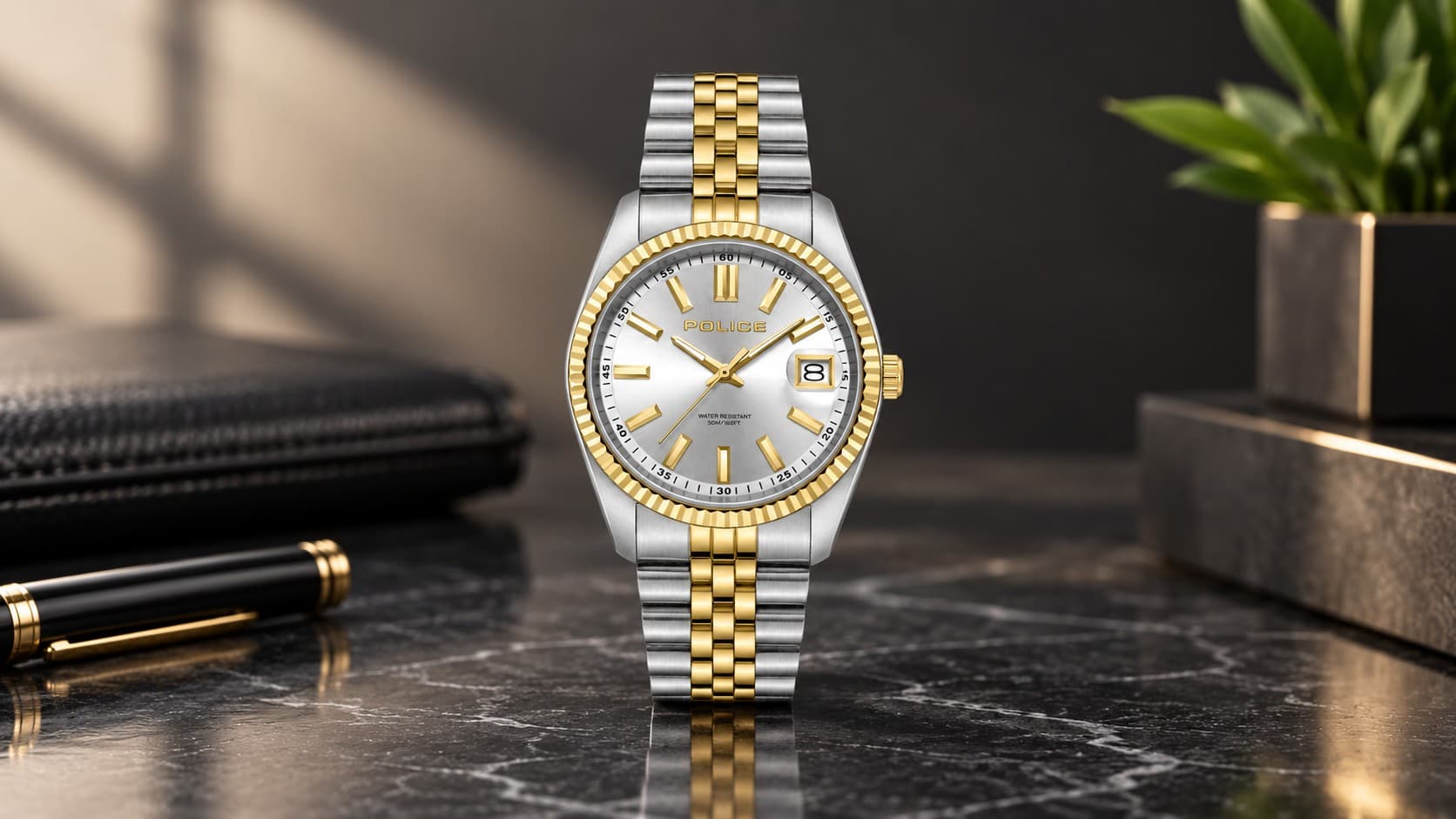
Police watches are solidly built for what they are, even though they aren’t fine watchmaking. Police doesn’t operate in the same category as high-end Swiss watchmaking, and its lineup skips complications like tourbillons or in-house manufacture movements entirely. That absence doesn’t make the watches poorly made, though. The stainless steel cases, dependable quartz movements, and multi-year warranties make them durable daily-wear pieces rather than fragile fashion accessories.
A typical model breaks down into a consistent set of specifications:
| Feature | What Police Offers |
|---|---|
| Movement | Japanese quartz |
| Case material | Stainless steel |
| Crystal | Mineral glass |
| Water resistance | 3–5 ATM (30–50m) |
| Warranty | Usually 2–3 years |
A standard two- to three-year manufacturer’s warranty comes with most models, and coverage of that length is worth noting: brands that expect frequent failures rarely commit to multi-year support.
Popular Police Watch Collections
Police organizes its watches into named collections, and the lineup changes over time as older lines get replaced with new ones. Five collections span that range, each built around a different idea of what a Police watch should look like:
- Vigor — a multi-function watch with a leather strap and a steel case finish, available in several colors, aimed at a rugged, attention-grabbing look.
- Patriot — made entirely of metal, both the strap and the case, offered in silver or black, built for a simpler and more refined style than the sportier Police lines.
- Jet — a large, sport-casual stainless steel model, typically around 44mm, with a leather or steel strap and 3–5 ATM water resistance, sitting closer to everyday wear than a dress watch.
- Flick — one of the clearest examples of Police’s branding showing up on the dial itself, since several versions place the brand’s skull motif, also used on its fragrance bottles, at the center of a 47mm gunmetal stainless steel case.
- Octane — a women’s collection built around an unusual octagon-shaped case rather than the round or square shapes most fashion watches use, paired with a stainless steel bracelet.
Because Police regularly rotates its collection names and designs, the current lineup on an authorized retailer’s site is a more reliable reference than any fixed list of collection names.
Special and Limited Edition Watches
Beyond its regular collections, Police occasionally releases licensed collaboration pieces aimed at collectors. The most notable recent example launched in February 2022, when Police partnered with Warner Bros. to release four limited-edition watches tied to the movie The Batman: THE BATMAN Watch, THE BATMAN Vengeance Edition, THE BATMAN Gotham City Edition, and THE BATMAN Catwoman Edition.
Only 10,000 of these timepieces were produced worldwide, and they were priced between AED 730 and AED 1,460 (roughly $200 to $400 USD at the time), positioned above Police’s usual everyday pricing to reflect the limited production run. According to De Rigo Group Managing Director Michele Aracri, the partnership made sense because both Police and the Batman franchise share a similar audience, spanning roughly ages 15 to 60, which is part of why licensed collaborations keep appearing in Police’s watch lineup alongside its standard collections.
How to Tell If a Police Watch Is Real
Counterfeits are common with popular fashion brands, and Police is no exception. Like every popular brand, Police has its share of counterfeits, and a few details typically give a fake away:
- An unrealistically low price. A model that typically retails around €200 showing up for a fraction of that, such as €30, isn’t a bargain — it’s a strong sign the piece is fake.
- Rough finishing. Genuine pieces show tight, clean construction, with crisp dial printing and sharp logo edges, while counterfeits tend to give themselves away through smudged text or coarse, uneven materials.
- Unusually light weight. Authentic cases are made from real stainless steel, so a watch that feels noticeably light in the hand often points to cheaper substitute metals underneath.
- Poorly rendered brand symbols. Signature imagery like the skull and eagle designs used across several collections is normally cut with sharp, precise detail, and a muddy or blurred version of those same symbols is a strong warning sign.
Buying only from authorized retailers is the simplest way to avoid all four problems at once.
Frequently Asked Questions
Is Police a Swiss watch brand?
No. Police is an Italian fashion brand that uses Japanese quartz movements in its watches, not Swiss-made mechanical movements. The design and branding are Italian, but the internal mechanism comes from Japan.
Who founded Police watches?
The Police brand was founded in Italy in 1983 by the De Rigo brothers, whose company originally made sunglasses for other labels. Watches didn’t arrive until 2003, two decades after the brand launched, followed by jewelry, leather goods, and apparel in the years after.
Can I wear a Police watch in the shower or pool?
It depends on the specific model’s water resistance rating, but most Police watches sit between 3 ATM and 5 ATM, which handles splashes and rain but not swimming or diving. The individual model’s rating sets the real limit, and it typically stops well short of anything deeper than a quick splash.
Are Police watches actually connected to police departments?
No. The name references the idea of freedom and authority that police officers symbolize, not any real partnership with law enforcement agencies. It’s a branding choice, not an affiliation.
How long does a Police watch battery last?
Police uses standard Japanese quartz movements, and batteries in these movements commonly last one to two years under normal use before needing a replacement, similar to most quartz watches on the market.
The Bottom Line
Police built its identity on being loud, Italian, and affordable rather than mechanically prestigious, and that combination is exactly why it has stayed popular for over 40 years since its start as a sunglasses maker in Belluno. For anyone seeking a stainless steel watch with real presence, a dependable quartz movement, and a multi-year warranty, without paying luxury watch prices, Police fills that specific gap well. Buying from an authorized retailer, matching the water resistance rating to actual use, and choosing a collection — including the occasional licensed special edition — based on design style is ultimately what separates one Police watch from another.