When most people hear the name Victorinox, they picture a little red pocket knife with a tiny pair of scissors folded inside. That knife made the company famous around the world. But for more than three decades, Victorinox has also built wristwatches, and it does it with the same idea in mind: tools should be tough, simple to use, and built to survive rough treatment. That mix of toughness and everyday usefulness is exactly what makes Victorinox watches worth a closer look, whether the comparison is against other affordable Swiss brands or against a first serious watch purchase altogether.
How a Swiss Knife Company Started Making Watches
Victorinox didn’t make its first watch until exactly 100 years after it was founded as a knife company. The business traces back to 1884, when Karl Elsener opened a small cutlery workshop in Ibach-Schwyz, Switzerland, with support from his mother, Victoria. It wasn’t until 1989 that the company put out its first wristwatch, a full century after Elsener first started sharpening blades.
The brand name itself is a small tribute hiding in plain sight. In 1909, Elsener registered “Victoria” as the company name in memory of his mother, and in the early 1920s the name became Victorinox by combining “Victoria” with “inox,” the French word tied to stainless steel. That single name change quietly captured everything the brand still stands for today: family history plus tough, corrosion-resistant materials.
The watch business grew alongside another major shift in the company’s history. In 2005, Victorinox acquired Wenger, its longtime rival and the other official supplier of knives to the Swiss army. Wenger had actually started making its own watches in 1988, a year before Victorinox, so the acquisition brought two separate watchmaking traditions under one roof. Victorinox kept the Wenger name alive for watches and travel gear for years afterward, and it also opened a dedicated Watch Competence Center in Delémont, Switzerland, in 2016 to give the watch division its own real production and development home rather than treating it as a side project.
The Reason Behind Victorinox’s Move Into Watches
Victorinox added watches in 1989 to diversify beyond knives so the company wouldn’t rely on one product alone. A knife business can be hit hard by shifts in trade rules, military contracts, or consumer trends, so branching into a new product category gave Victorinox a second leg to stand on. Watches were a natural fit because they share the same values as a good pocket knife: something small, reliable, and built to work every single day without fuss.
That instinct to diversify proved its worth years later, even outside of watches. After the September 11 attacks, tighter carry-on security rules crushed pocket knife sales at airport duty-free shops, and the crisis hit rival knife maker Wenger especially hard. That financial strain is part of what led to Victorinox acquiring Wenger in 2005, folding a former competitor’s watch and travel gear lines into its own growing portfolio. It’s a clear real-world example of exactly the kind of risk that made diversifying into watches such a sound decision in the first place.
Victorinox has remained fully independent and family-owned since its founding, and it holds its watches to the same rigorous manufacturing checks it built its reputation on with its pocket knives.
That quality-control mindset is a big part of why the watches earned trust so quickly, even though the brand was brand new to horology at the time.
What Makes a Victorinox Watch Unique
Victorinox watches stand out because they’re built like tools first and fashion pieces second. Where many watch brands chase elegance or status, Victorinox designs around function: legible dials, shock resistance, and rugged cases that can handle drops, water, and rough weather. This isn’t a brand built to impress with gold and diamonds. It’s a brand built to keep the time readable in a snowstorm.
The brand backs that reputation up with real testing rather than just marketing language. Some Alliance models, for example, go through 100 separate homologation tests before they’re approved for sale, and the I.N.O.X. line was famously put through 130 torture tests, including being run over by a battle tank. Materials matter too: depending on the model, Victorinox watches use stainless steel, titanium, or carbon composite cases, almost always paired with scratch-resistant sapphire crystal, and water resistance that commonly reaches 100, 200, or even 300 meters.
Value is another major factor. Compared to other Swiss watchmakers, Victorinox prices its watches well below the luxury tier while still using genuine Swiss movements and components. This makes the brand a popular entry point for someone who wants a real Swiss-made watch without spending thousands of dollars. Because Victorinox also makes knives, tools, bags, and fragrances, it has manufacturing scale that smaller boutique watch brands simply don’t have, and that helps keep prices reasonable.
The Main Victorinox Watch Collections
Victorinox organizes its watches into a handful of collections, and each one is built around a different use case rather than just a different look. Knowing the collections makes it easier to match a model to a specific purpose.
| Collection | Best For | Movement Type | Standout Feature |
|---|---|---|---|
| I.N.O.X. | Extreme durability, outdoor use | Quartz or automatic | Survived 130 torture tests |
| Fieldforce | Military-style everyday wear | Quartz | Bold dials, GMT and chronograph options |
| Maverick | Sporty, all-around versatility | Quartz | Rotating bezel, date display |
| Alliance | Dressier, office-appropriate style | Quartz or automatic | Swiss automatic movements (ETA-based) |
| Journey 1884 | Heritage-inspired outdoor style | Quartz or automatic | Named after the brand’s founding year |
I.N.O.X.
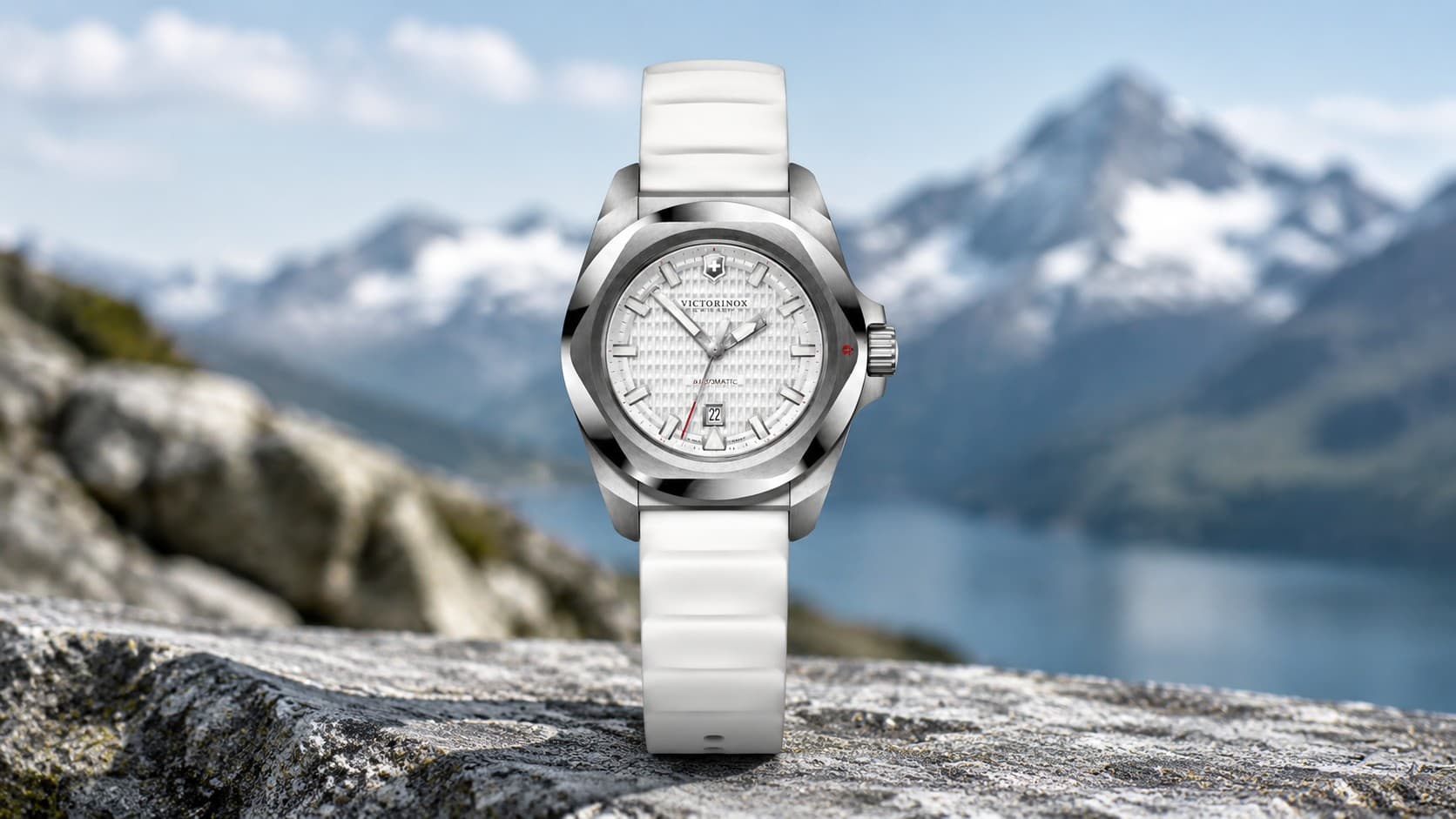
The I.N.O.X. collection is Victorinox’s toughest and most adventure-ready line of watches, and it has one of the best origin stories in the whole catalog. To mark the company’s 130th anniversary in 2014, Victorinox designed a watch and then set out to prove it could survive almost anything, subjecting it to exactly 130 separate endurance tests. Over roughly six months of testing and 421 prototype samples (about half of which failed along the way), the watch was frozen to -57°C and then instantly heated to +71°C using the same temperature-shock trial the US Army uses on missiles, boiled in a coffee pot, tumbled in a washing machine, dropped from ten meters, and even driven over by a Leopard battle tank. It came out the other side unscathed, and Victorinox even turned the name into a tongue-in-cheek acronym: “Impact Neutralizing Object for the Xtremes.”
Beyond the marketing spectacle, the real-world specs back it up. The I.N.O.X. is built with a thick, reinforced stainless steel case, reinforced dials and hands designed to resist shock and vibration, and water resistance rated to 200 meters on many models. It’s the collection built for hiking, work, and everyday wear without any need to baby it.
Fieldforce
The Fieldforce collection is Victorinox’s version of a classic military field watch. Expect bold numerals, oversized hands, and strong Super-LumiNova lume so the dial stays readable in low light or rough conditions. Extra functions vary by model: a GMT hand appears on some references for tracking a second time zone, while others lean toward a chronograph layout with a tachymeter scale instead. This is a good pick for anyone who likes a rugged, military-inspired look that still works fine with a suit.
Maverick
The Maverick collection leans into sporty, everyday versatility with a slightly bolder case design. It’s marketed as shock-resistant and versatile, built from Swiss Army Knife heritage to handle rough terrain as easily as a paved sidewalk. Maverick watches often include useful details like a rotating bezel, date display, and sapphire crystal, which makes them a solid choice for someone who wants one watch that can go from the office to the outdoors.
Alliance
The Alliance collection is Victorinox’s dressier, more refined line, and it’s the one place where the brand shows it can do elegant just as well as rugged. It comes in both quartz and automatic mechanical versions, so buyers can choose battery-free simplicity or the appeal of a moving mechanical movement. Some Alliance Mechanical models run on Swiss-made automatic movements, such as the ETA 2824-2 or ETA 2892, visible through an exhibition case back, paired with a power reserve of roughly 40 to 48 hours depending on the exact caliber. This collection suits someone who wants a Victorinox watch for work meetings and dinners, not just trail hikes.
Journey 1884
The Journey 1884 collection connects the brand’s outdoor identity to a more refined, heritage-inspired design. Named after the company’s founding year, it pairs hiking-inspired styling details with the same precision engineering found across the rest of the catalog. It works well for people who like the story behind a watch as much as the watch itself.
A Few Specific Victorinox Watches Worth Checking Out
A handful of individual models stand out within these collections, each for a different reason.
- I.N.O.X. Professional Diver — This is the toughest watch in the toughest collection. It’s ISO 6425 certified as a genuine diving watch, rated to 200 meters of water resistance, built with anti-magnetic protection, and fitted with a unidirectional rotating bezel for tracking dive time. It even ships with an optional clear rubber bumper that snaps over the case for extra scratch protection, plus a magnifying lens over the crystal for easier reading underwater.
- Airboss Mechanical Chronograph — Built for pilots rather than divers, this model runs on a Swiss automatic movement (commonly a Sellita SW200-1 in the three-hand version, or an ETA Valjoux 7750 in the chronograph version) visible through an exhibition case back. It includes a circular slide rule bezel for in-flight calculations and a military time display, both classic pilot-watch touches.
- Maverick Chronograph — A sportier, everyday option with a 43mm stainless steel case, a quartz chronograph movement, and a unidirectional bezel with a tachymeter scale for measuring speed over distance. A coated, anti-reflective sapphire crystal and luminous markers keep it practical, not just good-looking.
- Alliance Mechanical — The dressiest pick of the bunch, running on a genuine Swiss automatic movement (either an ETA 2824-2 or ETA 2892 depending on the exact model) with roughly a 40 to 48-hour power reserve. A polished steel case, sapphire crystal, and leather strap make it the one Victorinox watch built specifically to look at home under a suit jacket.
What to Expect to Pay for a Victorinox Watch
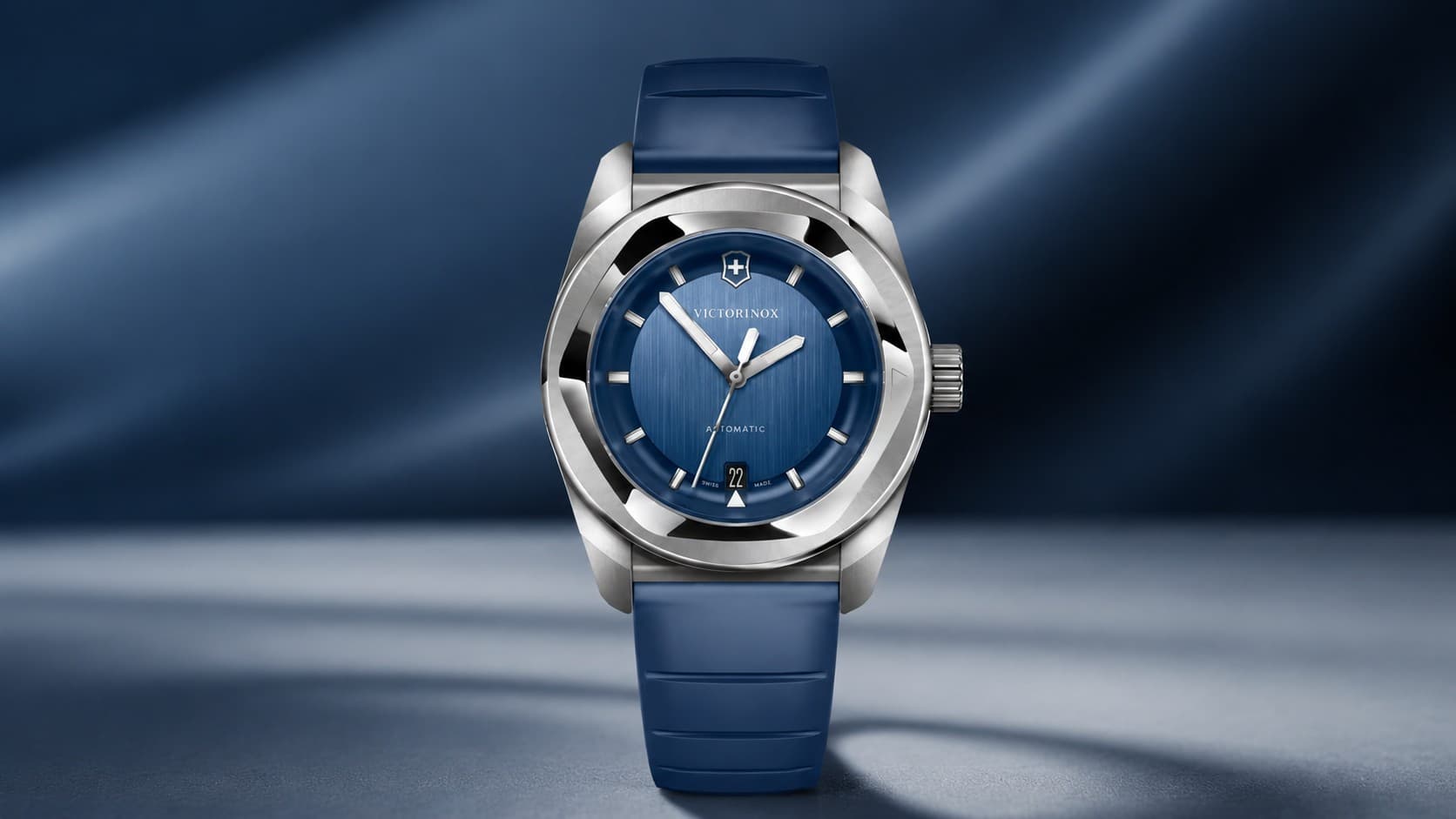
Most Victorinox watches fall in an affordable-to-mid-range price bracket compared to other Swiss watch brands. Simpler quartz models in the Fieldforce or Maverick lines often sell in the low hundreds of dollars, while automatic mechanical pieces in the Alliance collection can run higher because a mechanical movement costs more to produce than a quartz one.
| Collection | Typical Style | Movement Type | Rough Price Range |
|---|---|---|---|
| Fieldforce | Military field watch | Quartz | $300–$600 |
| Maverick | Sporty everyday watch | Quartz | $300–$600 |
| I.N.O.X. | Rugged, extreme-durability | Quartz or automatic | $350–$800 |
| Alliance | Dressier, classic style | Quartz or automatic | $400–$900 |
Exact prices shift based on materials, straps, and whether a model includes extra functions like a chronograph or GMT hand. Automatic movements, like the ETA-based calibers found in some Alliance models, generally push the price higher than a quartz version of the same design.
The warranty coverage adds real value on top of the sticker price. Victorinox’s watch warranty ran for 3 years for most of the brand’s history, then was lengthened to 5 years starting in 2019, and it covers problems traced back to manufacturing or material defects under ordinary use. Some quartz models also include a free replacement battery during the first year of ownership if the original one dies. That kind of coverage is generous for the price point, especially compared with other watches in the same budget range.
Should You Buy a Victorinox Watch?
Victorinox watches earn their price by prioritizing durability and function over flash. Because the company built its reputation on tools that had to work reliably in tough conditions, that same engineering mindset carries into the watches. The premium isn’t tied to a famous logo the way it often is with a luxury brand; it’s tied to solid construction, sapphire crystal on most models, and genuine Swiss movements at a fair price.
When a Victorinox Watch Makes Sense
The brand suits buyers looking for genuinely Swiss-made construction without a luxury price tag, durability for outdoor activity, travel, or physical work, the backing of a long, family-owned company history, and strong warranty coverage included at no extra cost.
Who Victorinox Isn’t Right For
Victorinox is a weaker fit for collectible or investment-grade watch shopping, for anyone set on mechanical haute horlogerie with in-house movements, or for a brand identity built purely around watchmaking heritage rather than tools.
Frequently Asked Questions
Is Victorinox the same company as Swiss Army knives?
Yes. Victorinox is the original maker of the Swiss Army Knife, and the same company also produces Victorinox watches, travel gear, and fragrances. Watches were originally sold under the “Swiss Army” brand name in North America before later carrying the Victorinox name directly.
When did Victorinox start making watches?
Victorinox launched its first watches in 1989, exactly a century after Karl Elsener founded the company as a cutlery workshop in 1884.
What does “I.N.O.X.” actually stand for?
I.N.O.X. borrows from “inoxydable,” the French word for stainless steel, and Victorinox has also used it as a playful acronym for “Impact Neutralizing Object for the Xtremes,” referencing the collection’s extreme durability testing.
Are Victorinox watches Swiss made?
Yes, Victorinox watches are manufactured in Switzerland and use Swiss movements, including both quartz calibers and Swiss automatic movements like the ETA 2824-2 and ETA 2892 found in some Alliance models.
What is the toughest Victorinox watch collection?
The I.N.O.X. collection is built specifically for extreme durability, having been designed and tested to withstand shocks, pressure, and rough handling better than the brand’s other lines.
Do Victorinox watches hold their value?
Not typically as collector’s items. Victorinox watches are priced for everyday use and durability rather than long-term investment, so they don’t usually appreciate in value the way rare luxury watches sometimes do.
The Bottom Line
Victorinox proves that a company doesn’t need a century of watchmaking heritage to earn a place on the wrist. What it built instead was a reputation for tools that simply work, and it carried that same philosophy directly into its watches, backing it up with real torture tests, Swiss movements, and a genuinely long warranty. Whether the pick is the rugged I.N.O.X., the field-ready Fieldforce, the sporty Maverick, or the dressier Alliance, the result is a Swiss-made watch designed around durability and clear, honest function rather than status. That combination of dependable engineering and a non-luxury price tag is exactly what makes Victorinox worth considering.