Most watch brands chase tradition. Locman does the opposite. Since 1986, this small Italian company has built its name on materials that older, more famous watchmakers avoided for decades, like carbon fiber, titanium, and aluminum, and it has done all of this from a tiny island off the coast of Tuscany rather than a glossy showroom in Switzerland. That combination of unusual materials, bold colors, and a genuinely Italian story has made Locman a favorite for people who want a watch that looks and feels different from everything else on the shelf. Understanding where the brand came from, and which of its collections actually deliver on that promise, explains why it has built such a loyal following despite staying outside the traditional Swiss watchmaking world.
The History of Locman Watches
Locman was founded in 1986 on the Island of Elba, a small island in Tuscany about ten kilometers from the Italian mainland. The company started out small, designing colorful watch straps rather than full watches. A year later, in 1987, it partnered with Genesi, a watchmaking factory in Milan, which allowed Locman to begin producing complete watches. In 1988, it released its first fully handcrafted watch under its own name, a piece that combined gold details with briar wood, a dense material taken from root burls that grow wild across Elba and the wider Mediterranean coastline.
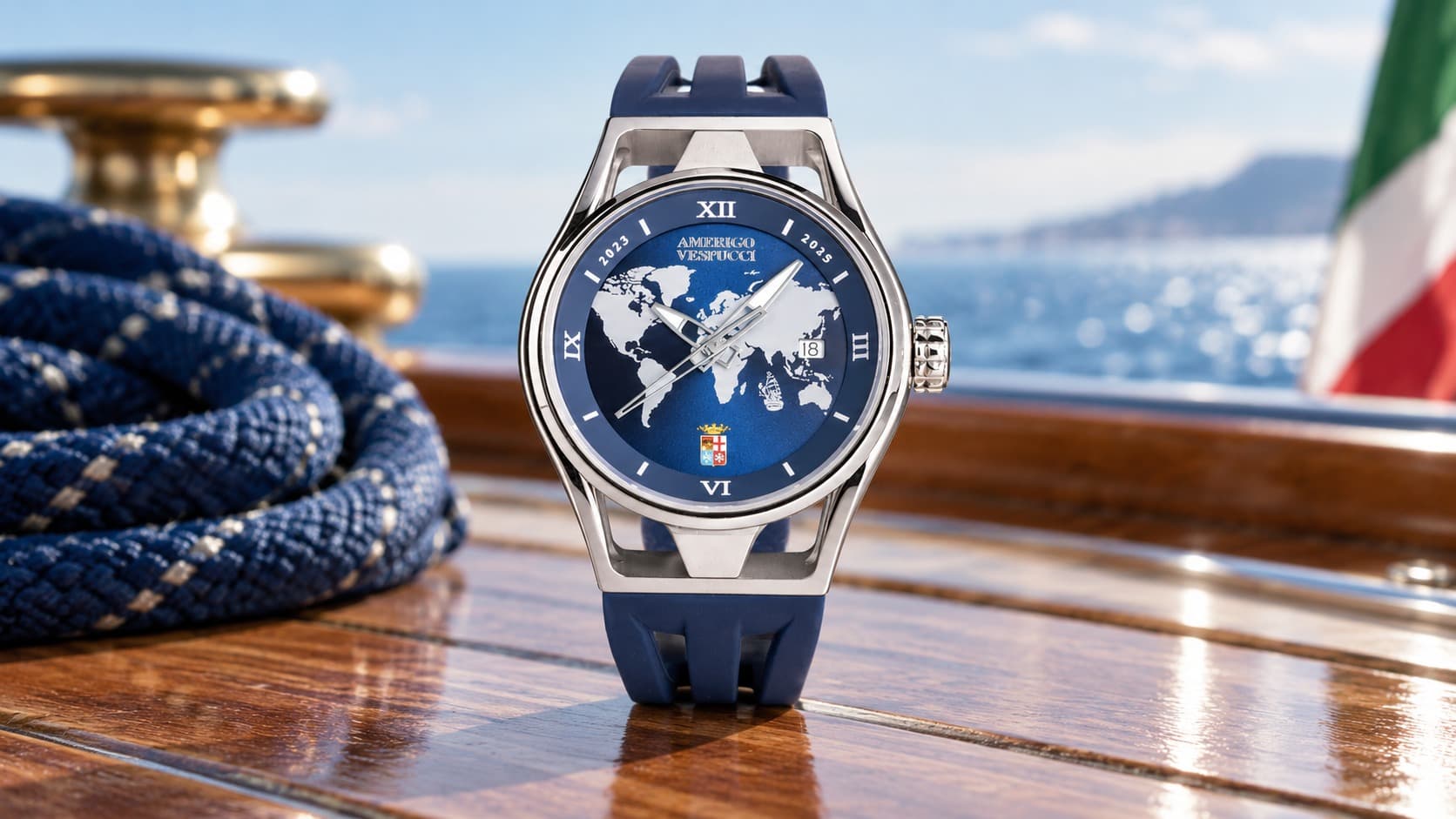
The brand grew quickly after that. In 1990, Carlo Crocco, the founder of the luxury Swiss brand Hublot, bought a stake in Locman and became its global distributor, which gave the small Italian company access to international markets it could not have reached alone. In 2001, HOPA S.p.A., a major Italian financial group, also invested in the company. Then in 2003, at the Baselworld watch fair, Locman debuted a watch case built completely from carbon fiber, a claimed industry first that turned the brand into something of a cult name among collectors who wanted their watches to look military-grade rather than formal. That reputation later led to official collaborations tied to the Italian Navy’s tall ship Amerigo Vespucci and the Frecce Tricolori, Italy’s national aerobatic display team.
In 2006, Locman opened its own research and development center on Elba called the Scuola Italiana di Orologeria, or S.I.O. (the Italian School of Watchmaking). This lab lets the company design its own movements instead of relying only on outside suppliers, which is unusual for a brand at Locman’s price point. In 2022, that effort reached a new level when Locman unveiled an OISA five-bridge manual mechanical movement, built almost entirely in-house and now anchoring its own dedicated line, Montecristo Oisa. Today, the company remains independently run by its founder and president, Marco Mantovani, and sells through roughly 1,200 authorized retailers worldwide, with its own boutiques in Florence, Milan, and New York, plus branch offices extending its reach into Hong Kong and Tokyo.
What Makes Locman Watches Unique
Locman’s Unique Watch Materials
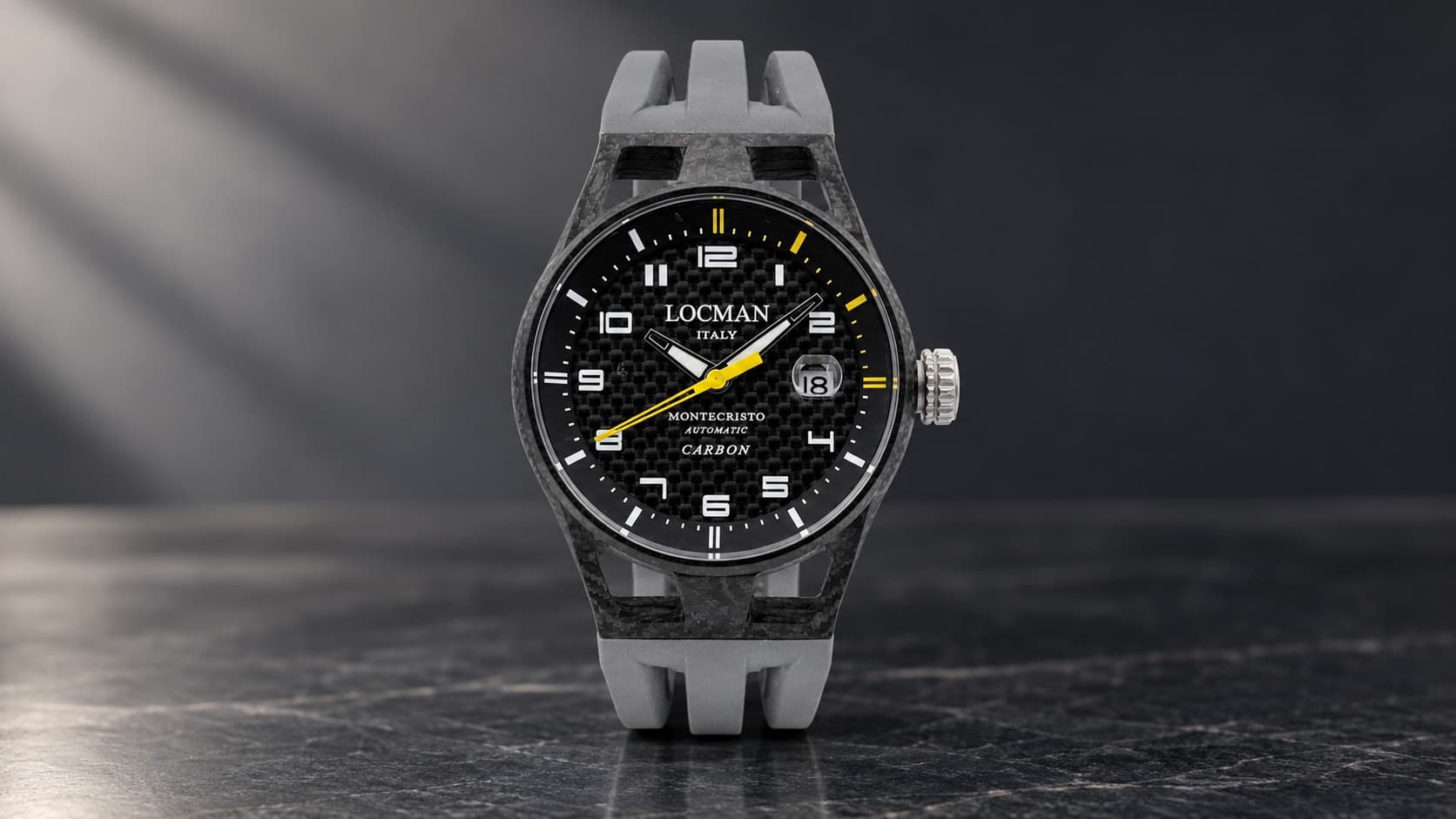
Locman built its reputation on case materials that were rare in watchmaking when the brand started using them. Titanium and carbon fiber make a watch case much lighter than steel, without giving up strength, and Locman leaned into both decades before they became trendy across the wider watch industry. Many models also use a material called texalium, which looks similar to carbon fiber but is actually a fiberglass fabric with a thin aluminum coating, giving designers more color options since pure carbon fiber only really comes in dark, mottled shades.
The difference shows up in actual wear, not just on a spec sheet. A 46mm dive watch sounds enormous on paper, but when the case is built from carbon and titanium instead of solid steel, it sits on the wrist far more comfortably than the size alone would suggest, which is the core idea behind Locman’s materials strategy: big, expressive designs without the added weight of a solid steel case.
Locman’s Italian Manufacturing Roots
Locman still designs and builds its watches at its original factory in Marina di Campo, on Elba. Many brands in Locman’s price range outsource production to keep costs down, while Locman has kept manufacturing on the island where it started, even as the company expanded into dozens of countries. The brand has also taken on contract production for other companies over the years, including the jewelry house Pomellato, which shows that other respected Italian names trust its factory with their own watches.
Locman has also earned a level of institutional trust that is rare for a brand its size. No other watchmaker currently holds the right to put the Italian Navy’s name and crest on a wristwatch, a privilege that produced pieces such as the Teseo Tesei model, named after a World War II naval officer who happened to be born in Marina di Campo, the same town where Locman’s factory sits today.
Best Locman Watch Collections
Montecristo: Locman’s Signature Collection
Montecristo is Locman’s flagship collection, launched in 2010, and it’s the easiest place to start when exploring what the brand is about. The name and design were inspired by the real island of Montecristo, a rugged, mostly uninhabited nature reserve that sits in the same Tuscan Archipelago as Elba and is famous as the setting of Alexandre Dumas’s novel The Count of Monte Cristo. The line includes dozens of models for both men and women, and several versions use nautical flag symbols instead of regular numbers on the dial as a nod to that island inspiration.
Case sizes in the Montecristo range run from around 36mm up to 44mm, and materials vary from plain stainless steel to combinations of steel, titanium, and carbon fiber. Movements span everything from basic quartz to automatic chronographs. Prices stretch widely too, from roughly $300 for an entry-level quartz model to well over $1,500 for an automatic chronograph in titanium and carbon, while a few limited pieces built around Locman’s own OISA mechanical movement push past $5,000.
Stealth: Locman’s Dive Watch Collection
Stealth is Locman’s main dive watch line, and the short answer to “is it a real dive watch” is yes, with water resistance reaching 300 meters on several models. The collection pairs a case that’s part carbon fiber and part titanium with a carbon-fiber dial and a rotating bezel, which keeps the overall weight low despite the case often measuring 44mm to 46mm across.
Locman has claimed that its carbon-fiber dive watches trace back to the world’s first full carbon-fiber case, shown at Baselworld in 2003. Whether or not it truly was the first, the brand has stuck with the material longer and more consistently than almost anyone else at this price point.
Not every Stealth watch is built for serious diving, though. Some versions trade the titanium caseback or higher water resistance for a lower price, so the exact reference, not the collection name, determines how much depth a given model can actually handle.
Mare: Locman’s Budget Dive Watch
Mare is Locman’s more affordable take on the dive watch idea, and it’s often the collection recommended to someone trying Locman for the first time. These watches use the same titanium-and-carbon or titanium-and-texalium approach as Stealth, but at a noticeably lower price, sometimes under $400 depending on the retailer and specific model. Automatic versions have been seen running on third-party Japanese movements such as the Miyota 8215, which is known for being dependable and easy to service almost anywhere in the world.
The trade-off is size. Several Mare models run as large as 46mm, which can wear bigger on the wrist than the price tag suggests, making the actual case dimensions more important than usual when comparing listings.
Isola d’Elba: Locman’s Island-Inspired Watches
Isola d’Elba translates to “Island of Elba,” and the collection is built around the relaxed, coastal feel of the island where Locman is based. These are mostly chronographs and time-only watches in steel, sometimes combined with titanium, aimed at everyday wear rather than serious sports use, and several versions add a sunray-finished dial or a knurled bezel for extra detail.
Prices for Isola d’Elba typically land between $300 and $700, which makes it one of the more accessible ways to own a Locman watch without stepping down to the most basic quartz pieces. Case sizes commonly run between 30mm, in women’s models, and 43mm.
1960: A Classic, Dressier Locman Collection
The 1960 collection looks backward instead of forward, drawing on the look of 1960s Italy, the era of Federico Fellini’s film La Dolce Vita, which won the Palme d’Or at Cannes and an Academy Award for its costumes that same year. Instead of titanium and carbon fiber, these watches lean on classic steel cases, leather straps, and clean, vintage-inspired dials, making the line feel noticeably different from the rest of Locman’s sportier collections.
Sizes in the 1960 line run smaller than Locman’s dive watches, typically between 32mm and 42mm, and prices generally sit between $200 and $500. It’s a good option for someone who likes Locman’s story and Italian identity but wants a dressier watch rather than a bold sports piece.
Locman x Ducati: A Motorcycle-Inspired Watch
In 2017, Locman partnered with Ducati, the Bologna-based motorcycle manufacturer, to design a line of watches together, and the partnership has been renewed with new models nearly every year since. The watches borrow design cues directly from Ducati’s dashboards and racing heritage, including a crown shield modeled on the Ducati logo and dial details that echo instrument clusters. An early limited edition from 2018 was capped at 3,000 pieces, and the line has continued to grow with both three-hand and chronograph versions.
The Locman Ducati line includes quartz and automatic models, with the automatic versions running on Locman’s own SIO1 movement, developed at its in-house watchmaking school. Prices have ranged from around $300 for quartz three-hand models up to roughly $1,200 for automatic chronographs, depending on the release year and case materials.
How Much Do Locman Watches Cost?
| Collection | Typical Price Range | Best For |
|---|---|---|
| Montecristo | $300 – $1,700+ | Signature Locman style, widest variety |
| Stealth | $600 – $1,400 | Serious diving, bold case shapes |
| Mare | $200 – $500 | First-time Locman buyers on a budget |
| Isola d’Elba | $300 – $700 | Everyday wear, coastal styling |
| 1960 | $200 – $500 | Classic, dressier Italian design |
| Ducati | $300 – $1,200 | Motorsport fans, motorcycle collectors |
These numbers shift depending on the retailer, whether the watch is quartz or automatic, and which materials are used in the case. Automatic movements and carbon-fiber or titanium cases push prices toward the top of each range, while simple steel quartz models sit at the bottom.
Key Things to Know Before Buying Locman
Several practical details separate one Locman watch from another more than the collection name does:
- Movement type. Quartz movements run on a battery and need almost no maintenance, while automatic movements wind themselves from wrist movement but need occasional servicing.
- Case size. Locman watches, especially the dive-inspired lines, often run larger than they look in photos. A 44mm or 46mm case will sit noticeably bigger than most mainstream watches.
- Water resistance rating. Not every Stealth or Mare model is built for actual diving, so the specific rating, measured in meters or ATM, matters more than the collection name alone.
- Material combination. Full carbon-fiber and titanium cases cost more but weigh less, while steel versions of the same design are heavier and generally cheaper.
- Warranty coverage. Locman backs its watches with a standard two-year international manufacturer’s warranty, which is worth confirming with the retailer, especially when buying through a third-party seller rather than an authorized dealer.
Frequently Asked Questions
Is Locman a good watch brand?
Locman has a solid reputation for interesting design and genuine use of lightweight materials like titanium and carbon fiber, and it has operated independently in Italy since 1986. It sits closer to the entry-level luxury and fashion-watch category than to traditional high-end Swiss watchmaking, so it’s a strong choice for someone who wants a distinctive design rather than heritage or investment value.
Are Locman watches automatic or quartz?
Locman makes both. Many of its everyday and budget-friendly models use quartz movements, which run on a battery, while higher-end pieces in the Montecristo, Stealth, Ducati, and 1960 lines offer automatic movements, including some built in-house at Locman’s own watchmaking school on Elba.
Where are Locman watches made?
Locman designs and manufactures its watches at its factory in Marina di Campo, on the Island of Elba in Tuscany, Italy. The company has kept production there since it was founded in 1986, even as it expanded its sales network internationally.
What makes Locman’s carbon fiber cases special?
Locman was one of the earliest watch brands to use carbon fiber for an entire case rather than just decorative dial elements, with a fully carbon case shown at Baselworld in 2003. The material keeps watches lightweight even at large case sizes, which is part of why many Locman dive watches can measure 44mm to 46mm without feeling heavy on the wrist.
Does Locman use Swiss movements?
Some Locman watches use Swiss-made or Japanese quartz and automatic movements, such as the Miyota caliber found in some Mare models, while others rely on Locman’s own calibers developed through its in-house research center, the Scuola Italiana di Orologeria. The brand does not position itself as a Swiss watchmaker, instead marketing its Italian identity and design as the main selling point.
Will a Locman watch hold its value?
Generally, no, not in the way brands like Rolex or Omega can. Locman sits in the entry-level luxury and fashion-watch space, and most models lose a significant portion of their retail price on the used market, much like other brands at this level. That isn’t a reason to avoid Locman, since plenty of watches are bought to wear and enjoy rather than resell, but it’s worth buying one for its design and materials rather than as a financial investment.
The Bottom Line
Locman has built a genuinely unusual place in the watch world by treating carbon fiber, titanium, and bold color as its core identity rather than an occasional experiment, all while staying rooted in a small factory on a Tuscan island. The Montecristo line remains the best starting point for understanding that identity, Stealth and Mare cover real diving needs at very different price points, and the 1960 and Ducati collections show the brand can move in a dressier or more motorsport-driven direction without losing what makes it recognizably Locman. Whichever collection appeals most, the specific movement, case size, and water resistance of that exact model will matter more than the collection name alone.