F.P. Journe represents the pinnacle of independent Swiss watchmaking, where centuries-old craftsmanship meets innovative modern techniques. Founded by François-Paul Journe in 1999, this boutique manufacture has quickly earned its place among the world’s most prestigious watch brands, celebrated for unique complications, exceptional finishing, and limited production numbers that make each piece a rare treasure. With annual output deliberately capped at around 900 watches and waiting lists stretching years into the future, F.P. Journe timepieces are coveted by collectors and enthusiasts who recognize them as some of the finest mechanical watches being made today.
How F.P. Journe Became a Top Watch Brand
François-Paul Journe was born in Marseille in 1957 and struggled with traditional schooling despite showing exceptional talent working with three-dimensional objects. His parents enrolled him in watchmaking school at age 14, where he initially faced expulsion for behavioral issues before moving to Paris. There, he apprenticed with his uncle Michel Journe, a respected restorer of antique clocks, while finishing his studies at École d’horlogerie de Paris in 1976. Working alongside historical pieces from master watchmakers like Breguet and Abraham-Louis Breguet shaped his future vision for what exceptional timepieces could achieve.
- Between 1978 and 1983, Journe created his first tourbillon pocket watch entirely by hand, demonstrating technical skills that would become his hallmark. At just 22 years old, he designed a planetarium mechanism for Asprey London, and in 1982 he restored the famous Breguet No. 3177 at the Arts et Métiers Museum in Paris, deepening his appreciation for historical complications.
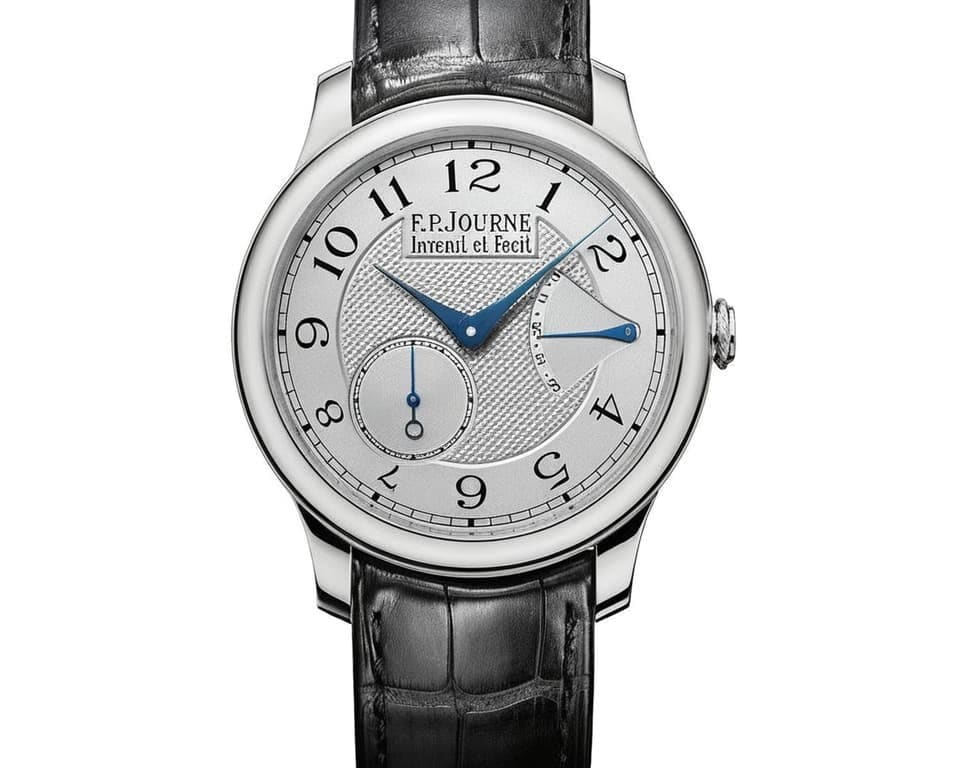
- The company launched in 1999 using a revolutionary subscription approach where twenty collectors paid half price upfront (CHF 27,500) to fund production of the Souscription Tourbillon series. Each of these platinum watches came with brass movements and a 38mm case size that deliberately contradicted the late 1990s trend toward oversized, heavily complicated chronographs dominating the luxury market.
- Early commercial releases included the Tourbillon Souverain and Octa collection in the brand’s first years, establishing Journe’s focus on useful complications rather than showpieces. The Chronomètre à Résonance debuted in 2000 as the world’s only wristwatch using acoustic resonance, where two independent balance wheels synchronize naturally through the movement plate to improve precision.
- A major technical shift occurred in 2004 when Journe replaced all brass movement components with 18k rose gold, a decision no other luxury watchmaker has replicated industry-wide. This expensive choice offers better stability across temperature changes, superior resistance to oxidation, and improved long-term durability compared to the brass movements used by virtually every other manufacturer.
- The watchmaking community recognized this innovation with three Aiguille d’Or awards from Geneva’s Grand Prix d’Horlogerie in 2004, 2006, and 2008—the only brand to achieve this triple recognition. These prizes cemented Journe’s reputation among collectors as a legitimate rival to established luxury houses despite producing a fraction of their annual volume.
- Throughout the 2010s, Journe invested heavily in vertical integration by acquiring dial maker Les Cadraniers de Genève and case manufacturer Les Boîtiers de Genève. This gave the company control over roughly 95% of component production, depending on outside suppliers only for sapphire crystals, mainsprings, jewel bearings, and certain escapement parts requiring specialized equipment.
- Fashion house Chanel purchased a 20% ownership stake in 2018, providing financial backing while explicitly preserving Journe’s total creative independence and operational control. This partnership addressed concerns about succession planning without forcing the brand toward higher production volumes or compromises in quality standards.
- Boutique expansion accelerated recently with new stores in New York’s SoHo neighborhood and London’s Mayfair district opening in 2023, followed by Bangkok in early 2024. The network now includes eleven company-owned boutiques worldwide, each receiving priority allocation of new releases and exclusive dial variants unavailable through multi-brand authorized dealers.
- The 25th anniversary in 2024 brought the Chronomètre Furtif, the brand’s first integrated-bracelet sports watch featuring a tungsten carbide case and central seconds hand. This release marked a stylistic departure while maintaining the technical excellence expected from every Journe timepiece, priced at CHF 85,000 and immediately generating multi-year waiting lists.
Journe’s trajectory from subscription-funded startup to globally recognized independent manufacturer happened through consistent focus on technical merit rather than marketing hype. Production stays deliberately capped near 900 pieces annually despite demand that could support five times that volume, creating authentic scarcity rather than artificial limited editions. This approach has made F.P. Journe watches extremely difficult to obtain at retail, with some models requiring qualification applications and established purchase history before customers can even join waiting lists that stretch five to ten years into the future.
Key Features of F.P. Journe Timepieces
F.P. Journe stands apart from other luxury watchmakers through a combination of technical decisions that most brands consider too expensive or impractical. The philosophy centers on “Invenit et Fecit”—Latin for “he invented and made it”—requiring every complication to be developed and manufactured internally rather than sourcing designs from suppliers. This means each watch represents genuine innovation rather than variations on existing technology, though it requires significant investment in research and tooling that doesn’t show immediate returns.
- All mechanical movements use 18k rose gold for plates and bridges instead of the brass alloy found in virtually every other luxury watch, including brands costing twice as much. Rose gold provides better dimensional stability when temperature changes, resists corrosion and oxidation far better than brass, and maintains tighter tolerances over decades of use, though it costs significantly more and requires different machining techniques.
- The manufacture controls approximately 95% of production in-house across three dedicated Geneva facilities, producing movements, dials, cases, and bracelets without relying on the shared suppliers that most Swiss brands use. Only sapphire crystals, balance springs, jewel bearings, and a few specialized escapement components come from outside suppliers, giving Journe unusual control over quality and finishing standards.
- Free-sprung balance wheels with adjustable weights allow regulation without a traditional index lever, the same system used in marine chronometers and the most expensive pocket watches. This approach takes longer to adjust during assembly but maintains accuracy better over time as the watch ages and components wear, particularly when combined with the rose gold construction that doesn’t degrade like brass.
- The Chronomètre à Résonance remains the only wristwatch ever made that achieves acoustic resonance between two independent movements, a phenomenon where oscillators synchronize naturally through vibrations transmitted through the baseplate. This provides superior timekeeping because environmental factors that would slow one balance wheel affect both equally, causing them to cancel out rather than accumulate as errors.
- Constant force mechanisms appear across multiple models, using a small spring called a remontoire that rewinds every second to deliver consistent power to the escapement. Most watches have declining amplitude as the mainspring unwinds, affecting rate stability, but constant force keeps the balance wheel swinging at the same arc throughout the entire power reserve for superior chronometric performance.
- The Chronomètre Optimum uses an EBHP bi-axial escapement designed entirely by Journe, featuring direct impulse to the balance wheel without sliding friction and operating without lubrication. This addresses one of mechanical watchmaking’s biggest challenges—escapement oil degrading over time—through geometry that eliminates the need for lubricants entirely while maintaining efficiency.
- Advanced case materials include tantalum with its 3,016°C melting point and extreme density of 16.65 grams per cubic centimeter, making it harder to machine than steel or gold. The proprietary Titalyt titanium treatment uses electro-plasma oxidation to create a ceramic-like surface layer that’s significantly harder than untreated titanium, and the 2024 Chronomètre Furtif uses tungsten carbide normally reserved for cutting tools.
- Traditional decorative techniques like circular graining, Geneva stripes, and chamfered edges appear on every movement component visible through the display back, finished to standards matching pocket watches from the 1800s. Modern CNC machines cut the components, but final finishing still happens by hand using the same tools and methods watchmakers have used for centuries.
- The Élégante collection pioneered motion-sensor technology in mechanical luxury watches, where the quartz movement enters sleep mode when not worn and wakes instantly when picked up. This extends battery life to 8-18 years compared to 2-3 years for standard quartz, while maintaining the instant-set feature that lets wearers adjust time by pressing the crown rather than pulling it out.
- Annual production deliberately stays below 900 mechanical watches despite waiting lists that could support five or ten times that volume, with Journe stating publicly that expansion would require moving to a larger facility and compromising the direct oversight he maintains over every watch. This creates genuine scarcity rather than marketing-driven limited editions, as the manufacture physically cannot produce more watches without fundamental changes to operations.
These technical choices explain why F.P. Journe watches cost more than many established luxury brands and why collectors consider them investments rather than simply expensive accessories. The combination of proprietary movements, in-house production, advanced materials, and deliberate scarcity creates timepieces that hold value exceptionally well in the secondary market, often selling for two to four times their original retail price depending on the model and how long buyers have been waiting for retail allocation.
Top 10 Best F.P. Journe Watches
F.P. Journe’s current collection focuses on refined complications rather than chasing trends, with each model representing years of development work. The lineup divides into several categories—Classique for traditional complications, LineSport for contemporary designs, Élégante for innovative quartz technology, and ultra-rare grand complications produced in extremely limited numbers. Prices reflect genuine manufacturing costs rather than brand positioning, though secondary market values often exceed retail by substantial margins due to multi-year waiting lists and production constraints.
- Chronomètre Souverain serves as the brand’s foundational piece, featuring a time-only display with small seconds and power reserve indicator powered by the manual-winding Calibre 1304. The 40mm case comes in platinum or rose gold, and the movement’s constant force mechanism maintains consistent amplitude for superior timekeeping accuracy. Retail pricing starts around $44,000, though boutique editions with unique dial colors command significantly more in the secondary market where examples regularly sell for $80,000-$125,000.
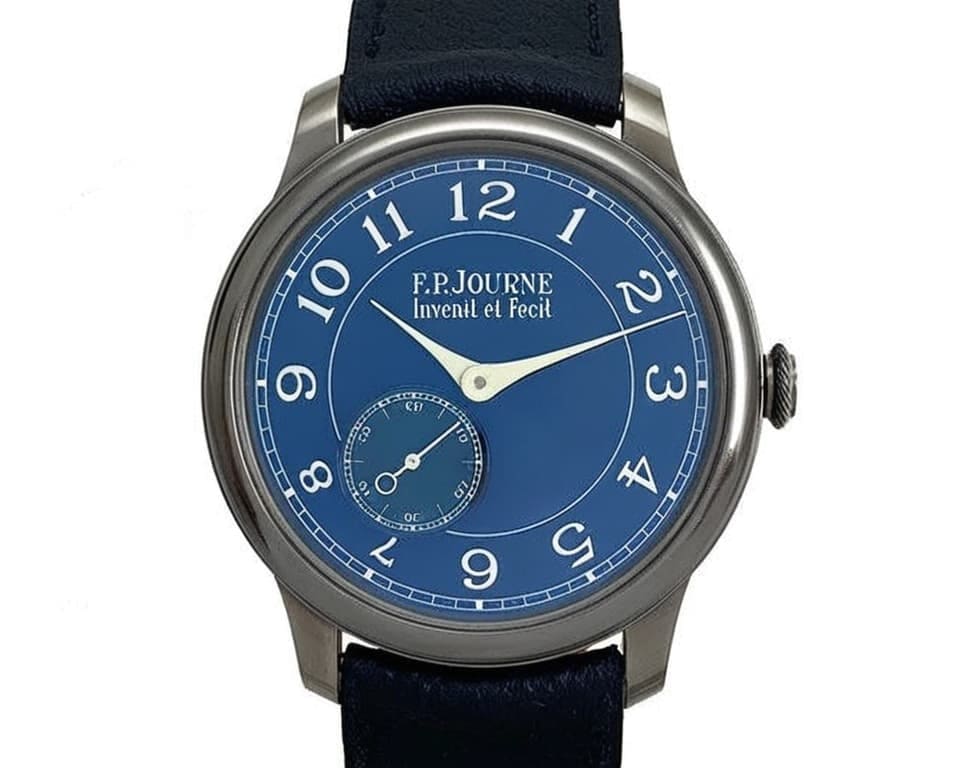
- Chronomètre Bleu has become the modern icon of the brand, distinguished by its 39mm tantalum case and striking blue chrome dial with cream-colored hands. Tantalum’s extreme density makes it noticeably heavier than steel or gold despite the modest case size, and the material’s difficulty to machine contributes to the $37,400 retail price. Secondary market values have exploded to $75,000-$90,000 due to five-year waiting lists and qualification requirements that prevent most first-time buyers from accessing retail allocation.
- Chronomètre à Résonance represents Journe’s most celebrated achievement—the world’s only wristwatch utilizing acoustic resonance between two independent balance wheels that synchronize naturally through the movement plate. Available in 40mm or 42mm cases with the latest Calibre 1520 featuring twin remontoirs for constant force, this watch displays two time zones with unprecedented accuracy. Retail pricing approaches $140,000, while secondary market examples command $250,000-$500,000 depending on dial configuration and production year.
- Tourbillon Souverain combines a one-minute tourbillon with remontoire d’égalité constant force and deadbeat seconds hand that jumps rather than sweeps. The 40mm platinum or rose gold case houses Calibre 1403 with 42 hours of power reserve, and the tourbillon cage remains visible at 6 o’clock through the dial. Retail prices start around $250,000 for standard versions, with early brass-movement examples and special editions reaching $500,000+ at auction due to their historical significance.
- Chronomètre Optimum pushes precision further with dual mainspring barrels, constant force remontoire, and the revolutionary EBHP bi-axial escapement that operates without lubrication. This technical showcase runs at 21,600 vibrations per hour with superior long-term stability compared to traditional lever escapements, housed in 40mm or 42mm precious metal cases. Original retail pricing was approximately $90,000, but secondary market values have climbed to $175,000-$250,000 as collectors recognize this as one of modern watchmaking’s most significant innovations.
- Octa Automatique Reserve offers the brand’s self-winding movement with an impressive 120-hour power reserve from a single barrel, using Journe’s innovative winding system with oversized rotor. The 40mm case includes power reserve indicator and large date display, making this the most practical F.P. Journe for daily wear. Retail prices start around $50,000, with secondary market values reaching $85,000-$120,000 depending on dial variant and case material.
- Centigraphe Souverain revolutionized chronograph design by measuring elapsed time to 1/100th of a second despite running at only 3Hz frequency, achieved through a patented instant-jump mechanism. The 44mm case accommodates this complex movement available in titanium, rose gold, or platinum, with the chronograph seconds hand making one full rotation per second. Retail pricing ranges from $65,000 for titanium to $120,000 for platinum, while secondary market examples trade between $90,000-$200,000.
- Chronomètre Furtif debuted in 2024 as the brand’s first integrated-bracelet sports watch, featuring a 42mm tungsten carbide case that’s nearly impossible to scratch and extremely difficult to manufacture. The mirror-polished anthracite enamel dial contrasts with the matte-finished case, and the manual Calibre 1522 includes central seconds hand and 56-hour power reserve. Priced at CHF 85,000 with immediate multi-year waiting lists, this represents Journe’s entry into the luxury sports watch category without compromising technical standards.
- Élégante 48mm Titalyt showcases innovative quartz technology with motion-sensor activation that extends battery life to 8-18 years while maintaining instant timesetting through crown pushes rather than pulls. The 48mm case uses proprietary Titalyt titanium treatment creating a ceramic-like surface significantly harder than standard titanium, available with various dial options. Retail pricing ranges from $16,700-$20,000, but secondary market values have reached $50,000-$70,000 for certain dial configurations as collectors recognize this as legitimate haute horlogerie despite quartz power.
- Astronomic Souveraine sits at the collection’s pinnacle with complications including dual time zones, sidereal time, moonphase, sunrise/sunset times, annual calendar, and equation of time—all in a 44mm steel case. Only a handful are produced annually with retail pricing approaching $900,000, and secondary market examples exceed $1,000,000 due to extreme rarity and the movement’s complexity requiring months of assembly by the brand’s most experienced watchmakers.
Each model demonstrates Journe’s commitment to useful complications executed with technical excellence rather than creating showpieces for marketing purposes. The 18k rose gold movements, meticulous hand-finishing, and deliberate production limitations mean every F.P. Journe watch represents hundreds of hours of skilled labor, explaining both the substantial retail prices and the even higher secondary market premiums driven by collectors who cannot access retail channels despite willingness to pay full price.
How to Buy an F.P. Journe Watch
Purchasing an F.P. Journe watch differs significantly from buying most luxury timepieces due to extreme scarcity and the brand’s selective distribution approach. New buyers face substantial challenges accessing retail allocation, while the secondary market offers faster acquisition at premium prices that reflect genuine supply constraints. Prospective owners should carefully evaluate their budget, timeline expectations, and willingness to build relationships with boutiques or authorized dealers before committing to what often becomes a multi-year pursuit.
- Entry-level pricing begins with the Élégante quartz collection at $14,500-$20,000 retail, providing an accessible introduction to the brand’s finishing standards and design language. Mechanical watches start with the Chronomètre Bleu at $37,400, while most complications like the Chronomètre Souverain retail around $40,000-$50,000. Complex pieces including the Tourbillon Souverain reach $250,000, and grand complications like the Astronomic approach $900,000, with the ultra-exclusive FFC exceeding $1,000,000.
- Secondary market premiums have become standard due to retail scarcity, with most models trading at 200-400% of original prices depending on age, condition, and desirability. The Chronomètre Bleu commands $75,000-$90,000 despite $37,400 retail, while boutique editions reach $125,000-$150,000. Popular models like the Centigraphe trade between $90,000-$200,000 based on material choice, and early brass-movement pieces from before 2004 achieve even higher multiples due to historical significance.
- Waiting list reality varies dramatically by model and purchase history, with first-time buyers facing the longest delays while established customers receive priority for new releases. The Chronomètre Bleu now requires qualification applications reviewed by boutique staff, and most mechanical models involve 18-24 month minimum waits. François-Paul Journe has stated publicly that some customers now face up to 10-year waiting times, particularly for popular pieces like the Résonance or limited-production variants.
- Building relationships with boutiques or authorized dealers significantly improves allocation chances, as the brand rewards loyal customers who purchase multiple watches or demonstrate genuine collecting interest rather than speculation. Visiting boutiques in person, expressing specific model preferences, and showing familiarity with the brand’s history and technical achievements helps establish credibility with sales staff who control waiting list positions.
- Authentication challenges require careful attention due to high values attracting counterfeiters, though F.P. Journe fakes remain relatively uncommon compared to Rolex or Patek Philippe. Genuine watches feature “Invenit et Fecit” inscribed on the movement, 18k rose gold movement plates in all mechanical models produced after 2004, consistent high-quality finishing without shortcuts, and serial numbers verifiable through F.P. Journe customer service.
- Case sizing has evolved from original 38mm dimensions (now discontinued and highly collectible) to current 40mm and 42mm standards across most of the mechanical collection. The Chronomètre Bleu maintains unique 39mm proportions, while LineSport models offer 42mm and 44mm options for contemporary wrist presence. The Élégante collection provides both 40mm and 48mm sizes, with larger options accommodating the innovative quartz technology and motion sensors.
- Material considerations significantly impact pricing and wearing experience, with platinum cases offering substantial weight and precious metal prestige at premium prices. Rose gold provides warmth and traditional luxury appeal, while tantalum delivers exotic density and corrosion resistance. The newest tungsten carbide and Titalyt titanium options combine modern aesthetics with technical advantages like scratch resistance and reduced weight.
- Documentation requirements include original warranty card, instruction manual, wooden presentation box, and preferably purchase receipt from authorized dealer or boutique. Complete documentation significantly impacts resale value, with undocumented pieces selling for 20-30% less than fully papered examples even when authenticity isn’t questioned. The brand’s Patrimoine service can verify watches and provide documentation for vintage pieces lacking original papers.
- Service history becomes crucial for older watches, as proper maintenance records demonstrate responsible ownership and help preserve value. F.P. Journe recommends service without specifying exact intervals, and comprehensive overhauls typically cost $2,000-$5,000 depending on complications. Watches serviced by the manufacture receive updated technical specifications, ensuring older pieces benefit from recent improvements in movement design.
- Insurance considerations require specialized coverage due to values often exceeding standard homeowner policy limits for jewelry and watches. Agreed-value policies from specialty insurers familiar with haute horlogerie provide better protection than standard replacement-cost coverage, particularly for discontinued models or pieces trading well above retail. Annual premiums typically run 1-2% of insured value depending on location and security measures.
Budget planning should account for the total ownership cost including purchase price, insurance, periodic servicing, and potential storage solutions like watch winders for automatic models. The reality that retail allocation remains extremely difficult means most buyers will pay secondary market premiums, essentially doubling or tripling advertised prices to obtain watches within reasonable timeframes. However, these premiums often represent sound investments given F.P. Journe’s consistent appreciation and the brand’s careful production management that prevents market flooding.
F.P. Journe Authorized Dealers and Boutiques
Acquiring an F.P. Journe watch requires navigating a deliberately limited distribution network designed to maintain brand exclusivity and ensure customer relationships. The company prioritizes direct sales through boutiques over wholesale partnerships, giving them control over the customer experience while limiting availability. Understanding which channels offer the best allocation chances versus fastest acquisition helps buyers develop realistic strategies based on their timeline and budget constraints.
- Company-owned boutiques operate in eleven cities worldwide and receive priority allocation of new releases plus exclusive Black Label editions unavailable elsewhere. The Tokyo boutique opened first in 2003, followed by locations in Hong Kong, Geneva, Paris, Miami (as a Maison format), Los Angeles, Dubai, Beirut, New York’s SoHo neighborhood (2023), London’s Mayfair district (2023), and Bangkok (January 2024). Boutique customers typically receive better service, faster waitlist movement, and access to special dial variants not distributed to multi-brand retailers.
- Authorized dealers operate under the “Espace F.P. Journe” designation in select markets including Australia, Canada, France, Italy, Mexico, Portugal, Qatar, Singapore, Spain, and Switzerland beyond the boutique cities. Multi-brand retailers in these regions carry F.P. Journe watches, though their allocations remain extremely limited compared to boutiques. Most authorized dealers receive only a handful of watches annually, making them viable primarily for customers with established purchase history at that specific retailer.
- Secondary market platforms provide the fastest acquisition path at premium prices, with numerous reputable dealers specializing in independent watchmakers. Established pre-owned watch dealers offer F.P. Journe pieces with warranties typically ranging from one to two years and authentication guarantees. Online marketplaces connect buyers with professional dealers worldwide, though purchasers should verify seller ratings, request detailed photographs, and confirm return policies before committing to transactions.
- F.P. Journe’s Patrimoine Service sells certified pre-owned watches through boutiques with three-year warranties, providing factory authentication and full servicing before resale. This program supports long-term ownership by ensuring vintage pieces can be properly maintained and documented, while giving collectors confidence when purchasing older models that may lack complete original documentation. Patrimoine watches command premiums over standard pre-owned pieces due to factory certification and extended warranty coverage.
- Auction houses regularly feature F.P. Journe watches from private collections, with major international auction houses conducting specialized watch sales multiple times annually. Auction purchases carry risks including condition issues, lack of warranty coverage, and bidding competition that can push prices beyond rational levels. However, auctions sometimes surface rare early examples or unique pieces that never appear through traditional retail channels.
- Private sales between collectors happen frequently in F.P. Journe enthusiast circles, often facilitated through online forums, collector groups, or social media communities. These transactions can offer better pricing than dealer channels while avoiding auction house premiums, though they require significant due diligence for authentication and condition verification. Buyers should insist on in-person inspection or use escrow services when dealing with unknown sellers.
- Allocation strategies differ significantly between boutiques and authorized dealers, with some locations prioritizing local customers while others welcome international clients. Geneva and Hong Kong boutiques see heavy collector traffic and maintain longer waiting lists, while newer locations like Bangkok or Miami may offer shorter waits as they build customer bases. Developing relationships with multiple boutiques across different regions can improve allocation chances, though some locations restrict waiting list access to residents or frequent visitors.
- Waiting list deposits vary by location, with some boutiques requiring no deposit to join lists while others request partial payment or proof of serious intent. Most waiting lists are non-binding, allowing customers to decline when their turn arrives without penalty, though repeatedly declining may affect future allocation opportunities. Transparency about budget limitations and genuine model preferences helps boutique staff match customers with appropriate pieces when inventory becomes available.
- Trade-in options exist through both boutiques and authorized dealers, allowing owners to upgrade within the F.P. Journe collection using existing watches as partial payment. The brand’s strong value retention makes trades financially viable, though sellers generally receive better net proceeds through private sales or specialized pre-owned dealers. Trade-ins offer convenience and immediate access to new pieces without managing separate sales transactions.
- Gray market considerations apply to F.P. Journe watches, where pieces intended for specific markets get diverted to dealers in other regions. These watches are authentic but may lack proper warranty coverage or documentation for the sale region, potentially affecting service access and resale value. Most serious collectors avoid gray market purchases despite potential savings, preferring authorized channels that provide full factory support and proper documentation.
The reality facing new F.P. Journe buyers involves either accepting multi-year waits through authorized channels or paying substantial premiums for immediate secondary market acquisition. Boutique relationships offer the best long-term value but require patience and often multiple purchases before accessing highly sought pieces like the Chronomètre Bleu or Résonance. Secondary market purchases provide instant gratification at costs that can double or triple retail prices, though these premiums often prove justified given retail’s practical unavailability for most buyers without established purchase histories.
Are F.P. Journe Watches Good Investments?
F.P. Journe watches have demonstrated exceptional investment performance over the past decade, consistently outperforming traditional luxury brands in secondary market appreciation. The combination of genuine scarcity from limited annual production, technical innovation that appeals to serious collectors, and growing recognition of François-Paul Journe’s achievements has created strong demand that far exceeds supply. While past performance doesn’t guarantee future results, the structural factors supporting F.P. Journe values suggest continued strength for well-maintained examples with complete documentation.
- Auction records highlight the brand’s blue-chip status among independent watchmakers, with a 1993 Tourbillon Souverain selling for CHF 7,320,000 (approximately $8.36 million) at Phillips Geneva in 2024—the highest price ever achieved for any independent watchmaker’s wristwatch. This exceptional result reflected the watch’s historical significance as an early prototype, though it demonstrates the ceiling prices F.P. Journe pieces can reach when provenance and rarity align.
- Recent sales data from 2024 shows consistent strength across the collection, with a Sonnerie Souverain featuring ruthenium dial achieving $1,754,000 at a major New York auction in December. Even quartz models have set records, including a unique Élégante 48mm Titalyt selling for $420,000 at a Miami sale—extraordinary for any battery-powered watch regardless of finishing quality or materials.
- Market evolution has progressed through distinct phases starting with the early years from 1999-2018 when pieces traded at 1.2-2x retail prices as the brand built recognition. The surge period from 2019-2021 saw unprecedented growth with some models reaching 5-7x retail as wealthy collectors discovered independent watchmaking. The current stabilization from 2022-2025 has settled at elevated but more sustainable levels, with typical models trading at 2-4x retail depending on desirability and condition.
- Model-specific performance varies significantly based on production era and technical significance, with early brass-movement pieces from before 2004 commanding the highest premiums due to historical importance and limited production numbers. Black Label boutique editions maintain substantial premiums over standard production pieces, while limited series like the 2015 stainless steel set of 38 pieces achieve exceptional values due to the material’s rarity in F.P. Journe’s predominantly precious-metal lineup.
- Appreciation drivers include the brand’s deliberate production cap at approximately 900 pieces annually regardless of demand, genuine technical innovations like the resonance complication found nowhere else, superior craftsmanship with 18k rose gold movements and hand-finishing, maintained independence despite growth opportunities, and increasing collector recognition as François-Paul Journe’s reputation spreads beyond hardcore watch enthusiasts.
- Comparative performance shows F.P. Journe consistently outperforming established luxury brands like Omega or even some Rolex models in percentage appreciation, though total market liquidity remains lower due to smaller production volumes. The brand occupies a unique position between traditional manufacture watches and ultra-exclusive independent makers, offering better availability than completely unobtainable pieces while maintaining genuine scarcity.
- Condition impact on value cannot be overstated, with original unpolished cases commanding significant premiums over refinished examples even when the work was performed professionally. Complete documentation including original warranty card, box, and purchase receipt adds 20-30% to values, while service history from the manufacture provides assurance about proper maintenance and technical updates.
- Market liquidity has improved substantially as F.P. Journe’s reputation has grown, with desirable models typically selling within days or weeks when offered at fair market prices. However, overpriced pieces can languish for months, and sellers should research recent comparable sales rather than relying on outdated price guides or optimistic dealer asking prices that don’t reflect actual transaction values.
- Risk factors include concentration risk around François-Paul Journe himself, as the brand’s identity remains deeply tied to its founder despite succession planning through the Chanel partnership. Potential market corrections from 2021 peak prices could affect highly appreciated models, authentication complexity creates risks for inexperienced buyers, and the specialized collector market means less liquidity than mainstream luxury brands during economic downturns.
- Geographic variations in pricing reflect local demand patterns, with certain models commanding premiums in Asian markets while others perform better in Europe or North America. Import duties, currency fluctuations, and regional preferences for case sizes or complications create arbitrage opportunities for sophisticated buyers willing to purchase across borders, though shipping, insurance, and customs costs can offset apparent savings.
- Future outlook appears positive based on structural factors including continued production limitations, ongoing technical innovation with new models like the Chronomètre Furtif generating collector interest, the Chanel partnership providing financial stability without compromising independence, and growing recognition of independent watchmaking as a collecting category. However, buyers should prioritize personal enjoyment over pure investment considerations, as watches provide different value propositions than traditional financial assets.
The investment case for F.P. Journe watches rests on genuine scarcity rather than artificial limited editions, technical merit that appeals to knowledgeable collectors, and a founder whose achievements place him among the most important watchmakers of the modern era. While prices have risen substantially from early years, the structural supply-demand imbalance suggests continued strength for well-chosen examples, particularly models featuring unique complications or historical significance that cannot be replicated by increased production.
How to Service Your F.P. Journe Watch
F.P. Journe watches require specialized care due to their complex movements, rose gold construction, and hand-finished components that differ from standard luxury timepieces. The brand emphasizes that proper maintenance ensures unlimited lifespan, though the definition of “proper” involves both owner responsibility for daily handling and periodic professional servicing. Costs for maintenance reflect the watches’ technical sophistication and the specialized expertise required to work on movements featuring unique complications and materials found nowhere else in the industry.
- Daily wear precautions include avoiding magnetic fields from electronic devices, as the free-sprung balance wheels and certain complications can be affected by strong magnetism despite antimagnetic materials in some components. Impact protection matters particularly for complicated models like the Résonance where the dual balance wheels require precise alignment, and sudden shocks can disrupt the acoustic synchronization that defines the watch’s performance.
- Water resistance varies by model, with most F.P. Journe watches offering 30 meters resistance suitable for daily wear and hand washing but not swimming or showering. The brand focuses on horological complications rather than sports functionality, so owners should treat these as dress watches regardless of case materials. Crown operation should always occur with dry hands, and crowns must be fully pushed in or screwed down before any water exposure.
- Manual winding technique matters for the many hand-wound models in the collection, with recommended daily winding at approximately the same time to maintain consistent power reserve. Winding should stop at the first sign of resistance rather than forcing the mechanism, as overwinding can damage mainspring barrels despite stop-work mechanisms. The brand recommends winding while the watch is off the wrist to avoid placing lateral stress on the crown and stem.
- Automatic models in the Octa collection benefit from watch winders when not worn regularly, as the 120-hour power reserve can deplete during storage and require date correction if the calendar advances without sufficient power. Winders should be set to the minimum rotations needed to maintain power rather than constant movement, as excessive winding creates unnecessary wear on the rotor bearing system.
- Service intervals remain unspecified by F.P. Journe, with the brand stating only that watches should be serviced “when necessary” based on timekeeping performance rather than fixed schedules. Most experts recommend complete overhauls every 5-7 years for regularly worn pieces, while watches stored in collections may extend intervals to 8-10 years if they maintain accuracy when worn periodically.
- Factory service procedures involve complete movement disassembly with every component cleaned, inspected, and replaced as needed using parts manufactured to current specifications. Case reconditioning uses laser techniques that preserve original dimensions and finishing without the material removal that traditional polishing causes. Movements receive updates to latest technical specifications, meaning older watches benefit from recent improvements in design and materials discovered since original production.
- Service costs range from approximately CHF 1,500-2,500 for basic overhauls of time-only models to CHF 3,500-5,500 for complicated pieces with chronographs, perpetual calendars, or tourbillons. The rose gold movement construction requires specialized tools and expertise that few watchmakers outside the manufacture possess, making factory service strongly recommended despite premium pricing compared to independent watchmakers.
- Warranty coverage provides 24 months for watches purchased from authorized dealers and 36 months for boutique purchases, with coverage extended to 12 additional months through online registration within 30 days of purchase. The Élégante collection receives exceptional 5-year warranty coverage from both boutiques and dealers, reflecting confidence in the innovative quartz technology and motion sensor systems. Warranty covers manufacturing defects but excludes damage from accidents, improper use, or unauthorized service.
- Regional service centers exist beyond the Geneva manufacture, though the brand recommends factory service when possible to ensure proper expertise and parts availability. Service turnaround typically requires 8-12 weeks depending on complications and parts availability, with rush service unavailable due to the careful attention required for each movement. Owners should plan service timing around periods when the watch won’t be needed.
- Storage recommendations include keeping watches in their original wooden boxes in climate-controlled environments away from direct sunlight and extreme temperature fluctuations. Watch winders for automatic models should operate in controlled environments rather than humid locations like bathrooms, and manual-winding pieces benefit from periodic winding even when not worn to maintain lubricant distribution throughout the movement.
- Insurance documentation should include professional appraisals updated every 2-3 years to reflect current market values, particularly for models appreciating substantially above original purchase prices. Photographs documenting condition including case, dial, and movement should be stored separately from the watch, and serial numbers should be recorded with insurance carriers to facilitate claims if theft or loss occurs.
- Strap and bracelet care requires attention to leather straps that should be rotated to prevent sweat damage and body oils from degrading the material, with replacement recommended when flexibility decreases or visible cracking appears. Metal bracelets benefit from occasional cleaning with soft brushes and mild soap solution, though ultrasonic cleaning should only be performed by professionals familiar with F.P. Journe’s bracelet construction to avoid loosening screws or damaging finishing.
The total cost of F.P. Journe ownership extends beyond purchase price to include insurance premiums typically running 1-2% of insured value annually, periodic servicing every 5-7 years at several thousand dollars per service, and potential strap or bracelet replacements over the watch’s lifetime. However, proper maintenance preserves both the watch’s functionality and its substantial resale value, making these expenses investments in preserving what are often six-figure assets that appreciate rather than depreciate with age when properly maintained.
F.P. Journe Watches: Frequently Asked Questions
F.P. Journe watches raise numerous questions from prospective buyers and collectors due to the brand’s unique position in the luxury watch market. These frequently asked questions address common concerns about availability, value, technical features, and ownership experience. Understanding these aspects helps potential owners make informed decisions about whether F.P. Journe aligns with their collecting goals and budget constraints.
How long are F.P. Journe waiting lists?
Waiting times vary dramatically by model and buyer history, with popular pieces like the Chronomètre Bleu requiring qualification applications and 5-10 year waits for first-time customers. Standard mechanical models typically involve 18-24 month waits minimum, while less complicated pieces or certain Élégante models may be available within 6-12 months. Existing customers receive priority allocation, and boutique relationships significantly improve access compared to authorized dealer waiting lists.
Are F.P. Journe watches good investments?
Historical data shows strong appreciation with most models trading at 2-4x retail prices in the secondary market, and rare pieces achieving even higher multiples at auction. The 2024 sale of an early Tourbillon Souverain for over $8 million demonstrates the ceiling values exceptional examples can reach. However, investment performance varies by model, condition, and documentation completeness, and buyers should prioritize personal enjoyment over pure financial returns given that watches are collectibles rather than securities.
How many F.P. Journe watches are made annually?
The manufacture produces approximately 900 mechanical watches plus 500 Élégante quartz models each year, with François-Paul Journe stating publicly he will not increase production as it would require relocating facilities and compromising his direct oversight. This deliberate limitation creates genuine scarcity rather than artificial limited editions, though it means demand exceeds supply by substantial margins across most of the collection.
Can F.P. Journe watches be customized?
Limited customization options exist through the manufacture including dial color choices, case material selection, and strap preferences for certain models, though these must be specified when ordering rather than after production. The brand does not offer extensive bespoke services like some competitors, preferring to maintain design integrity across the collection. Boutique anniversary editions and certain Black Label pieces provide exclusive options not available through standard ordering channels.
What makes F.P. Journe different from other luxury brands?
The brand stands alone in producing all mechanical movements with 18k rose gold plates and bridges, maintains approximately 95% vertical integration unusual for independent manufacturers, and features unique complications like the Résonance found nowhere else in wristwatches. François-Paul Journe’s direct involvement in every design decision and the deliberate production limitations create timepieces with genuine exclusivity rather than marketing-driven scarcity.
Do F.P. Journe watches hold their value?
Values have appreciated substantially since the brand’s founding, with well-maintained examples typically selling for 2-4x original retail prices in current markets. Early brass-movement pieces from before 2004 command even higher premiums, and certain limited editions or boutique exclusives achieve exceptional values. However, condition and documentation significantly impact resale prices, with incomplete papers or polished cases reducing values by 20-30% compared to pristine examples.
Where should I service my F.P. Journe watch?
Factory service through the Geneva manufacture is strongly recommended due to the unique rose gold movement construction and proprietary complications requiring specialized expertise. Regional service centers exist but may need to send complicated pieces to Geneva regardless. Independent watchmakers generally lack the specific training, tools, and parts access needed for proper F.P. Journe service, making them unsuitable despite potentially lower costs.
What is F.P. Journe’s warranty coverage?
New purchases include 24 months warranty from authorized dealers or 36 months from boutiques, with an additional 12 months available through online registration within 30 days. The Élégante collection receives exceptional 5-year warranty coverage reflecting confidence in the quartz technology. Warranty covers manufacturing defects but excludes damage from misuse, accidents, or unauthorized service, and it does not transfer to subsequent owners without factory documentation.
Are F.P. Journe watches suitable for daily wear?
Most models in the collection function perfectly as daily wearers despite their fine watchmaking pedigree, though the 30-meter water resistance means they should be treated as dress watches rather than sports pieces. The Élégante and certain LineSport models offer more robust construction suitable for active lifestyles, while complicated pieces like the Résonance benefit from careful handling to preserve their precision. Manual-winding models require daily winding discipline that some owners find meditative while others consider inconvenient.
What happens if F.P. Journe discontinues my model?
Discontinued models often appreciate faster than current production pieces due to impossible-to-replace scarcity, as seen with the original 38mm cases and early Octa Sport aluminum models. The manufacture continues servicing all models indefinitely through their Patrimoine program, maintaining parts availability and technical support regardless of production status. Discontinuation generally enhances rather than diminishes long-term value for well-maintained examples.
How does F.P. Journe compare to Patek Philippe or Rolex?
F.P. Journe operates at a different scale with annual production around 900 pieces compared to tens of thousands for traditional luxury brands, creating genuine rather than artificial scarcity. Technical innovations like rose gold movements and unique complications distinguish the brand from even prestigious manufacturers, though smaller production means less brand recognition outside serious collector circles. Investment performance has exceeded most traditional luxury brands over the past decade, though market liquidity remains lower due to smaller production volumes.
Can I buy F.P. Journe watches online?
The brand does not sell directly through their website, requiring purchases through physical boutiques or authorized dealers who may have online presences. Secondary market purchases happen frequently through specialized pre-owned dealers and auction platforms, though buyers should exercise significant caution verifying authenticity and condition when purchasing sight-unseen. Most serious collectors prefer in-person transactions for six-figure timepieces despite the convenience online purchasing offers.
These answers reflect current market conditions and brand policies as of 2024-2025, though specific details like waiting times and pricing continue evolving as F.P. Journe’s reputation grows and demand increases. Prospective buyers should verify current information directly with boutiques or authorized dealers rather than relying solely on general guidance, as individual circumstances and model availability vary significantly by location and timing.
Conclusion
F.P. Journe represents the pinnacle of contemporary independent watchmaking, where technical innovation meets artisanal craftsmanship in timepieces that satisfy both horological enthusiasts and serious collectors. The brand’s commitment to rose gold movements, proprietary complications like the unique Résonance system, and deliberate production limitations at approximately 900 pieces annually create watches with genuine scarcity rather than marketing-driven exclusivity. While retail access requires multi-year waiting lists and established relationships with boutiques, the secondary market offers faster acquisition at premiums that reflect the legitimate supply-demand imbalance. Each F.P. Journe watch represents hundreds of hours of skilled labor and genuine innovation, justifying both substantial retail prices and the even higher values achieved in collector markets.
The investment case for F.P. Journe watches extends beyond financial appreciation to the satisfaction of owning mechanical masterpieces that push horological boundaries. From the entry-level Chronomètre Bleu at $37,400 retail to grand complications approaching $1 million, the collection offers options for various budgets while maintaining consistent standards of excellence. The 18k rose gold movement construction, meticulous hand-finishing, and François-Paul Journe’s direct involvement in every design decision ensure that even “entry-level” pieces exceed the quality standards of many competitors’ flagship models. For collectors seeking the ultimate expression of modern watchmaking, F.P. Journe delivers timepieces that combine technical brilliance with aesthetic refinement in ways few other manufacturers can match.
Whether pursuing F.P. Journe watches as investments, collectibles, or daily companions, prospective owners should approach acquisition with realistic expectations about availability and costs. The brand’s controlled distribution and production constraints mean patience becomes essential for retail purchases, while secondary market premiums offer immediate gratification at multiples of list prices. However, these challenges ultimately enhance rather than diminish the ownership experience, as the difficulty of acquisition makes each F.P. Journe watch feel genuinely special. For those willing to invest the time, effort, and resources required, F.P. Journe timepieces deliver rewards that extend far beyond simple timekeeping into the realm of wearable mechanical art that appreciates in both value and personal significance over time.