Invicta is one of the most recognized watch names on the planet, even though most serious watch collectors barely mention it in the same breath as Rolex or Omega. That gap between fame and reputation is exactly what makes the brand interesting. Invicta sells watches by the millions each year by leaning into oversized cases, loud dials, and prices that look like a steal next to a “suggested retail price” that can be ten times higher. Its actual history, its collections, and the pricing behind them explain why the brand looks the way it does today.
What Is Invicta Known For?
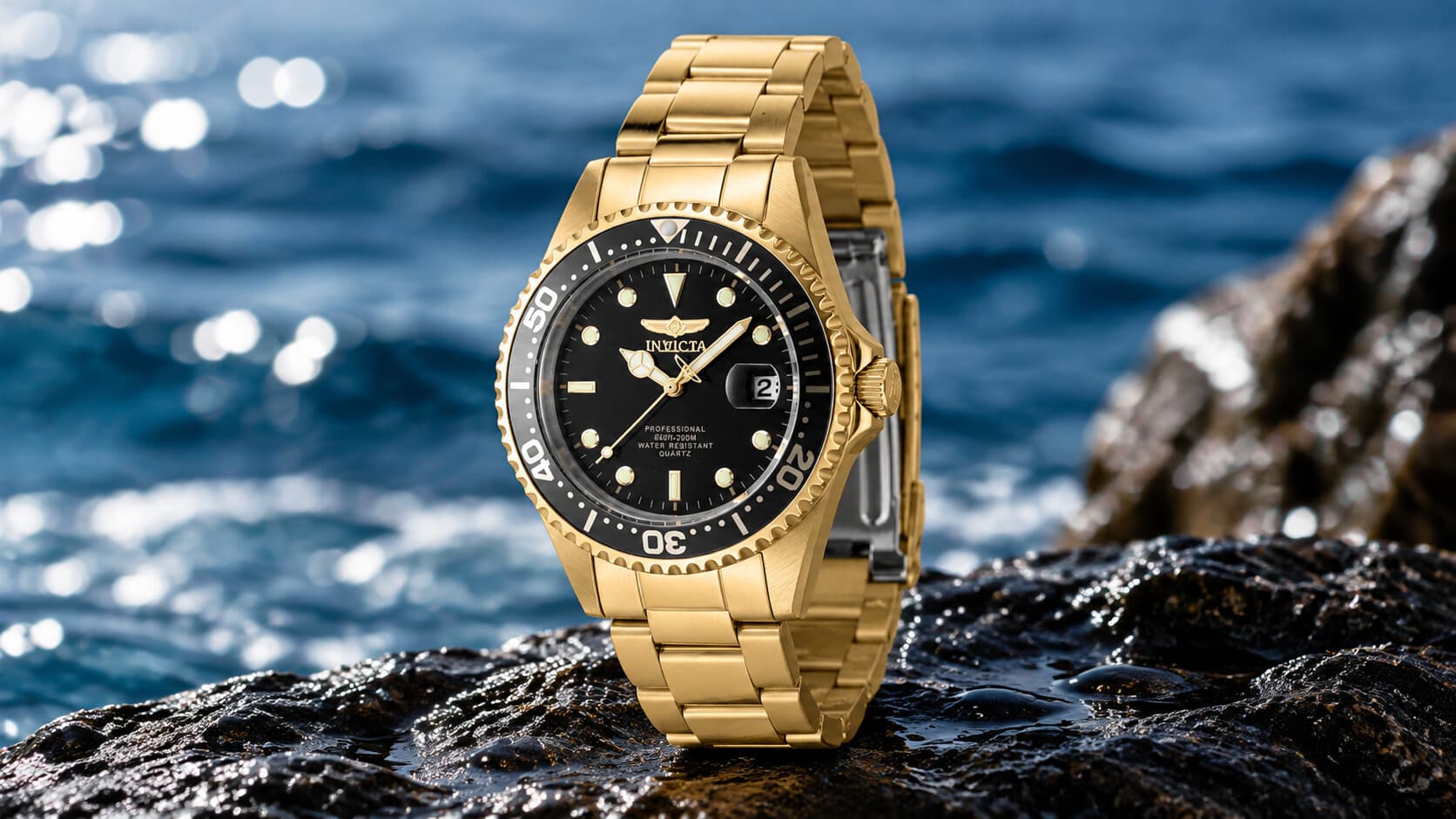
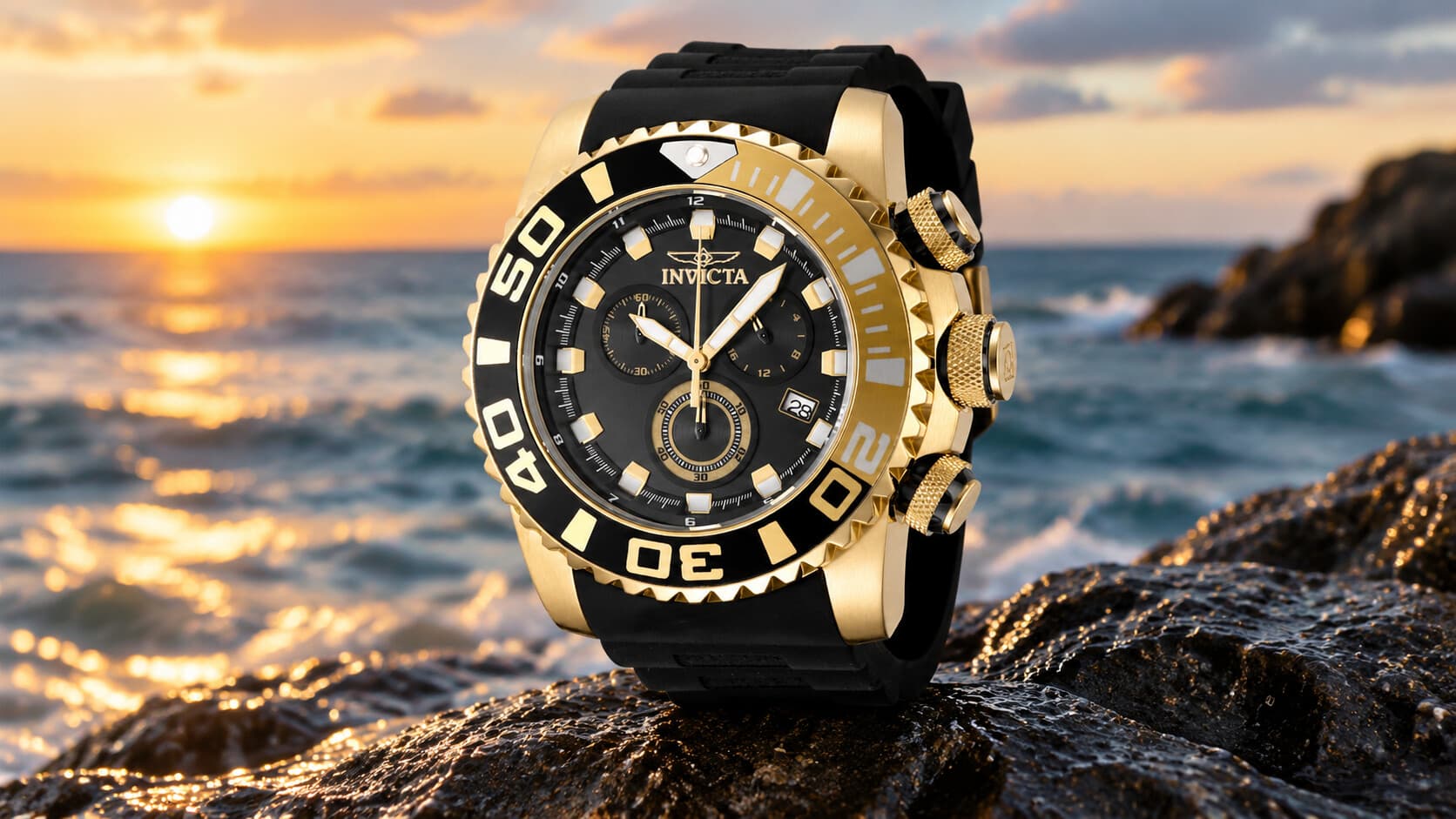
Invicta is known for large, flashy watches sold at low prices with very high “list prices” printed on the box. The brand built its modern identity on dive-style watches with oversized cases, bright dials, and rotating bezels that look far more expensive than they cost.
The company actually goes back further than most people think. Invicta started in 1837 in La Chaux-de-Fonds, Switzerland, a town that has produced Swiss watches for centuries. A watchmaker named Raphael Picard founded it with a simple goal: make solid Swiss watches that regular people could afford, not just the wealthy. For over a hundred years, the Picard family ran the company under the name Les Fils de R. Picard, and it earned real respect in the industry, even picking up a gold medal at the 1914 Swiss National Exhibition in Bern. In 1928, the business reorganized into a joint-stock company with a healthy capital base, a sign of how established the name had become in Europe.
Then the 1970s happened. Cheap, accurate quartz watches from Japan flooded the market and crushed traditional Swiss watchmakers who relied on mechanical movements. Invicta nearly disappeared during this stretch, known in the watch world as the quartz crisis. The name sat mostly dormant until 1991, when an American company led by Eyal Lalo, whose family had spent generations in the watch trade, bought the rights and relaunched Invicta in the United States. The company is now headquartered in Hollywood, Florida, and while it still uses the Swiss name and history in its marketing, most of its watches today are designed in the U.S. and manufactured in Asia, with only a smaller portion of higher-end pieces assembled using Swiss parts.
Since its American relaunch, Invicta has built its identity around volume and variety rather than exclusivity. Its parent group holds long-running license agreements with Disney, Marvel, Star Wars, DC Comics, Warner Bros., and the NFL, which explains the officially licensed Darth Vader, Batman, and team-branded watches sold alongside the brand’s plain steel dive watches. The company also holds dozens of design and mechanical patents and well over a thousand trademarks, and it has picked up international recognition like the Red Dot design award for individual watch designs, even though its overall reputation among watch enthusiasts remains mixed.
Invicta is also not a standalone company in the way its marketing sometimes implies. The same corporate group that owns Invicta also owns TechnoMarine, S. Coifman, and the Swiss brand Glycine, designing, manufacturing, and distributing all four under one roof. This shared structure explains why certain TechnoMarine case shapes bear a strong resemblance to Invicta models, since both brands draw from the same design and manufacturing pool despite being marketed as separate names.
Invicta Watch Quality: What to Expect
Invicta watches are decent for the price, but they are not built to the same standard as established Swiss or Japanese watchmakers. Most models use dependable, mass-produced movements, sturdy stainless steel cases, and simple quartz batteries that keep accurate time without much fuss.
That said, “decent for the price” is doing real work in that sentence. Invicta is transparent that it functions mainly as a case and design company rather than a traditional watchmaker. It buys movements from established suppliers, most often Japanese brands like Miyota and Seiko’s Hattori-Seiko division, and sometimes Swiss suppliers like ETA for pricier lines. These are the same kinds of movements found inside many respected mid-range watch brands, so the ticking heart of an Invicta is rarely the actual problem. A fuller breakdown of what quartz, automatic, and mechanical movements actually do differently is covered in Nobbier’s guide to how watch movements work.
The more common complaints from owners center on finishing details: crowns that feel loose, lume (the glow-in-the-dark coating on the hands and markers) that fades faster than it should, cheap crystal materials on entry models, and clasps that need adjusting out of the box. None of these are usually deal-breakers on a watch that might cost under $100, but they explain why Invicta doesn’t hold resale value or collector interest the way a Seiko or Tissot does. Because Invicta releases hundreds of new model variations every year across dozens of collections, quality also isn’t perfectly consistent from one reference number to the next, making the specific model a better indicator than the collection name alone.
The recurring theme across owner feedback on entry-level Pro Diver models is consistency without ceremony: the movement keeps reasonable time, the case holds up to daily bumps, and nothing about the experience feels remarkable in either direction.
That sums up the general consensus on the brand’s cheaper models: fine for casual daily wear at that price, not a watch built for a lifetime of hard use or to be handed down as an heirloom.
Why Are Invicta Watches So Cheap Compared to Their List Price?
Invicta prints a “manufacturer’s suggested retail price” on many watches that is far higher than what anyone actually pays. A watch labeled with an $895 MSRP might regularly sell for $90 to $150, and that gap is by design rather than a mistake.
This pricing style became closely tied to Invicta’s growth through television shopping networks in the 1990s and 2000s, where big “percentage off” numbers made for compelling on-air deals. The company has defended the practice by arguing the inflated price reflects what a similar combination of features, such as a Swiss movement, a sapphire crystal, and a high water-resistance rating, could theoretically cost from a more established brand. Critics see it differently, calling it a “shell game” that makes a fairly ordinary product feel like a luxury bargain.
This kind of pricing isn’t unique to Invicta, and it isn’t unregulated either. The Federal Trade Commission maintains a specific section of its Guides for the Watch Industry dealing with deceptive pricing, and its broader Guides Against Deceptive Pricing warn any retailer against advertising a “former price” that isn’t a genuine, real price the item actually sold for. Whether every inflated Invicta list price would hold up under that standard is debatable, but the rules exist precisely because this pattern, from big brands and small ones alike, has been common enough in retail for decades to draw regulatory attention.
The practical conclusion for anyone comparing models is that the MSRP carries almost no useful information about a watch’s actual value. A far more reliable measure is the street price, meaning what retailers commonly charge day to day, weighed against similar watches from other budget and mid-range brands. Pricing across unauthorized sellers or overseas listings can swing even further from any official number, a dynamic explained in more detail in Nobbier’s guide to the grey market for watches.
Invicta Watch Collections Explained
Invicta releases an enormous number of models each year, but nearly all of them fall under a handful of collection names, each with a distinct look and purpose.
| Collection | Style | Typical Case Size | Typical Street Price | Typical Use |
|---|---|---|---|---|
| Pro Diver | Rotating bezel, chunky case, resembles classic dive watches | 40–52mm | $50–$150 | Everyday wear, casual swimming |
| Bolt / Bolt Zeus | Sharp, angular case shapes, sporty dials | 45–53mm | $100–$250 | Bold statement pieces |
| Speedway | Chronograph-style layout inspired by racing watches | 45–53mm | $80–$220 | Motorsport-inspired sport watch |
| Coalition Forces | Military-inspired, rugged cases, tactical dials | 46–52mm | $90–$250 | Tough, outdoorsy daily wear |
| Reserve | Invicta’s higher-end line, Swiss-sourced movements on some models | Varies by sub-line | $150–$400+ | Dressier or “statement” occasions |
| Venom | Bold, sculpted cases with animal-inspired names and details | 47–52mm | $120–$300 | Collectors who like dramatic design |
| S1 Rally | Racing-inspired dials, often skeleton or open-heart designs | 44–50mm | $100–$250 | Motorsport fans, mechanical-watch fans |
| Character Collection | Officially licensed Disney, Marvel, Star Wars, DC, and NFL designs | 40–52mm | $90–$300+ | Fans and collectors of the licensed property |
These figures are approximate ranges based on commonly observed retail listings rather than the inflated MSRP printed on the box, and they shift with sales, limited editions, and specific materials like sapphire crystal or Swiss movements.
Pro Diver
The Pro Diver is Invicta’s best-known and best-selling line, and the one most people picture when they hear the brand’s name. It borrows heavily from classic dive watch design: a unidirectional rotating bezel, a large luminous dial, and a screw-down crown on many versions. Water resistance commonly ranges from 100 meters to 200 meters, which is fine for swimming and snorkeling but not for serious scuba diving.
Pro Divers come in both quartz (battery-powered) and automatic (self-winding, no battery needed) versions, often built around Japanese Miyota or Hattori-Seiko movements. Prices for base models frequently land under $100, making this the collection with the most affordable entry points across Invicta’s lineup.
Bolt and Bolt Zeus
The Bolt line pushes further into bold styling, with sharper case edges and more dramatic dial layouts than the rounder Pro Diver. The Bolt Zeus sits at the top of this family with larger, more sculpted cases and sometimes Swiss movements, along with limited-edition finishes like rainbow-coated crystals or fully anatomic case shapes designed to hug the wrist. These watches are built to be noticed rather than blend in, and pricing typically runs higher than the standard Pro Diver line.
Speedway
Speedway watches borrow visual cues from motorsport, including multiple sub-dials that mimic a chronograph stopwatch layout, tachymeter bezels, and racing-style color schemes like red, black, and silver. Some Speedway models include real chronograph functions, meaning the sub-dials actually time events, while others use the layout purely for looks, so the specific model’s functions are worth confirming before assuming it can time a lap. A few Speedway references also use fully mechanical, hand-wound movements with an exposed “ghost bridge” design that reveals some of the gears in motion, unusual at this price point.
Coalition Forces
This collection leans into a military and tactical look, with textured dials, camouflage patterns, and tougher-looking cases, some finished in matte black or gunmetal tones rather than polished steel. It appeals to buyers drawn to a rugged, outdoor aesthetic rather than a polished dress or dive style, and several references use automatic movements with exhibition case backs that leave the rotor visible.
Reserve
Reserve is Invicta’s step up in materials and finishing rather than a single fixed design. Watches under this label are more likely to use Swiss-made movements from suppliers like ETA, feature sapphire crystal instead of the more scratch-prone mineral crystal, and carry a noticeably higher, though still modest by luxury standards, price point. The Reserve name is applied across several sub-lines, including some Coalition Forces, Bolt Zeus, and Speedway models, functioning more as a quality tier than a standalone collection.
Venom and S1 Rally
Venom watches use dramatic, sculpted case designs, sometimes with gemstone accents built into the design, such as the “Cobra” variant’s colored gemstone eyes, or unusual shapes drawing from animal or mythological names. S1 Rally leans into motorsport styling similar to Speedway but frequently includes skeleton or open-heart dials that reveal some of the moving parts inside, along with racing-inspired color combinations like red, white, and checkered patterns.
Character Collection
Beyond its house designs, Invicta’s parent group holds official license agreements with Disney, Marvel, Star Wars, DC Comics, Warner Bros., and the NFL, channeling those into a dedicated line of collectible watches. These range from Darth Vader and Batman chronographs to team-branded NFL dials, often sold as limited editions with matching packaging. They’re built on the same Pro Diver or Bolt-style cases as the rest of the lineup, with the license mainly shaping the dial art, packaging, and included extras rather than the mechanics underneath.
How to Buy an Invicta Watch the Smart Way
A handful of habits make a real difference when shopping this brand, since the pricing and marketing can be confusing.
- The model number matters more than the collection name. Every Invicta watch has a specific model number printed on the case back or listing, and searching that exact number reveals what the watch typically sells for across different sellers.
- The crossed-out “was” price is marketing, not a real comparison point. The watch’s actual selling price is the only number worth judging it on.
- The movement type affects daily use. Quartz movements need a battery replacement every year or two but require no winding. Automatic movements never need a battery but will stop if left unworn for a few days, and quality can vary more between individual models.
- Water resistance ratings have real limits. A 100-meter rating is fine for washing hands or swimming; it is not a scuba-diving certification, regardless of how “diver” the watch looks. Nobbier’s guide to watch water resistance ratings breaks down what each number actually permits.
- Counterfeits circulate on third-party marketplaces. Because Invicta is so widely resold, it is also widely faked, and Nobbier’s guide to authenticating watches covers the general red flags worth checking before buying secondhand.
- Warranty terms vary by seller, not just by Invicta. Invicta’s standard manufacturer warranty typically runs one year, though individual retailers sometimes extend that coverage as part of their own promotions, making it worth confirming what a specific seller actually offers.
- Return policies matter more than small discounts. Because quality can vary between individual units, especially on lower-cost models, a flexible return window carries more real value than a marginal price cut.
Frequently Asked Questions
Are Invicta watches made in Switzerland?
Most Invicta watches today are designed by the company’s U.S. team and manufactured in Asia, primarily using movements from Japanese suppliers. A smaller number of higher-end models, mainly in the Reserve line, use Swiss-made movements or components, but the brand as a whole is not considered a Swiss manufacturer in the traditional sense anymore, even though it was founded in Switzerland in 1837.
What movement do most Invicta watches use?
Most Invicta watches run on Japanese quartz or automatic movements from suppliers like Miyota or Seiko’s Hattori-Seiko division. These are reliable, widely used movements found in many budget and mid-range watch brands, not something unique or lower quality made specifically for Invicta.
Why does Invicta list such high prices before discounting?
Invicta prints a manufacturer’s suggested retail price that is often far above what the watch actually sells for, a pricing style the brand built its reputation on through television shopping channels. The listed price functions as marketing rather than a genuine measure of the watch’s value, so the real street price against similar watches elsewhere is a far better comparison.
Is Invicta a good first watch brand?
Invicta works well as an affordable, low-risk way to try different watch styles, like dive watches or chronographs, without a large financial commitment. It’s a reasonable starting point for building a first small collection, though it’s not typically viewed as a long-term investment piece or a brand that holds resale value.
Are the Disney, Marvel, or NFL Invicta watches worth more than regular models?
Officially licensed Invicta watches are generally priced higher than a comparable plain design because of the license fee and limited-edition packaging, not because the watch itself is built to a higher mechanical standard. They can be worthwhile for a collector of that specific franchise or team, but they aren’t a better investment or higher-quality timepiece than Invicta’s standard collections.
How long do Invicta watches typically last?
With normal care, an Invicta watch’s movement can run reliably for years, since the movements themselves come from established suppliers. The parts most likely to wear out first are cosmetic or mechanical extras like the crystal, crown, clasp, or luminous coating, particularly on the brand’s lower-priced models.
The Bottom Line
Invicta earns its popularity honestly: it gives people access to big, dramatic watch designs and even officially licensed collectible pieces at prices most other brands simply can’t match, built around movements that are perfectly serviceable for daily wear. The trade-off is equally clear, since the inflated list prices are pure marketing, the finishing details won’t match a $500 watch from a more established name, and the brand carries little to no resale value or collector prestige. Judged on those honest terms, rather than the number crossed out on the price tag, Invicta makes the most sense as an affordable way to enjoy bold watch styling, not as a long-term investment or a substitute for a more established brand’s craftsmanship.