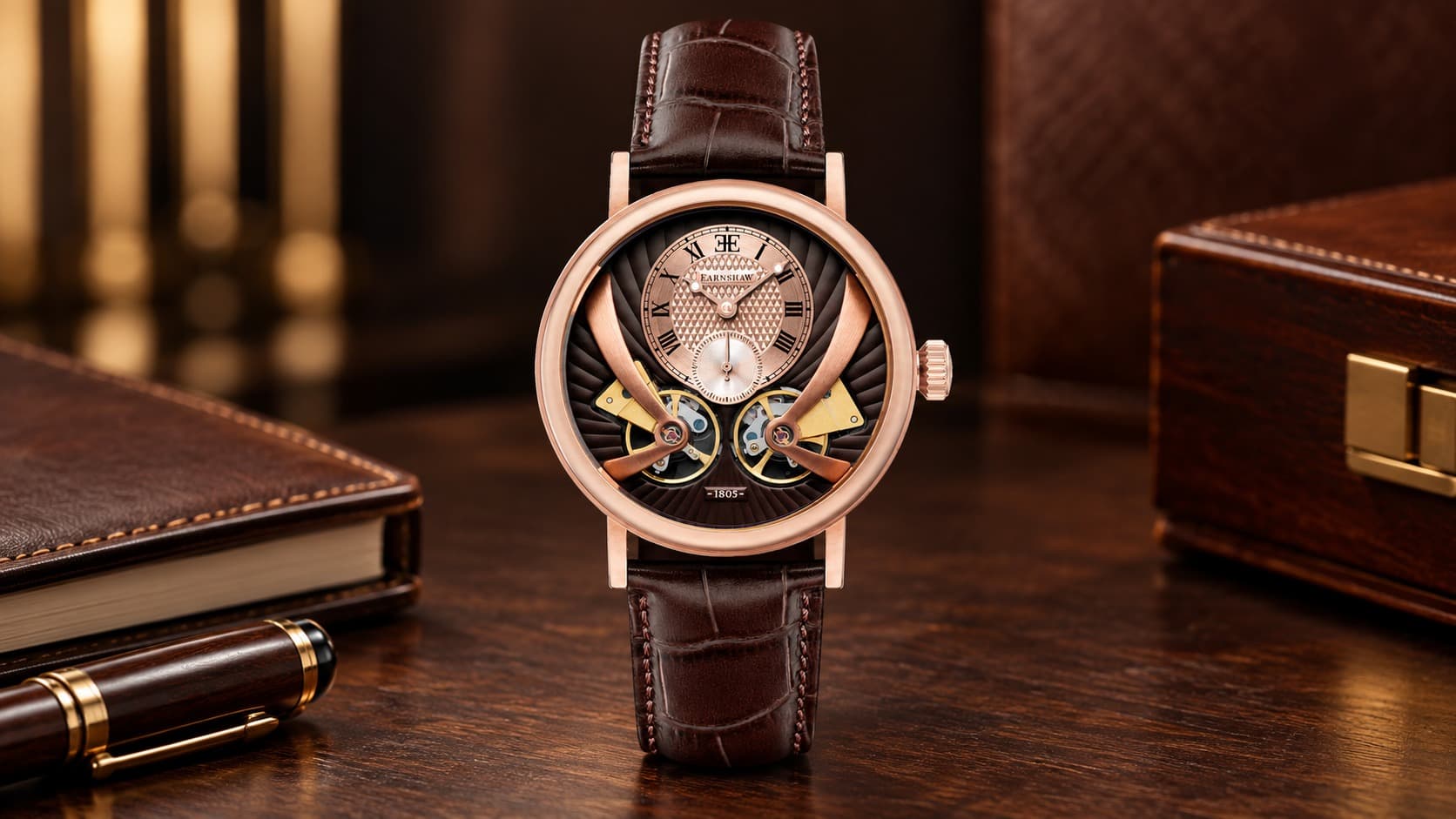
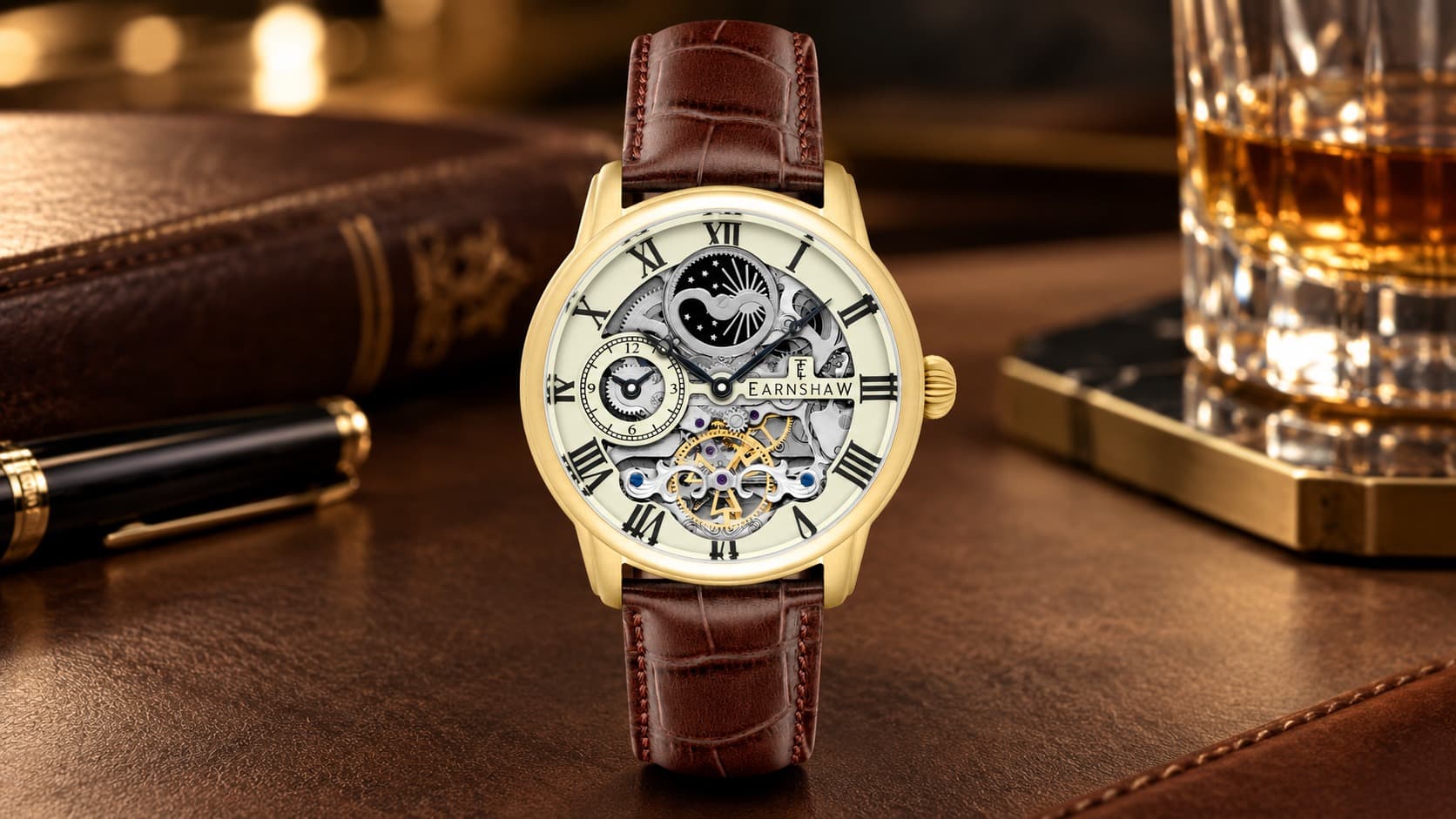
Thomas Earnshaw watches represent a fascinating intersection of genuine historical legacy and modern affordable luxury. Named after the legendary 18th-century English chronometer maker who helped revolutionize marine navigation, the modern Earnshaw brand offers skeleton automatic watches that showcase mechanical movements at accessible prices. While the contemporary company operates independently from its historical namesake, Earnshaw timepieces have carved out a distinctive niche in the affordable watch market through their emphasis on visible complications, British-inspired design elements, and competitive pricing. For watch enthusiasts seeking entry-level mechanical timepieces with visual appeal, Earnshaw presents both compelling advantages and important considerations that every potential buyer should understand before making a purchase decision.
The Story Behind Earnshaw Watches
The Thomas Earnshaw story bridges two completely separate eras, connecting an 18th-century English master craftsman with a 21st-century affordable watch company that borrowed his famous name. The historical clockmaker created revolutionary marine timepieces that changed navigation forever, while today’s brand focuses on bringing mechanical watches to budget-conscious buyers who want to see their movements working.
- Thomas Earnshaw lived from 1749 to 1829 and became one of England’s greatest clockmakers during the age of sailing ships and exploration. He worked in London creating marine chronometers – special clocks that could keep accurate time even on rocking ships in storms. Before his innovations, sailors couldn’t figure out exactly where they were on the ocean, which led to shipwrecks and lost expeditions. Earnshaw fixed this problem by making chronometers that stayed accurate no matter how rough the seas got.
- His chronometers used clever mechanical solutions like temperature compensation wheels and special escapements that weren’t affected by ship movement or weather changes. These improvements were so important that the British Royal Navy bought hundreds of his timepieces to use during the Napoleonic Wars. When ships could navigate precisely, they could avoid enemy fleets, find safe harbors, and complete their missions successfully. Earnshaw’s workshop in London became famous across Europe for producing the most reliable marine timepieces available.
- The most famous voyage using Earnshaw chronometers was Charles Darwin’s trip on HMS Beagle from 1831 to 1836. Darwin needed perfect timekeeping to map new lands and record scientific observations with precise coordinates. The Earnshaw chronometers never failed during the entire five-year voyage, helping Darwin collect the data that would later support his theory of evolution. Many other exploration voyages also relied on Earnshaw timepieces to discover new continents and chart unknown waters.
- When Thomas Earnshaw died in 1829, his workshop closed and no family members continued the business. For nearly 200 years, the Earnshaw name disappeared from the watch world completely. During this time, other companies like Rolex, Omega, and Seiko built their reputations by actually continuing to make watches generation after generation. The Earnshaw legacy lived on only in maritime museums where his original chronometers are displayed as priceless historical artifacts.
- In 2012, a British company called Dartmouth Brands decided to revive the Earnshaw name for a new line of affordable watches. Dartmouth Brands was incorporated in 2013 and owns more than 30 different watch brands including AVI-8, Spinnaker, and CCCP. The company employs around 25 people and operates from offices in London, Hertford, and Andover. They specialize in creating new watch brands quickly by using historical names and stories that sound impressive to customers.
- The modern Earnshaw brand has absolutely no connection to the original clockmaker’s family, workshop, or techniques. No descendants of Thomas Earnshaw were involved in creating the new company, and none of the historical tools, designs, or methods are used in today’s production. This practice is called “borrowed heritage” in the watch industry, where companies take famous names from the past to make their products seem more prestigious than they actually are.
- Dartmouth Brands chose the Earnshaw name specifically because Thomas Earnshaw is considered one of the greatest clockmakers in British history. By using his reputation, they could market their watches as having a connection to this legendary craftsman, even though the connection exists only in name. Many customers don’t research the history deeply enough to realize there’s no actual relationship between the original maker and today’s brand.
- The business model focuses on selling directly to customers through websites rather than traditional watch stores. They set very high original prices (called MSRPs) then offer constant “sales” with 50-70% discounts to make buyers think they’re getting expensive watches for cheap. Most of their watches are manufactured in China using mass-produced movements, though they also source some parts from Japan and Switzerland depending on the price level.
- Since 2012, the brand has become most popular in English-speaking countries like the United States, United Kingdom, and India. They sell mainly through their own website, Amazon, and discount watch retailers like Ashford and Jomashop. Traditional jewelry stores usually don’t carry Earnshaw watches because serious watch collectors know about the borrowed heritage issue and prefer brands with genuine historical connections.
- The company positions Earnshaw as their premium brand within the Dartmouth portfolio, focusing on skeleton watches that let buyers see the mechanical movements working inside. They use maritime themes and exploration stories in their marketing to reinforce the connection to the historical Thomas Earnshaw, even though today’s watches have nothing to do with marine chronometry or navigation equipment.
Today’s Thomas Earnshaw brand represents a modern marketing strategy that uses a genuinely impressive historical reputation to sell contemporary budget watches. While the original clockmaker truly was a legendary craftsman whose innovations changed the world, buyers should know that purchasing a modern Earnshaw watch doesn’t mean owning a piece of that historical legacy. The current watches are simply affordable timepieces that happen to carry the name of a famous historical figure, much like how a restaurant might be called “Napoleon’s” without any actual connection to the French emperor. For shoppers considering Earnshaw watches, the decision should be based on the actual quality and features of today’s products rather than any assumed connection to 18th-century British craftsmanship.
Earnshaw Watch Characteristics: Design, Quality, and Price
Earnshaw watches occupy a unique position in the affordable watch market by combining skeleton movement displays with aggressive pricing strategies and heritage-inspired design themes. The brand targets entry-level mechanical watch enthusiasts who want to see their timepieces working without paying luxury prices, though several factors distinguish them from both budget competitors and established heritage brands.
- Skeleton and open-heart dial designs form the core identity of most Earnshaw models, allowing wearers to observe the mechanical movements operating through cutouts in the dial face. This visual complexity appeals to newcomers who find traditional closed dials boring but can’t afford expensive luxury watches with similar complications. The skeleton designs range from small apertures showing just the balance wheel to fully exposed movements where nearly the entire dial reveals the gears, springs, and escapements working together.
- Movement variety spans multiple price points and quality levels, from basic Chinese automatic calibers in entry-level models to Swiss Sellita movements in premium pieces. Most popular models use Chinese-made movements from manufacturers like Shanghai and Seagull, which provide adequate timekeeping and visual appeal at very low costs. Mid-range models often feature Japanese Miyota automatic movements known for better reliability, while the highest-priced pieces incorporate Swiss movements that command respect from serious collectors.
- Oversized case dimensions typically range from 42mm to 48mm in diameter, appealing to buyers who prefer bold, masculine timepieces that make strong visual statements. The large cases provide ample space for skeleton displays and give the watches substantial wrist presence that photographs well for social media. However, these dimensions can overwhelm smaller wrists and make the watches unsuitable for formal business environments where subtlety is preferred.
- Maritime and exploration themes permeate the entire product line through collection names like Longitude, Beaufort, Admiral, and Drake that reference famous navigators, naval history, and scientific expeditions. Each model includes storytelling elements that connect the timepiece to historical exploration, even though the actual watches have no navigation capabilities or maritime heritage beyond marketing narratives borrowed from the original Thomas Earnshaw’s legacy.
- Aggressive discount pricing represents the brand’s primary competitive advantage, with most models selling for 50-70% below their stated retail prices through constant promotional campaigns. A watch listed at $400 MSRP typically sells for $160-180, making mechanical complications accessible to buyers who normally could only afford quartz timepieces. This pricing strategy works because many customers focus on the “savings” rather than researching whether the original prices were artificially inflated.
- British design aesthetics appear throughout the collections via Roman numeral hour markers, classic color combinations of white, black, and gold, and vintage-inspired case shapes that evoke early 20th-century pocket watches. The styling deliberately contrasts with modern sports watch trends by emphasizing traditional elegance and historical references rather than contemporary technology or athletic functionality.
- Entry-level mechanical accessibility allows budget-conscious buyers to experience automatic movements without investing in established Swiss or Japanese brands that cost significantly more. For many customers, Earnshaw represents their first mechanical watch purchase, introducing them to concepts like power reserves, hand-winding, and the satisfaction of wearing a timepiece powered by wrist movement rather than batteries.
- Limited water resistance ratings of 30-50 meters restrict these watches to basic splash protection rather than swimming or water sports activities. This limitation reflects the focus on dress watch aesthetics over sports functionality, though many competitors at similar prices offer 100+ meter ratings that provide greater versatility for active lifestyles.
- Proprietary strap designs with unique lug shapes make replacement difficult when the original leather straps wear out or break. While the initial straps often feature attractive textures and colors that complement the vintage-inspired cases, finding compatible replacements requires ordering directly from Earnshaw rather than using standard aftermarket options available at any watch shop.
- Exhibition casebacks on most models reveal the movement from both front and rear, doubling the visual mechanical appeal that attracts skeleton watch enthusiasts. The transparent case backs often include decorative engravings with maritime themes and the Earnshaw logo, though the Chinese movements visible through these windows lack the finishing quality found in Swiss or high-end Japanese calibers.
- Direct-to-consumer sales model eliminates traditional retail markups, allowing the company to offer lower prices than competitors who sell through jewelry stores and authorized dealers. However, this approach also means customers can’t examine the watches in person before purchasing and must rely on online photos and descriptions that may not accurately represent the actual product quality or size.
Earnshaw watches succeed by making mechanical complexity visually accessible to buyers who want impressive-looking timepieces without luxury price tags. The skeleton designs, maritime storytelling, and dramatic discount pricing create an appealing package for entry-level enthusiasts, though buyers should approach these watches as fashion accessories rather than serious horological instruments. The brand fills a specific market niche between basic fashion watches and established mechanical watch manufacturers, offering visual complexity that photographs well and sparks conversations, even if the underlying quality and heritage claims don’t match the marketing presentation.
Top 10 Best Earnshaw Watches
Earnshaw’s current lineup centers around skeleton automatics and dual-time complications, with most models priced between $179-219 after typical discounts from inflated retail prices. The brand refreshes their collection frequently, but certain designs have proven most popular with customers seeking visible mechanical movements and maritime-inspired aesthetics.
- Regency Blue (ES-8059-05) commands $199 after discount from $520 MSRP, featuring a 43mm stainless steel case with blue dial and dual barrel automatic movement. The skeleton design reveals the movement’s gear train through strategic cutouts while maintaining readability with applied Roman numerals. The blue leather strap complements the dial color, though some buyers report strap deterioration within 18 months of regular wear. Water resistance reaches 50 meters for basic splash protection, and the exhibition caseback displays the Chinese automatic movement with decorative rotor engraving.
- Legacy White (ES-8063-01) sells for $179 down from $350 retail, offering a 42mm case with white skeleton dial and dual time zone complication that appeals to frequent travelers. The secondary time display appears in a subdial at 9 o’clock, powered by a modified Chinese automatic movement with additional gear trains. Roman numeral hour markers provide classical elegance, while the brown leather strap adds vintage character. The smaller 42mm size works better for average wrist sizes compared to Earnshaw’s typically oversized cases.
- Sovereign Gold (ES-8011-04) represents the brand’s most dramatic skeleton design at $179 from $380 MSRP, housed in a substantial 48mm gold-tone case that maximizes visual impact. The grande skeleton dial exposes nearly the entire movement, showing gears, springs, and the oscillating balance wheel in constant motion. Black Roman numerals contrast sharply against the exposed brass movement plates, creating strong readability despite the mechanical complexity. The large size makes this model unsuitable for smaller wrists or formal occasions requiring subtlety.
- Imperial White (ES-8059-01) costs $199 after discount from $500 retail, featuring a 43mm case with white dial and small seconds subdial at 6 o’clock for enhanced functionality. The automatic movement includes hand-winding capability and hacking seconds for precise time setting. Blue steel hands provide classical elegance against the white background, while the skeleton aperture at 12 o’clock reveals the escapement mechanism. Brown leather strap with contrast stitching adds vintage appeal, though replacement options remain limited due to proprietary lug design.
- Midnight Green (ES-8006-09) offers multifunction complexity for $179 down from $320 MSRP, combining skeleton displays with day/date complications in a 44mm black case. The dark green dial creates unusual color contrast rarely seen in skeleton watches, appealing to buyers seeking distinctive aesthetics. Multiple subdials show day, date, and 24-hour time, powered by a Chinese automatic movement with calendar module. The black leather strap matches the case finish, creating a cohesive monochromatic appearance that photographs well for social media.
- Structured Gold (ES-8049-02) commands $219 from $470 retail as one of the brand’s premium mechanical offerings, featuring hand-wound movement in a 42mm gold-tone case. The manual winding appeals to traditionalists who prefer the daily ritual of winding their watches, while the structured skeleton dial reveals the gear train geometry in precise patterns. Roman numerals and baroque-style hands enhance the classical appearance, though the manual movement requires daily attention that some buyers find inconvenient compared to automatic alternatives.
- Stealth Black (ES-8063-03) sells for $179 down from $375 MSRP, offering an all-black aesthetic with dual time zone functionality in a 42mm PVD-coated case. The black dial with matching case creates a contemporary tactical appearance that contrasts with Earnshaw’s typically classical styling. Skeleton apertures reveal the movement’s operation while maintaining the stealth aesthetic through darkened components. White numerals and hands provide essential contrast for readability, though the PVD coating may wear off with heavy use.
- Fine Brown (ES-8006-08) provides multifunction capability for $179 from $340 retail, featuring brown dial with gold-tone accents in a 44mm case that emphasizes warm, vintage-inspired colors. The combination of skeleton displays and calendar complications appeals to buyers wanting both visual interest and practical functionality. Brown leather strap matches the dial color perfectly, creating coordinated appearance that works well with casual and business casual attire. The Chinese automatic movement includes day/date displays alongside the central skeleton aperture.
- Emerald Green (ES-8011-09) offers grande skeleton drama for $179 down from $390 MSRP, featuring an unusual emerald green dial color in the brand’s largest 48mm case size. The extensive skeleton design exposes most of the movement’s components, creating maximum visual complexity for buyers who want their watches to spark conversations. Gold-tone case and hands complement the green dial, though the bold color combination limits versatility with different clothing styles. The oversized dimensions make this model suitable only for larger wrists.
- Tuxedo Black (ES-8006-07) rounds out the top models at $179 from $320 retail, combining all-black aesthetics with multifunction complications in a 44mm case designed for evening wear versatility. The black dial features silver skeleton apertures that reveal the movement’s operation while maintaining formal elegance suitable for black-tie events. Multiple subdials provide day, date, and 24-hour displays powered by a Chinese automatic movement. The black leather strap includes subtle texture that adds visual interest without compromising the formal appearance.
- Technical specifications remain consistent across the lineup, with stainless steel cases ranging 42-48mm in diameter and 14-16mm thick, 22mm strap widths for aftermarket compatibility, mineral crystal rather than scratch-resistant sapphire, and 3-10 ATM water resistance depending on model. Most watches include exhibition casebacks, hacking seconds for precise time setting, and 38-42 hour power reserves typical of Chinese automatic movements.
- Movement accuracy varies by caliber type, with Chinese movements typically running +20-40 seconds per day compared to +/-15 seconds for Japanese alternatives at similar prices. The skeleton designs prioritize visual appeal over chronometric precision, making these watches better suited for casual wear rather than situations requiring exact timekeeping. Hand-winding capability allows manual power input when automatic winding proves insufficient during sedentary periods.
- Strap quality represents a consistent weak point across models, with genuine leather construction that often shows premature wear, cracking, or color fading within 12-18 months of regular use. The proprietary lug shapes make standard replacement straps incompatible, forcing buyers to order replacements directly from Earnshaw at additional cost. Some models include deployant clasps that improve security and comfort compared to traditional pin buckles.
These ten models represent Earnshaw’s most successful designs in terms of customer satisfaction and sales volume, though buyers should expect fashion watch quality rather than serious horological craftsmanship. The skeleton complications provide impressive visual appeal that photographs well and generates positive attention, making these watches effective conversation starters and social media accessories. However, the Chinese movements, mineral crystals, and construction shortcuts reflect the aggressive pricing strategy that prioritizes affordability over long-term durability or precision timekeeping that serious watch enthusiasts demand from their mechanical timepieces.
How to Choose the Right Earnshaw Watch
Purchasing an Earnshaw watch requires careful evaluation of several key factors that distinguish these timepieces from both fashion watches and established mechanical brands. The brand’s unique positioning between budget quartz watches and serious horological instruments creates specific considerations that buyers should address before making their decision.
- Movement type significantly impacts long-term satisfaction and maintenance requirements across Earnshaw’s diverse lineup. Chinese automatic movements in entry-level models provide adequate timekeeping and visual appeal but typically require replacement rather than service after 3-5 years of use. Japanese Miyota movements in mid-range pieces offer better reliability and serviceability, while Swiss Sellita movements in premium models deliver chronometer-grade performance with established repair networks. Manual wind movements appeal to traditionalists but require daily winding discipline that some buyers find inconvenient.
- Case size selection proves critical given Earnshaw’s tendency toward oversized dimensions that can overwhelm smaller wrists or appear inappropriate in formal business settings. The 42mm models work best for 6.5-7.5 inch wrists, while 44-48mm cases require 7.5+ inch wrists to maintain proportional appearance. Thickness measurements of 14-16mm create substantial wrist presence that may not fit comfortably under dress shirt cuffs, limiting versatility for professional environments requiring slim profile timepieces.
- Water resistance ratings of 30-50 meters restrict usage to basic splash protection rather than swimming, showering, or water sports activities that many buyers expect from modern watches. Competitors at similar prices often provide 100+ meter ratings that allow greater lifestyle flexibility, making Earnshaw watches primarily suitable for dry land activities. The skeleton dial constructions with multiple apertures may also compromise water resistance over time as seals age and gaskets deteriorate.
- Budget planning should account for realistic pricing rather than inflated MSRPs that create false impressions of value and savings. Most Earnshaw watches sell for their true market value of $150-220, with original retail prices artificially elevated to enable dramatic discount marketing. Smart buyers focus on the actual purchase price compared to competitors rather than percentage savings from fictional starting prices that no retailer ever charges.
- Strap replacement considerations become important due to proprietary lug designs that prevent standard aftermarket strap compatibility. When original leather straps deteriorate within 12-24 months, buyers must order replacements directly from Earnshaw rather than visiting local watch shops for immediate solutions. This limitation increases long-term ownership costs and creates inconvenience when straps fail unexpectedly during travel or important events.
- Service availability varies dramatically by geographic location, with authorized repair centers concentrated in major markets while rural buyers face shipping delays and limited warranty support. International customers often encounter extended wait times for parts and service, making local independent watchmakers the only practical option for routine maintenance. Chinese movements may lack parts availability after 5-7 years, effectively making the watches disposable rather than repairable heirlooms.
- Style versatility depends heavily on specific model selection between classical dress watch designs and bold skeleton displays that command attention in any setting. Conservative Roman numeral models work well for business environments, while dramatic grande skeleton pieces suit casual and social occasions but may appear inappropriate for professional meetings. Color combinations of dial, case, and strap significantly impact wardrobe compatibility and long-term satisfaction.
- Quality expectations should align with fashion watch standards rather than Swiss or Japanese mechanical watch benchmarks that serious collectors demand. Earnshaw timepieces excel as conversation starters and social media accessories but lack the precision, durability, and refinement that characterize established horological brands. Buyers seeking their first mechanical watch may find Earnshaw adequate, while experienced collectors typically prefer proven alternatives.
- Warranty coverage extends 24 months for manufacturing defects but excludes common wear items like straps, crystals, and battery components that often fail first. Registration requirements and proof of purchase obligations create administrative burdens, while customer service responsiveness has drawn consistent complaints from buyers experiencing problems. International warranty claims involve shipping costs and extended wait times that may exceed the watch’s actual value.
- Resale value remains minimal due to fashion watch positioning rather than collectible status that maintains long-term worth. Secondary market prices typically range 50-70% below purchase prices, making Earnshaw watches poor investment choices compared to established brands that retain value better. Buyers should consider these timepieces as disposable accessories rather than assets that appreciate or maintain worth over time.
- Alternative brand comparison reveals superior options at similar price points from established manufacturers like Seiko, Orient, and Citizen that offer genuine heritage, better movements, established service networks, and proven reliability. These alternatives may lack skeleton complications but provide superior long-term value through better construction quality and comprehensive dealer support that Earnshaw cannot match.
- Purchase timing affects pricing and model availability as Earnshaw frequently updates their lineup and discontinues popular models without warning. Seasonal sales events and promotional campaigns can reduce prices further, while limited edition releases may sell out quickly. Direct website purchases often provide better selection than third-party retailers who carry only basic models.
- Return policy evaluation becomes essential given the inability to examine these watches in person before purchase through the predominant online sales channels. Understanding return windows, condition requirements, and shipping cost responsibilities helps protect buyers who discover size, quality, or aesthetic issues after delivery. Some retailers offer more generous return policies than others for the same models.
Successful Earnshaw purchases require realistic expectations about quality, functionality, and long-term value that align with fashion watch standards rather than serious horological benchmarks. Buyers who appreciate mechanical complexity, maritime aesthetics, and conversation-starting designs may find satisfaction with these timepieces, provided they approach the purchase as acquiring an interesting accessory rather than a precision instrument or valuable collectible. The skeleton displays and aggressive pricing create appeal for entry-level mechanical watch enthusiasts, but experienced collectors typically prefer established alternatives that offer superior movements, better construction quality, and genuine heritage backing their marketing claims.
Best Places to Buy Earnshaw Watches
Earnshaw watches sell primarily through online channels and discount retailers, with limited availability in traditional brick-and-mortar jewelry stores that typically prefer established heritage brands. The direct-to-consumer model allows competitive pricing but reduces opportunities for hands-on examination before purchase, making retailer selection important for customer service and return policies.
- Official thomas-earnshaw.com website serves as the primary sales channel with the largest model selection, latest releases, and most frequent promotional campaigns offering 50-70% discounts from MSRP pricing. The site features detailed product photography, specification charts, and heritage storytelling that emphasizes the maritime connection, though buyers cannot examine actual watches before ordering. International shipping reaches most countries with 2-year warranty coverage, but customer service operates from Hong Kong which can complicate returns and warranty claims for Western buyers.
- Major online marketplaces provide convenient purchasing through both official brand stores and various sellers, with familiar shipping benefits and return policies that many customers prefer over direct website ordering. Authentic Earnshaw watches on these platforms typically match official website pricing during promotional periods, though buyers must verify seller authorization to ensure warranty coverage. Customer reviews often provide more honest assessments than the curated testimonials on the official website.
- Authorized discount watch retailers specialize in discounted luxury and fashion watches, frequently offering Earnshaw models at prices competitive with the official website. Their inventory focuses on popular skeleton models rather than the complete lineup, with regular sales events that can reduce prices below even the manufacturer’s promotional pricing. These retailers provide established customer service and return policies familiar to watch buyers, plus occasional bundle deals combining watches with accessories.
- Specialized watch retailers carry select Earnshaw models as authorized dealers with professional presentation and detailed specifications that help buyers make informed decisions. Their inventory typically includes current popular models rather than limited editions or discontinued pieces, with pricing that matches other authorized dealers during promotional periods. Educational content about watch movements and complications provides useful context for first-time mechanical watch buyers considering Earnshaw pieces.
- Grey market retailers offer Earnshaw watches at pricing that often beats authorized dealer prices, though warranty coverage may be limited to retailer-specific policies rather than manufacturer protection. Their inventory varies unpredictably based on wholesale availability, sometimes including discontinued models not available elsewhere. Buyers should verify warranty terms before purchasing, as grey market watches may not qualify for official Earnshaw service support.
- Online auction platforms include both new and used Earnshaw watches from various sellers, with new pieces often available below retail pricing from dealers clearing inventory. Used watches typically sell for 50-70% of retail prices, reflecting poor resale value but creating opportunities for budget-conscious buyers willing to accept pre-owned condition. Buyers must carefully verify seller reputation and authenticity, as the borrowed heritage branding creates opportunities for counterfeit products.
- Indian market presence through major e-commerce platforms and luxury watch retailers represents Earnshaw’s strongest regional distribution outside English-speaking countries. These platforms offer local customer service in multiple languages and familiar payment methods for Indian buyers, with pricing often more competitive than importing from Western retailers. The brand’s maritime themes and British heritage marketing particularly resonate with Indian consumers interested in classical European aesthetics.
- International shipping reaches most global markets through the official website and major online retailers, though shipping costs, customs duties, and local taxes can significantly increase total purchase prices. Buyers in countries without authorized dealers may face extended wait times for warranty service and parts, effectively making local independent watchmakers the only practical repair option. Some regions restrict automatic watch imports or impose additional regulations that complicate ordering.
- Retail store availability remains extremely limited compared to established watch brands, with most traditional jewelry stores declining to stock Earnshaw due to the borrowed heritage concerns and fashion watch positioning. Buyers seeking in-person examination must typically visit multi-brand discount retailers or department stores that carry fashion watch selections rather than serious horological dealers. This limitation prevents trying different sizes and examining build quality before purchase.
- Seasonal sales events around Black Friday, Christmas, and summer clearance periods often provide the deepest discounts from both official and authorized dealer channels. These promotional periods can reduce prices 10-20% below standard promotional pricing, making timing important for budget-conscious buyers. However, popular models may sell out quickly during major sales events, forcing buyers to choose between immediate purchase and waiting for potential better pricing.
- Authentication verification becomes important when purchasing from third-party sellers or grey market dealers, as the heritage marketing and relatively high MSRPs create incentives for counterfeit production. Genuine Earnshaw watches include specific serial number formats, movement markings, and packaging details that buyers should verify against official specifications. The skeleton dial designs make movement inspection easier than solid dial watches for detecting obvious fakes.
- Return policy comparison varies significantly between retailers, with some offering 30-day satisfaction guarantees while others impose restocking fees or limit returns to defective merchandise only. Major marketplace return policies often provide more buyer protection than smaller specialized retailers, while the official website’s international return process can involve extended shipping times and customer service delays that frustrate buyers experiencing problems.
- Warranty registration requires completion through the official website regardless of purchase source, with proof of purchase from authorized dealers necessary for full 24-month coverage. Grey market purchases may void manufacturer warranty coverage entirely, leaving buyers dependent on retailer-specific protection that varies in scope and duration. International buyers should verify warranty service availability in their regions before purchase.
- Price monitoring tools can help buyers identify genuine sales versus artificial price manipulation that creates false urgency. Given Earnshaw’s frequent promotional campaigns and inflated MSRP strategy, patient buyers can often find better deals by waiting for legitimate sales events rather than responding to time-limited offers that may not represent actual savings.
- Authorized dealer networks vary by region, with stronger representation in English-speaking markets than continental Europe or Asia beyond India. Buyers should verify dealer authorization status before purchase to ensure warranty coverage and authentic merchandise, as unauthorized sellers may offer counterfeit products or grey market goods without full manufacturer support.
Smart Earnshaw buyers research multiple retailers to compare pricing, warranty terms, and return policies before making purchase decisions, since the direct-to-consumer model creates variation in customer service quality and post-purchase support. The online-heavy distribution means buyers cannot examine these watches in person before ordering, making retailer reputation and return policies crucial for satisfaction with purchases that may not meet expectations for size, quality, or aesthetic appeal based solely on website photography and marketing descriptions.
Earnshaw Watch Resale Value: What to Expect When Selling
Earnshaw watches function primarily as fashion accessories rather than investment pieces, with secondary market performance reflecting their positioning as affordable mechanical timepieces rather than collectible horological instruments. Buyers should approach these purchases expecting minimal value retention and focusing on personal enjoyment rather than financial appreciation over time.
- Secondary market prices consistently range 50-70% below original purchase prices on various resale platforms and classified advertisements, with most used Earnshaw watches selling for $50-150 regardless of original retail pricing. This dramatic depreciation occurs immediately upon purchase and continues steadily, making even recent models worth significantly less than buyers paid just months earlier. The steep value decline reflects market recognition that these watches represent fashion accessories rather than serious horological investments.
- Limited collector interest stems from the borrowed heritage marketing and Chinese manufacturing that serious watch enthusiasts view unfavorably compared to established brands with genuine historical connections. Watch collector forums consistently categorize Earnshaw as “mushroom brand” products that lack the authenticity and craftsmanship that drive collector demand. This reputation severely limits future appreciation potential regardless of current model popularity or visual appeal.
- Market demand remains concentrated among entry-level buyers seeking affordable mechanical watches rather than experienced collectors who typically prefer proven brands with established service networks and genuine heritage. The narrow target audience reduces liquidity in the secondary market, with many listings receiving few watchers or bids compared to equivalent Swiss or Japanese alternatives. This limited demand pool contributes to poor resale performance and extended selling times.
- Brand recognition outside enthusiast communities remains minimal despite aggressive marketing campaigns emphasizing the historical Thomas Earnshaw connection. General consumers often don’t recognize the Earnshaw name compared to major luxury or mainstream watch brands, reducing impulse purchase interest from casual buyers browsing used watch listings. The lack of mainstream brand awareness limits resale appeal to the same narrow demographic that buys new Earnshaw watches.
- Seasonal model updates and frequent discontinuations prevent any particular Earnshaw design from developing the consistent availability that creates collector following over time. Unlike established brands that maintain popular models for decades, Earnshaw regularly refreshes their lineup to maintain marketing freshness, making discontinued pieces obsolete rather than rare. This constant product churn prevents the scarcity that typically drives appreciation in collectible timepieces.
- Component quality limitations affect long-term desirability as Chinese movements, mineral crystals, and construction shortcuts become apparent to potential buyers examining used examples. Worn Earnshaw watches often show movement irregularities, crystal scratches, and case finish deterioration that reduce appeal compared to better-built alternatives at similar used prices. The visible quality compromises make these watches less attractive as they age compared to properly constructed timepieces.
- Service availability concerns impact resale confidence since buyers of used Earnshaw watches often discover limited repair options and parts availability that make maintenance expensive or impossible. Potential purchasers research these issues before buying used mechanical watches, frequently choosing alternatives from brands with established service networks rather than risking expensive repairs on Chinese movements with uncertain parts supplies.
- Authentication challenges create additional barriers for both sellers and buyers in secondary markets where counterfeit Earnshaw watches occasionally appear due to the heritage marketing and relatively high MSRP positioning. The skeleton dial designs make movement inspection easier than solid dial watches, but casual buyers may lack expertise to distinguish genuine pieces from convincing fakes, reducing confidence in used purchases.
- Regional market variations show stronger performance in certain countries where Earnshaw maintains better brand recognition and customer service support. Some international markets show more stable used pricing due to local retail presence and customer familiarity, while other regions demonstrate steeper depreciation reflecting greater availability of established alternatives at competitive prices.
- Condition sensitivity affects pricing more dramatically than with better-built watches, as Earnshaw timepieces often show wear patterns that significantly impact functionality and appearance. Strap deterioration, movement irregularities, and case finish issues common in used examples can reduce values below even the modest expectations typical for fashion watches, making condition assessment critical for both buyers and sellers.
- Comparison with alternatives reveals superior value retention from established Japanese and Swiss brands that cost similar amounts new but maintain higher resale percentages due to better construction quality and brand recognition. Entry-level automatic watches from reputable manufacturers typically retain 60-80% of their value after moderate use, while equivalent Earnshaw pieces often drop to 30-50% of purchase price in similar condition.
- Bundle sale strategies sometimes help sellers recoup higher percentages by offering multiple Earnshaw watches together rather than individual pieces, appealing to buyers seeking variety for collection building or gift giving. However, these bulk sales still typically achieve prices well below what the individual pieces cost new, confirming the poor individual value retention that characterizes the brand.
- Documentation importance increases for used Earnshaw sales since boxes, papers, and warranty cards may be the only way to verify authenticity and original purchase source for potential buyers. Complete documentation rarely increases prices significantly but can reduce selling time by providing confidence to buyers concerned about authenticity or warranty coverage for recently purchased pieces.
- Market timing affects resale success with holiday periods and summer months typically showing better demand for gift purchases and vacation acquisitions. However, even optimal timing rarely allows sellers to achieve prices approaching their original purchase costs, emphasizing the fundamental value retention challenges that affect all Earnshaw models regardless of condition or completeness.
- Investment comparison with legitimate collectibles like vintage luxury chronometers or modern limited editions from established manufacturers demonstrates the vast performance gap between serious horological investments and fashion watch purchases. While rare vintage timepieces can appreciate hundreds of percent over decades, Earnshaw watches lose most of their value immediately and show no historical precedent for future appreciation regardless of current model popularity.
- Depreciation timeline follows predictable patterns with steepest value loss occurring within the first 6-12 months after purchase, followed by gradual decline that stabilizes at 30-50% of original pricing after 2-3 years. This depreciation curve resembles consumer electronics or fashion accessories rather than timepieces from manufacturers whose products maintain more stable long-term values.
- Auction performance rarely exceeds private sale prices for Earnshaw watches, as the limited collector base and poor brand recognition reduce competitive bidding that drives higher realized prices for desirable timepieces. Most auction results confirm the 50-70% depreciation typical in private sales, with exceptional examples occasionally achieving slightly better results due to timing or presentation rather than inherent value.
Earnshaw buyers should approach these purchases as consumption expenses similar to clothing or electronics rather than investments that might appreciate or maintain value over time. The combination of borrowed heritage, Chinese manufacturing, limited brand recognition, and fashion watch positioning creates fundamental barriers to value retention that no amount of skeleton complexity or maritime marketing can overcome in secondary markets where buyers have unlimited alternatives from established manufacturers with proven track records.
Earnshaw Watch Maintenance: Cleaning, Service, and Repair

Earnshaw watches require specific maintenance approaches that account for their Chinese movement construction, skeleton dial complexity, and limited service network availability. Proper care can extend functional lifespan significantly, though buyers should prepare for eventual replacement rather than long-term restoration given the fashion watch positioning and parts availability challenges.
- Daily wearing practices significantly impact longevity since the skeleton dial constructions and oversized cases create vulnerability to shocks and impacts that solid-dial watches better resist. Automatic models require consistent wrist movement to maintain power reserves, typically needing 8-12 hours of active wear daily to stay wound properly. Manual wind models demand daily winding discipline, with 15-20 full crown turns recommended each morning to achieve optimal 38-42 hour power reserves without overwinding stress.
- Water exposure limitations demand strict adherence to the 30-50 meter resistance ratings that provide only splash protection rather than swimming or shower safety. Even brief submersion during handwashing can compromise seals around skeleton apertures and crown assemblies that receive less robust gasket protection than solid sports watches. Humidity from hot showers or steam rooms can fog crystals and damage movements, making these watches unsuitable for bathroom wear during bathing routines.
- Crystal cleaning requires gentle techniques since mineral glass scratches more easily than sapphire alternatives used by premium brands. Microfiber cloths and gentle circular motions remove fingerprints and smudges without creating additional scratches, while avoiding paper towels or rough fabrics that can damage the surface. For stubborn marks, slightly dampened cloths work better than cleaning chemicals that might seep through skeleton apertures into movement components.
- Strap maintenance varies by material type but generally involves regular cleaning and conditioning to prevent premature cracking and color fading that commonly affects Earnshaw leather straps within 12-18 months. Brown and black leather straps benefit from monthly conditioning with appropriate leather products, while avoiding water exposure that accelerates deterioration. Metal bracelets require periodic cleaning with soft brushes to remove accumulated dirt and oils from link mechanisms.
- Movement accuracy monitoring helps identify developing problems before complete failure occurs, with Chinese automatic movements typically maintaining +20-40 seconds daily when functioning properly. Sudden accuracy changes, irregular hand movements, or complete stopping indicate internal issues that require professional attention. Hand-wound models should maintain consistent power reserves and smooth winding feel, with resistance or grinding sensations suggesting gear train problems.
- Professional service intervals follow 3-5 year schedules for automatic movements, though Chinese calibers often require attention sooner due to manufacturing tolerances and lubrication quality that differs from Swiss or Japanese standards. Complete overhauls typically cost $80-150 through independent watchmakers, often approaching or exceeding the watch’s replacement value for entry-level models. Swiss Sellita movements in premium Earnshaw pieces justify service costs better than Chinese alternatives.
- Parts availability creates significant challenges since Earnshaw supplies components only to authorized service centers rather than independent repair shops or consumers seeking DIY maintenance. Common wear items like crowns, crystals, and hands may become unavailable as models age, effectively making watches unrepairable after 5-7 years regardless of movement condition. Generic replacement parts sometimes work but may not match original specifications or aesthetics.
- Storage recommendations emphasize protection from magnetic fields, extreme temperatures, and direct sunlight that can affect movement regulation and dial colors over time. Watch boxes or padded drawers prevent crystal scratches and case dings during periods of non-wear, while automatic winding boxes maintain power reserves for occasional-wear pieces. Skeleton watches benefit from dust-free storage since exposed movements collect particles more readily than sealed alternatives.
- Crown and pusher care prevents common failure points that frequently affect Earnshaw watches due to cost-cutting in sealing systems and component quality. Gentle operation without forcing resistance helps preserve threading and gasket integrity, while avoiding crown adjustment during wet conditions prevents water ingress. Chronograph pushers on multifunction models require particularly careful operation since these complications add complexity to budget movements.
- Temperature considerations affect accuracy and longevity since Chinese movements often lack temperature compensation found in higher-grade calibers. Extreme cold can cause lubricants to thicken and affect timekeeping, while excessive heat accelerates oil degradation and component wear. Room temperature storage and gradual temperature transitions help maintain optimal performance, particularly important for manual wind movements with exposed gear trains.
- Magnetic field exposure from smartphones, computers, and household electronics can magnetize movement components and affect timekeeping accuracy significantly. Modern Chinese movements lack antimagnetic shielding found in better watches, making Earnshaw timepieces particularly susceptible to magnetic interference. Professional demagnetization costs $20-40 but may require repetition if exposure continues.
- Travel precautions become important for skeleton watches that expose delicate movement components to airport security, baggage handling, and climate changes during transit. Padded travel cases protect against impacts, while manual wind models should be wound before flights to maintain operation during time zone adjustments. Customs declarations for valuable-appearing watches may be required despite their actual modest values.
- Warranty service procedures require contacting customer service through the official website with proof of purchase and detailed problem descriptions. International customers often face extended shipping times and customs complications when sending watches for warranty repair. The 24-month coverage excludes common wear items like straps and crystals that frequently fail first, limiting warranty utility for typical problems.
- Independent repair options provide alternatives when official service proves inadequate or unavailable, though watchmakers may decline complex skeleton movements or charge premium rates for unfamiliar calibers. Local repair shops often substitute generic components when original parts aren’t available, potentially affecting appearance and functionality. Some repairs may void remaining warranty coverage, requiring careful consideration of timing and service provider selection.
- Preventive maintenance extends functional life through regular cleaning, proper storage, and gentle handling that reduces stress on budget movement components designed for limited service intervals. Rotating between multiple watches reduces individual wear, while avoiding extreme activities protects skeleton constructions from impacts that solid watches better withstand. Simple care practices often prove more cost-effective than professional services for fashion watches with limited repair value.
- End-of-life planning helps owners prepare for eventual replacement when repair costs exceed watch values or parts become unavailable. Most Earnshaw watches provide 3-7 years of service with proper care before requiring expensive overhauls that aren’t economically justified. Planning replacement timing allows budget allocation for superior alternatives while maximizing enjoyment from current pieces without unrealistic longevity expectations.
Successful Earnshaw ownership requires balancing proper care with realistic expectations about longevity and repair economics that favor replacement over restoration for most models. The skeleton complexity and maritime aesthetics provide enjoyment during functional periods, but buyers should treat these watches as medium-term accessories rather than lifetime heirlooms that justify extensive maintenance investments typical of serious horological instruments from established manufacturers with comprehensive service networks.
Frequently Asked Questions About Earnshaw Watches
Common questions about Earnshaw watches reflect buyer uncertainty about quality, heritage claims, and value propositions that distinguish these timepieces from both established brands and typical fashion watches. These answers address the most frequent concerns based on customer experiences and industry analysis.
- Are Earnshaw watches good quality? Earnshaw watches deliver adequate quality for their actual selling prices of $150-220, though not for the inflated MSRPs of $300-500 used in marketing. The stainless steel cases provide reasonable durability and skeleton dials offer visual appeal, but mineral crystals scratch easily and leather straps deteriorate quickly. Quality aligns with fashion watch standards rather than serious horological benchmarks.
- What movements do Earnshaw watches use? Most models feature Chinese automatic movements from Shanghai and Seagull manufacturers that provide basic timekeeping at low costs. Mid-range pieces include Japanese Miyota calibers for better reliability, while premium models use Swiss Sellita movements. Movement quality varies significantly across price points, with Chinese calibers adequate for casual wear but lacking precision of established alternatives.
- Are Earnshaw watches waterproof? No, most models offer only 30-50 meter water resistance suitable for handwashing and light rain. The skeleton dial constructions create additional seal points that compromise water protection. Swimming, showering, or water sports activities risk water damage that voids warranty coverage.
- How accurate are Earnshaw automatic watches? Chinese automatic movements typically run +20-40 seconds per day, considerably less accurate than Japanese alternatives achieving +/-15 seconds daily at similar prices. The skeleton constructions prioritize visual appeal over chronometric precision, making them better suited for casual wear than exact timekeeping situations.
- Do Earnshaw watches come with warranty? All authentic pieces include 24-month international warranty for manufacturing defects in movements, hands, and dials when purchased from authorized dealers. However, warranty excludes common wear items like straps and crystals that often fail first. Registration through the official website with proof of purchase is required.
- Can I replace the strap on my Earnshaw watch? Strap replacement proves challenging due to proprietary lug designs that prevent standard aftermarket compatibility. When original leather straps deteriorate within 12-24 months, buyers must order replacements directly from Earnshaw rather than using readily available alternatives from watch shops.
- Are Earnshaw watches suitable for daily wear? They function adequately for office environments and social occasions but lack durability and water resistance for active lifestyles. The oversized cases and skeleton complications create vulnerability to impacts that solid sports watches better resist. Daily wear accelerates strap deterioration and reduces functional lifespan.
- How do I set the time on an automatic Earnshaw watch? Pull the crown to its outermost position, rotate to adjust hours and minutes, then push back to normal position. Many models include hacking seconds that stop movement during adjustment. Avoid setting time between 9 PM and 3 AM when date mechanisms engage to prevent damage.
- What’s the difference between Earnshaw and other British watch brands? Modern Earnshaw operates as a Chinese-manufactured fashion watch brand with borrowed British heritage, unlike established companies like Bremont that maintain genuine UK connections. Today’s brand has no actual relationship to the historical clockmaker’s workshop, family, or techniques despite marketing claims.
- Are skeleton watches from Earnshaw durable? Skeleton designs create additional complexity and potential failure points compared to solid dial alternatives. The exposed movements collect dust readily and become vulnerable to impacts, though proper care helps maximize longevity within the 3-5 year expectation typical for Chinese automatic movements.
- Can I swim with my Earnshaw watch? Swimming is not recommended due to limited water resistance and skeleton dial vulnerabilities. Even 50-meter rated models provide only splash protection rather than swimming safety. The combination of oversized cases and exposed dial apertures makes these watches unsuitable for aquatic activities.
- How long do Earnshaw watches last? Typical models provide 3-5 years of functional service with proper care before requiring expensive maintenance or replacement. Chinese movements often need attention sooner due to manufacturing tolerances, while premium Swiss movement models may last 5-8 years with appropriate service intervals.
- Are Earnshaw watches worth buying? They offer reasonable value at actual selling prices of $150-220 for buyers seeking affordable mechanical complexity and skeleton visual appeal. However, they provide poor value at inflated MSRP pricing and cannot compete with Japanese alternatives like Seiko for long-term reliability and service support.
- Where can I get my Earnshaw watch repaired? Official warranty service operates through authorized centers, though international customers face extended shipping times. Independent watchmakers may service basic functions but often lack original parts access. Many owners find replacement more practical than repair when problems develop beyond warranty coverage.
- Do Earnshaw watches hold their value? They experience dramatic depreciation immediately upon purchase, typically retaining only 30-50% of buying prices in secondary markets. The borrowed heritage and fashion watch positioning create barriers to value retention that limit resale appeal to entry-level buyers seeking affordable mechanical watches.
These answers reflect common customer experiences and industry analysis, helping potential buyers make informed decisions based on realistic expectations about Earnshaw watch capabilities and limitations rather than marketing claims that may not align with actual ownership experiences.
Conclusion
Thomas Earnshaw watches occupy a unique position in the affordable watch market by offering skeleton mechanical complications at aggressive discount prices, making them accessible entry points for buyers curious about automatic movements. The visual appeal of exposed gears and escapements provides genuine entertainment value and conversation-starting potential that photographs well for social media sharing. For first-time mechanical watch buyers seeking impressive-looking timepieces without luxury price tags, Earnshaw delivers adequate functionality wrapped in maritime-themed marketing that creates emotional connection to the genuine historical legacy of the legendary English clockmaker.
However, significant concerns about borrowed heritage marketing, Chinese manufacturing quality, limited service networks, and poor resale value severely impact the long-term ownership experience. The dramatic depreciation, proprietary strap designs, mineral crystals, and customer service challenges create frustrations that many buyers discover only after purchase. While the skeleton displays and classical styling offer visual satisfaction, the underlying construction shortcuts and questionable longevity make these watches better suited as fashion accessories than serious horological instruments that justify maintenance investments over time.
Smart buyers considering Earnshaw watches should focus on actual selling prices of $150-220 rather than inflated MSRPs, approach purchases as medium-term accessories rather than lifetime investments, and compare alternatives from established brands like Seiko, Orient, and Citizen that offer superior movements, genuine heritage, and comprehensive service support at similar costs. For those attracted specifically to skeleton complications and willing to accept fashion watch limitations, Earnshaw provides reasonable value when expectations align with the reality of Chinese manufacturing and borrowed heritage positioning rather than the marketing narratives that emphasize prestigious historical connections to British chronometer craftsmanship.