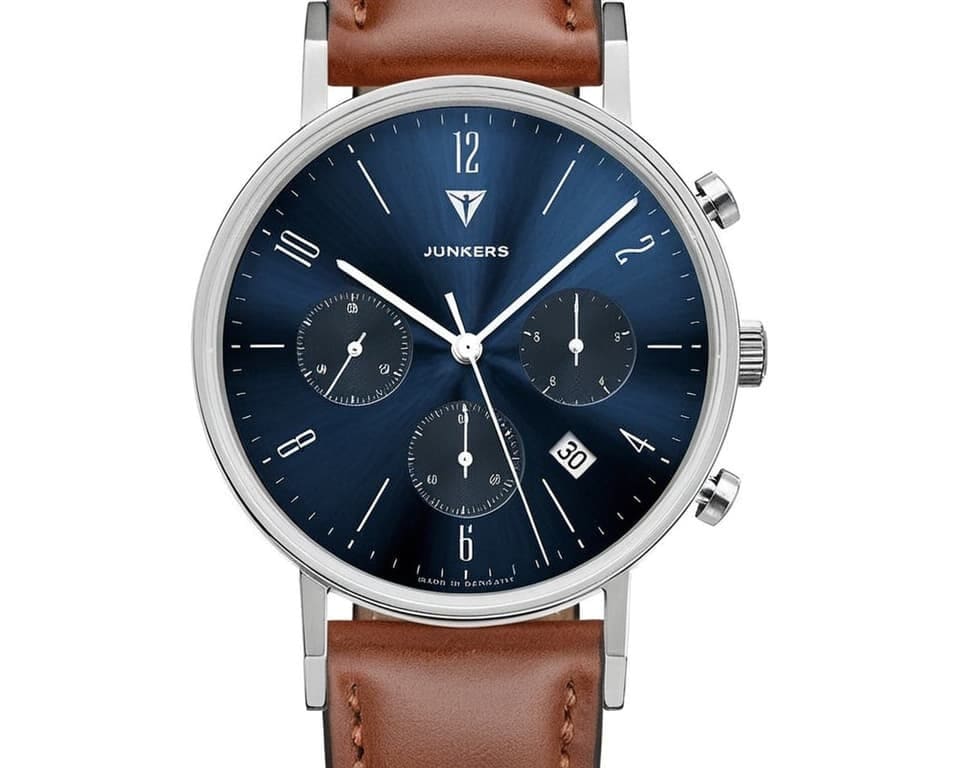
Junkers watches blend German aviation history with modern watchmaking, carrying Hugo Junkers’ aircraft legacy into contemporary timepieces. What makes them compelling is the recent transformation under family ownership, with Charlotte Junkers, the aviation pioneer’s great-granddaughter, now controlling the brand through Junkers Uhren GmbH. This change has renewed focus on authentic German manufacturing and aviation-inspired design, positioning Junkers between accessible pricing and genuine heritage. Current pricing spans $230 USD for entry-level quartz models to $2,600 USD for Swiss chronometer pieces, making German watchmaking accessible across different budgets. Whether you prefer Bauhaus minimalism or pilot watch functionality, navigating today’s Junkers landscape requires understanding recent brand changes and identifying which models offer the best value.
Junkers Brand History: How Aviation Became Watchmaking
The Junkers brand story reveals how aviation pioneering spirit evolved into modern watchmaking excellence, though recent ownership changes have created both opportunities and complexity for buyers. The transformation from licensed manufacturing to family control has fundamentally changed what Junkers represents in today’s watch market.
- Hugo Junkers built his reputation as both an aviation pioneer and Bauhaus supporter during the early 20th century, creating revolutionary aircraft designs while fostering artistic innovation. His factories produced groundbreaking all-metal aircraft including the legendary Ju 52 “Tante Ju” with its distinctive corrugated aluminum skin, which became one of aviation history’s most recognizable planes and inspired the textured dial patterns found on many current Junkers timepieces.
- The watch brand emerged in 1988 when PointTec Electronic GmbH obtained licensing rights to use the Junkers name and began production in 1998, building a reputation for affordable pilot-inspired timepieces over nearly two decades. PointTec’s approach focused on mass production using reliable Japanese Miyota and Swiss movements, creating accessible entry points into aviation-themed watches while establishing design themes that persist today.
- Legal disputes between PointTec and the Junkers family escalated through the 2010s, culminating in license termination in 2017 and a definitive court settlement in 2020 that awarded complete naming rights to the Junkers heirs. This resolution allowed Charlotte Junkers to reclaim her family’s legacy and establish authentic German operations independent of the previous mass-production model.
- Modern Junkers operates as a boutique manufacturer emphasizing traditional German craftsmanship and authentic aviation heritage rather than volume production. Charlotte Junkers personally oversees design decisions and quality standards, working with co-managing directors Dr. Manuel Mayer and Georgi Peev to maintain hand-assembly processes in Germany while sourcing premium movements from Switzerland and Japan.
- The brand split created lasting market confusion as PointTec continued producing similar watches under new names like Iron Annie and Zeppelin, while authentic Junkers models command higher prices due to lower production volumes and premium positioning. This separation explains why buyers today encounter multiple aviation-themed German watch brands with similar aesthetics but different quality standards and pricing structures.
The evolution from licensed mass production to family-controlled boutique manufacturing represents a complete philosophical shift that affects every aspect of current Junkers watches. Today’s models prioritize authenticity and craftsmanship over affordability, resulting in superior build quality but requiring careful dealer verification to ensure authentic family-produced timepieces rather than older PointTec stock or competing brands using similar design languages.
Junkers Watch Quality: German Craftsmanship and Aviation-Inspired Design
Junkers watches distinguish themselves through a unique combination of authentic German aviation heritage, Bauhaus design principles, and strategic movement selection that delivers quality at accessible price points. The brand’s approach differs significantly from typical fashion watches by prioritizing functional design elements rooted in actual aircraft instrumentation and German engineering philosophy.
- Authentic German assembly sets Junkers apart from competitors who merely license German names for overseas production, with each watch hand-assembled in Munich facilities under direct family supervision. Charlotte Junkers maintains strict quality control protocols that ensure consistent build standards, while German labor adds authenticity that justifies premium pricing over mass-produced alternatives from similar price segments.
- Aviation heritage influences every design decision, from the distinctive corrugated dial patterns that mirror the Ju 52’s aluminum skin to the large Arabic numerals designed for cockpit legibility during flight operations. Many models feature specific aircraft references in their naming and design elements, such as the G38 collection honoring Hugo Junkers’ largest passenger aircraft, creating emotional connections for aviation enthusiasts beyond mere aesthetic appeal.
- Bauhaus design philosophy drives the brand’s minimalist aesthetic approach, emphasizing clean lines, functional layouts, and purposeful proportions that eliminate unnecessary decorative elements. This design language originated from Hugo Junkers’ direct collaboration with Bauhaus artists in the 1920s, making current watches authentic expressions of this influential design movement rather than modern interpretations.
- Strategic movement sourcing balances reliability with cost effectiveness by selecting proven calibers from established manufacturers rather than developing proprietary movements. Junkers uses reliable Japanese Miyota automatics for volume models, Swiss ETA movements for premium pieces, and Swiss Ronda quartz for entry-level options, ensuring each watch contains appropriate movement quality for its price point while maintaining repair accessibility worldwide.
- German engineering principles influence case construction and dial design with emphasis on durability and legibility over flashy aesthetics, resulting in watches that function as genuine tool watches rather than jewelry pieces. Specifications like anti-magnetic properties, shock resistance, and clear dial layouts reflect practical requirements from the brand’s aviation heritage rather than marketing-driven features.
- Limited production volumes compared to mass-market brands create exclusivity while maintaining affordability, with annual production measured in thousands rather than hundreds of thousands of units. This approach allows attention to individual quality control and design refinement while keeping prices reasonable compared to other boutique German manufacturers like A. Lange & Söhne or Glashütte Original.
- Direct family involvement in design and production decisions ensures authentic heritage expression rather than corporate interpretation of aviation themes, with Charlotte Junkers personally reviewing new models and maintaining connections to her great-grandfather’s original design philosophy. This personal oversight creates consistency and authenticity that larger corporate watch brands cannot replicate.
The combination of genuine aviation heritage, authentic German production, and thoughtful component selection creates watches that offer substance beyond their modest pricing. Junkers succeeds by staying true to functional design principles rather than chasing trends, resulting in timepieces that appeal to enthusiasts seeking authentic stories and practical functionality rather than luxury status symbols.
Top 10 Best Junkers Watches
Current Junkers models span four distinct collections, each targeting different preferences and budgets while maintaining the brand’s aviation heritage and German quality standards. These selections represent the most compelling options available, chosen for their combination of value, reliability, and design excellence.
- Junkers Bauhaus 6060-5 delivers exceptional value at $420-540 USD with its Miyota 9132 automatic movement featuring power reserve indicator, date display, and 24-hour subdial complications. The 40mm stainless steel case with domed hesalite crystal provides authentic vintage character, while the exhibition caseback reveals decorated movement details. This model represents the optimal balance of features and pricing for first-time Junkers buyers seeking mechanical sophistication without premium costs.
- Junkers Bauhaus 6050-2 elevates the experience with Swiss Sellita SW200 movement and refined finishing details at $600-800 USD, offering superior movement decoration and reliability compared to Japanese alternatives. The clean white dial with blued steel hands exemplifies Bauhaus minimalism, while sapphire crystal and improved water resistance justify the price premium for buyers prioritizing Swiss quality in authentic German packaging.
- Junkers Flieger Bronze GMT 966.02.02 represents the brand’s most innovative achievement with solid bronze construction, Seiko NH34 GMT movement, and industry-leading 200-meter water resistance. The 42mm bronze case develops natural patina over time while the GMT function serves dual time zone travelers, making this the first Junkers suitable for serious water activities and professional aviation use.
- Junkers Cockpit JU52 6252-4 captures authentic pilot watch aesthetics with oversized Arabic numerals, robust Miyota 821A movement, and vintage aviation design elements at $300-400 USD. The large crown designed for gloved operation and matte black dial ensure excellent legibility, while the corrugated dial texture references the famous Ju 52 aircraft that inspired the collection name.
- Junkers Hugo Junkers Chronometer 6270-2 showcases Swiss ETA 2826-2 movement with COSC chronometer certification, representing the brand’s premium mechanical offering at approximately $850 USD. The classical dress watch design with small seconds subdial and power reserve indicator appeals to buyers seeking certified precision in elegant packaging suitable for business or formal occasions.
- Junkers Bauhaus Lady 6075M-2 addresses female buyers with 35mm sizing, Swiss quartz movement, and rose gold-plated case at $280-350 USD. The proportionally scaled design maintains Bauhaus principles while offering practical sizing for smaller wrists, with reliable Swiss Ronda movement ensuring minimal maintenance requirements for daily wear.
- Junkers Iron Annie JU52 Big Date 6640-2 features the brand’s distinctive corrugated dial design with oversized date display and dual time zones at $230-280 USD. The quartz movement provides reliable accuracy while the textured dial creates visual interest that directly references aircraft construction techniques, making this an affordable entry point into Junkers’ aviation heritage.
- Junkers G38 Chronograph 6970-2 offers Swiss Ronda chronograph movement with 1/10th second precision and 12-hour totalizer at $260-320 USD. The aviation-inspired layout with contrasting subdials ensures excellent legibility during timing operations, while the robust quartz movement eliminates maintenance concerns for buyers prioritizing functionality over mechanical complexity.
- Junkers Spitzbergen F13 6164-5 honors polar aviation history with Miyota automatic movement and distinctive cream dial at $380-450 USD. The watch commemorates Hugo Junkers’ F13 aircraft used in Arctic expeditions, featuring period-appropriate numerals and hands that maintain legibility in extreme conditions while offering modern reliability through proven Japanese movement technology.
- Junkers Manual Wind ETA 7001 provides traditional mechanical watchmaking at $900 USD with Swiss hand-wind movement and small seconds display. This model appeals to purists seeking authentic manual winding experience, featuring exhibition caseback that reveals the beautifully finished ETA movement while maintaining slim profile suitable for dress watch applications.
These recommendations reflect current availability and proven performance based on user feedback, technical specifications, and market positioning within Junkers’ lineup. Each model addresses different priorities while maintaining the quality standards and authentic design language that distinguish Junkers from competitors in similar price ranges, providing clear guidance for buyers across various needs and budgets.
How to Choose the Right Junkers Watch
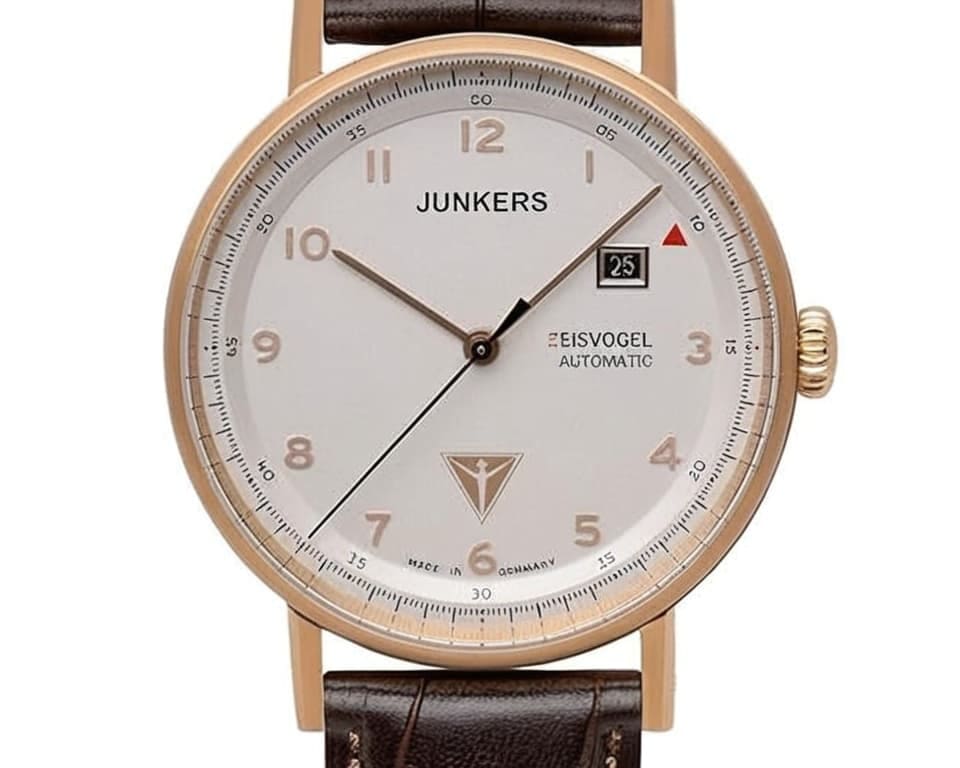
Selecting the right Junkers watch requires evaluating several key factors that affect long-term satisfaction, from movement preferences to sizing considerations and intended use scenarios. The brand’s diverse offerings create opportunities but also require careful matching of specifications to individual needs and expectations.
- Movement type selection fundamentally impacts ownership experience, with quartz models offering minimal maintenance and superior accuracy for buyers prioritizing convenience and reliability. Automatic movements provide traditional mechanical appeal and eliminate battery replacements but require regular wear or winding to maintain operation, while Swiss movements command premium pricing for enhanced prestige and potentially better long-term service support compared to Japanese alternatives.
- Case sizing varies significantly across collections, with Bauhaus models available in both 38mm and 40mm diameters to accommodate different wrist sizes and style preferences. Pilot watches typically measure 40-42mm for enhanced legibility, while ladies’ models scale down to 35mm with proportionally adjusted dial elements. Lug-to-lug measurements affect wearability more than diameter alone, particularly for smaller wrists where 47mm+ lug spacing creates overhang issues.
- Water resistance limitations restrict most Junkers models to splash resistance only, with traditional 30-50 meter ratings unsuitable for swimming or water sports activities. The new bronze GMT series breaks this limitation with 200-meter rating and screw-down crown, making it the first Junkers suitable for serious water activities. Buyers planning regular swimming or diving require careful model selection or should consider alternative brands with superior water resistance specifications.
- Crystal type affects both aesthetics and durability, with entry-level models using mineral glass or hesalite providing authentic vintage character but requiring careful handling to prevent scratching. Sapphire crystal models offer superior scratch resistance and clarity but command higher prices, while hesalite crystals can be polished to remove minor scratches but lack the hardness of modern alternatives.
- Strap options include genuine Italian leather as standard equipment across most models, with various colors and textures complementing different dial combinations. Metal bracelets remain limited in availability and typically require separate purchase, while NATO straps provide casual alternatives that enhance water resistance through elimination of spring bar failure points. Leather quality generally exceeds price expectations but requires replacement every 1-2 years with regular wear.
- Price positioning considerations include recent significant increases from the PointTec era, with automatic models previously selling for €350 now commanding €800+ for equivalent specifications. These increases affect value perception compared to competitors like Orient, Seiko Prospex, or Hamilton, requiring careful evaluation of German assembly premium versus alternative brand offerings with similar movement quality and features.
- Collection coherence matters for buyers planning multiple purchases, as Bauhaus models complement each other aesthetically while mixing pilot watches with dress pieces may create styling conflicts. The brand’s aviation theme provides natural collection unity, though individual models vary significantly in formality levels from business-appropriate Bauhaus pieces to casual pilot watches unsuitable for professional environments.
- Service accessibility varies by geographic location, with European buyers enjoying comprehensive manufacturer support while North American customers may require independent watchmaker services for routine maintenance. Movement selection affects service options, as Swiss ETA calibers enjoy universal service support while some Japanese movements may require specialized parts availability through authorized service centers.
- Authentication concerns arise from market confusion between authentic family-produced Junkers watches and older PointTec stock or competing brands using similar aesthetics. Buyers must verify current production through authorized dealers and confirm warranty documentation matches Junkers Uhren GmbH rather than legacy companies, particularly when purchasing through secondary markets or unfamiliar retailers.
Successful Junkers purchases require matching specific model characteristics to individual requirements rather than assuming brand consistency across all offerings. The diverse range creates excellent options for different needs but demands careful specification review to ensure selected models meet expectations for functionality, durability, and long-term satisfaction.
Best Places to Buy Junkers Watches
The 2019 brand separation created a complex distribution landscape where authentic Junkers watches from Charlotte Junkers’ company require careful dealer verification to ensure proper warranty coverage and genuine products. Multiple similar brands and older stock create potential confusion for buyers seeking current family-produced timepieces.
- Authorized European dealers provide the most reliable access to current Junkers models, with several major distributors offering comprehensive stock and 2-year international warranty coverage across the Netherlands, UK, and Germany. These official retailers maintain direct relationships with Junkers Uhren GmbH, ensuring authentic products and local customer service support while offering competitive pricing and immediate availability of popular models.
- North American availability remains extremely limited with only select dealers maintaining official authorization, creating challenges for US and Canadian buyers seeking warranty coverage and authentic products. Most North American retailers offer older PointTec-manufactured stock or competing brands, requiring careful verification of actual Junkers family production versus similar aviation-themed alternatives that may appear identical but lack authentic heritage and warranty support.
- Official online channels include the primary Junkers websites at junkers.de and junkerswatches.com, though these platforms focus primarily on European markets with limited international shipping options. These direct channels guarantee authenticity but may involve customs duties and extended shipping times for international buyers, while customer service operates primarily in German with limited English support for warranty claims and technical questions.
- Secondary marketplaces offer the largest selection of both new and pre-owned Junkers watches from various dealers worldwide, though buyers must verify seller authorization and authentic family production versus older models from the previous manufacturer. Major watch trading platforms provide buyer protection policies for international transactions, but warranty coverage varies significantly depending on seller authorization status and watch production period.
- Specialty watch retailers carry current Junkers models through both online and physical locations, though authorization status requires verification directly with Junkers Uhren GmbH to ensure proper warranty coverage. These smaller dealers often provide personalized service and competitive pricing but may have limited stock availability and varying expertise with the brand’s complex history and current production standards.
- Australian and New Zealand markets benefit from official regional distributors providing local warranty service and comprehensive product selection with local currency pricing. This arrangement offers the best buying experience for Oceania customers, including local customer service and repair facilities that eliminate international shipping complications and customs delays.
- Warning signs for unauthorized dealers include pricing significantly below MSRP, stock of discontinued models in large quantities, inability to provide manufacturer warranty documentation, or confusion about brand ownership and production details. Many retailers still carry older stock or competing brands without clearly distinguishing these from current family-produced Junkers watches, creating potential warranty and authenticity issues.
- Verification requirements for authentic purchases include confirming dealer authorization through Junkers Uhren GmbH directly, ensuring warranty cards bear current company information, and verifying model numbers match current catalog listings rather than older references. Serial numbers and case back engravings should reflect current production standards rather than legacy manufacturing details that indicate older stock from the previous licensing arrangement.
The complex dealer network requires active buyer diligence to ensure authentic family-produced timepieces with proper warranty coverage. European buyers enjoy the best selection and dealer support, while international customers face challenges finding authorized dealers and may need to purchase directly from Germany with associated shipping and customs considerations that can add significant costs to final pricing.
Junkers Watches Investment Value: Do They Hold Their Worth?
Junkers watches serve primarily as functional timepieces rather than investment opportunities, with secondary market performance reflecting their positioning as accessible German watches rather than luxury collectibles. Market data consistently shows modest depreciation and limited collector interest across most current models.
- Secondary market pricing typically demonstrates 20-40% depreciation from retail values, with popular Bauhaus automatic models selling for €300-650 used compared to €400-800 new pricing structures. High listing volumes on platforms like Chrono24 indicate active ownership turnover but stable rather than appreciating values, suggesting owners view these as practical purchases rather than wealth preservation vehicles.
- Depreciation factors include mass production volumes during the PointTec era that created large quantities of similar models, mid-tier market positioning that avoids luxury status, and brand confusion from multiple aviation-themed German manufacturers using comparable design languages. Recent price increases may improve resale values for newer models, but insufficient time has passed to establish clear market trends.
- Limited collector interest stems from relatively recent brand establishment compared to historic manufacturers, focus on functional rather than horological innovation, and competition from established brands like Sinn, Stowa, or Laco in the German aviation watch segment. Collector communities generally favor brands with longer independent histories or significant technical achievements rather than family heritage alone.
- Better resale performance appears among vintage Poljot chronograph models with Russian manual wind movements, early Bauhaus pieces from before recent price increases, and limited edition releases like the J1 commemorative series. However, these represent niche collecting areas with small buyer pools rather than broad market appeal that supports strong resale values.
- Factors affecting individual resale value include condition maintenance, complete original packaging and documentation, rarity of specific dial configurations or limited production runs, and service history documentation. Models with Swiss movements generally maintain better resale ratios than Japanese alternatives, while quartz variants typically show steeper depreciation curves despite lower maintenance requirements.
- Regional market variations show European markets maintaining stronger resale values due to better brand recognition and dealer support, while North American secondary markets often confuse authentic Junkers with competing brands or older stock. Australian markets benefit from official distributor support that maintains better resale stability compared to regions lacking authorized dealer networks.
- Competitive analysis reveals similar depreciation patterns among other German aviation brands like Zeppelin or Iron Annie, while established manufacturers like Hamilton or Tissot often maintain superior resale values despite comparable original pricing. Swiss-made alternatives typically outperform German-assembled Junkers in secondary markets, reflecting broader consumer preferences for Swiss provenance in mechanical watches.
- Investment alternatives for buyers seeking appreciation potential include vintage German military watches, established Swiss sports watches, or Japanese Grand Seiko models that demonstrate consistent collector interest and value retention. The €800+ now required for automatic Junkers models approaches pricing for proven investment-grade alternatives with superior long-term value prospects.
- Realistic expectations for Junkers ownership should focus on personal enjoyment rather than financial returns, with depreciation considered part of ownership costs rather than temporary value storage. The authentic German heritage and aviation connections provide intangible value that justifies purchase for enthusiasts, while financial considerations favor other brands for investment-minded buyers.
Current market evidence suggests Junkers watches function best as personal timepieces valued for their design, heritage, and functionality rather than financial assets. Buyers motivated primarily by investment potential should consider established luxury brands with proven appreciation records, while those seeking authentic German aviation heritage will find Junkers offers excellent value despite modest resale prospects.
Junkers Watch Maintenance and Service
Junkers watches require straightforward maintenance routines that reflect their tool watch heritage, though specific care requirements vary significantly between movement types and water resistance levels. The brand provides comprehensive warranty coverage through authorized dealers while maintaining reasonable service costs for long-term ownership.
- Warranty coverage includes 2-year international protection for material and manufacturing defects when purchased through authorized dealers, with coverage requiring original purchase documentation and excluding normal wear, water damage, or unauthorized repairs. Warranty service typically targets 6-week turnaround times through Munich headquarters, though actual timeframes vary by geographic location and repair complexity.
- Service network combines manufacturer support through Junkers Uhren GmbH with established third-party specialists including Watch Repairs USA, Repairs by Post in the UK, and various regional service centers familiar with common movement types. Customer feedback generally favors independent watchmakers over manufacturer service for communication quality and turnaround times, particularly for routine maintenance on standard movements.
- Automatic movement maintenance follows standard mechanical watch practices with service intervals every 5-10 years depending on usage patterns and environmental exposure. Miyota movements typically cost $150-250 USD for complete service including cleaning, lubrication, and regulation, while Swiss ETA movements command $200-350 USD due to premium parts pricing and specialized service requirements.
- Quartz models require minimal maintenance beyond battery replacement every 2-3 years at costs of $15-30 USD through local jewelers or watch repair shops. Swiss Ronda movements provide excellent reliability with typical battery life exceeding manufacturer specifications, while water resistance testing during battery replacement ensures continued protection against moisture intrusion.
- Water resistance limitations demand careful handling for most models rated at 30-50 meters, which provides splash protection only and requires removal before swimming, showering, or water sports activities. The new bronze GMT series with 200-meter rating represents the first Junkers suitable for swimming and snorkeling, though scuba diving requires specialized dive watch features not present in current models.
- Daily care recommendations include avoiding extreme temperature changes that can affect movement regulation, protecting hesalite crystals from impact damage that creates scratches, and regular cleaning with soft cloth to maintain case finishing. Leather straps require rotation with alternatives during hot weather or exercise to prevent premature degradation from moisture and oils.
- Movement-specific considerations include regular winding for manual wind models to prevent lubricant settling, avoiding rapid date changes between 9 PM and 3 AM on automatic models with date complications, and protecting against magnetic fields from electronics that can affect accuracy. Miyota rotors may produce audible noise during winding but this represents normal operation rather than defect requiring service.
- Storage requirements for infrequently worn automatic watches include watch winders or regular manual winding to prevent complete power reserve depletion and potential lubricant issues. Temperature-stable environments away from direct sunlight help preserve dial colors and leather strap integrity, while humidity control prevents internal condensation in watches with compromised water resistance.
- Service cost expectations range from $100-150 USD for basic quartz battery replacement and pressure testing to $350+ USD for complex chronograph overhauls with Swiss movements. Independent service providers often offer competitive pricing compared to manufacturer service, particularly for standard movements available across multiple brands.
- Replacement parts availability varies by movement type, with Swiss ETA components readily available worldwide while some Japanese movement parts require ordering through authorized distributors. Case and dial parts remain available through Junkers Uhren GmbH but may involve extended wait times and premium pricing compared to movement components.
- Preventive maintenance includes annual pressure testing for water resistance verification, professional cleaning every 2-3 years to remove accumulated dirt and oils, and immediate service following any impact damage or water exposure beyond rated specifications. Regular professional inspection can prevent minor issues from developing into expensive repairs requiring complete movement overhaul.
Proper maintenance ensures decades of reliable service from Junkers watches while preserving their distinctive character and functionality. The combination of proven movements and German assembly quality supports long-term ownership when basic care guidelines are followed and service performed by qualified professionals familiar with specific movement requirements.
Frequently Asked Questions About Junkers Watches
Common questions about Junkers watches reflect buyer concerns about authenticity, value proposition, and practical ownership considerations in today’s complex market landscape. These frequently asked questions address the most important decision factors for potential buyers considering current models.
Are Junkers watches worth the money?
Current Junkers models offer solid value for buyers seeking authentic German assembly and aviation heritage, though recent price increases to €800+ for automatic models create competition with established Swiss and Japanese alternatives. The combination of proven movements, genuine German craftsmanship, and family ownership justifies premium pricing for enthusiasts valuing authentic stories, while budget-conscious buyers may find better specifications elsewhere at similar prices.
How do I verify authentic Junkers watches versus older models?
Authentic family-produced Junkers feature specific case back engravings referencing Junkers Uhren GmbH rather than PointTec markings, current model numbers matching official catalogs, and warranty cards bearing Munich company information. Serial numbers should reflect recent production rather than older PointTec sequences, while packaging includes updated branding and documentation from Charlotte Junkers’ company rather than legacy materials.
What movements are currently used in Junkers watches?
Current models primarily use Japanese Miyota automatics including the 9132 with complications and 821A for basic timekeeping, Swiss ETA movements like the 2826-2 and Sellita SW200 for premium models, and Swiss Ronda quartz for entry-level pieces. The new bronze GMT series introduces Seiko NH34 GMT movements, while manual wind options feature Swiss ETA 7001 calibers for traditional mechanical appeal.
Why are Junkers watches more expensive than before?
The transition from PointTec mass production to Charlotte Junkers’ boutique manufacturing eliminated volume economies while emphasizing premium materials and hand assembly processes. German labor costs, lower production volumes, improved movement selection, and positioning as authentic heritage pieces rather than mass-market accessories justify higher pricing, though this creates value perception challenges for buyers familiar with previous pricing structures.
Can Junkers watches be serviced anywhere?
Most models use standard movements serviceable by qualified watchmakers worldwide, with Miyota and ETA calibers enjoying universal parts availability and service support. Manufacturer service through Munich headquarters provides authentic parts and warranty coverage but involves international shipping and extended timeframes, while local service offers convenience and competitive pricing for routine maintenance using standard movement components.
How long do Junkers watches typically last?
Properly maintained Junkers watches can provide decades of reliable service, with quartz models requiring minimal maintenance beyond battery replacements and automatic movements benefiting from professional service every 5-10 years. Build quality generally exceeds price expectations, while proven movement types ensure long-term reliability and parts availability for future service requirements.
What water activities are safe with Junkers watches?
Most Junkers models provide splash resistance only at 30-50 meters, suitable for handwashing and rain exposure but requiring removal before swimming or showering. The new bronze GMT series with 200-meter rating represents the first Junkers appropriate for swimming and snorkeling activities, though scuba diving requires specialized dive watch features not present in current aviation-focused collections.
Do Junkers watches hold their value?
Secondary market data shows typical depreciation of 20-40% from retail pricing, with resale values reflecting practical timepiece positioning rather than luxury collectible status. European markets maintain better resale stability due to brand recognition and dealer support, while limited edition models and Swiss movement variants generally perform better than standard production pieces with Japanese movements.
Where can I buy authentic Junkers watches?
Authorized dealers including BensonTrade in Europe, Watchpartners.com.au for Australia/New Zealand, and select retailers in the UK provide guaranteed authentic products with proper warranty coverage. North American availability remains extremely limited with most retailers offering older stock or competing brands, requiring careful verification of current family production versus legacy models or similar aviation-themed alternatives.
What makes Junkers different from Iron Annie or Zeppelin watches?
Current Junkers watches represent authentic family heritage under Charlotte Junkers’ direct control, while Iron Annie and Zeppelin continue under PointTec production with similar aesthetics but different ownership and quality standards. Authentic Junkers emphasize German hand assembly and premium positioning, while related brands focus on volume production and lower pricing, creating distinct market segments despite shared aviation themes.
These answers reflect current market realities and help buyers navigate the complexities of modern Junkers ownership, from authentication requirements to realistic performance expectations and service considerations for long-term satisfaction.
Conclusion
Junkers watches represent a compelling proposition for buyers seeking authentic German aviation heritage combined with reliable timekeeping at accessible prices. The brand’s transformation under Charlotte Junkers’ family ownership has elevated quality standards while maintaining the distinctive Bauhaus aesthetics and pilot watch functionality that originally defined the collection. Current models span from $230 quartz pieces to $2,600 Swiss chronometers, providing options across different budgets while ensuring each watch carries genuine historical connections to Hugo Junkers’ pioneering aircraft designs. The combination of proven movements, German assembly, and authentic family oversight creates timepieces that offer substance beyond their modest positioning in the luxury watch hierarchy.
However, recent price increases and distribution complexities require careful consideration from potential buyers. The transition from mass production to boutique manufacturing has eliminated the exceptional value proposition that originally attracted enthusiasts, with automatic models now commanding prices that compete directly with established Swiss and Japanese alternatives offering superior specifications. Authentication challenges from multiple similar brands and limited North American dealer networks add complexity to the buying process, while modest resale values confirm these watches function best as personal timepieces rather than investment opportunities. Buyers must weigh the premium for German heritage against practical alternatives that may provide better long-term value.
For enthusiasts drawn to aviation history and authentic German craftsmanship, current Junkers watches deliver genuine heritage and solid construction that justify their pricing within reasonable expectations. The brand succeeds by maintaining focus on functional design principles rather than luxury pretensions, creating timepieces that serve their intended purpose while honoring their aviation legacy. Success with Junkers ownership requires selecting appropriate models for individual needs, purchasing through verified dealers, and viewing these watches as long-term companions valued for their stories and functionality rather than financial returns. Those seeking maximum specifications per dollar may find better options elsewhere, but buyers prioritizing authentic heritage and German quality will find Junkers offers a unique proposition in today’s competitive watch market.