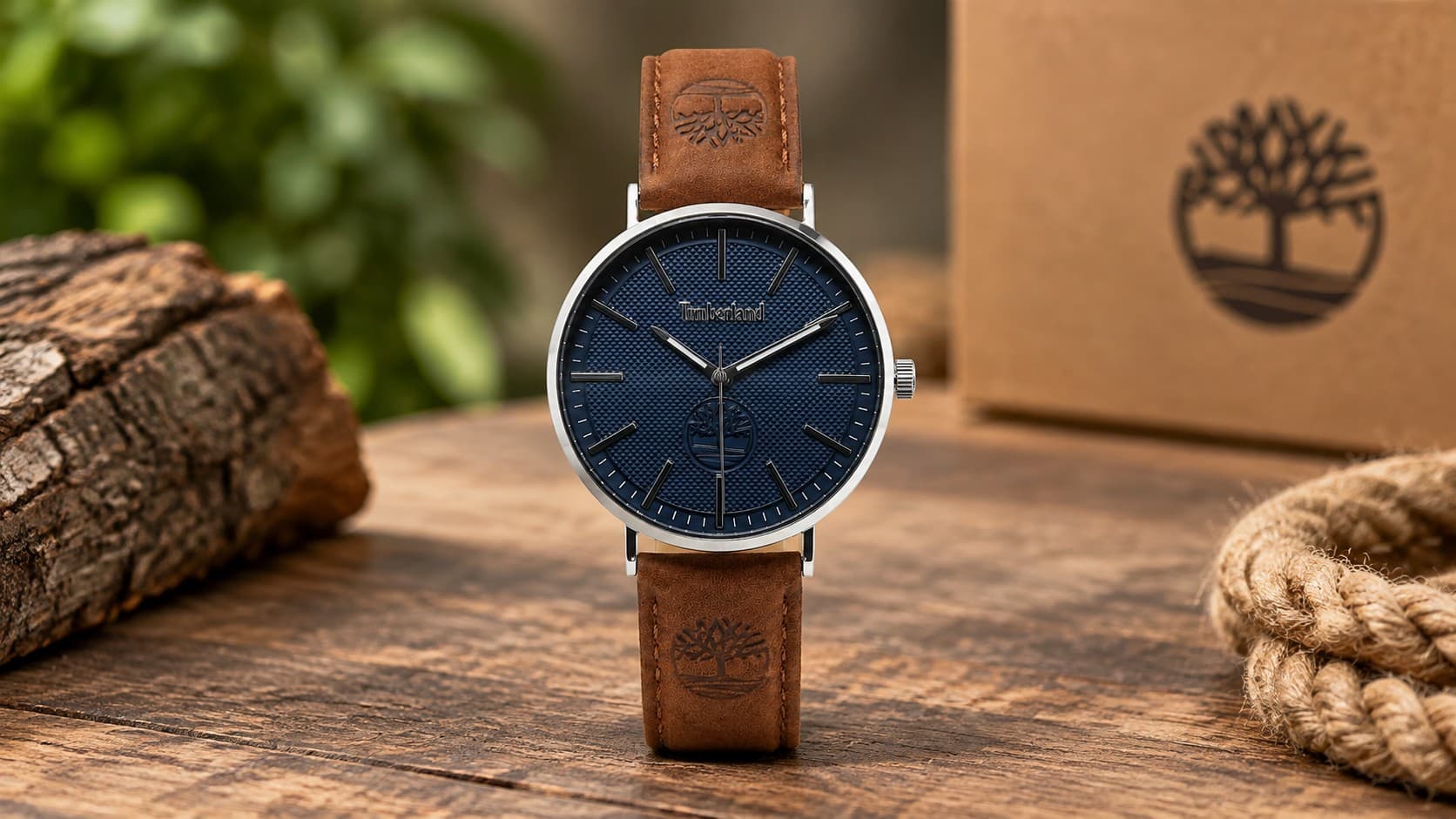
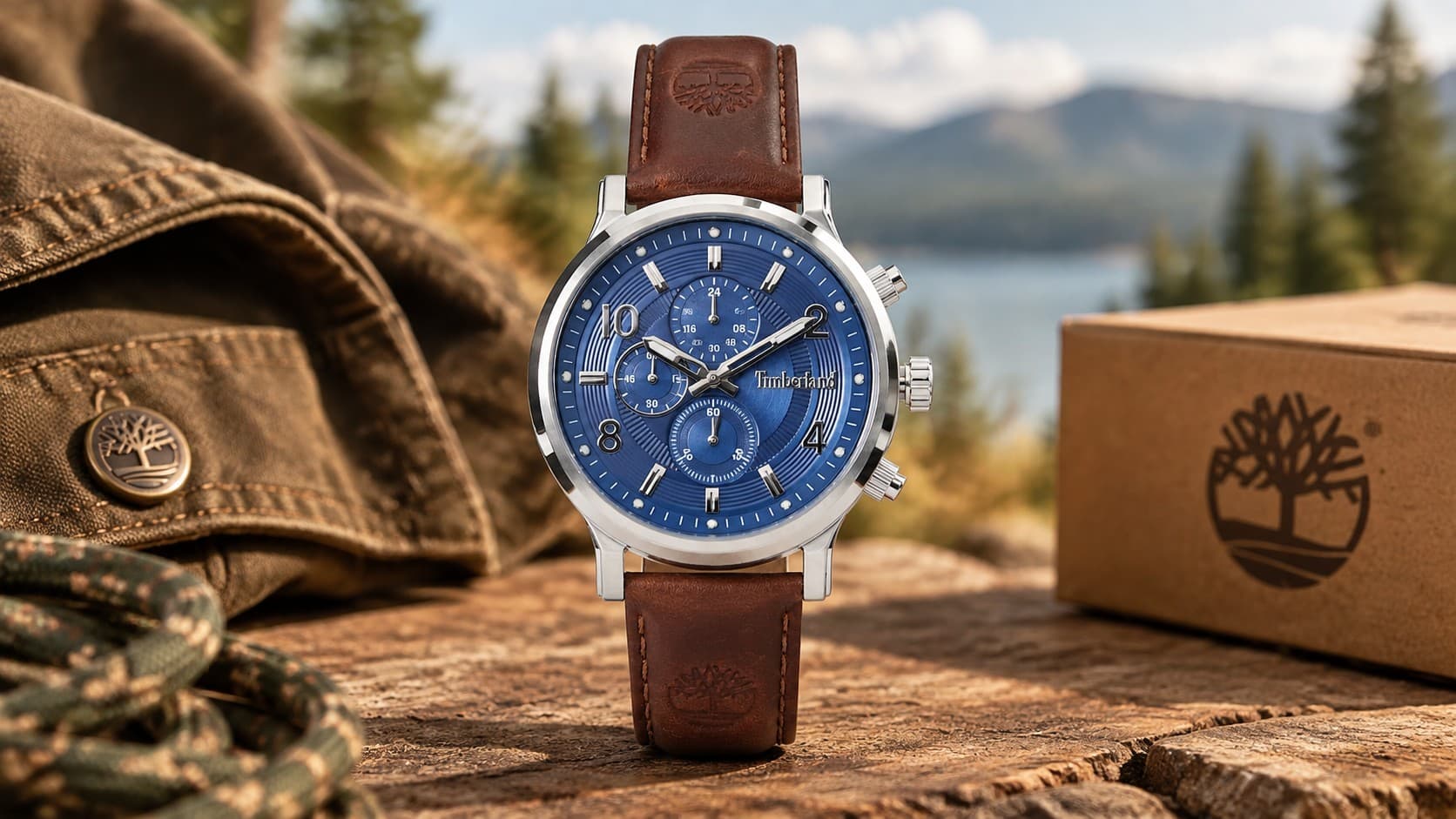
Timberland watches blend outdoor-inspired design with practical functionality, offering affordable timepieces for adventure enthusiasts and casual wearers alike. Known primarily for their iconic yellow boots, Timberland expanded into watches during the 1990s as part of their broader lifestyle brand evolution. These watches feature rugged aesthetics, water-resistant construction, and the recognizable tree logo that has become synonymous with outdoor durability. While they occupy the fashion watch category rather than luxury or technical timepieces, Timberland watches provide solid construction quality at accessible price points ranging from approximately $66 to $200. This guide explores everything you need to know about Timberland watches—from their manufacturing origins and standout features to buying considerations, maintenance requirements, and realistic expectations about quality and value retention.
How Timberland Started Making Watches
The story of Timberland watches starts with boots, not timepieces. This footwear heritage shapes everything about how these watches look, feel, and perform today. What began as a small Massachusetts shoe company in the 1930s eventually grew into a global outdoor lifestyle brand that would add watches to its product lineup six decades later. These timepieces arrived as branded accessories meant to complement clothing and boots rather than as entries into serious watchmaking.
- The Abington Shoe Company opened for business in 1933 in Abington, Massachusetts, laying the groundwork for what would become Timberland decades later. Many sources incorrectly list 1952 as the founding year, but that’s actually when Nathan Swartz entered the picture. Swartz, a Ukrainian immigrant with years of experience as a skilled shoe stitcher, bought half ownership of the already-operating Abington Shoe Company in 1952. Three years later in 1955, he purchased the remaining stake for $20,000 and brought his sons Sidney and Herman into the family operation, setting the stage for the innovations that would eventually create a global brand.
- Everything changed in 1973 when the company introduced their first truly waterproof leather boot. The engineering breakthrough came from new injection-molding technology that permanently bonded leather uppers directly to rubber bottoms without any stitching—the traditional weak point where water seeps through. This wasn’t just a technical achievement. The boot itself became instantly recognizable with its honey-colored nubuck leather, thick padded collar, distinctive yellow stitching, and aggressive lug sole pattern. Originally designed for New England construction workers and loggers, the boot unexpectedly crossed over into mainstream fashion, eventually adopted by hip-hop culture, urban youth, and outdoor enthusiasts worldwide.
- The boot’s massive popularity led the entire company to rebrand itself as The Timberland Company in 1978, dropping the Abington name completely. This move represented more than just marketing—it signaled a fundamental identity shift from being a manufacturer that made various shoe styles to becoming a brand built around outdoor performance and durability. The tree logo and Timberland name became powerful symbols that would eventually extend far beyond footwear.
- Revenue explosion in the early 1990s fueled aggressive expansion into new product categories. The company’s sales jumped from $291 million in 1992 to $637.5 million just two years later in 1994. This financial success funded launches of men’s and women’s clothing lines starting in 1988, followed by bags, accessories, and outdoor gear. The strategy was clear: create a complete “head-to-toe” outdoor lifestyle brand where loyal customers could outfit themselves entirely in Timberland products.
- Watches entered the Timberland catalog around 1996-1997 as part of this expansion wave. The company never intended to become watchmakers in the traditional sense. Instead, they wanted another accessory that could carry their tree logo and outdoor aesthetic to complement their growing apparel business. These early models emphasized rugged looks with large cases, earth-tone color schemes, practical features like chronographs and rotating bezels, and styling cues borrowed directly from their boot designs.
- Rather than build watches themselves, Timberland licensed their name to Geneva Watch Group, a specialized manufacturer that produces timepieces for fashion and lifestyle brands. Founded in 1974 and headquartered in New York, Geneva Watch Group makes watches for numerous brands including Kenneth Cole, Police, and Superdry. Despite the “Geneva” name suggesting Swiss roots, the company manufactures in Asian facilities while maintaining design direction and quality oversight from their U.S. offices. This licensing model is standard practice across fashion watches—Michael Kors, Fossil Group brands, Tommy Hilfiger, and DKNY all follow similar arrangements where apparel companies provide brand identity while specialized manufacturers handle actual production.
- The licensing setup means Geneva Watch Group selects movements, sources cases and components, assembles finished watches, handles quality control, manages distribution, and provides warranty service. Timberland’s role focuses on design direction, aesthetic guidelines, and brand standards to ensure watches look and feel consistent with their outdoor identity. This explains why Timberland’s official website directs customers to Geneva Watch Group for all repairs, battery replacements, and warranty claims rather than handling watch service internally. You’re essentially buying a Geneva Watch Group product that wears Timberland’s branding and styling.
- A significant ownership change came in September 2011 when VF Corporation purchased The Timberland Company for $2.3 billion. VF Corporation owns numerous outdoor and lifestyle brands including The North Face, Vans, Dickies, Smartwool, and others. This acquisition brought Timberland into a larger corporate structure with expanded distribution networks and retail resources, but the watch licensing arrangement with Geneva Watch Group remained intact. VF ownership has helped Timberland expand its global retail footprint while maintaining the brand’s distinct identity in the outdoor lifestyle space.
- Environmental responsibility became increasingly central to Timberland’s brand positioning starting in the early 2000s. The ReBOTL program creates products using fabric made from recycled plastic bottles—the company diverted 345 million bottles from landfills by 2018. Their Timberloop initiative lets customers return worn products for recycling instead of throwing them away. Timberland committed to planting 50 million trees by 2025 and achieving net positive environmental impact by 2030. These sustainability efforts extend to watches in limited but meaningful ways: some models use eco-friendly PVD coating processes that reduce chemical waste compared to traditional electroplating, select styles feature leather straps sourced from tanneries with reduced environmental footprints, and the Driscoll collection specifically incorporates cases made from recycled ocean plastic collected through coastal cleanup programs.
- Current Timberland watches reach customers through over 4,000 retail locations worldwide. You’ll find them in Timberland branded stores, major department stores like Macy’s and Nordstrom, specialty watch retailers, airport shops, airline catalogs, independent jewelry stores, and online platforms from Amazon to the brand’s own website. The pricing strategy puts most models between $66-200, positioning them as affordable accessories rather than luxury purchases. The target customer is typically 18-35 years old, values outdoor aesthetics and brand recognition, and sees watches as fashion statements rather than technical instruments or investments. Today’s collections emphasize practical features like water resistance ratings from 50-200 meters, chronograph complications, large 44-46mm case sizes, date displays, and construction using stainless steel cases, mineral crystal glass, and genuine leather or metal bracelets.
This evolution from a family-owned New England boot maker to a global brand selling licensed watches illustrates how modern outdoor lifestyle companies operate. Timberland never set out to master watchmaking as a craft. They recognized that customers who loved their boots and clothing might also want accessories bearing that same tree logo and rugged style. By licensing to a specialized manufacturer, they could offer these products without investing in horological expertise or production facilities. This business model delivers exactly what it promises: wrist-worn accessories that look and feel like Timberland products, made by a company that knows how to manufacture affordable fashion watches efficiently.
Key Features of Timberland Watches
Timberland watches sit firmly in the fashion watch category, which means they prioritize style and brand identity over technical watchmaking excellence. They compete with brands like Fossil, Michael Kors, Tommy Hilfiger, and Nautica rather than serious watch manufacturers like Seiko or Omega. What sets them apart is their specific outdoor aesthetic—rugged designs that echo the boot styling that made the brand famous. If you’re considering a Timberland watch, you need to know exactly what you’re getting for your money and how these timepieces stack up against alternatives in the same price range.
- Case construction uses stainless steel across virtually the entire lineup, with diameters typically ranging from 44-46mm—these are large, masculine watches that make a statement on the wrist. Some models push even bigger to 48mm or beyond, while a few smaller options start around 40-42mm for those with more modest wrist sizes. Case thickness generally runs 10-13.6mm, providing substantial presence without becoming uncomfortably bulky for daily wear. Finishes include polished silver stainless steel, matte brushed steel, black ion plating that creates a tactical look, and PVD coating in gunmetal or bronze tones. Design details borrowed from boot construction include knurled or textured lugs that mimic boot hardware, integrated crown guards that protect the winding stem, and occasionally camo-pattern finishes that reference outdoor gear.
- Crystal material across all Timberland watches uses mineral glass, which is hardened and treated to resist scratches better than regular glass but remains inferior to sapphire crystal found on higher-end timepieces. Mineral crystal represents the standard for fashion watches in this price bracket—it performs adequately for daily wear and resists minor impacts, but determined scratching from abrasive materials will eventually mark it. You won’t find sapphire crystal on any Timberland model regardless of price, which is one clear indicator of their positioning as affordable accessories rather than premium watches.
- Movement quality reveals the most significant limitation of these timepieces. Every Timberland watch uses Japanese quartz movements, with no automatic or mechanical options anywhere in their catalog. These are basic battery-powered movements, typically generic Miyota calibers or similar low-cost Japanese mechanisms, though some models do incorporate slightly better Seiko Instruments movements like the VX9J in certain chronograph versions. Watch enthusiasts who have opened Timberland cases report finding very inexpensive movements—one forum member described discovering “a £2 movement, so cheap and nasty” inside. These movements keep accurate time and require minimal maintenance beyond battery changes every 2-3 years, but they lack any craftsmanship or horological interest. For comparison, competitors like Citizen and Seiko offer superior movements with better finishing and reliability at identical or even lower prices.
- Water resistance specifications vary considerably across the collection, creating important distinctions for how you can actually use these watches. The most basic rating is 3 ATM (30 meters), which handles only splashing from handwashing and light rain—no swimming or showering. The majority of models carry 5 ATM (50 meters) ratings, technically suitable for brief swimming and showering but not diving or water sports. Select sport-oriented models achieve 10 ATM (100 meters), appropriate for swimming, snorkeling, and water sports. A few dedicated sport watches reach 20 ATM (200 meters), the threshold for recreational scuba diving. One critical caveat affects all these ratings: most Timberland watches come on leather straps, which deteriorate quickly when repeatedly exposed to water. Even if the case can handle swimming, the leather strap cannot, limiting practical water use unless you swap to a rubber or metal alternative.
- Strap and bracelet options lean heavily toward leather, reflecting the brand’s boot-making heritage. Genuine calf leather in brown, tan, black, and occasionally darker earth tones dominates the collection, often featuring the Timberland tree logo embossed into the leather itself. Many straps show visible contrast stitching that mimics boot construction, and recent models increasingly offer “sustainable” or “eco-friendly” leather sourced from tanneries with reduced environmental impact. Standard strap widths run 22-24mm with traditional pin buckle or tang buckle closures. Stainless steel mesh bracelets appear on dressier models, offering better water resistance and longevity than leather. Sport models sometimes feature silicone or rubber straps in black or dark colors, which actually make more sense for the water resistance ratings these watches claim. The good news: Timberland uses standard spring bar attachments, making third-party strap replacements straightforward when the original wears out.
- Feature sets vary from simple three-hand time-only displays to complicated multifunction chronographs. Basic models show hours, minutes, seconds, and a date window positioned at 3, 4, or 6 o’clock. Chronograph models add three sub-dials for measuring elapsed time, typically showing continuous seconds, 30-minute counters, and 24-hour indicators, along with start/stop/reset pushers on the case side and tachymeter scales on the bezel for calculating speed. Multifunction quartz models display day and date together, sometimes adding 24-hour indicators or dual time zones. Many models incorporate luminous hands and hour markers, though the lume quality is basic and fades quickly compared to serious dive watches. Some older discontinued models experimented with digital-analog hybrid displays or temperature sensors, though these features rarely worked well and have mostly disappeared from current collections.
- Design language pulls heavily from outdoor gear and boot construction rather than traditional watch styling. Expect earth-tone color palettes with browns, tans, olive greens, navy blues, and blacks dominating dial and strap choices. Cases feature chunky proportions with thick lugs and prominent crown guards that look tough even if they’re not technically necessary. Dials often incorporate the tree logo prominently, along with “Timberland” spelled across the dial face and sometimes additional text referencing outdoor activities or geographic locations. The overall aesthetic says “rugged adventure” even on models clearly intended for office wear rather than actual hiking. This styling succeeds at capturing brand identity but feels somewhat derivative to watch enthusiasts—it’s outdoor theater rather than genuine field watch design.
- Build quality assessment depends entirely on who’s evaluating. Casual buyers who purchase these watches generally report satisfaction, describing them as “solid,” “well-made for the price,” and “comfortable to wear.” The leather quality compares favorably to Fossil and similar fashion brands, cases feel substantial rather than cheap, and they function reliably as everyday timepieces. However, watch enthusiasts and experienced collectors paint a much harsher picture. Forum discussions consistently describe Timberland watches as having “cheap movements,” “basic construction,” and “poor value compared to actual watch brands.” The consensus among serious watch people: you’re paying primarily for brand licensing and outdoor styling rather than horological quality. At $100-150, you could buy entry-level Seiko, Citizen Eco-Drive, or Casio models with superior movements, better finishing, and stronger long-term durability.
- Price positioning runs from approximately $66 at the entry level up to around $200 for premium chronographs, with the sweet spot around $99-150 for most models. European pricing typically shows €90-147 for comparable models. Sales and discounts frequently drop prices 20-30% below these figures, especially at department stores and during holiday promotions. This pricing puts Timberland squarely in the middle of the fashion watch pack—cheaper than Michael Kors or Armani Exchange, comparable to Tommy Hilfiger and Nautica, slightly more expensive than Timex but less than Fossil’s upper range. For context, this same $100-150 budget could buy you a Seiko 5 automatic watch with in-house movement, a Citizen Eco-Drive that never needs batteries, or a Casio G-Shock with legendary durability. The Timberland premium comes entirely from brand cachet and specific styling rather than superior watchmaking.
- Sustainability initiatives appear more prominently in Timberland watches than most fashion watch competitors, though efforts remain modest compared to the brand’s footwear programs. The Driscoll collection specifically uses cases made from recycled ocean plastic recovered through coastal cleanup initiatives, making it one of the few watch lines incorporating post-consumer recycled materials in primary construction. Select models feature PVD coating processes that reduce chemical waste and environmental impact compared to traditional electroplating. Leather straps increasingly come from tanneries certified for reduced water consumption and chemical use. However, these efforts face inherent limitations—quartz watch movements contain batteries that eventually require disposal, mineral crystals and stainless steel production carry environmental costs, and the fashion watch business model encourages replacement rather than lifetime use.
- Market positioning targets a specific demographic: outdoor-minded consumers aged 18-35 who value brand recognition and rugged aesthetics over technical watch capabilities. These buyers typically own Timberland boots or clothing already and want matching accessories to complete their look. They see watches as fashion statements rather than tools or investments. This audience generally doesn’t research movement specifications or worry about resale value—they want something that looks tough, carries a recognizable logo, and costs less than $200. For this specific market segment, Timberland delivers exactly what’s expected: wrist-worn accessories that successfully translate boot styling into watch form.
The honest assessment requires separating marketing from reality. These watches look rugged and outdoorsy, but they’re fashion accessories with basic movements, not technical instruments for serious outdoor use. The leather straps that define their aesthetic actually make them poor choices for real hiking, camping, or water activities. They’ll keep accurate time and survive normal daily wear, but they lack the robustness and value retention of watches from dedicated manufacturers. If you love Timberland’s specific aesthetic and accept what you’re actually buying—a licensed fashion watch with their branding—they serve their purpose adequately. Just don’t expect horological quality or long-term value from what is essentially disposable fashion at watch prices.
Top 10 Best Timberland Watches
Finding the best Timberland watches means identifying models that deliver solid construction, appealing aesthetics, and practical features at fair prices within their fashion watch category. The current 2024-2025 lineup includes over 150 models across various collections, ranging from simple three-hand designs to complex chronographs. This selection focuses on currently available or recently produced watches that represent the brand’s strongest offerings across different styles and price points.
Timberland Ashmont (Multiple Variants)
The Ashmont represents Timberland’s everyday casual watch with clean design and practical sizing. The 46mm stainless steel case comes in black ion plating or polished silver with Japanese quartz movement, three-hand display, and date window at 3 o’clock. Water resistance reaches 5 ATM (50 meters) for daily wear. The sunburst navy or grey dial features luminous hands and applied markers, while brown leather straps show contrast stitching and embossed tree logo. Pricing runs $80-120. The Ashmont works as an affordable entry point without overwhelming smaller wrists, though the movement remains basic and leather limits actual water use.
Timberland Driscoll (TDWGF2231002, TDWGF2231005, TDWGM0028002)
The Driscoll stands out with 46mm cases constructed from recycled ocean plastic recovered through coastal cleanup programs. This multifunction quartz design includes date window, 5 ATM water resistance, and black dial with tree logo. Straps come in black leather or stainless steel bracelet with 24mm width. Pricing shows €95-130 in Europe, $110-145 in the U.S. The Driscoll appeals to environmentally conscious buyers, though it still uses disposable batteries. Available through BlueSpirit, TheWatchAgency, and authorized retailers with good stock levels.
Timberland Robbinston (15939JS/79MM, 15939JS/14, 15939JS/03)
The Robbinston delivers versatile styling that transitions from casual to slightly dressier wear. The 45mm stainless steel case comes in polished silver or black with 3-5 ATM water resistance. Japanese quartz drives clean three-hand display with date window in grey, blue, or brown dials. The silver mesh stainless steel bracelet version proves particularly popular for durability and water-friendly construction. Pricing ranges €83-125 in Europe, $90-135 in the U.S. The mesh bracelet variant makes practical sense given water resistance claims. Widely available through Solartime and WatchPilot.
Timberland Allendale (15638JS/02, 15638JS/03MM, 15270JS/14)
The Allendale offers both three-hand models and chronograph variants in the same design family. The 45mm polished stainless steel case features 5 ATM water resistance. Three-hand versions show clean dials in brown, blue, or navy with date windows, while chronographs add three sub-dials, pushers, and tachymeter bezels. Straps include brown leather, tan leather, or silver mesh bracelets. Pricing sits $120-150 for three-hand versions, $160-180 for chronographs. The chronograph offers good value for buyers wanting timing functionality. Solid availability through Amazon and specialty retailers.
Timberland Bradshaw (15423JS/03)
The Bradshaw chronograph emphasizes classic outdoor styling with 44-46mm stainless steel case and brown dial incorporating three sub-dials, tachymeter scale, and 5 ATM water resistance. Genuine brown leather strap features contrast stitching and embossed tree logo. Two pushers handle chronograph operation with Japanese quartz movement. UK pricing shows £95-120, approximately $120-150 in U.S. markets. The Bradshaw delivers accessible chronograph styling without excessive complexity. Strong availability through WatchPilot and UK retailers.
Timberland Sherbrook (TDWGF2230402, TDWGB2230701)
The Sherbrook provides day-date functionality in 45-46mm stainless steel case with polished silver or black-plated finishes and 5 ATM water resistance. The Seiko Instruments VX9J quartz movement displays both day and date through dial windows. Blue or black dials incorporate silver elements, applied markers, and tachymeter scales. Brown or tan leather straps measure 24mm wide. Pricing runs $120-150. The Sherbrook appeals to buyers checking dates frequently. Some variants show as “historical collection” suggesting partial discontinuation, though recent models remain available through Mastersintime.
Timberland Caswell (TBL.14247JS/02)
The Caswell distinguishes itself with 10 ATM (100 meters) water resistance, making it suitable for actual swimming and water sports. The 44mm black stainless steel case features black dial with white contrasting elements and brown leather strap. Japanese quartz drives three-hand display with date window and luminous hands. Pricing approximately $89-120 makes it competitive for the specifications. Limited availability remains at NY Watch Store and Watchard, suggesting approaching discontinuation. The Caswell represents one of Timberland’s most functionally capable offerings if you can find it.
Timberland Northbridge (15930JSB Series, TDWGB0041206)
The Northbridge delivers oversized 45-46mm cases with stainless steel construction and 5 ATM water resistance. Japanese quartz movement keeps time while leather straps in brown or black provide traditional styling. Dials emphasize legibility with large numerals or bold indices, date windows, and basic luminous hands. Some versions include decorative small seconds sub-dials. European pricing runs €105-122, roughly $115-140 in the U.S. The Northbridge works for buyers seeking larger watches making bold statements. Available at WatchPilot, BlueSpirit, and TheWatchAgency.
Timberland Raynham (TDWGF0075102)
The Raynham brings dual time zone functionality in 43.8mm IP gun stainless steel case with 5 ATM water resistance. Dual time zone capability displays via additional sub-dial or 24-hour hand. Black dial incorporates golden details, calendar functionality, and luminescent hands. Sustainable brown eco-friendly leather strap reflects environmental initiatives. European pricing approximately €90-110, U.S. pricing $100-130. The Raynham appeals to travelers or professionals working across time zones. Available through authorized European retailers.
Timberland Ashbrook (15474JSBL/61)
The Ashbrook chronograph combines 46mm stainless steel case with distinctive camo-style finish and 10 ATM (100 meters) water resistance. Chronograph complication provides three sub-dials, pushers, and tachymeter bezel on gunmetal grey dial. Black leather strap with 22mm width attaches the watch, though water use requires rubber or nylon replacement. Multifunction quartz chronograph handles all complications reliably. Pricing sits $140-170. The Ashbrook targets buyers wanting chronograph functionality with legitimate water resistance, though the camo finish may limit versatility.
When choosing, prioritize based on actual needs rather than marketing. If you won’t swim with the watch, 5 ATM ratings suffice. For water capability, choose Caswell or Ashbrook with 10 ATM, but budget for rubber strap replacement. Chronographs look impressive but most buyers would be satisfied with simpler three-hand models at lower prices. Choose primarily based on aesthetics and fit rather than technical specifications that don’t differ dramatically across the range.
What to Consider When Buying Timberland Watches

Buying a Timberland watch requires realistic expectations about what you’re actually purchasing. These aren’t precision instruments or investment pieces—they’re fashion accessories with outdoor styling at accessible prices. Smart buying means matching the watch to your actual needs rather than getting swept up in marketing claims. Several key factors separate satisfying purchases from disappointing ones.
- Budget planning should account for total ownership costs, not just the sticker price. Timberland watches retail between $66-200, with most models landing in the $100-150 range. Sales and discounts appear frequently—expect 20-30% off during holiday promotions at department stores, and authorized online retailers often undercut official pricing by $20-40. Beyond purchase price, factor in battery replacement every 2-3 years costing $20-35, or $35-50 with water resistance testing. If you swap leather straps for more practical materials, add $15-40 for replacement rubber or nylon options. Over a typical 5-7 year ownership period, you’re looking at $240-300 total investment including maintenance. Given resale values of only $30-60 after several years, plan on this being money spent rather than invested.
- Intended use dramatically affects which models make sense and which disappoint. For daily office wear with occasional weekend activities, any 5 ATM model with leather strap works fine. For genuine outdoor activities including hiking or camping, the leather straps that define Timberland’s aesthetic become liabilities that crack and smell with sweat exposure—you’ll need rubber or silicone alternatives. For water sports or swimming, only 10 ATM models like Caswell or Ashbrook provide adequate protection, and leather straps again become deal-breakers requiring immediate replacement. For formal or business professional environments, these watches don’t fit—the large cases and outdoor branding read wrong for conservative dress codes.
- Size and fit considerations matter more than you might expect given Timberland’s preference for larger cases. The standard 44-46mm case diameter creates substantial wrist presence that looks proportional on medium to large wrists (7 inches circumference and up) but overwhelms smaller wrists (under 6.5 inches). Case thickness typically runs 10-13.6mm, comfortable for daily wear and fitting under most shirt cuffs. Lug-to-lug measurements often extend 50-52mm or more, which determines comfort more than diameter alone—if your wrist is narrower than the lug-to-lug span, the watch won’t wear comfortably. Try watches in person when possible, or buy from retailers offering free returns and generous return windows like Kohl’s (180 days) or Watchard (100 days).
- Water resistance ratings need interpretation beyond the numbers printed on the dial. The 3 ATM (30 meters) rating handles only splashing from handwashing and rain—no immersion. The common 5 ATM (50 meters) technically allows brief swimming according to ISO standards, but leather straps on most 5 ATM Timberland models make water exposure impractical. The 10 ATM (100 meters) rating provides genuine swimming and snorkeling capability. Two critical caveats: water resistance degrades as gaskets age, requiring resealing during battery changes, and ratings assume fresh water—salt water and chlorine accelerate deterioration.
- Movement type across all Timberland watches means Japanese quartz exclusively—no automatic or mechanical options exist. These battery-powered movements deliver accurate timekeeping, require minimal maintenance beyond battery changes every 2-3 years, and start working immediately when you put the watch on. The downside is these are very basic, inexpensive quartz movements with no craftsmanship or horological interest. When movements fail, repair costs typically exceed replacement watch costs, leading most owners to simply buy new watches rather than fix old ones.
- Strap material and replacement planning should happen before purchase. Leather straps define Timberland’s aesthetic with brown shades, embossed tree logos, and visible stitching, but deteriorate with water exposure and sweat. Expect leather to last 1-3 years before cracking or smelling. Stainless steel mesh bracelets offer better longevity and water resistance. Rubber and silicone straps make most sense for active wear or humid climates. Standard spring bar attachments and common lug widths (20mm, 22mm, 24mm) mean aftermarket replacement is straightforward at $10-40.
- Feature requirements should match what you’ll actually use. Basic three-hand models with date display handle what most people need. Chronograph complications add visual interest but see little practical use—most buyers admit they rarely time events after initial experimentation. Day-date models help if you frequently need to confirm which day it is. Dual time zones serve frequent travelers. Luminous hands aid darkness visibility, though basic lume quality on Timberland watches fades within minutes. Rotating bezels look functional but serve primarily decorative purposes on non-dive models.
- Style preferences ultimately matter most since these are fashion accessories where aesthetics drive purchase decisions more than specifications. Timberland’s design emphasizes rugged outdoor character with earth tones, large cases, visible branding, and boot-inspired styling. This works perfectly for casual wear, outdoor outfits, jeans and flannel, and relaxed weekends. The styling becomes problematic for formal occasions, conservative business environments, or situations requiring subtle accessories. Case finishes from polished silver to black plating to camo patterns create different vibes. Consider which styling you’ll actually wear regularly rather than what looks cool in photos.
The smartest approach combines realistic assessment of your needs with what these watches genuinely offer. If you love Timberland’s aesthetic and accept it as a disposable accessory with 5-7 year lifespan, they work fine. If you need serious water resistance, prioritize movement quality, or want something to last decades, better alternatives exist at identical prices. Buy with eyes open about the licensing model and depreciation, and you’ll be satisfied.
Where to Buy Timberland Watches
Finding Timberland watches is remarkably easy given their distribution through over 4,000 retail locations worldwide. Unlike limited-production luxury watches that require hunting down authorized dealers, Timberland watches appear everywhere from department stores to airport shops. The challenge isn’t finding them—it’s finding the best prices and understanding which sellers provide legitimate warranty coverage versus grey market products that save money but sacrifice official support.
- The official Timberland website sells watches directly with the full current catalog and guaranteed authenticity. The site offers free shipping for members on orders over $75, making membership worthwhile if you’re buying multiple items. Selection spans their complete range from minimalist three-hand models to complex chronographs, with filtering by style, color, and price. Buying direct ensures you receive genuine products with full warranty coverage and easy access to customer service. The main downside is pricing—the official site rarely offers deep discounts compared to authorized retailers, though occasional promotions and seasonal sales do appear.
- Major department stores provide extensive availability with the advantage of trying watches in person before buying. These retailers carry wide selections with pricing around $129-199 before frequent promotional discounts of 15-30%. Many offer generous return policies and free shipping. Department stores let you assess size and fit on your actual wrist, compare multiple models side-by-side, and return easily if the watch doesn’t meet expectations. Watch for holiday sales, Black Friday, and end-of-season clearances when department stores discount watches heavily to clear inventory.
- Large online marketplaces feature perhaps the widest selection with hundreds of Timberland watch listings across various sellers. Prices often undercut official retail by 10-30%, and membership programs mean free two-day shipping. Return policies typically allow 30 days for unworn watches with free return shipping through thousands of drop-off locations. The major caveat: verify sellers carefully to ensure you’re buying from authorized sources rather than grey market importers. Look for official retail partners with established storefronts. Grey market watches may be genuine but often lack manufacturer warranty coverage. Check that warranty cards are included and properly dated.
- Specialized online watch retailers frequently offer the best pricing on Timberland watches. Authorized online watch shops typically stock over 100+ models, provide free or low-cost shipping, and offer generous return policies ranging from 30-100 days depending on the retailer. Their pricing typically undercuts department stores by $20-40. These specialized retailers understand watches better than general retailers, can answer technical questions, and often maintain better stock depth across color and size variants. Many operate as official authorized dealers ensuring full warranty coverage.
- Discount retailers occasionally carry Timberland watches at significant markdowns, sometimes 40-60% below original retail. These are typically overstock, discontinued models, or last season’s designs rather than current releases. Selection is unpredictable and varies dramatically by location and timing. If you spot a Timberland watch at these discount chains, inspect carefully for damage, verify all links and components are present, and confirm the model number matches what’s described. Warranty coverage on discount retailer purchases can be questionable—some honor manufacturer warranties while others sell products “as-is” without coverage.
- The two-year manufacturer warranty covers movements, hands, dial, and defects in materials and workmanship from the original purchase date. Excluded items include batteries, case and crystal deterioration, band wear, accident damage, and unauthorized service. Geneva Watch Group serves as the official warranty provider and can be contacted through their support website or phone line. Processing takes 2-3 weeks for warranty service. Warranty repairs are free for parts and labor, though expect a modest shipping charge to return the watch. Critical requirement: you must provide proof of purchase and buy from authorized sellers—grey market purchases void warranty coverage entirely.
- Return policies vary significantly by retailer and dramatically affect buying risk. The official Timberland site allows 30 days from shipment for unworn items with free return labels, though original shipping costs aren’t refunded. Some department stores provide exceptional 90-180 day return windows with receipt, accepting returns both in-store and by mail. Others maintain flexible policies with no strict time limits for reasonable returns. Major online retailers grant 30 days with free return shipping for most watches. Specialized watch retailers may offer 60-100 day free returns as competitive advantages. When buying online without trying the watch first, prioritize retailers with generous return windows and free return shipping so you can assess fit and finish at home without financial penalty.
- International availability extends to most countries through Timberland’s global distribution network, though selection and pricing vary by region. European customers access wide selection through authorized online watch retailers and national dealers throughout the UK, Germany, France, Spain, and Italy. Pricing in Europe typically runs €90-150 for most models. Canadian buyers find Timberland watches at major department stores and through online marketplaces. Asian markets including Japan, Singapore, and Hong Kong have authorized dealers, though selection skews toward smaller case sizes. Australian and New Zealand customers can order through international retailers offering global shipping. Always verify that international purchases include proper warranty cards and authorized dealer stamps to ensure warranty validity.
- Grey market and secondary market options provide ways to save money if you’re willing to sacrifice official warranty support. Grey market dealers source watches from authorized channels but sell outside official distribution networks, often importing from regions with lower pricing. You get genuine watches at 20-40% discounts but usually void manufacturer warranties. Online auction sites host numerous grey market sellers plus individual owners selling used watches. Prices for used Timberland watches typically run $25-100 depending on condition and model. Watch marketplace websites list some Timberland inventory, mostly from European sellers. Local classified ads and community marketplace platforms occasionally have listings. When buying grey market or used, inspect photos carefully, verify serial numbers, ask about service history, and accept that you’re on your own for repairs. Given Timberland’s rapid depreciation, buying gently used at 50-70% off retail makes financial sense if you find desirable models in good condition.
Smart buying strategy combines several approaches. Check authorized retailers for current models with warranty protection, but compare prices across multiple sources before committing. Watch for sales at department stores where 30-40% discounts appear regularly during promotions. Consider grey market or used options if you’re comfortable without warranty coverage. Take advantage of generous return policies when buying online to eliminate fit risk. Always verify seller authorization status before purchasing to avoid counterfeit products—while Timberland watches aren’t commonly counterfeited like luxury brands, fake fashion watches do exist. Keep all receipts and warranty cards in safe places for the unlikely event you need warranty service. The wide availability means patience usually rewards you with better pricing than impulse purchases at full retail.
Timberland Watch Resale Value and Investment
Timberland watches make terrible investments, and anyone considering them as financial assets needs to hear this plainly before spending money. These are fashion accessories that depreciate heavily and quickly, with virtually no collector market and minimal secondary demand. If you’re buying a Timberland watch, budget the full purchase price as money spent on a consumable product rather than money invested in something that holds value. The resale reality is harsh, and pretending otherwise leads to disappointment when you eventually try selling.
- First-year depreciation hits hardest with losses of 30-50% from retail price the moment you walk out of the store. A $150 Timberland watch purchased new becomes worth roughly $75-105 in the secondary market immediately, even unworn in original packaging. This depreciation curve mirrors typical fashion watches where brand licensing and basic movements create poor value retention. The steep initial drop reflects that buyers can easily find brand new models on sale for 20-30% off retail, making used watches at anywhere near original prices completely unappealing.
- Long-term value retention gets worse, not better. After 3-5 years of ownership, expect to recover only 20-40% of original purchase price when selling. The secondary market shows used Timberland watches selling between $23-60 for basic models in decent condition, $40-100 for better-maintained chronographs, and occasionally $85-143 for higher-end models originally retailing at $200-250. A $120 watch you wore for three years might fetch $30-50 if you’re lucky. After five years, many owners discover their watches are essentially worthless—the effort required to photograph, list, communicate with buyers, and ship the watch exceeds the $20-40 you’d actually receive.
- Secondary market presence remains weak across all platforms. Used watch marketplaces show moderate Timberland listings but slow turnover at depressed prices, with many sitting for weeks or months without buyers. Specialized watch trading sites feature minimal Timberland inventory compared to hundreds or thousands of listings for recognized watch brands. Watch forums contain virtually zero discussion or trading activity around Timberland watches because serious collectors have no interest in fashion watches with basic movements. Local classifieds occasionally show listings, usually from owners trying to recoup any money from watches sitting unused in drawers. The weak demand means you’re competing mainly on price, and buyers know these watches have limited value.
- No collectible or limited edition models exist with enhanced value retention. Research uncovered zero limited editions commanding premium prices, no special collaborations with elevated desirability, and no vintage Timberland watches attracting collector interest. The brand occasionally releases seasonal collections or special colorways, but these disappear into the same depreciation curve as standard models. Without scarcity, historical significance, or collector community, nothing separates one Timberland watch from another in resale value—a 10-year-old model sells for the same $30-50 as a 3-year-old model in similar condition.
- Comparing alternatives at similar prices reveals dramatically better value retention from actual watch manufacturers. Seiko 5 automatics purchased new at $100-150 hold 50-70% of value after several years because they contain in-house movements and appeal to watch enthusiasts. Citizen Eco-Drive models retain value better thanks to solar-powered movements that never need batteries. Even basic Casio G-Shock watches hold value reasonably well due to legendary durability and active collector markets. Timex models depreciate but start at lower prices making the absolute dollar loss smaller. Within the fashion watch category, even some competing brands show marginally better resale thanks to broader name recognition and more extensive model variety creating some collector interest.
- Realistic five-year ownership cost analysis reveals the true financial picture. Start with $150 purchase price for a new watch. Add two battery changes at $35-50 each including resealing service, totaling $70-100. Include one strap replacement at $20-40 when the original leather deteriorates. Total investment reaches $240-290 over five years. Resale value after five years: $30-60 if you find a buyer, often less. Net cost: $180-260, or roughly $36-52 annually for the privilege of wearing this watch. This calculation assumes nothing breaks—if the movement fails or the case suffers damage, repair costs of $100-200+ usually exceed the watch’s worth, turning it into immediate disposal rather than repair.
- Best practices for minimizing value loss start with never paying full retail when sales occur constantly. Buying at 20-30% off immediately reduces your depreciation hit. Consider purchasing gently used at $50-80, letting the original owner absorb the steep first-year loss while you get essentially the same product. If you do buy new, keep all original packaging, papers, warranty cards, and receipts—while these won’t dramatically increase resale value, they help marginally and provide proof of authenticity. Maintain the watch properly with regular battery changes and resealing to prevent internal damage that makes it completely unsellable. Accept that you’ll lose money regardless, and factor this into your purchase decision rather than discovering the harsh reality years later when you want to sell.
- When to sell versus keep becomes a calculation of remaining utility versus hassle of selling. If the watch still functions, fits your style, and serves your needs, keep wearing it—the $30-50 you’d get from selling doesn’t justify the effort. If it sits unused in a drawer for more than a year, sell it immediately before further depreciation makes it completely worthless. If you’re upgrading to better watches and need to clear space, selling makes sense even at loss just to recoup something. If the battery dies and you don’t want to invest in replacement, selling as non-working for parts recovery typically nets $15-30. The break-even calculation rarely favors selling unless you actively dislike the watch.
The fundamental issue preventing any investment value comes down to the business model. Timberland licenses their name for watch production, resulting in mass-produced timepieces using inexpensive generic movements, basic cases, and minimal craftsmanship. Nothing about this process creates the scarcity, quality, or desirability that drives collector interest and value retention. Watch enthusiasts who drive secondary market values consistently dismiss fashion watches as inferior products not worth discussing, collecting, or paying premium prices for. Without enthusiast support, only casual buyers enter the used market, and they can easily buy new models on sale for prices that undercut used offerings.
These watches work perfectly fine as what they are—affordable fashion accessories you enjoy wearing for several years then dispose of when they wear out or your tastes change. They fail completely as investments, stores of value, or items worth maintaining long-term. Buy them because you like how they look and accept the money as spent, not because you expect any financial return. The honest assessment saves disappointment and helps you make purchase decisions aligned with reality rather than wishful thinking about watch investments.
Timberland Watch Maintenance and Repair
Timberland watches require minimal maintenance thanks to their quartz movements, but the care they do need significantly affects longevity. Proper maintenance extends useful life from 3-5 years to 7-10 years, while neglect leads to premature failure. The basic components—battery, gaskets, straps, and external cleaning—need attention at predictable intervals, and understanding maintenance costs helps you decide when to service versus replace.
- Battery replacement represents the primary maintenance need every 2-3 years when the watch stops running. Standard silver oxide batteries power these quartz movements, with specific types varying by model. Replace batteries promptly when the watch stops to prevent leakage that corrodes internal components and destroys the movement. Basic battery replacement at jewelry stores costs $20-35 including labor. Service with water resistance testing runs $35-50. Premium service with longer-life batteries reaches $50-60. Avoid DIY battery replacement if you care about maintaining water resistance—opening the case without proper tools compromises gasket seals.
- Gasket maintenance happens with battery changes and determines whether water resistance ratings mean anything. Gaskets seal the case back, crystal, crown, and pushers against water intrusion. These rubber components deteriorate from exposure and compression. Professional resealing involves movement removal, ultrasonic cleaning, new gasket installation with silicone grease, and pressure testing. This typically costs $35-40 bundled with battery service. Skipping gasket replacement saves $10-15 short-term but risks water damage that destroys the watch completely.
- Water resistance degradation occurs gradually even without opening the case. Heat, humidity, and physical stress slowly compromise gasket integrity. After 3-4 years without service, stated ratings become questionable. If you use your watch around water—swimming, showering, sports—professional testing every 2-3 years maintains protection. Most Timberland models have leather straps making regular water exposure impractical anyway.
- Strap replacement becomes necessary when leather cracks, smells, or loses flexibility. Expect 1-3 years lifespan depending on wear frequency and conditions—daily wear in humid climates destroys leather faster. Signs requiring replacement include visible cracking, persistent odor, hardening, and discoloration. Original Timberland straps cost $25-50 when available through Geneva Watch Group. Third-party leather, rubber, or NATO straps offer better availability at $10-40. Standard spring bar tools ($5-10) make changes straightforward DIY projects.
- External cleaning maintains appearance and prevents damaging buildup. Wipe the case, crystal, and strap weekly with microfiber cloth to remove oils and dirt. For deeper cleaning, use slightly damp cloth on case and crystal—never submerge unless confident about water resistance. Leather straps need specialized cleaner and conditioner every few months. Metal bracelets can be cleaned with mild soap and soft toothbrush, then dried thoroughly. Avoid harsh chemicals or abrasives that scratch finishes.
- Storage recommendations prevent damage when not wearing the watch. Keep in cool, dry locations away from sunlight, extreme temperatures, and magnetic fields. Watch boxes work fine—expensive winders are unnecessary for quartz watches. Remove during activities involving impacts, heavy lifting, or chemical exposure. Take off before applying perfumes, hairsprays, or lotions that damage straps and cases. Store away from strong magnets that can affect accuracy.
- Common problems indicate when professional service becomes necessary. Losing several minutes per month means battery needs replacement or movement has issues. Rattling inside requires professional repair. Difficult crown operation means gaskets need attention. Condensation under crystal requires immediate service to prevent further damage. Chronograph pushers sticking indicate mechanism problems. Watch stopping with fresh batteries means movement failure—replacement usually makes more sense than repair.
- Professional service becomes economically questionable given Timberland’s value positioning. Complete movement service costs $100-200—often more than replacement watches on sale. Case refinishing runs $50-100, crystal replacement $30-60, crown replacement $25-50. When repair estimates approach $100, assess whether sentimental value justifies repairs versus buying new. The basic movements aren’t designed for repeated servicing—they run maintenance-free until failure, then get replaced.
The maintenance philosophy should prioritize prevention over repair. Replace batteries promptly, clean regularly, replace straps when worn. Beyond these basics, accept that these are disposable fashion accessories designed for 5-10 years rather than lifetime service. When major repairs become necessary, run the math—buying new usually makes more financial sense than expensive repairs on mass-produced fashion watches worth $30-50 regardless of condition.
Common Questions About Timberland Watches
Buyers consistently ask the same questions about Timberland watches before purchasing, revealing concerns about quality, durability, and value. Answering these questions honestly helps set realistic expectations and prevents disappointment after buying.
- Are Timberland watches good quality? Quality depends on your expectations. Casual buyers find them satisfactory—solid construction for the price, comfortable wear, and reliable timekeeping. Watch enthusiasts are less impressed, consistently noting very cheap movements and basic construction. Overall assessment: mid-tier fashion watches rated 6-7 out of 10. They’re adequate for casual wear at $100-150, but alternatives like Seiko, Citizen, or Casio deliver superior movements and better long-term value at identical prices.
- How long do Timberland watch batteries last? Battery life typically runs 2-3 years under normal use. Basic three-hand models last closer to 3 years, while chronograph models with complications drain batteries faster at 18-24 months. Replace batteries immediately when the watch stops to prevent leakage that corrodes the movement. Professional replacement costs $20-35 for basic service, or $35-50 including gasket replacement and water resistance testing.
- Are Timberland watches waterproof? No watch is truly waterproof—they’re water resistant. Ratings vary by model: 3 ATM (30m) handles splashes only, 5 ATM (50m) allows brief swimming, 10 ATM (100m) works for water sports and snorkeling, and 20 ATM (200m) handles recreational diving. Most models have leather straps that make water exposure impractical regardless of case ratings. Water resistance degrades over time as gaskets age, requiring professional resealing during battery changes.
- Where are Timberland watches made? Timberland watches are manufactured in Asia, primarily China, despite the Geneva Watch Group name suggesting Swiss origins. Geneva Watch Group holds the manufacturing license and produces these watches overseas with U.S. design direction. They’re not Swiss-made—they use Japanese quartz movements in Asian-assembled cases, identical to how Michael Kors, Fossil, and Tommy Hilfiger produce their watches.
- Do Timberland watches have a warranty? Yes, a 2-year manufacturer warranty from Geneva Watch Group covers defects in materials and workmanship for movement, hands, and dial. Excluded: batteries, case/crystal deterioration, bands, accident damage, and normal wear. Contact Geneva Watch Group at 1-800-874-0907 for service. Processing takes 2-3 weeks with free repairs but $12 return shipping. You must have proof of purchase from authorized sellers—grey market purchases void warranty.
- Can you replace Timberland watch straps? Yes, easily. Timberland uses standard spring bar attachments with common lug widths (20mm, 22mm, 24mm). Original straps cost $25-50 through Geneva Watch Group when available. Third-party straps offer better value at $10-40 from watch retailers. Spring bar tools ($5-10) make replacement a simple DIY job taking five minutes.
- Are Timberland watches Swiss made? No. Despite Geneva Watch Group manufacturing them, these watches aren’t Swiss made. They use Japanese quartz movements in cases assembled in Asia. The “Geneva” name creates confusion, but no Swiss movements, assembly, or quality standards apply. If Swiss origin matters to you, look elsewhere.
- How do Timberland watches compare to Fossil or Michael Kors? Nearly identical quality—all use the same licensing model, Asian manufacturing, and inexpensive quartz movements. Timberland differentiates through outdoor aesthetic versus fashion styling. Fossil edges ahead slightly with broader range and occasional automatic options. The choice comes down to which style you prefer. Watch enthusiasts recommend spending the same $100-150 on Seiko, Citizen, or Casio for superior movements and value.
- Are Timberland watches suitable for hiking? Not really, despite outdoor branding. Leather straps deteriorate with sweat and water exposure. They’re not built like purpose-designed field watches with proper shock resistance. If you insist on wearing one hiking, immediately swap to rubber straps and choose 10 ATM models. Better options for actual outdoor use include Casio G-Shock, Suunto, or Garmin watches designed for rugged conditions.
- Do Timberland watches hold their value? No. Expect 30-50% depreciation in year one, dropping to 20-40% of original price after 3-5 years. A $150 watch becomes worth $30-60 after several years. No collector interest, no valuable limited editions. These are fashion accessories with heavy depreciation. Buy expecting to lose your money, not as an investment.
The answers reveal a consistent pattern: Timberland watches serve well as affordable fashion accessories but fall short as technical instruments or investments. Buying with realistic expectations about their limitations prevents disappointment and helps you decide whether they fit your actual needs.
Conclusion
Timberland watches deliver exactly what they promise: affordable outdoor-inspired fashion accessories with recognizable branding at accessible prices. They successfully translate the rugged aesthetic of Timberland’s iconic boots into wrist-worn form, offering large cases, earth-tone color schemes, and practical features like water resistance and chronograph complications. For buyers who love Timberland’s specific styling, want accessories that complement their outdoor wardrobe, and accept these as disposable fashion items with 5-10 year lifespans, they serve their purpose adequately. The $66-200 price range positions them as impulse-friendly purchases rather than significant investments, and the wide availability through thousands of retail locations makes buying and returning convenient.
However, honesty requires acknowledging their significant limitations. These watches use basic Japanese quartz movements manufactured under license by Geneva Watch Group in Asian facilities—you’re not buying products from a watchmaking company but rather branded accessories with Timberland’s name and styling applied to standard fashion watch components. The movements lack horological interest, cases use mineral crystal instead of sapphire, and construction quality falls below dedicated watch manufacturers like Seiko, Citizen, or even Casio at identical or lower prices. The leather straps that define their aesthetic actually limit practical outdoor use despite marketing suggesting otherwise. Resale value plummets immediately and continues dropping, making these terrible investments that you’ll never recoup money from selling.
The final recommendation depends entirely on what you value. If brand recognition, specific outdoor aesthetic, and affordable pricing matter most—and you accept the watch as a consumable accessory rather than lasting timepiece—Timberland watches work fine for their intended audience. Buy them on sale rather than full retail, maintain them properly with regular battery changes and gasket replacement, and enjoy them for what they are. But if you care about movement quality, long-term durability, resale value, or respect from watch enthusiasts, spend your $100-150 on alternatives from actual watch manufacturers instead. Timberland watches succeed as fashion accessories for their target demographic while failing completely as serious timepieces or investments. Know which category matters to you, set expectations accordingly, and you’ll make purchase decisions you won’t regret.