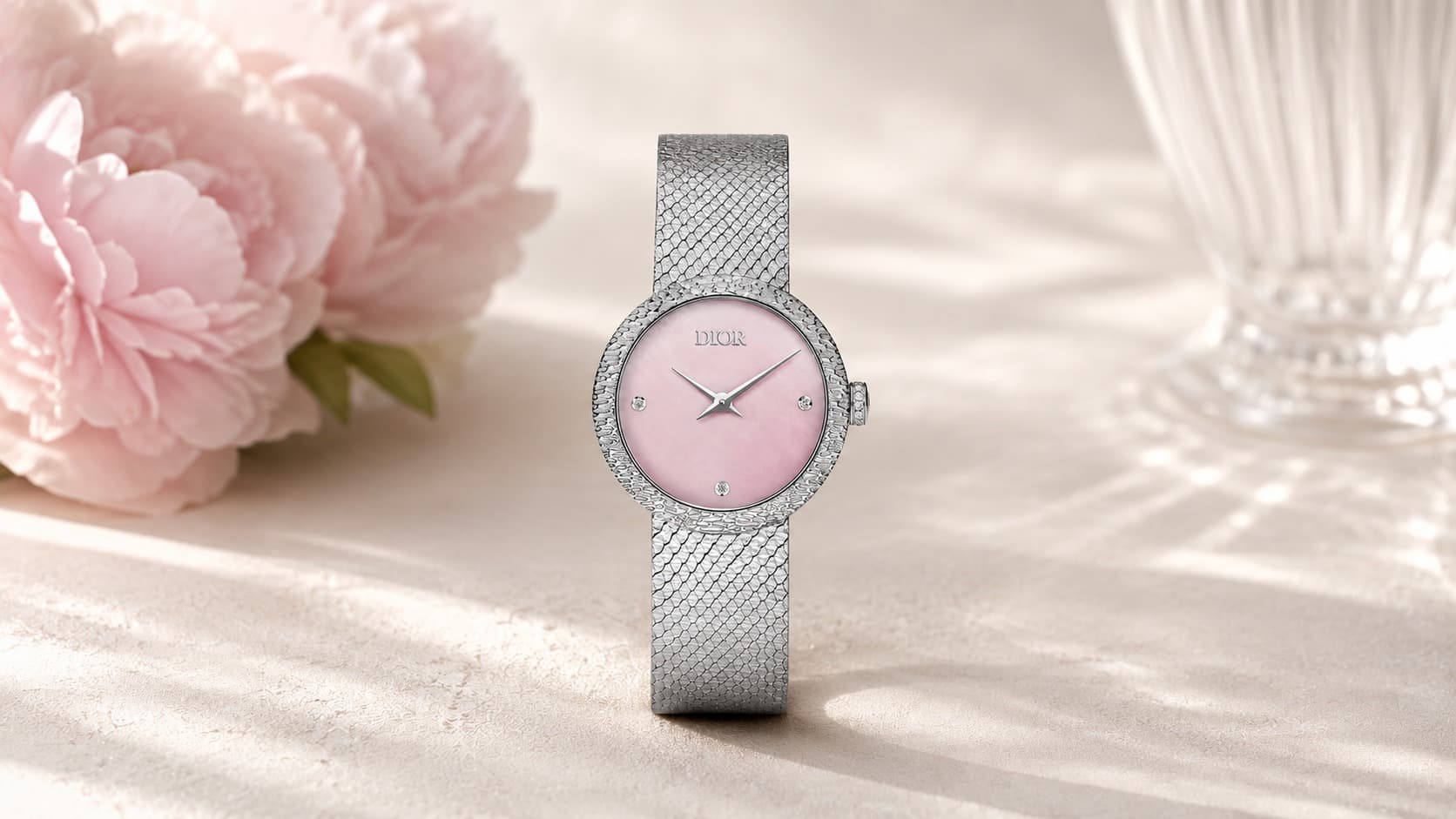
Dior watches occupy a unique space in luxury horology where haute couture heritage meets Swiss manufacturing precision. While the brand is globally recognized for its fashion empire, Dior has spent over two decades building legitimate watchmaking credentials through dedicated Swiss facilities, partnerships with premium movement makers like Zenith, and innovative complications like the proprietary Dior Inversé system. With prices ranging from approximately €3,800 for entry-level models to over €38,500 for limited edition pieces, Dior targets fashion-conscious luxury consumers who seek distinctive designs that transcend typical fashion watches. The brand generated around $75 million in watch revenue in 2022, positioning it as a serious player among fashion houses entering horology, though still trailing competitors like Hermès and Chanel in market presence and collector recognition.
The Story Behind Dior Watches
The story of Dior watches begins not in Switzerland’s watchmaking valleys, but in a Parisian fashion atelier where Christian Dior revolutionized women’s clothing in the years following World War II. The transformation from haute couture house to serious Swiss watchmaker took over half a century, marked by false starts, renewed commitments, and ultimately a genuine investment in horological manufacturing. What sets Dior apart from many fashion brands dabbling in watches is the decision to build actual production facilities in Switzerland and forge real partnerships with respected movement makers, rather than simply licensing the name to external manufacturers.
- Christian Dior opened his fashion house at 30 Avenue Montaigne in Paris on December 16, 1946, backed financially by textile magnate Marcel Boussac who provided the capital for Dior’s ambitious vision. When the “New Look” collection debuted in February 1947, it redefined post-war fashion with voluminous skirts and cinched waists, establishing Dior as a brand synonymous with luxury, femininity, and transformation through design—principles that would eventually guide the watchmaking philosophy.
- The first Dior-branded watches appeared in 1968 through a partnership with a Swiss subsidiary of Bulova, featuring the interlocking “CD” logo that remains iconic today. These early pieces were fashion accessories rather than serious timepieces, distributed primarily through Dior boutiques as complementary products to handbags and jewelry rather than competing in dedicated watch retail channels.
- In 1975, Dior released the “Black Moon” collection, which watch historians consider the true beginning of Dior’s watchmaking identity. This line embraced minimalist design with clean dials and simple cases, establishing an aesthetic language focused on elegance and restraint rather than the ornate complications favored by traditional Swiss brands. The Black Moon’s success proved customers wanted watches that looked like Dior, not imitations of Rolex or Patek Philippe.
- Bernard Arnault’s 1987 acquisition brought Dior into the LVMH conglomerate, providing access to the financial resources and luxury goods expertise that would prove essential for serious watchmaking. LVMH’s portfolio already included champagne houses and leather goods brands, and Arnault envisioned building a luxury empire that could compete across all premium categories, including the lucrative Swiss watch market.
- The 1995 purchase of Benedom SA gave LVMH control of the Swiss manufacturer that had been producing Dior and Céline watches under contract. This acquisition brought watchmaking operations in-house, providing direct oversight of quality and design while building institutional knowledge about Swiss manufacturing standards and distribution networks. It was a crucial step toward eventual self-sufficiency in production.
- Everything changed in 2001 when Dior established Les Ateliers Horlogers Dior SA in La Chaux-de-Fonds, the Swiss town that serves as the epicenter of traditional watchmaking. This wasn’t a small assembly operation or a marketing office—it was a legitimate manufacturing facility capable of producing watches that met Switzerland’s strict “Swiss Made” requirements, which mandate that at least 60% of a watch’s value must originate in Switzerland. For the first time, Dior could claim genuine Swiss watchmaking credentials.
- Victoire de Castellane became the creative force behind Dior watches in 2003, bringing her jewelry design background to the “La D de Dior” collection that launched that year. De Castellane understood that Dior customers wanted timepieces that functioned as jewelry first and watches second, leading to designs featuring mother-of-pearl dials, diamond settings, and cases shaped like the pyramidal studs from Christian Dior’s iconic handbags. This collection finally defined what a Dior watch should look like.
- The 2004 launch of “Chiffre Rouge” marked Dior’s push into men’s watches and established a partnership with Zenith, one of Switzerland’s most respected movement manufacturers. By incorporating Zenith’s automatic calibers—including the legendary El Primero chronograph movement—Dior gained access to genuine haute horlogerie mechanics that could compete with traditional Swiss brands on technical merit, not just design appeal. The Chiffre Rouge’s asymmetrical case with the crown at 4 o’clock created a distinctive silhouette that looked nothing like conventional round chronographs.
- Dior entered the world of high complications with the 2008 “Christal Tourbillon”, featuring watchmaking’s most prestigious and technically demanding mechanism. The tourbillon, invented in 1795 to improve accuracy by counteracting gravity’s effects on the movement, requires extraordinary skill to produce and typically appears only in watches costing $50,000 or more. By creating a tourbillon watch, Dior signaled serious intentions to compete in haute horlogerie, not just fashion accessories.
- The development of the Dior Inversé caliber system represents the brand’s most innovative contribution to watchmaking technology. Traditional automatic watches hide their oscillating weight (the rotor that winds the mainspring through wrist movement) on the case back, invisible to the wearer. Dior engineers flipped this convention, mounting the rotor on the dial side where it becomes a decorative element. These rotors feature exotic materials like gold thread embroidery, silk, feathers, gemstones, and even iridescent scarab beetle wings, transforming a functional component into kinetic art.
- LVMH’s watch division structure provides Dior with resources unavailable to independent brands, including access to movement technology from sister companies Zenith and TAG Heuer, shared research and development costs, and La Fabrique du Temps, LVMH’s complications workshop that creates custom movements for special editions. This corporate ecosystem allows Dior to produce genuinely complicated watches without decades of independent development.
The progression from Parisian fashion house to Swiss manufacturer reflects a patience rare in an industry where many brands rush to market with outsourced products. Dior’s willingness to invest in actual facilities, hire Swiss watchmakers, and develop proprietary technology demonstrates a commitment to legitimacy that goes far beyond slapping a luxury logo on generic watches. Whether this investment will eventually position Dior alongside Cartier and Hermès as a fashion brand taken seriously by watch collectors remains an open question, but the foundation has been carefully laid over more than two decades of systematic development.
Dior Watch Features: Design and Movements
Dior approaches watchmaking through the lens of a couture house rather than a traditional Swiss manufacturer, treating each timepiece as a canvas for artistic expression while maintaining the mechanical integrity expected from Swiss Made products. This fusion creates watches that appeal to buyers seeking jewelry-level craftsmanship and distinctive design rather than horological orthodoxy. The brand draws heavily on its fashion archives, translating signature elements like the Cannage quilted pattern, asymmetrical silhouettes, and Christian Dior’s personal superstitions into three-dimensional watch designs. Where traditional Swiss brands emphasize heritage movements and sporting provenance, Dior emphasizes visual impact and the marriage of mechanics with decorative arts.
- The Cannage pattern serves as Dior’s most recognizable design signature, appearing across watch dials, oscillating rotors, and leather straps. This quilted motif originated from the cane chairs used at Christian Dior’s first fashion show in 1947, where models sat waiting to walk the runway. By incorporating this pattern into watch designs, Dior creates an immediate visual connection to its couture heritage, making each timepiece instantly identifiable even without seeing the logo. The pattern appears in various executions, from guilloche engraving on metal dials to embossed leather straps to three-dimensional ceramic bracelet links.
- Asymmetrical case architecture defines several key collections, most notably the Chiffre Rouge with its crown positioned at 4 o’clock instead of the traditional 3 o’clock location. This unconventional placement required redesigning the entire movement architecture and case construction, but creates a distinctive silhouette that breaks from conventional round chronograph design. The crown receives additional protection from a raised “bumper” on the case side, both functional and sculptural. These asymmetries reflect Christian Dior’s belief that perfection often emerges from calculated imbalance rather than rigid symmetry.
- Color theory plays a crucial role in Dior’s design philosophy, particularly the prominence of red across collections. Christian Dior considered red “the color of life” and incorporated it extensively in his fashion work. In watches, this appears as red dial accents on the Chiffre Rouge, red stitching on leather straps, and red-tipped hands that provide both aesthetic appeal and improved legibility. The brand avoids the typical black-and-white palette favored by traditional sports watches, instead embracing softer tones, pastels, and bold primary colors that reference fashion trends rather than diving specifications.
- The number eight carries symbolic significance throughout Dior’s designs because Christian Dior considered it his lucky number. The Dior VIII collection takes its name directly from this superstition, featuring cases and bracelets constructed from pyramid-shaped links that echo the number 8’s geometry. Launch dates for major collections often fall on the 8th of the month, and limited editions frequently come in production runs of 8, 88, or 88 pieces. This numerological obsession adds layers of meaning that resonate with customers familiar with Dior’s history.
- Materials selection emphasizes luxury and innovation over traditional watchmaking conventions. Cases utilize 316L stainless steel as the foundation material, but Dior applies specialized surface treatments including black DLC (Diamond-Like Carbon) coating that provides scratch resistance while creating a matte black appearance favored in contemporary design. Precious metal cases come in 18-karat rose, white, and yellow gold variations, machined to jewelry-level finishing standards. The brand was an early adopter of ceramic technology, using scratch-resistant black and white ceramic for cases and bracelets on the VIII collection, a material more commonly associated with Chanel and Rado than traditional Swiss brands.
- Crystal work goes beyond standard sapphire implementation to incorporate gemstone elements directly into watch architecture. The discontinued Christal collection featured pyramid-cut sapphire crystals integrated into bracelet links, creating a jewelry watch that sparkled from every angle. These weren’t simply decorative elements glued onto metal—they were structural components requiring advanced lapidary skills to cut and set. All current models use anti-reflective coated sapphire crystals with treatments that minimize glare from multiple angles, essential for dials featuring reflective materials like mother-of-pearl.
- Mother-of-pearl receives extensive use across women’s collections, appearing in multiple colors including white, pink, black, and blue variations. Dior sources shell material from specific mollusk species to achieve desired iridescence and color patterns, then cuts thin slices that are fitted precisely into dial openings. Each dial becomes unique because natural materials never repeat exactly. The GEM DIOR collection incorporates even more exotic stones including lapis lazuli, malachite, turquoise, and chrysoprase, treating the dial as a jeweler would approach a pendant rather than a watchmaker would approach a time display.
- Movement partnerships elevate Dior beyond typical fashion watch mechanics through strategic relationships with premium Swiss manufacturers. The primary collaboration with Zenith provides access to two movement families: the “Irréductible” chronograph calibers based on the legendary El Primero, operating at 36,000 vibrations per hour for exceptional precision and offering 1/10th second measurement capability; and the ultra-flat “Elite” automatic movements measuring just 2.84mm to 3.46mm thick, enabling elegant dress watch proportions. These aren’t generic ETA movements found in entry-level Swiss watches—they’re the same calibers used by Zenith in its own luxury timepieces.
- Modified movements receive Dior-specific designations and customizations that distinguish them from standard versions. The CD.001 caliber derives from Zenith’s El Primero but features Dior-designed rotors with Cannage patterns and specific finishing requirements. The CD.002 caliber bases itself on the reliable Sellita SW300 movement but receives additional decoration and testing to meet Dior’s standards. This practice mirrors what Cartier and Hermès do with their sourced movements—taking proven Swiss calibers and personalizing them rather than developing entirely proprietary movements from scratch.
- The Dior Inversé system represents the brand’s most significant mechanical innovation, completely reimagining automatic watch architecture. Traditional automatic watches position the oscillating weight on the case back, hidden from view. Dior engineers relocated this component to the dial side, requiring extensive redesign of the gear train and movement layout. The technical challenge was substantial—the rotor needed sufficient mass to wind the mainspring efficiently while remaining balanced enough to avoid interfering with timekeeping accuracy. The payoff is transforming a functional component into a kinetic art installation.
- Inversé rotors feature materials unprecedented in traditional watchmaking, including gold thread embroidery, silk fabric inserts, peacock feathers, colored gemstone mosaics, and iridescent beetle wing cases. Some rotors require dozens of hours of handwork by specialized artisans, making them more akin to haute joaillerie than standard watch components. The movement beneath often comes from Zenith or other suppliers, but the rotor decoration elevates each piece into a unique creation. Certain limited editions feature rotors so elaborate they’re signed by the artisan who created them.
- Manufacturing at Les Ateliers Horlogers Dior ensures Swiss Made certification through rigorous adherence to legal requirements and quality standards. Swiss law mandates that at least 60% of a watch’s manufacturing value must originate in Switzerland, that the movement must be Swiss, and that final casing and quality inspection must occur in Switzerland. Dior exceeds these minimums through hand-assembly by skilled Swiss watchmakers, component sourcing from Swiss and approved suppliers, and quality control procedures that match standards at more established manufactures.
- COSC chronometer certification applies to select automatic models, providing third-party verification of timing accuracy. The Contrôle Officiel Suisse des Chronomètres tests movements over 15 days in multiple positions and temperatures, certifying that they maintain accuracy within -4 to +6 seconds per day. Not all Dior watches carry COSC certification—primarily the higher-end Chiffre Rouge chronographs—but its presence on any model indicates genuine precision rather than just decorative appeal.
The result of these design and manufacturing choices is a watch collection that occupies unique territory in the luxury market. Dior timepieces don’t compete directly with Rolex for tool watch credibility or with Patek Philippe for investment value. Instead, they offer buyers a way to wear recognizable luxury fashion on their wrist while knowing the mechanics inside meet legitimate Swiss standards. Whether this approach will build lasting collector interest remains uncertain, but it has created a distinctive identity that doesn’t simply imitate what traditional Swiss brands have done for decades.
Top 10 Best Dior Watches
Dior’s current catalog spans from accessible luxury jewelry watches to genuine haute horlogerie complications, with each collection targeting specific customer preferences and use cases. The lineup reflects a focus on mechanical credibility through Swiss partnerships while maintaining the fashion-forward aesthetics that define Dior’s identity. These ten models represent the strongest offerings across price points, complications, and design approaches, showcasing both the brand’s heritage pieces and its ambitious push into serious watchmaking territory.
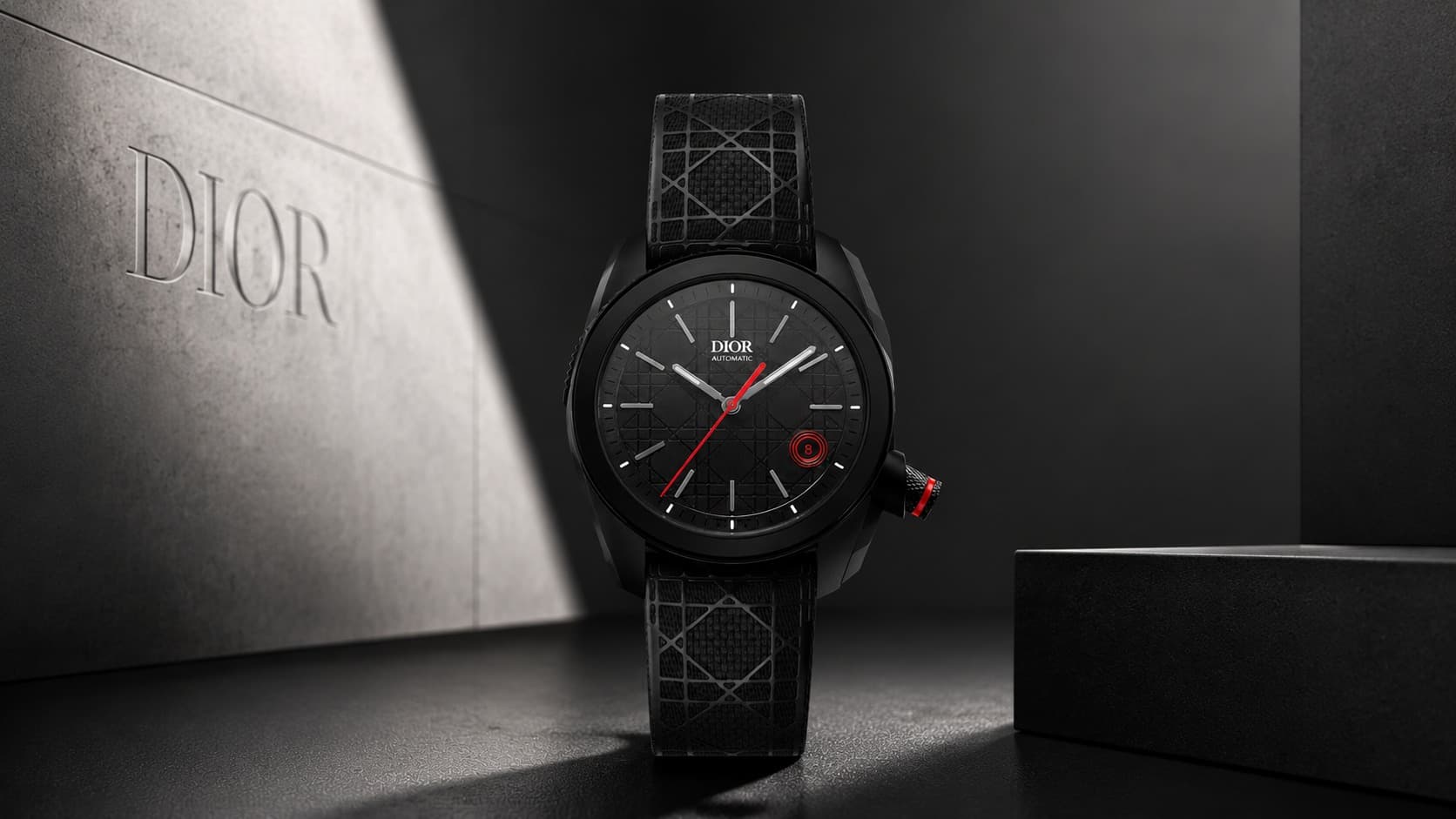
- Chiffre Rouge Black Ultramatte Chronograph stands as Dior’s most credible entry for serious watch enthusiasts, featuring a 41mm case with black DLC coating and matte finish. Inside beats a modified Zenith El Primero movement (CD.001) operating at 36,000 vibrations per hour for exceptional chronograph precision measuring down to 1/10th of a second. The asymmetrical design positions the crown at 4 o’clock with a protective bumper, creating an instantly recognizable profile. Water resistance reaches 100 meters, making it suitable for swimming and water sports. Retail pricing sits at approximately €13,500, with limited production runs of 100 pieces for special editions enhancing exclusivity.
- Chiffre Rouge Time and Date represents the collection’s more accessible entry point, offering the distinctive asymmetrical 38mm case without chronograph complications. Inside sits a modified Sellita SW300 automatic caliber (CD.002), a proven movement known for reliability across the Swiss industry. The simplified dial focuses on time and date with red accents honoring the collection’s name. Retail pricing around €7,900 makes this the most affordable mechanical Dior watch for men, competing against automatic offerings from Longines and Oris. The 100-meter water resistance makes it genuinely suitable for daily wear.
- GEM DIOR defines the brand’s contemporary jewelry watch identity with an irregular octagonal 27mm case that breaks from traditional shapes. Seven variations span from steel with black mother-of-pearl at €3,800 to 18-karat gold with diamonds and exotic stones reaching €31,500. Dial options include lapis lazuli, malachite, turquoise, and chrysoprase—semi-precious stones rarely used in watchmaking. The asymmetrical bracelet eliminates traditional clasps through a sliding link system, while Swiss quartz movements provide reliable timekeeping without maintenance concerns.
- La D de Dior continues as the brand’s established women’s bestseller, recognized by its case shape inspired by Christian Dior’s lucky number eight and pyramidal handbag studs. Available in 25mm and 28mm sizes with Swiss quartz movements, pricing starts at $4,200 for pink mother-of-pearl variants with integrated Milanese mesh bracelets. Premium versions feature diamonds and decorative stones extending prices upward, while 30-meter water resistance makes them suitable for daily wear but not swimming. The collection competes directly with Chanel’s Première and Cartier’s smaller jewelry watches.
- Grand Bal showcases Dior’s haute horlogerie ambitions through the proprietary Dior Inversé caliber system, featuring oscillating weights visible on the dial side rather than hidden on the case back. Cases range from 33mm to 38mm, housing movements with rotors decorated using precious materials including gold thread embroidery, silk, feathers, and gemstones. Each rotor requires dozens of hours of handwork by specialized artisans. Pricing spans from $5,450 for steel variants to over $35,000 for diamond-set versions, with limited editions like the 38-piece Grand Bal Broderie Florale representing ultimate exclusivity.
- Grand Soir Automate targets collectors seeking artistic timepieces with mechanical complications, featuring animated scenes activated by pushers on the case side. These watches incorporate traditional automaton mechanisms where figures move in choreographed sequences, combining 18th-century watchmaking traditions with contemporary Dior design. Recent examples include the Year of the Snake edition limited to 38 pieces at €38,500. Production numbers rarely exceed 100 pieces, ensuring genuine scarcity for collectors who appreciate mechanical artistry.
- Dior VIII established the brand’s ceramic watch credentials when launched, featuring scratch-resistant black or white ceramic cases and bracelets with pyramid-shaped links referencing Christian Dior’s lucky number eight. The 33mm and 38mm sizes accommodate different wrist proportions, with Swiss automatic movements in higher-end versions and quartz in entry models. While current production appears limited compared to newer collections, the secondary market shows steady demand with prices ranging from $1,383 to $6,600, indicating the design’s lasting appeal among Dior enthusiasts.
- Dior Christal revolutionized jewelry watch design through extensive use of pyramid-cut sapphire crystals integrated into bracelet links and bezels, creating a jewelry watch that sparkled from every angle. Though discontinued, these models remain collectible for their innovative gemstone work requiring advanced lapidary skills and distinctive asymmetrical cases. Secondary market pricing spans $605 to $5,999 depending on size and materials, with automatic chronograph versions commanding premium prices. The collection demonstrated Dior’s willingness to experiment with unconventional materials.
- La Mini D de Dior caters to customers preferring discreet luxury, scaling down the La D de Dior design to 19mm for subtle wrist presence. Despite tiny dimensions, cases still feature the signature pyramidal shape and high-jewelry finishing standards. Swiss quartz movements make practical sense at this scale where mechanical movements would be impractically expensive to manufacture and service. Pricing starts around $3,500, competing with Cartier’s smallest Tank models and Chanel’s petite J12 variants for the ultra-compact luxury watch segment.
- Chiffre Rouge Tourbillon represents Dior’s pinnacle achievement in traditional haute horlogerie, featuring one of watchmaking’s most prestigious and technically demanding complications. Limited to single-digit production numbers annually, these pieces command prices exceeding €100,000 depending on case materials and gem settings. The tourbillon cage visible through the dial adds mechanical theater to the asymmetrical Chiffre Rouge design language, while the movement itself requires hundreds of hours of skilled handwork. These watches target serious collectors who appreciate haute horlogerie regardless of brand origin.
This range demonstrates Dior’s multi-pronged strategy: accessible quartz jewelry watches for fashion-conscious buyers, mid-tier automatic pieces for those seeking mechanical watches with distinctive design, and genuine complications for collectors who appreciate haute horlogerie. The pricing structure creates clear segmentation while the design language maintains consistency across categories, ensuring every watch looks unmistakably like Dior whether it costs €3,800 or €100,000.
Things to Consider Before Buying a Dior Watch
Purchasing a Dior watch requires different evaluation criteria than buying traditional Swiss timepieces, because the brand occupies unique territory between fashion accessory and serious horology. Buyers need to clarify their priorities—whether they value distinctive design and brand recognition over investment potential, and whether they want mechanical movements or reliable quartz. Budget considerations span a wide range from under €4,000 to over €100,000, with significant jumps in mechanical complexity and materials quality at each price tier. The decision also involves practical factors like water resistance, size proportions, and long-term serviceability that affect daily wearability beyond initial aesthetic appeal.
- Budget determines which collections become accessible and what movement types you’ll receive. Entry-level purchases starting around €3,800 provide Swiss quartz jewelry watches like GEM DIOR with exotic stone dials and sculptural cases. The €7,000-€8,000 range introduces mechanical automatic movements in the Chiffre Rouge time-and-date models with modified Sellita calibers. Stepping up to €13,500 brings Zenith El Primero chronograph movements with genuine haute horlogerie credentials. Above €30,000, you’re entering high jewelry territory with extensive gem settings or limited edition complications. Setting a realistic budget early prevents falling in love with pieces financially out of reach.
- Movement type fundamentally affects maintenance requirements and long-term ownership costs. Swiss quartz movements in ladies’ collections need only battery replacements every 2-3 years at $50-150, making them practically maintenance-free for occasional wearers. Automatic movements require professional servicing every 3-5 years costing $200-400 for basic maintenance, with complete overhauls reaching $400-800. Complicated movements like chronographs and tourbillons increase service costs and require watchmakers familiar with those specific calibers. Buyers who dislike regular maintenance should stick with quartz models.
- Case size significantly impacts wearability and comfort across different wrist sizes. Dior’s range spans from 19mm Mini D models suitable for very small wrists to 41mm Chiffre Rouge chronographs appropriate for larger proportions. The optimal 33-38mm sizing in many collections works well for most wearers without overwhelming smaller wrists or looking undersized on larger ones. Asymmetrical designs like Chiffre Rouge’s offset crown can affect how size is perceived, sometimes wearing larger than measurements suggest. Try watches in person when possible, as proportions often look different on the wrist than in photos.
- Water resistance ratings vary dramatically across collections and limit usage scenarios. Most dress models including La D de Dior and GEM DIOR offer only 30-meter resistance, suitable for handwashing and brief splashes but not swimming or showering. The Dior VIII collection’s 50-meter rating provides slightly more protection but still isn’t truly swim-safe by conservative standards. Only Chiffre Rouge sport models with 100-meter ratings handle swimming and water sports confidently. Buyers who want one watch for all situations need to prioritize collections with higher water resistance, while those with multiple watches can choose dress pieces with minimal ratings.
- Gender-specific versus unisex designs affect which collections to consider. La D de Dior and GEM DIOR clearly target women with smaller cases, jewelry aesthetics, and feminine color palettes. Chiffre Rouge speaks primarily to men with larger cases and sport chronograph functionality. The Grand Bal and Dior VIII collections occupy middle ground with sizes ranging from 33mm to 38mm that work for both genders depending on wrist size and style preferences. Some buyers prefer clearly gendered designs while others appreciate versatile pieces that transcend traditional categories.
- Limited edition versus regular production creates important long-term considerations. Regular production pieces benefit from ongoing parts availability and established service procedures through Dior’s network. Limited editions with production runs of 8-100 pieces provide exclusivity and potentially better resale values, but may complicate future servicing if specific components become unavailable. Extremely limited tourbillon and automate pieces with single-digit production numbers become nearly irreplaceable if damaged. Conservative buyers should favor regular production, while collectors willing to accept risks can pursue limited editions.
- Strap and bracelet options affect versatility and wearing comfort across different situations. Integrated bracelets on collections like GEM DIOR and Dior VIII create cohesive designs but can’t be swapped for different looks or seasonal preferences. Models with interchangeable straps offer more flexibility, allowing switches between leather for formal occasions, fabric for casual wear, or rubber for sports. Metal bracelets typically require professional sizing while leather straps allow easy adjustments. Consider whether you want one unchangeable look or the ability to modify appearance for different contexts.
- Warranty coverage and service network accessibility matter for long-term ownership peace of mind. Dior provides 1-2 year warranties covering manufacturing defects but excluding normal wear and user damage. Service must be performed through official Dior workshops accessed via boutiques and authorized retailers, with 2-4 week turnaround times typical. Unlike brands with widespread independent watchmaker support, Dior servicing relies on a smaller network requiring watches to be sent to centralized facilities. Buyers far from major cities may face greater inconvenience for routine maintenance.
- Resale value expectations should be realistic given fashion watch market realities. Dior watches typically depreciate 40-60% from retail pricing, making them poor financial investments compared to Rolex or Patek Philippe. Purchasing decisions should prioritize personal enjoyment over potential appreciation. The pre-owned market offers better value propositions with 50% discounts common on recent models. Buyers planning to upgrade frequently should accept losses on resale, while those keeping watches long-term can disregard investment concerns entirely.
- Personal style alignment matters more for Dior than traditional watch brands, because the designs make bold statements rather than blending into conservative aesthetics. The asymmetrical Chiffre Rouge looks nothing like conventional chronographs, the octagonal GEM DIOR breaks from traditional jewelry watch shapes, and the visible Inversé rotors in Grand Bal models demand attention. Buyers uncomfortable with distinctive designs that prompt comments and questions should consider more conservative Swiss brands, while those seeking conversation pieces will appreciate Dior’s willingness to break horological conventions.
The ideal Dior buyer understands they’re purchasing wearable art with Swiss mechanical credibility rather than traditional tool watches or investment pieces. Prioritizing design, brand recognition, and wearing enjoyment over financial appreciation creates realistic expectations that align with what Dior actually offers. Buyers seeking pure horological value or future collectibility should look elsewhere, but those wanting fashion house luxury backed by legitimate Swiss manufacturing will find compelling options across Dior’s current range.
Where to Buy Authentic Dior Watches
Purchasing a Dior watch involves navigating a relatively controlled distribution network that prioritizes brand presentation and customer experience over widespread availability. The company maintains tight oversight of authorized sellers to protect brand image and ensure proper warranty coverage, meaning fewer purchasing options exist compared to mass-market Swiss brands. Buyers face a choice between paying full retail at official channels for complete warranty protection and buying pre-owned at significant discounts while accepting some risks. The secondary market for Dior watches remains relatively thin compared to established Swiss brands, which limits options but can create opportunities for patient buyers seeking discontinued models or discounted recent pieces.
- Official Dior boutiques provide the most comprehensive selection and guaranteed authenticity through direct sales channels. The brand operates approximately 390 stores across 51 countries, with major locations in fashion capitals like Paris, New York, London, Tokyo, and Shanghai. These boutiques stock complete current collections with knowledgeable staff who understand the fashion context behind each design. Customers receive proper warranty registration, manufacturer documentation, and access to after-sales service through official networks. The boutique experience includes presentation in luxury environments consistent with Dior’s fashion image, though prices remain non-negotiable at full retail.
- Dior’s official website extends boutique access to online shoppers, offering convenient purchasing for customers far from physical locations. The site provides express delivery for watches over $10,000 and maintains the same pricing as boutiques. Online purchases receive identical warranty coverage and documentation as in-store sales. The website’s primary limitation is the inability to physically try watches before purchasing, which matters significantly for sizing and proportions. Return policies become more restrictive for watches over $10,000, requiring careful consideration before finalizing orders.
- Authorized multi-brand luxury retailers carry selected Dior models, though inventory tends to be more limited than at dedicated boutiques. Jewelry stores and watch specialists with authorized dealer status provide legitimate purchases with manufacturer warranties. Department stores with Dior concessions or jewelry sections sometimes stock watches alongside fashion accessories. These retailers offer the advantage of comparing Dior directly against competing brands in the same location, helping contextualize pricing and features. However, sales staff may lack the specialized Dior knowledge found at dedicated boutiques.
- The pre-owned market offers significant savings but requires careful authentication, with major online watch marketplaces serving as primary platforms for Dior watches. Current listings range from $254 for older quartz models to $4,153+ for recent mechanical pieces, representing 40-60% discounts from retail prices. Selection varies unpredictably based on what owners choose to sell, with popular discontinued models like Christal appearing occasionally. The relatively thin market means desirable configurations may take months to surface, requiring patience from buyers seeking specific models.
- Specialized pre-owned dealers focus on luxury fashion watches, including authenticated Dior pieces with detailed condition descriptions. These dealers typically inspect watches before listing, provide some form of guarantee or return period, and handle authentication concerns. Pricing tends to be slightly higher than private sales but includes added security and recourse if problems emerge. Inventory remains limited compared to pre-owned dealers specializing in traditional Swiss brands, reflecting Dior’s smaller production volumes and collector base.
- Authentication services become essential for pre-owned purchases outside authorized channels, protecting buyers from the substantial counterfeit market for luxury fashion brands. Professional authentication companies provide expert verification through detailed analysis of case finishing, dial printing, movement quality, and serial number verification. Costs typically range from $30-100 depending on service level and urgency. These services examine high-resolution photos submitted by buyers, identifying telltale signs of counterfeits that escape untrained eyes.
- Dior’s date code system helps verify authenticity but differs from traditional serial numbers. The brand uses format “XX-XX-XXXX” where the first two digits indicate country of manufacture, the middle two indicate production year, and the final four provide date codes. These appear on cards and documentation rather than engraved on watches themselves in most cases. Counterfeiters often get these codes wrong or use impossible number combinations, making them useful authentication tools when present and correctly formatted.
- Auction houses occasionally offer vintage and limited edition Dior watches, though major auction houses rarely feature Dior in their important watch sales. Regional auctions and online platforms may list estate pieces or collections, sometimes at below-market prices if the seller wants quick liquidation. Auction purchases require careful condition assessment and typically come without warranties or return options, making them riskier than retail or established pre-owned dealers.
- Gray market dealers import watches from other regions but operate outside official networks, offering discounts of 10-30% off retail by sourcing from markets with lower pricing or excess inventory. These dealers provide watches in factory-sealed condition but may not include manufacturer warranties valid in the buyer’s country. Dior’s relatively limited gray market presence compared to mainstream Swiss brands means fewer opportunities for these purchases, and warranty complications may negate the modest savings.
- Avoiding unauthorized sellers and obvious counterfeits protects buyers from fraud and disappointment. Red flags include prices far below market rates, sellers unable to provide detailed photos of movement and case back, listings with stock photos rather than actual watch images, and sellers with limited transaction history or poor feedback. Dior’s luxury fashion positioning makes it a popular target for counterfeiters who prey on buyers seeking prestigious brands at bargain prices. If a deal seems too good to be true, it almost certainly involves a fake watch or scam.
The safest purchasing path runs through official Dior boutiques or authorized retailers, accepting full retail prices in exchange for guaranteed authenticity and complete warranty coverage. Buyers comfortable with some risk can find excellent value in the pre-owned market, particularly for recent models where 40-50% discounts are common. The key is conducting thorough authentication verification and buying only from sellers with strong reputations and return policies. Patience matters significantly, as the relatively small Dior watch market means ideal pieces may take time to surface at reasonable prices.
Do Dior Watches Hold Their Value?

Dior watches function primarily as luxury fashion purchases rather than financial investments, with resale values declining substantially from retail prices in ways that disappoint buyers expecting traditional Swiss watch appreciation. The secondary market remains relatively thin compared to established horological brands, indicating limited collector demand and modest liquidity when owners decide to sell. While certain limited editions may hold value slightly better than regular production pieces, no Dior watches have demonstrated the consistent appreciation seen with Rolex sports models or Patek Philippe complications. Buyers should purchase based on personal enjoyment and design preferences rather than expecting their watch to maintain or increase in value over time.
- Typical depreciation ranges from 40-60% off retail pricing within the first few years of ownership, making Dior watches among the poorest performers for value retention in the luxury segment. A watch purchased new at €10,000 might realistically sell for €4,000-€6,000 in the pre-owned market, even in excellent condition with complete documentation. This depreciation curve resembles other fashion-oriented luxury watches rather than investment-grade Swiss timepieces. The steepest losses occur immediately after purchase, with some stabilization after the initial drop.
- Pre-owned market pricing currently shows models ranging from $254 to over $4,000, with most pieces clustered in the $1,000-$3,000 range regardless of original retail prices. This compressed pricing structure indicates the market values Dior watches more by general desirability than by their original tier positioning or complications. Even pieces that originally retailed for $8,000-$12,000 often sell for similar prices as simpler models, suggesting buyers focus more on design appeal than mechanical complexity when purchasing pre-owned.
- Limited edition models perform marginally better but still face substantial depreciation from their premium retail prices. Production runs of 8-100 pieces create genuine scarcity, but this doesn’t translate to strong resale values without underlying collector demand. A limited edition that sold for €30,000 new might fetch €15,000-€20,000 pre-owned, representing 33-50% retention rather than the 40-60% losses on regular models. The improvement is modest and doesn’t justify buying limited editions purely for investment purposes.
- Discontinued collections like Christal maintain steady but not exceptional demand, with secondary market prices of $605-$5,999 reflecting their innovative design and distinctive aesthetics. These pieces appeal to buyers seeking unique vintage fashion watches rather than collectors pursuing valuable complications. The relatively stable pricing suggests the designs have lasting appeal, but appreciation above inflation remains unlikely. Buyers can find these discontinued models at reasonable prices compared to their original retail.
- Comparison with competing luxury fashion brands reveals Dior’s weak positioning in value retention. Hermès watches maintain extraordinary 100-103% value retention through extremely limited production and jewelry watch focus, essentially functioning as alternative currency in the luxury market. Chanel achieves 87-92% retention with established collecting communities and models like the J12 and Première that have achieved iconic status. Even other LVMH brands like TAG Heuer retain 60-70% on popular models. Dior’s 40-60% retention places it in the lower tier among luxury watches.
- The thin secondary market creates both challenges and opportunities for buyers and sellers. Sellers face limited platforms and buyer pools, potentially waiting months to find interested parties at acceptable prices. Buyers benefit from this illiquidity through negotiating leverage and below-market purchases when sellers need quick sales. Major pre-owned watch platforms show far fewer Dior listings than Omega, Breitling, or even other fashion brands like Cartier, indicating limited trading activity.
- Factors affecting individual watch values include condition, completeness of documentation, desirability of specific models, and presence of rare features. Watches in unworn or mint condition with full boxes, papers, and warranty cards command premium prices over those with wear or incomplete documentation. Popular models like Chiffre Rouge chronographs sell faster and retain more value than obscure references. Unusual dial colors, limited edition status, or celebrity associations can boost specific watch values above typical depreciation patterns.
- Market positioning challenges stem from Dior’s inconsistent horological history, having entered and exited serious watchmaking multiple times before the current commitment. This creates uncertainty about long-term model support, parts availability, and brand direction that affects collector confidence. Traditional Swiss brands benefit from century-long continuous production that assures buyers of service support decades into the future. Dior’s relatively recent entry into legitimate watchmaking doesn’t provide this same assurance.
- Recent developments including Swiss manufacturing investment and Zenith partnerships represent attempts to build horological credibility that could eventually improve value retention. However, market acceptance requires years or decades to develop. The watch collecting community values heritage, consistency, and proven track records—attributes Dior is still building. Even with genuine improvements in quality and mechanics, the brand needs time to overcome its fashion watch perception.
- Strategic buying in the pre-owned market offers the best value proposition for Dior enthusiasts, allowing purchases at 50-70% below retail prices. Buyers who purchase pre-owned essentially avoid the steepest depreciation already absorbed by original owners. A watch bought pre-owned at €5,000 that originally sold for €10,000 might only lose €1,000-€2,000 in additional depreciation, representing 20-40% loss from purchase price rather than 50-60% from retail. This approach makes more financial sense while still providing access to Dior’s distinctive designs.
- Realistic expectations are essential for buyer satisfaction with Dior watches as luxury purchases. Viewing them as fashion accessories that happen to contain quality Swiss movements rather than investment instruments prevents disappointment when resale time arrives. The watches offer genuine value through design, craftsmanship, and wearing enjoyment—just not financial appreciation. Buyers who accept this reality upfront can make informed decisions aligned with their priorities rather than harboring unrealistic hopes for future value.
The fundamental truth is that Dior watches depreciate like luxury cars rather than appreciate like fine art. Buyers seeking investment-grade timepieces should look to Rolex, Patek Philippe, Audemars Piguet, or even Omega and Tudor for better value retention. Those who love Dior’s distinctive aesthetics and want to wear recognizable French luxury should purchase confidently, knowing they’re buying for personal satisfaction rather than portfolio diversification. The pre-owned market’s steep discounts actually benefit new buyers willing to purchase secondhand, making Dior’s poor value retention somewhat advantageous for smart shoppers entering the brand.
Dior Watch Service and Care
Proper maintenance extends the lifespan of Dior watches while preserving their aesthetic appeal and mechanical performance, though requirements vary significantly between quartz and automatic models. The brand’s use of delicate materials including mother-of-pearl, exotic stones, DLC coatings, and ceramic components demands more careful handling than rugged tool watches designed for abuse. Water resistance limitations across most collections require particular attention to avoid damage from exposure beyond stated ratings. Regular professional servicing becomes essential for mechanical models to maintain accuracy and prevent expensive repairs from neglected lubrication, while quartz pieces need minimal intervention beyond battery changes.
- Water resistance ratings must be respected strictly to prevent costly damage, as most Dior collections offer limited protection. Models rated to 30 meters including La D de Dior and GEM DIOR should only contact water briefly during handwashing, never during showering or swimming. The 50-meter rating on Dior VIII provides slightly more protection but conservative guidelines still recommend avoiding submersion. Only Chiffre Rouge models with 100-meter ratings handle swimming and water sports confidently. Exceeding these limits risks water entering the case, damaging movements, fogging crystals, and corroding components. Gaskets deteriorate over time even without water exposure, so resistance decreases as watches age.
- Automatic movement servicing should occur every 3-5 years to maintain optimal performance and prevent premature wear. During service, watchmakers disassemble the movement completely, clean all components in ultrasonic baths, replace worn parts, apply fresh lubricants, and regulate timing. Basic service for simple automatic movements costs $200-400, while chronograph servicing reaches $400-600 due to additional complexity. Tourbillon and complicated movements may exceed $800 for complete overhauls. Neglecting service leads to dried lubricants, increased friction, accelerated wear, and eventual failure requiring more expensive repairs.
- Quartz models require only battery replacement every 2-3 years, making them practically maintenance-free for occasional wearers. Battery service costs $50-150 depending on case construction and water resistance testing requirements. Some models with snap-back cases allow quick battery changes, while others with screwed cases require more labor. When replacing batteries, technicians should test water resistance and replace gaskets if needed. Quartz movements occasionally fail and require replacement, but this happens far less frequently than automatic movements needing service.
- Professional servicing must occur through official Dior service centers for warranty coverage and guaranteed authentic parts. Boutiques and authorized retailers send watches to centralized workshops where trained technicians familiar with Dior’s specific calibers perform repairs. Turnaround typically requires 2-4 weeks, though complicated repairs may take longer. Outside warranty periods, qualified independent watchmakers can service Dior watches, particularly models using standard Sellita or ETA movements, though authentic Dior-specific parts may be difficult to source.
- Daily cleaning prevents dirt accumulation that degrades appearance and causes premature wear. Metal bracelets benefit from gentle scrubbing with a soft toothbrush and lukewarm soapy water, paying attention to links where dirt accumulates. Rinse thoroughly and dry with a soft cloth. Cases can be wiped with slightly damp cloths to remove fingerprints and oils. Avoid harsh chemicals, abrasive cleaners, or ultrasonic cleaning at home, which can damage components or loosen stones. For watches with leather straps or water resistance below 50 meters, use only dry or barely damp cloths.
- Leather straps require special care to prevent premature deterioration and cracking. Keep leather away from water, perfumes, cosmetics, and cleaning products that break down the material. Allow straps to dry completely if they get wet before wearing again. Avoid excessive sun exposure and extreme temperatures that dry out leather. When leather shows significant wear, replacement becomes necessary as repair rarely succeeds. Dior boutiques can source authentic replacement straps, though costs often run $200-500 depending on material and finishing.
- Mother-of-pearl dials need gentle handling due to the organic material’s relative fragility. Clean only with mild soap and water using soft cloths, never abrasive materials that scratch the iridescent surface. Avoid acids, alkaline cleaners, and fatty substances that can damage or discolor mother-of-pearl. The material can crack from impacts despite appearing solid, so handle these watches carefully during daily wear. Similarly, exotic stone dials in GEM DIOR models require gentle treatment as lapis lazuli, malachite, and turquoise are softer than traditional dial materials.
- DLC coatings and ceramic components resist scratching but remain vulnerable to impacts that can cause chipping or cracking. The black coating on Chiffre Rouge models withstands daily wear better than traditional polished steel but can chip at edges from hard impacts. Ceramic cases and bracelets on Dior VIII models are extremely scratch-resistant but can crack or shatter from drops onto hard surfaces. These materials can’t be repaired through polishing like steel—damage requires component replacement at significant cost.
- Storage recommendations help preserve watches during periods of non-use. Keep watches in their original boxes or watch cases that protect from dust, light, and impacts. Avoid locations with extreme temperatures or humidity that can damage movements and materials. Keep watches away from magnetic fields generated by speakers, phones, and laptops, which can magnetize movements and affect accuracy. For automatic watches worn infrequently, consider watch winders that keep movements running and lubricants distributed, though this remains optional rather than essential.
- Common issues requiring professional attention include timing variations in mechanical movements that indicate the need for regulation or service. If an automatic watch suddenly gains or loses more than 10 seconds daily, professional inspection becomes necessary. Fogging inside the crystal indicates water intrusion requiring immediate service before rust develops. Difficulties with crown operation, pushers that stick, or bracelets with loose links need repair before complete failure occurs. Strange noises from movements, reduced power reserve, or complete stoppage all require professional diagnosis.
- Avoiding magnetization protects mechanical watch accuracy from invisible interference. Modern life surrounds us with magnetic fields from electronics, speakers, magnetic clasps on bags and phone cases, and airport security equipment. Magnetized movements run fast, sometimes gaining hours per day. Watchmakers can demagnetize movements in seconds using specialized equipment, but prevention is easier than treatment. Keep watches at least a few inches from magnetic sources and remove them before passing through airport security body scanners.
- Warranty coverage typically spans 1-2 years from purchase and covers manufacturing defects but excludes normal wear, user damage, or unauthorized service. Dior requires product registration and purchase receipt retention for warranty claims. Coverage includes movement malfunctions, crown or pusher failures from defects, and case or crystal problems resulting from manufacturing errors. Water damage from exceeding stated resistance limits, damage from drops or impacts, scratches and wear to cases or bracelets, and battery replacements all fall outside warranty coverage. Service performed outside authorized networks immediately voids remaining warranty.
Proper care extends watch lifespans from years to decades while maintaining aesthetic appeal that justifies the significant initial investment. The delicate materials and limited water resistance across most Dior collections demand more cautious treatment than rugged sports watches, but reasonable care habits prevent most problems. Mechanical models require accepting ongoing service costs as part of ownership, similar to maintaining a luxury car, while quartz pieces minimize these expenses. Buyers should factor long-term maintenance costs into purchasing decisions, recognizing that a €10,000 watch may require €2,000-€4,000 in service costs over a decade of ownership.
Frequently Asked Questions About Dior Watches
Dior watches generate numerous questions from potential buyers trying to evaluate whether these fashion house timepieces offer legitimate horological value or simply expensive accessories with luxury logos. The brand’s position between traditional Swiss watchmaking and fashion accessories creates confusion about quality, authenticity, and value propositions. Common concerns revolve around manufacturing origins, movement quality, water resistance capabilities, service costs, and investment potential. These questions reflect broader uncertainty about whether Dior watches deserve consideration alongside traditional Swiss brands or belong in a separate category of fashion-oriented luxury timepieces.
- Are Dior watches actually made in Switzerland? Yes, all current Dior watches meet Swiss Made requirements through manufacturing at Les Ateliers Horlogers Dior in La Chaux-de-Fonds since 2001. The brand exceeds minimum 60% Swiss content requirements through component sourcing, movement assembly, final casing, and quality inspection all performed in Switzerland. This represents genuine Swiss manufacturing rather than simple labeling.
- What movements power Dior watches? Ladies’ jewelry watches use Swiss quartz calibers. The Chiffre Rouge time-and-date models contain modified Sellita SW300 automatics (CD.002). Chronographs feature Zenith El Primero calibers (CD.001) with 36,000 vph frequency. Grand Bal pieces use proprietary Dior Inversé movements with front-facing rotors. These represent quality Swiss calibers rather than cheap movements found in typical fashion watches.
- How can I verify if my Dior watch is authentic? Check for properly formatted date codes following “XX-XX-XXXX” patterns on documentation. Examine finishing quality on cases and dials for meticulous detail without rough edges. Verify the movement matches specifications for that model. Consider professional authentication services for pre-owned purchases, as experts can identify subtle tells that escape casual observation.
- What water activities are safe with my Dior watch? Only Chiffre Rouge models with 100-meter ratings are suitable for swimming. Dior VIII with 50-meter ratings can handle brief water contact but not extended submersion. La D de Dior and GEM DIOR with 30-meter ratings should only contact water during handwashing. Water resistance decreases over time as gaskets age.
- How much does Dior watch servicing cost? Basic automatic service runs $200-400 every 3-5 years. Chronograph service costs $400-600. Complicated movements may exceed $800 for overhauls. Quartz models need only battery replacement at $50-150 every 2-3 years. Service must occur through official Dior channels for warranty coverage.
- Do Dior watches hold their value over time? No, Dior watches typically depreciate 40-60% from retail pricing. The secondary market shows limited collector demand compared to traditional Swiss brands. Limited editions perform marginally better but still face substantial depreciation. Buyers should purchase based on personal enjoyment rather than expecting appreciation.
- Are Dior watches suitable for daily wear or only special occasions? Sport models like Chiffre Rouge handle daily activities well with 100-meter water resistance and robust construction. Jewelry watches including La D de Dior and GEM DIOR require more careful handling due to delicate materials and limited water resistance, making them better suited for formal occasions or careful daily wear depending on lifestyle.
- How does Dior compare to other luxury fashion watch brands? Dior occupies middle ground among fashion houses. Hermès commands premium respect with near 100% value retention. Chanel has built stronger collecting communities with 87-92% retention. Dior trails both in market acceptance and resale values despite genuine Swiss manufacturing capabilities, but exceeds purely fashion-oriented brands using outsourced production.
- Can I shower or swim with my Dior watch? Most Dior watches should not be worn during showering or swimming. Only Chiffre Rouge models with 100-meter ratings provide adequate protection. Hot water and soaps can damage gaskets faster than cold water. Even swim-rated watches need gaskets tested during regular service intervals to maintain water resistance.
- What warranty coverage comes with Dior watches? New Dior watches include 1-2 year warranties covering manufacturing defects but excluding normal wear and user damage. Coverage requires product registration and purchase receipts. Service occurs only through official Dior workshops. Water damage from exceeding stated resistance, impacts, strap wear, and scratches fall outside coverage.
- Are Dior watches worth the price compared to traditional Swiss brands? This depends on buyer priorities. For pure horological value and investment potential, traditional Swiss brands offer better propositions. For distinctive design and fashion house prestige, Dior provides unique value. The use of genuine Zenith movements offers comparable quality to more expensive Swiss watches. Buyers prioritizing design over resale value will find pricing reasonable.
- Where can I get my Dior watch serviced? Official service occurs through Dior boutiques and authorized retailers who send watches to centralized workshops, ensuring authentic parts and warranty coverage. Turnaround typically requires 2-4 weeks. Out-of-warranty watches can be serviced by qualified independent watchmakers, though Dior-specific parts may be difficult to source.
These questions reveal common themes of authenticity concerns, value propositions, and practical wearability that affect Dior watch purchasing decisions. The brand’s fashion house origins create skepticism that must be addressed through transparent information about genuine Swiss manufacturing, quality movements, and realistic expectations about value retention. Buyers armed with accurate information can make informed decisions aligned with their priorities rather than purchasing based on misconceptions or unrealistic hopes about what Dior watches offer.
Conclusion
Dior watches represent a distinctive category in luxury horology where haute couture design philosophy meets legitimate Swiss manufacturing capabilities. The brand has invested systematically over two decades to build genuine watchmaking credentials through dedicated facilities in La Chaux-de-Fonds, partnerships with respected movement makers like Zenith, and proprietary innovations like the Inversé caliber system. This commitment distinguishes Dior from fashion brands that merely license their names to watch producers, creating timepieces with authentic Swiss Made status backed by quality movements and meticulous finishing. The current collection spans accessible quartz jewelry watches around €3,800 to haute horlogerie complications exceeding €38,500, providing entry points across multiple price tiers while maintaining consistent design language rooted in Christian Dior’s founding principles of luxury and refinement.
The watches succeed brilliantly as fashion statements and wearable art while facing limitations as financial investments or collector pieces. Buyers seeking distinctive designs that generate conversation, recognizable luxury brand prestige, and mechanical watches that break from conventional Swiss aesthetics will find compelling value in Dior’s offerings. The use of Zenith El Primero movements in chronographs provides genuine horological credibility comparable to brands costing significantly more, while innovations like visible oscillating rotors decorated with exotic materials create mechanical theater unavailable elsewhere. However, those prioritizing value retention, strong secondary markets, or traditional horological heritage should consider established Swiss brands where decades of collector interest support better resale values and broader market acceptance.
The ideal Dior watch buyer understands they’re purchasing luxury fashion with Swiss mechanical credibility rather than investment-grade timepieces or tool watches for extreme conditions. Realistic expectations about 40-60% depreciation, limited water resistance on most models, and the need for regular maintenance on automatic pieces prevent disappointment while allowing full appreciation of what Dior actually delivers—beautifully designed watches that translate haute couture sensibilities into three-dimensional timepieces. The pre-owned market offers excellent opportunities for buyers willing to let original owners absorb initial depreciation, accessing Dior’s distinctive aesthetics at 50% discounts or more. Whether worn as daily luxury or reserved for special occasions, Dior watches provide a unique alternative to conventional Swiss timepieces for those who value design innovation and fashion house heritage alongside mechanical quality.