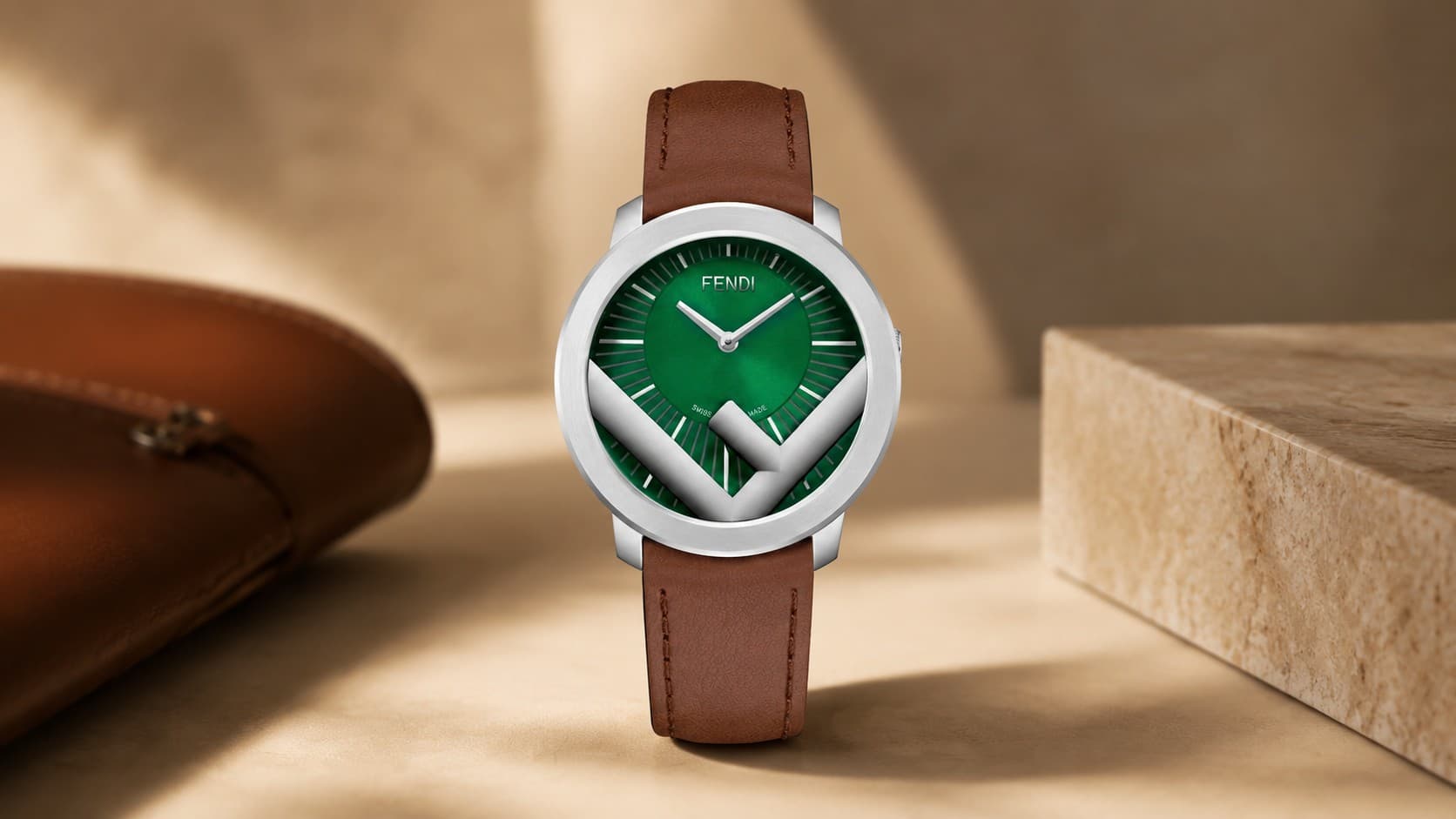
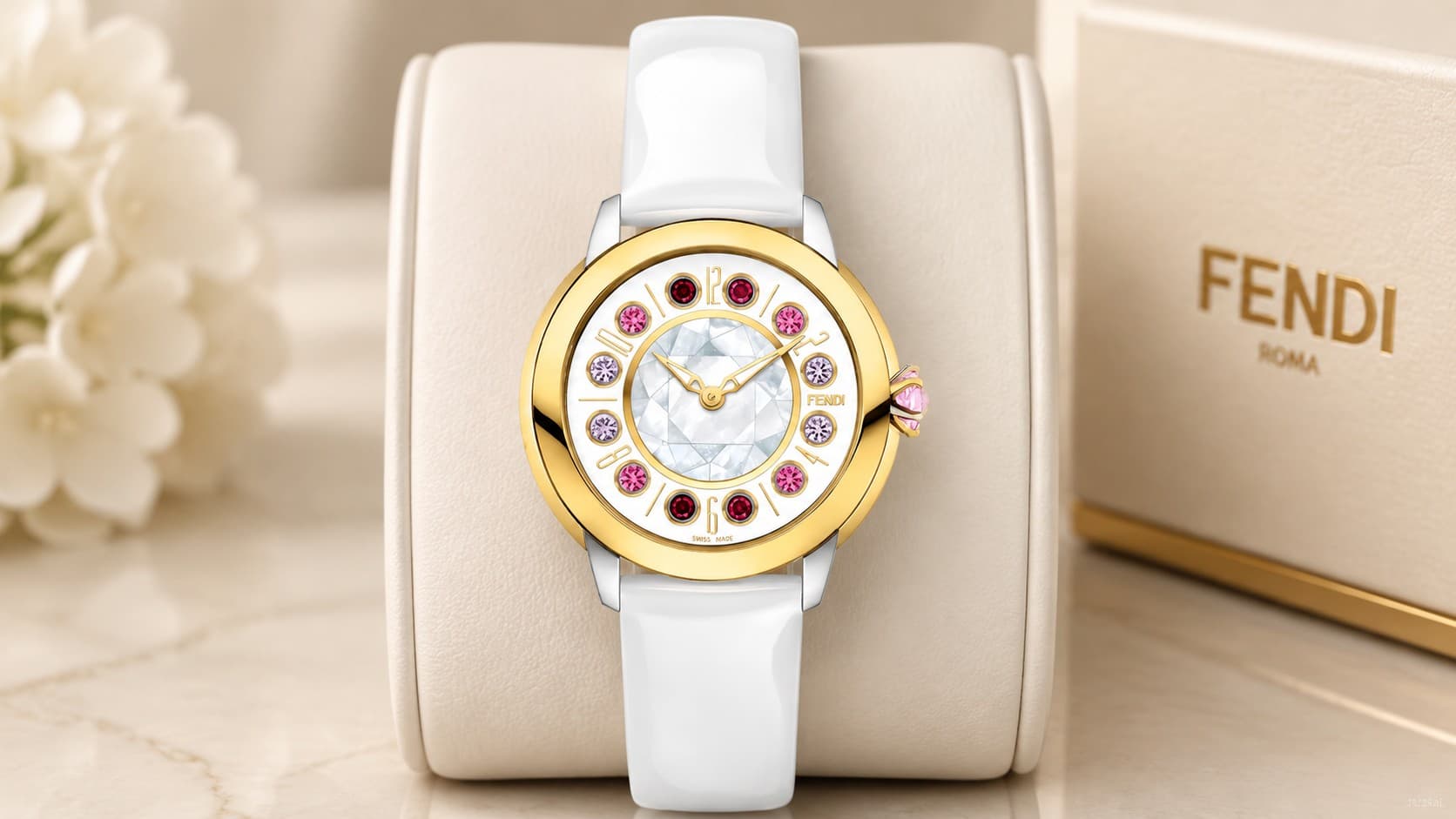
When most people think of Fendi, they picture luxurious handbags and high-fashion runway shows, not Swiss-made watches. Yet this iconic Roman brand has been quietly crafting timepieces since 1988, creating watches that look nothing like traditional luxury pieces. Fendi treats watches as wearable jewelry rather than technical instruments, designing bold pieces with asymmetrical cases, vibrant gemstones, and creative complications that conservative Swiss brands would never attempt. These aren’t cheap fashion accessories with logos slapped on—they’re genuinely manufactured in Switzerland using quality ETA movements, sapphire crystals, and proper construction techniques. The difference is that Fendi wraps this Swiss reliability in Italian design that prioritizes style over horological tradition, creating timepieces that appeal to fashion enthusiasts rather than watch collectors.
Fendi’s Journey Into Watchmaking
Fendi’s path to becoming a watchmaker spans nearly a century, starting from humble beginnings in Rome’s historic center. The brand spent decades mastering leather craftsmanship and building a fashion empire before ever producing a single timepiece. This long apprenticeship in luxury goods gave Fendi a unique perspective when they finally entered the watch industry—they saw timepieces as wearable art rather than just functional instruments.
- Eduardo Fendi and Adele Casagrande opened their first shop on Via del Plebiscito in Rome in 1925, selling handcrafted leather goods and fur products. The small workshop operated as a true family business, with the couple working directly with artisans to create each piece. Their reputation for quality spread throughout Rome, attracting wealthy customers who appreciated fine Italian craftsmanship. When the couple’s five daughters inherited the business, they maintained the same commitment to quality while slowly expanding beyond their original location. This family-run approach meant decisions were made carefully, with each new product category considered thoroughly before launch.
- Karl Lagerfeld transformed Fendi when he joined as creative director in 1965, bringing modern design thinking to their traditional products. Lagerfeld was relatively unknown at the time, but he immediately started pushing Fendi in bold new directions. He created the interlocking FF logo that became synonymous with the brand—originally standing for “Fun Furs” to reflect Fendi’s playful approach to fur design. This logo would become one of the most recognizable symbols in fashion, appearing on everything from bags to scarves. Lagerfeld stayed with Fendi for over 50 years, longer than any of his other creative partnerships, which shows how important the brand was to his career.
- Silvia Venturini Fendi, granddaughter of the founders, spearheaded the brand’s entry into watchmaking in 1988 with the launch of the Zucca Collection. As a third-generation family member, Silvia had grown up surrounded by Fendi’s leather craftsmanship and wanted to bring that same quality to watches. The Zucca Collection featured the FF logo integrated directly into watch straps and dial designs, making these timepieces instantly recognizable as Fendi products. The collection introduced what Fendi called “elegant sportivo”—a blend of sporty functionality with high-fashion aesthetics that didn’t exist in traditional watchmaking. These weren’t meant to compete with Rolex or Patek Philippe on technical grounds; instead, they offered fashion-conscious buyers something completely different.
- Fendi formed a strategic partnership with Taramax SA, a Swiss manufacturer based in Neuchâtel, initially acquiring a 51% ownership stake to control quality and production. The brand recognized that making legitimate Swiss watches required genuine Swiss expertise, not just slapping their name on someone else’s product. Taramax SA provided access to Swiss ETA movements, which are the same reliable mechanisms used by many respected Swiss brands. Every watch produced through this partnership received individual serial numbers engraved on the case back, scratch-resistant sapphire crystals protecting the dial, and water resistance testing to ensure real-world durability. This wasn’t a licensing deal—Fendi owned the majority of the manufacturing company, giving them direct control over every production decision.
- The luxury giant LVMH purchased Fendi in 2001, bringing the watch division under the same corporate umbrella as brands like TAG Heuer, Hublot, and Zenith. This acquisition changed everything for Fendi’s watch business. Suddenly they had access to LVMH’s extensive distribution network, which included owned boutiques and relationships with luxury retailers worldwide. LVMH also provided expertise from their other watch brands, sharing best practices in movement sourcing, quality control, and after-sales service. The corporate backing gave Fendi watches credibility with traditional watch retailers who might have been skeptical about carrying a fashion brand’s timepieces. LVMH’s investment capital also allowed Fendi to expand their watch collections and improve manufacturing processes.
- Fendi purchased the remaining 49% of Taramax SA in 2014, creating the fully independent Fendi Timepieces division with complete control over design and production. This move eliminated any compromise with outside partners. CEO Domenico Oliveri could now make decisions about new collections, pricing strategies, and quality standards without consulting anyone outside the Fendi organization. The brand invested in upgrading Taramax’s facilities and bringing in additional Swiss watchmaking talent. This vertical integration meant Fendi could respond quickly to market trends, launching new designs in months rather than years. CEO Pietro Beccari publicly stated that this independence allowed them to fully combine “Swiss expertise with Italian creativity”—maintaining strict Swiss manufacturing standards while pushing design boundaries that conservative Swiss brands wouldn’t touch.
- Fendi relocated its global headquarters to the Palazzo della Civiltà Italiana in Rome in 2015, a building that would inspire future watch designs. This iconic square structure, often called the “Square Colosseum,” became the brand’s spiritual home and a source of design inspiration. The building’s geometric patterns and architectural details started appearing in watch case designs and dial layouts. This move also symbolized Fendi’s commitment to its Roman heritage—even as they manufactured watches in Switzerland, the creative vision remained distinctly Italian. The palazzo features in marketing materials and brand storytelling, reinforcing that Fendi watches are Roman designs executed with Swiss precision.
From a small leather workshop to owning Swiss watch manufacturing facilities represents an unusual journey in the luxury world. Most fashion brands simply license their names to watch manufacturers, collecting royalties without controlling production. Fendi took the harder path, investing in genuine manufacturing capabilities and building expertise over decades. This commitment shows in the final products—these aren’t just fashion accessories with watch movements installed. They’re properly constructed Swiss timepieces that happen to have more adventurous designs than traditional watchmakers would dare attempt. The trade-off is that Fendi watches still struggle with resale value like most fashion brand timepieces, but buyers get genuine Swiss quality rather than fashion-branded products manufactured cheaply in Asia.
Fendi Watch Features and Quality
Fendi approaches watchmaking differently than almost any other brand in the luxury market. While traditional Swiss watchmakers focus on complications, heritage, and technical achievements, Fendi treats their timepieces as jewelry that happens to tell time. This philosophy creates watches that appeal to fashion enthusiasts rather than hardcore watch collectors, offering bold designs and creative material choices that conservative Swiss brands would never consider.
- Fendi prioritizes Italian design aesthetics over traditional Swiss watchmaking conventions, creating timepieces that look like wearable art pieces rather than classic watches. The brand draws inspiration from Roman architecture, contemporary art, and high fashion rather than horological history. This means you’ll see asymmetrical cases, unexpected color combinations, and avant-garde dial layouts that break every traditional design rule. The brand’s designers come from fashion backgrounds rather than watchmaking schools, which explains why Fendi watches often look nothing like other luxury timepieces. They’re designed to complement outfits and make fashion statements rather than appeal to watch purists who value timeless designs.
- The FF logo appears throughout Fendi’s watch collections in creative ways that go far beyond simple branding. Some models feature the logo as part of the minute track, where the watch hands actually form the FF shape when they align at certain times. Other designs incorporate the double-F motif into the bezel shape itself, creating cases that are recognizable from across the room. The Momento collection uses a particularly clever approach—the minute markers are arranged so the hands spell out “FF” when they point to specific positions. This isn’t just logo placement for marketing purposes; it’s integrated into the actual design architecture of each watch, making the Fendi identity inseparable from the timepiece’s visual appeal.
- Every Fendi watch uses Swiss-made movements sourced from ETA, the same supplier used by many respected Swiss watch brands. This ensures reliable timekeeping and means any competent watchmaker can service these movements when needed. The quartz models use Swiss quartz calibers known for accuracy within a few seconds per month, while the automatic models feature self-winding mechanisms with 38-hour power reserves. These aren’t cheap Asian movements with Swiss labels attached—they’re genuine Swiss manufacture components that meet the strict standards required to print “Swiss Made” on the dial. The movements may not be exotic or hand-finished like those in haute horlogerie brands, but they’re the same proven workhorses that power watches costing several times more.
- Fendi incorporates materials from their leather goods expertise, creating watch straps that showcase the same craftsmanship as their famous handbags. The brand’s Italian leather suppliers provide premium hides that get worked in Fendi’s own atelier, where artisans apply techniques developed over decades of making luxury accessories. Some straps feature the same leather treatments used on their bestselling bags, while others incorporate exotic materials like alligator and python. The My Way collection even offers optional natural fur accessories—a controversial choice that reflects Fendi’s heritage in fur goods. These straps aren’t afterthoughts or generic leather bands; they’re crafted with the same attention to detail as any Fendi accessory, often becoming the most distinctive feature of the watch.
- Scratch-resistant sapphire crystals protect every Fendi watch dial, providing the same level of durability found in luxury Swiss timepieces. Sapphire crystal ranks 9 on the Mohs hardness scale, second only to diamond, which means it resists scratching from normal wear far better than mineral glass or acrylic alternatives. This material choice significantly increases manufacturing costs but ensures your watch face won’t accumulate scratches from daily activities. The crystals receive anti-reflective coating on some models, making the dial easier to read in bright sunlight. This represents a genuine commitment to quality—many fashion brands use cheaper mineral glass to cut costs, but Fendi specs their watches like serious Swiss manufacturers.
- Water resistance ratings of 30-50 meters (3-5 ATM) on most models provide protection for daily wear, with some sport models reaching 100 meters. These ratings mean you can wash your hands, get caught in rain, or even swim without worrying about water damage. The 100-meter models in the ceramic collection can handle recreational swimming and snorkeling, though they’re not rated for serious diving. Fendi achieves these ratings through proper case construction with sealed crowns and case backs, not just marketing claims. However, any impact to the case or crown can compromise water resistance, so the brand recommends testing every two years at authorized service centers.
- The Crazy Carats collection features a unique rotating gemstone mechanism that lets wearers change which precious stones are visible on the dial. This innovative complication uses crown manipulation to rotate a disc set with different colored gemstones—topaz, sapphires, or diamonds depending on the model. You can display pink topaz in the morning, switch to blue topaz for an afternoon meeting, and show off rainbow topaz for evening events, all from the same watch. Some versions feature up to 7 total carats of stones across three different configurations. This represents genuine innovation in gem-set watches, offering functionality beyond just decorative sparkle. The mechanism required specific engineering to rotate smoothly while keeping the stones secure, showing that Fendi can develop original complications when they want to.
- Fendi offers extensive customization options, with the Policromia collection providing over 100,000 possible combinations of cases, stones, and straps. Buyers can select from different case materials including stainless steel and gold plating, choose from multiple natural stone dial options like lapis lazuli or malachite, pick bezel diamond settings, and select from various strap materials and colors. This level of personalization transforms each watch into a unique piece rather than mass-produced inventory. The brand maintains an online configurator that lets you preview combinations before ordering, though these bespoke pieces naturally command premium prices and longer wait times than standard production models.
- Case sizes range from petite 19mm ladies’ pieces to bold 46mm chronographs, covering more variety than most Swiss brands offer. This broad size range reflects Fendi’s fashion-first approach—they design watches to suit different wrist sizes and style preferences rather than sticking to traditional proportions. Women can choose delicate jewelry-scale pieces or statement-sized models that traditionally would be considered men’s watches. Men can select conservative 40mm sizes or aggressive 46mm chronographs that command wrist presence. The brand doesn’t gender-police their collections, instead offering sizes and styles that anyone can wear based on personal preference rather than outdated marketing categories.
- Fendi integrates design elements from Roman architecture, particularly from the Palazzo della Civiltà Italiana where their headquarters are located. The palazzo’s distinctive geometric patterns appear in dial guilloché work, case shapes, and bracelet link designs. This architectural influence gives Fendi watches a cohesive design language that connects them to the brand’s Roman heritage. You’ll see squared edges, symmetrical patterns, and classical proportions translated into modern watch designs. This isn’t accidental—the design team specifically mines Roman architectural traditions for inspiration, creating timepieces that feel distinctly Italian even when manufactured in Switzerland.
What sets Fendi apart is their refusal to play by traditional watchmaking rules. They’re not trying to impress watch collectors with in-house movements or complicated chronographs. Instead, they’re creating timepieces for fashion enthusiasts who want reliable Swiss quality wrapped in designs that actually look modern and exciting. The trade-off is that serious watch collectors often dismiss Fendi as “just a fashion brand,” and the resale market reflects this skepticism with significant depreciation. But if you’re buying to wear rather than invest, Fendi offers genuinely well-made Swiss watches with design courage that conservative brands lack. You get proper sapphire crystals, genuine Swiss movements, quality materials, and Italian design flair—just don’t expect these watches to hold value like a Rolex or Omega would.
Top 10 Best Fendi Watches
Fendi’s watch collections span from elegant dress pieces to sporty chronographs, each designed with the brand’s signature Italian flair. These aren’t arranged by ranking since the “best” model depends entirely on your personal style and needs. Instead, this list covers the most significant collections that represent what makes Fendi watches unique in the luxury market.
- Fendi Momento Fendi features a clever minute track where the watch hands form the FF logo when aligned at specific times. Available in 34mm, 40mm, 42mm, and 46mm sizes with both quartz and automatic movement options. The dual-textured straps combine smooth and grained leather in single bands. Case materials include stainless steel, black PVD coating, and gold plating with 100-meter water resistance across the collection. Prices range from $1,200 for basic quartz models to $2,500 for gold-plated chronographs.
- Fendi Policromia represents high jewelry watchmaking with over 100,000 customization combinations designed by Delfina Delettrez Fendi. Dial options include natural stones like lapis lazuli, malachite, opal, jasper, and mother-of-pearl. Asymmetrical bezels hold up to 42 diamonds, while cases come in stainless steel, 18k yellow gold, and rose gold. Genuine alligator leather straps complement the stone dials. These made-to-order pieces start at $3,200 and exceed $10,000 for full gold cases with diamond bezels.
- Fendi Runaway breaks traditional design rules with off-centered curved dials and upside-down F logo inserts. The asymmetrical layout creates dynamic visual interest in 28mm, 36mm, and 41mm sizes. Available with polished steel, black PVD, or gold plating in both metal bracelet and leather strap configurations. The geometric cases draw from modern architecture while maintaining 50-meter water resistance and Swiss quartz movements. Prices span $920 to $1,700 depending on size and materials.
- Fendi Selleria celebrates the brand’s leather heritage with detachable lug systems that simplify strap changes. Premium straps get crafted in Fendi’s fur atelier using equestrian-inspired techniques. The 42mm automatic models offer GMT complications with 38-hour power reserves, while 36mm ladies’ versions feature mother-of-pearl dials with optional diamond settings. Both automatic and quartz versions available across the collection. Prices range from $1,200 for quartz models to $3,600 for automatic GMT versions.
- Fendi Fendimatic brings automatic movements to distinctive geometric 42mm cases designed specifically for men. Available in stainless steel or black PVD finishes with blue satin-finish or black opaline dials. Swiss automatic movements with date functions positioned at 4 o’clock provide mechanical appeal without daily winding. Scratch-resistant sapphire crystals protect the dials while water resistance handles daily wear. These mechanical pieces price at $3,290-$3,300 depending on finish.
- Fendi Crazy Carats features a revolutionary rotating gemstone mechanism operated through the crown. Models display up to 7 total carats across three different stone combinations—pink/blue/rainbow topaz or diamond variations. The crown rotates a disc to change which gemstones appear on the dial throughout the day. Available in 33mm and 38mm sizes, with premium versions featuring 60 bezel diamonds and 96 dial diamonds. This innovative complication prices from $2,100 for basic versions to $7,000 for fully diamond-set models.
- Fendi Ceramic Collection combines durability with sporty elegance in black, white, and brown ceramic cases. Sizes range from 25mm to 49mm covering both subtle and bold preferences. Chronograph complications available on larger models with Swiss quartz movements. Diamond-set dial options add luxury to the sporty aesthetic. Ceramic’s scratch resistance exceeds steel while weighing less on the wrist. Deployment clasps ensure secure wearing. Prices range $900-$2,500 across the collection.
- Fendi Classico takes a traditional approach with rectangular and round cases from 25mm to 45mm. Clean minimalist dials in stainless steel and gold PVD finishes appeal to conservative tastes. Scratch-resistant sapphire crystals protect the simple layouts while 30-50 meter water resistance handles daily activities. These dress watches focus on elegance over complications, offering straightforward time display in refined cases. Prices span $800-$1,800 depending on size and finish.
- Fendi My Way integrates luxury fur accessories with 28mm and 36mm cases in stainless steel and gold plating. Optional fox fur strap attachments reflect Fendi’s heritage while colorful leather alternatives provide practical everyday options. Diamond-set special editions elevate the feminine designs. The collection targets fashion-forward buyers wanting distinctive wrist presence. These jewelry-focused pieces range $1,500-$3,500 based on materials and stone settings.
- Fendi Forever Collection emphasizes FF logo-centric design with 18k gold options featuring diamonds and integrated bracelet FF motifs. This signature collection represents classic Fendi aesthetics translated to watches with modern Swiss reliability. Cases range from subtle to bold with the double-F symbol central to every design. Premium materials and gem settings position these as statement pieces. Prices start at $1,500 and reach $4,000 for fully loaded versions.
These collections show Fendi’s range from accessible luxury to high jewelry pieces. The brand doesn’t produce a dedicated vintage line, though vintage-inspired elements appear throughout their collections. Historical Orologi series pieces from the 1990s-2000s occasionally surface in pre-owned markets at $300-$1,500, but current production focuses on these modern collections that blend Swiss manufacturing with Italian design courage.
Things to Consider When Buying Fendi Watches
Buying a Fendi watch requires different thinking than purchasing traditional Swiss timepieces. These watches serve fashion and style needs first, with horological considerations coming second. Your decision should focus on how the watch complements your wardrobe and lifestyle rather than investment potential or collector value.
- Budget planning should account for Fendi’s three distinct price tiers that serve different markets. Entry luxury pieces from $800-$1,500 include Classico models and basic Ceramic designs, offering Swiss quality at accessible prices for first-time luxury watch buyers. Core luxury pieces from $1,500-$3,500 cover most Momento, Runaway, and My Way models, representing the sweet spot where Fendi delivers distinctive design with solid construction. High luxury pieces from $3,500-$7,000+ include Policromia customizations, automatic Selleria models, and fully gem-set Crazy Carats, targeting buyers who want jewelry-grade watches with precious materials. Gray market dealers often discount these prices by 20-40%, though you lose manufacturer warranty coverage in exchange for savings.
- Style decisions separate Fendi buyers into distinct camps with different priorities. Traditional dress watch buyers gravitate toward Classico models that work in conservative professional environments without drawing excessive attention. Fashion-forward buyers prefer Runaway and Momento collections that make bold statements and spark conversations. Jewelry enthusiasts choose Policromia and Crazy Carats for their precious materials and customization options. Sport-casual buyers select Ceramic models that survive active lifestyles while maintaining luxury appeal. Your existing wardrobe should guide this choice—a Crazy Carats watch looks out of place with business suits, while a simple Classico disappears when paired with bold fashion pieces.
- Movement selection between quartz and automatic affects both maintenance requirements and daily interaction with your watch. Swiss quartz models dominate Fendi’s lineup, offering accuracy within seconds per month and requiring only battery changes every 2-3 years. These suit buyers who want reliable timekeeping without thinking about their watch between wearings. Swiss automatic models in Fendimatic and select Selleria pieces provide mechanical appeal with visible rotors and self-winding operation, though they need wearing several times weekly to maintain power reserve. Automatics require complete servicing every 3-5 years at $400-800 per service, while quartz models need full service only every 10 years. Neither movement type significantly affects resale value since Fendi watches depreciate regardless of mechanism.
- Case sizing requires trying watches on your wrist since Fendi’s range from 19mm to 46mm covers extreme variations. Women’s models typically span 19mm-36mm, with 28-33mm representing the most popular sizes for feminine styling. Men’s pieces usually range 40-46mm, though the 40-42mm sweet spot fits most wrists comfortably. Fendi doesn’t strictly gender their collections, so anyone can wear any size based on personal preference. Smaller wrists under 6.5 inches should avoid chronographs over 42mm as they’ll overhang and look disproportionate. Larger wrists over 7.5 inches can handle the biggest 46mm models without them appearing toy-like. The brand’s boutiques and authorized dealers let you try multiple sizes to find proper fit.
- Strap and bracelet choices affect both comfort and versatility for different occasions. Leather straps work best for dress occasions and temperature-controlled environments, though they absorb sweat and wear faster than metal alternatives. Metal bracelets handle sports, swimming, and hot weather better while offering more formal appearance than rubber or fabric. Fendi’s quick-change systems on Selleria models let you swap straps in seconds, providing flexibility to match different outfits. Consider buying extra straps at purchase since third-party options rarely match Fendi’s leather quality. Alligator and exotic leather straps command premium prices but showcase the brand’s leather expertise.
- Authentication becomes critical when buying pre-owned since Fendi’s luxury status attracts counterfeiters. Genuine models feature Swiss movement quality with smooth hand operation and precise ticking. The FF logo shows crisp, clean edges without bleeding or blurry printing. Individual serial numbers get engraved clearly on case backs, not printed or poorly stamped. Substantial weight indicates quality materials—lightweight watches suggest cheap construction. Sapphire crystals resist scratching from fingernails, while fake mineral glass scratches easily. Case finishing shows consistent polish without rough edges or uneven surfaces. Purchase from authenticated platforms with buyer protection, avoiding individual sellers on general marketplaces who can’t verify authenticity.
- Warranty coverage provides 24 months of protection from authorized dealers but gets voided by gray market purchases. Official warranties cover manufacturing defects affecting movements, crystals, cases, bracelets, dials, hands, and plating. Water resistance failures, battery issues, and mechanical malfunctions get repaired free during the warranty period. You must complete warranty cards at purchase with dealer stamps for international coverage. Gray market dealers like Gemnation provide their own 1-2 year warranties that independent watchmakers honor, but official Fendi service centers reject these pieces. If buying gray market for savings, confirm the dealer’s warranty covers parts and labor, not just movement repairs.
- Service accessibility varies significantly by location, affecting long-term ownership costs. Official Fendi service centers operate in major markets including Spring Lake NJ for US customers, London for UK, Shanghai and Beijing for China, and Switzerland for Europe. These centers handle warranty work and post-warranty service with genuine parts. Independent watchmakers can service the standard ETA movements at lower costs than official centers, though they can’t provide genuine Fendi dials, hands, or case parts if needed. Urban buyers near authorized service centers enjoy convenient repairs, while rural buyers face shipping delays and costs. Factor service accessibility into your purchase decision, especially for complicated models requiring specialist attention.
The most important consideration is why you’re buying this watch. If you want an investment piece that holds value, Fendi isn’t the right choice—traditional Swiss brands like Omega, Rolex, or Cartier serve that purpose better. If you want a well-made Swiss watch with distinctive Italian design that complements your fashion sense, Fendi excels in this role. Buy for personal enjoyment and style expression, not future resale value, and you’ll be satisfied with your purchase.
Where to Buy Authentic Fendi Watches
Finding the right place to purchase your Fendi watch affects everything from price to warranty coverage to return policies. The channel you choose determines whether you pay full retail, get manufacturer support, and have recourse if something goes wrong. Each buying option involves trade-offs between price, authenticity guarantees, and service coverage.
- Fendi’s official website offers the complete current collection with full manufacturer warranty and direct customer service. Shopping directly from the brand guarantees authenticity and provides access to their customer service team Monday-Friday 10 AM-7 PM EST for questions about sizing, specifications, or care. The website shows real-time inventory, though some models require special orders with extended wait times. Free shipping applies to most orders, while return policies allow 14 days for unworn pieces in original packaging. The downside is paying full retail prices without any negotiation room. Limited-edition releases and new collection launches typically appear here first before reaching authorized dealers.
- Fendi boutiques worldwide provide hands-on experience trying watches before purchase with immediate availability on popular models. The brand’s store locator helps find the nearest location, with major boutiques in cities like New York, London, Paris, Milan, Tokyo, and Dubai. In-person shopping lets you compare sizes on your wrist, see how different straps look with your skin tone, and examine finishing quality up close. Boutique staff can order special configurations not in stock and arrange complimentary resizing for metal bracelets. You’ll pay full retail prices, but the personalized service and ability to walk out with your watch immediately appeals to buyers who value convenience. Some boutiques offer private shopping appointments for customers considering high-value Policromia or Crazy Carats pieces.
- Authorized luxury department stores provide convenient purchasing through established retailers with strong return policies. Major upscale department stores carry rotating Fendi watch selections both online and in flagship locations, offering free shipping and hassle-free returns within their standard windows. Their frequent sales events occasionally include Fendi watches at modest discounts, though significant markdowns are rare. These retailers provide full manufacturer warranties with proper warranty card completion. Their customer service infrastructure handles issues efficiently, and their buyer protection policies exceed what individual boutiques offer. Selection is more limited than buying direct from Fendi, typically focusing on bestselling models rather than full collections.
- Specialty watch retailers focus specifically on timepieces with expert staff knowledge across multiple luxury brands. These dedicated watch stores operate throughout major cities, carrying Fendi alongside traditional Swiss brands in upscale retail environments. Their staff can contextualize Fendi watches within the broader luxury market, helping buyers understand what they’re getting versus alternatives at similar prices. These specialists often stock harder-to-find pieces that general luxury retailers don’t carry, including discontinued models while inventory lasts. Their focused expertise helps match buyers with appropriate models based on wrist size, style preferences, and budget constraints. Some offer extended warranties or complimentary service packages as purchase incentives.
- Gray market dealers sell genuine new Fendi watches at 20-40% discounts by purchasing through parallel import channels outside manufacturer control. These retailers acquire authentic merchandise through authorized dealers in other markets or distributors seeking to move excess inventory. The watches are completely genuine and new, just sold without manufacturer blessing. The catch is warranty coverage—instead of official Fendi 24-month international warranties, you receive dealer warranties typically lasting 1-2 years. Official Fendi service centers may refuse warranty work on gray market pieces, requiring you to ship back to the selling dealer for repairs. For buyers prioritizing upfront savings over warranty coverage, gray market offers legitimate products at significantly reduced prices. Verify the dealer’s warranty covers both parts and labor, not just movement repairs.
- Pre-owned marketplaces offer used Fendi watches at substantial savings versus retail, typically 40-70% below original prices. Established luxury consignment platforms authenticate every piece before listing, using watch experts and gemologists to verify authenticity and assess condition. Their authentication removes the primary risk of buying pre-owned, though condition varies significantly between pieces requiring careful photo examination. These platforms provide buyer protection policies ensuring you can return pieces that arrive different than described. Prices reflect both age and condition, with newer pieces in excellent condition commanding premiums while older or worn examples sell at deeper discounts. Some discontinued models only appear through pre-owned channels since Fendi no longer produces them.
- Online watch marketplaces connect private sellers and dealers worldwide with buyers seeking specific models. These platforms function as intermediaries, offering escrow services that hold payment until buyers receive and approve their purchases. Seller ratings and transaction histories help identify reputable vendors, while platform authentication services add verification for premium listings. Selection includes both new gray market pieces and pre-owned watches, with prices varying based on seller motivation and market conditions. International sellers expand options but complicate returns and warranty service. These marketplaces work best for buyers seeking specific discontinued models or hard-to-find configurations not available through traditional retail channels.
- Luxury consignment stores occasionally carry Fendi watches alongside handbags, jewelry, and accessories. These retailers built reputations authenticating designer goods, extending that expertise across product categories. Their pricing reflects fashion accessory market dynamics rather than pure watch market valuations, sometimes creating opportunities for informed buyers. Selection is unpredictable since they depend on consignors bringing pieces in, so checking regularly helps catch newly listed items. Their authentication processes and return policies provide protection similar to dedicated watch platforms while occasionally offering unique pieces.
- Direct purchases from private sellers carry authentication risks despite potential savings. Individual sellers on general marketplaces may not recognize sophisticated counterfeits even when well-intentioned. Without expert verification, you’re trusting seller representations about authenticity and condition. Payment methods matter enormously—credit cards and payment platforms with buyer protection offer recourse for fraud, while wire transfers provide none. If buying this way, verify serial numbers with Fendi service centers before completing purchase, examine photos carefully for finishing quality, ask detailed questions about service history and origin, and use protected payment methods. The modest savings rarely justify the substantial risks for most buyers.
- International purchases through overseas dealers can offer tax savings but complicate warranty service and returns. Buying from EU dealers when traveling to Europe or using foreign addresses to avoid local taxes works in specific situations. However, international shipping risks damage, customs duties may apply depending on your country, and returning defective pieces internationally becomes complicated and expensive. Warranty cards stamped by foreign dealers may face scrutiny at domestic service centers. Unless the savings significantly exceed 20%, international buying headaches usually outweigh benefits for most situations.
The smartest approach for most buyers combines researching pre-owned market prices to understand real-world values, then deciding whether the warranty and return policy from authorized dealers justifies paying retail premiums. First-time luxury watch buyers benefit from authorized dealer purchases that include warranty coverage and easy returns if the watch doesn’t meet expectations. Experienced buyers comfortable with authentication and accepting dealer warranties save substantially through gray market or pre-owned channels. Never buy from unauthorized sellers without authentication guarantees—Fendi’s luxury status makes counterfeiting profitable enough that fake examples flood unregulated marketplaces.
Fendi Watch Resale Value and Investment Potential
Fendi watches face harsh realities in the secondary market that potential buyers need to understand before purchasing. While these timepieces offer genuine Swiss quality and distinctive Italian design, they perform poorly as financial investments compared to traditional watch brands. The resale market treats Fendi as a fashion brand rather than a horological manufacturer, resulting in significant depreciation that begins the moment you leave the store.
- Fendi watches typically retain only 40-60% of their original retail value within the first few years of ownership. This depreciation hits hardest in the first year, when new purchases immediately lose 30-50% of retail value the moment they’re considered “used.” The watches stabilize at 40-60% of retail by years 3-5, then slowly continue depreciating unless they’re rare limited editions or discontinued models that develop collector interest. A $2,000 Momento purchased new might fetch $800-$1,200 in the pre-owned market after a year of wear, while a $5,000 Policromia could drop to $2,000-$3,000 over the same period. This depreciation pattern affects all fashion brand watches regardless of their actual quality or manufacturing standards.
- The secondary market shows limited presence for Fendi watches on major platforms with low trading volumes indicating minimal collector demand. Browsing online reveals fewer than 100 Fendi listings globally at any time, compared to tens of thousands for brands like Omega or TAG Heuer. The RealReal typically carries 20-40 Fendi watches in rotation, with pieces sitting for months before finding buyers. This low liquidity means selling takes significantly longer than popular brands—your watch might sit listed for 3-6 months before attracting serious interest. Limited buyer interest also reduces negotiating power, often forcing sellers to accept lowball offers just to complete transactions. The small market means pricing guidance comes from sparse comparable sales rather than robust data.
- Major auction houses like Christie’s, Sotheby’s, and Phillips show no documented sales of Fendi watches in their watch auction results. These premier auction platforms focus on pieces with collector value, horological significance, or investment potential. The absence of Fendi from their catalogs speaks volumes about how the serious watch collecting community views these timepieces. Estate sales and regional auction houses occasionally include Fendi watches grouped with costume jewelry or fashion accessories rather than featured in dedicated watch auctions. This positioning reinforces that even auction professionals see these as fashion items rather than collectible horology.
- Limited edition models and special collaborations offer slightly better value retention but still face depreciation rather than appreciation. Pieces like the Roma Amor collaborations or numbered production runs maintain interest longer than standard production models. These might retain 50-70% of retail value versus 40-60% for regular pieces, but they’re still losing value not gaining it. True limited editions with very small production numbers under 100 pieces have potential to stabilize or slowly appreciate over decades, though Fendi produces few watches at this level of exclusivity. The brand’s limited editions typically run 500-1,000 pieces, which isn’t rare enough to drive collector demand.
- Automatic mechanical models hold value marginally better than quartz versions due to enthusiast preference for mechanical movements. The Fendimatic and automatic Selleria pieces attract buyers who specifically want self-winding watches and are willing to pay modest premiums for mechanical complications. However, the difference is relatively small—perhaps 5-10% better retention than equivalent quartz models. The movements are standard ETA calibers found in hundreds of other brands, so they don’t command the premiums that in-house movements receive. Buyers interested in mechanical watches at Fendi price points usually prefer traditional Swiss brands with stronger horological heritage.
- Comparing Fendi to other brands at similar price points reveals significantly better alternatives for buyers prioritizing value retention. Pre-owned Omega Speedmaster models purchased for $3,000-$4,000 typically hold 85-95% of purchase price and sometimes appreciate if the model gains popularity. Vintage Tudor pieces bought for $2,000-$3,000 often appreciate 10-30% over 5-year periods. Entry-level Cartier Tank watches purchased pre-owned for $2,500 generally maintain value well due to the model’s iconic status. Pre-owned TAG Heuer classics bought for $1,500-$2,000 stabilize quickly with minimal further depreciation. All these alternatives offer better value retention than new Fendi purchases at equivalent prices.
- Market data from resale platforms shows Cartier achieving 57% average value retention while Rolex demonstrates 91.5% appreciation over 12-year periods. These figures come from tracking thousands of actual transactions, not manufacturer marketing. Even mid-tier Swiss brands like Longines and Rado typically retain 50-60% of retail value, matching Fendi despite lower initial prices. Fashion brands including Michael Kors, Armani, and Diesel perform worse than Fendi, often dropping to 20-30% of retail. Fendi sits in the middle of the fashion watch market—better than mass-market fashion brands but far worse than serious Swiss manufacturers.
- Gem-set models with diamonds, colored stones, and precious metals face additional depreciation because jewelry loses value when removed from retail settings. A Policromia watch with $2,000 worth of diamonds at wholesale prices might retail for $6,000, but those same diamonds contribute only $500-$1,000 to resale value. Buyers of pre-owned watches discount gemstones heavily since they can’t verify quality, origin, or whether stones are original to the watch. Precious metal cases retain melt value as a floor, but labor and craftsmanship costs disappear in the secondary market. High jewelry Fendi pieces can lose 60-70% of retail value, making them particularly poor financial choices.
- Discontinued models occasionally develop modest collector interest that slows depreciation, particularly early Zucca Collection pieces from the late 1980s and 1990s. These historical models represent Fendi’s first watch designs and appeal to collectors interested in fashion brand history rather than pure horology. Prices remain modest with clean examples selling for $300-$800 depending on condition and original documentation. The collector base is small but dedicated, consisting mainly of Fendi fashion enthusiasts rather than watch collectors. These vintage pieces stabilize at low absolute values rather than appreciating significantly.
- The fashion watch stigma affects all brands that started in clothing, bags, or accessories regardless of their manufacturing quality or Swiss credentials. Watch collectors view timepieces as separate from fashion, valuing horological heritage, technical innovation, and brand history within watchmaking specifically. Fendi’s 35+ years making watches doesn’t overcome their 60+ years as a fashion brand in collectors’ minds. This perception drives secondary market dynamics more than actual watch quality—buyers simply prefer brands they recognize as watchmakers first. Breaking this stigma requires decades of consistent quality and horological achievement that few fashion brands manage.
The investment recommendation is straightforward: never buy Fendi watches expecting to preserve or grow wealth. Purchase only if you love the design and want to wear the watch for personal enjoyment. If resale value matters to your buying decision, choose established Swiss brands like Omega, Tudor, Longines, or even Seiko that depreciate far less dramatically. Alternatively, buy Fendi watches pre-owned at already-depreciated prices, avoiding the immediate 30-50% retail drop. A $5,000 budget buys either a new Fendi watch that becomes worth $2,500 quickly, or a pre-owned Omega worth $4,500 that maintains value. The choice is clear for anyone concerned about the financial aspects of watch ownership.
Fendi Watch Maintenance and Service

Proper care extends your Fendi watch’s lifespan and maintains its appearance, though no amount of maintenance will prevent the depreciation discussed earlier. These Swiss-made timepieces require similar attention to any luxury watch, with specific considerations for the leather straps and decorative elements that make Fendi designs distinctive. Regular maintenance costs factor into total ownership expenses beyond the initial purchase price.
- Daily protection starts with avoiding extreme temperatures that can damage seals, lubricants, and electronic components in both quartz and automatic movements. Don’t leave your watch in cars during summer where interior temperatures exceed 140°F, as heat degrades gaskets that maintain water resistance and can cause quartz movements to lose accuracy. Winter cold below 32°F makes lubricants thicken, increasing friction and wear on mechanical parts. Rapid temperature changes from air-conditioned buildings to hot outdoors cause materials to expand and contract at different rates, potentially compromising water resistance seals. Remove your watch before entering saunas, hot tubs, or steam rooms where temperatures and humidity exceed what any watch can handle safely.
- Chemical exposure from household products, cosmetics, and chlorine causes lasting damage to cases, straps, and finishes. Apply perfumes, lotions, and hairsprays before putting on your watch, allowing products to dry completely before contact. These chemicals attack leather straps causing discoloration and deterioration, while also degrading rubber gaskets that maintain water resistance. Chlorine in swimming pools and hot tubs corrodes metal cases and destroys leather straps within hours of exposure. Gold plating wears through faster when exposed to acidic sweat, so wipe your watch with a dry cloth after wearing. Cleaning products containing ammonia or bleach damage both metal finishes and leather, so remove your watch before household chores.
- Physical impacts threaten water resistance, crystal integrity, and movement accuracy even when no visible damage appears. Dropping your watch or banging it against hard surfaces can crack internal components, misalign hands, or compromise case seals without leaving external marks. The shock protection systems in Swiss movements handle normal daily bumps but not significant impacts. Remove your watch before activities like moving furniture, playing sports, or working with tools. Even minor impacts to the crown can break its seal with the case, allowing moisture to enter. After any significant impact, have water resistance tested at a service center before exposing the watch to water.
- Metal cases and bracelets need regular cleaning to remove dirt, sweat, and oils that accumulate in links and around bezels. Daily wiping with a soft microfiber cloth removes surface grime before it builds up. For deeper cleaning, use lukewarm water with a drop of mild dish soap and a soft toothbrush to gently scrub links, paying attention to the spaces where bracelet pins connect. Rinse thoroughly with clean water and dry completely with a lint-free cloth. Never use harsh chemicals, abrasive cleaners, or rough cloths that scratch polished surfaces. For stubborn grime, authorized service centers offer ultrasonic cleaning that safely removes buildup from hard-to-reach areas without damaging the watch.
- Ceramic components resist scratches better than steel but require gentle cleaning since impacts can cause chips or cracks. Clean ceramic cases and bracelets with dry microfiber cloths for routine maintenance, avoiding water unless necessary. When deep cleaning is needed, use only mild soap and water with soft cloths—never abrasive materials. Ceramic’s hardness makes it nearly scratch-proof from normal wear but also makes it brittle, so impacts that would dent steel can shatter ceramic. The material can’t be polished if damaged, requiring complete part replacement. Handle ceramic watches carefully when setting them down, avoiding hard surfaces.
- Leather straps demand the most careful maintenance since they absorb moisture, oils, and chemicals that cause permanent deterioration. Wipe straps with a dry cloth after each wearing to remove sweat and skin oils before they penetrate the leather. Never submerge leather straps in water or wear them swimming, as moisture causes swelling, cracking, and color changes. Avoid direct sunlight during storage since UV rays fade colors and dry out leather. Keep straps away from perfumes, lotions, and hairsprays that stain and weaken leather fibers. When straps do get wet accidentally, let them air dry naturally away from heat sources—never use hair dryers or radiators that crack leather. Quality leather straps last 2-5 years with proper care before needing replacement, while neglected straps fail within months.
- Alligator and exotic leather straps require even more delicate care than standard leather due to their scale patterns and higher costs. These premium materials show wear quickly when exposed to moisture or chemicals. Use only dry cloths for cleaning and store away from humidity. The natural oils in exotic leathers dry out faster than standard leathers, so some owners apply specialized leather conditioners sparingly once yearly. However, conditioning risks darkening colors or changing texture, so test on hidden areas first or have professional services handle it. Exotic straps cost $200-$500 to replace, making protection worthwhile.
- Water resistance testing every two years ensures seals remain intact and your watch can handle its rated depth. Any service center can pressure-test watches for $20-$40, identifying seal failures before water damage occurs. The test takes minutes and provides peace of mind, especially before vacation trips involving swimming or water sports. Remember that water resistance ratings assume perfect seals—3 ATM (30 meters) handles splashing and brief immersion, 5 ATM (50 meters) allows swimming, and 10 ATM (100 meters) supports snorkeling and recreational diving. Never operate the crown or pushers while the watch is wet or underwater, as this bypasses seals and allows water entry.
- Battery replacement for quartz models should happen within weeks of the second hand starting to jump in 2-4 second intervals rather than smooth one-second ticks. This “end-of-life” indicator gives warning before the battery dies completely. Leaving dead batteries in watches risks leakage that corrodes internal components and causes expensive damage. Authorized Fendi service centers charge $50-$150 for battery replacement including water resistance testing and seal replacement. Independent jewelers and watch repair shops charge $20-$50 for the same service using comparable batteries, though they may not replace all gaskets or test water resistance as thoroughly.
- Complete servicing for automatic movements should occur every 3-5 years depending on wear frequency and environmental conditions. Service involves complete disassembly, cleaning all parts in specialized solutions, replacing worn components, re-lubricating the movement, reassembling everything, timing adjustments, and water resistance testing. Authorized Fendi service centers charge $400-$800 for complete automatic movement service, with prices varying by model complexity and required parts. Independent watchmakers familiar with ETA movements charge $200-$400 for equivalent service, though they can’t provide genuine Fendi dials, hands, or case parts if cosmetic elements need replacement. Watches worn daily in demanding conditions need service toward the 3-year mark, while occasional-wear pieces can extend to 5 years.
- Quartz movements require complete service only every 10 years, making them far more economical to maintain than automatics over time. The service involves similar disassembly and cleaning as automatics but simpler procedures since quartz movements have fewer parts. Authorized service centers charge $200-$400 for complete quartz service, while independents charge $100-$250. Over 20 years of ownership, a quartz watch needs 2 major services versus 4-6 for automatics, saving $800-$2,400 in maintenance costs. Battery replacements every 2-3 years add $400-$1,200 over 20 years, still totaling less than automatic service schedules.
- Official Fendi service centers operate in major markets worldwide with trained technicians familiar with brand-specific designs. US customers ship to Spring Lake, NJ, while UK customers use the London service center. Asian customers access Shanghai and Beijing centers through authorized dealer networks. European customers ship to Switzerland for service. Turnaround times run 2-4 weeks for routine service and 6-8 weeks during busy holiday periods. These centers use genuine Fendi parts, maintain service records in brand databases, and provide warranty coverage on repair work. Contact information comes with warranty documentation or through the Fendi website’s customer service section.
- Independent watchmakers offer faster service at lower prices for basic maintenance, though they lack access to brand-specific parts. Since Fendi watches use standard ETA movements, any competent watchmaker can service the mechanisms. Independents often complete battery replacements same-day and finish movement services in 1-2 weeks versus the 2-8 weeks official centers require. The limitation comes with cosmetic parts—if your dial, hands, bezel, or case components need replacement, independents can’t source genuine Fendi parts. They’ll service the movement perfectly but can’t restore brand-specific aesthetics. Using independent service also means no records in Fendi’s database, which matters little since these watches have minimal collector value anyway.
- Storage requires cool, dry locations away from direct sunlight, magnetic fields, and humidity that damage movements and materials. Keep watches in their original boxes or dedicated watch cases with soft linings that prevent scratches. Avoid storing near speakers, tablets, or magnetic clasps that can magnetize automatic movements and affect accuracy. Humidity above 60% encourages mold on leather straps and corrosion on metal parts, while excessive dryness below 30% cracks leather. For quartz watches stored long-term, pull the crown out one position to stop the movement and preserve battery life. Automatic watches stored for months may need winding to redistribute lubricants before wearing again.
Maintenance costs factor significantly into long-term Fendi watch ownership. A $2,000 quartz Momento might cost $600-$1,000 in battery changes and services over 10 years, while a $3,500 automatic Fendimatic could require $1,500-$2,500 in services over the same period. Factor these ongoing expenses into your budget alongside the initial purchase price. The good news is that proper care keeps these Swiss movements running reliably for decades, meaning your depreciated $2,000 watch that’s worth $800 on the secondary market can still provide decades of accurate timekeeping with appropriate maintenance.
Frequently Asked Questions About Fendi Watches
These are the most common questions people ask before buying or owning a Fendi watch. The answers cut through marketing language to give you straight facts about what these watches actually offer, from their Swiss manufacturing to their unfortunate resale reality.
- Are Fendi watches Swiss made? Yes, all Fendi watches are manufactured in Switzerland using Swiss movements. The brand owns Taramax SA, their manufacturing facility in Neuchâtel, and uses ETA movements—the same supplier many respected Swiss brands rely on. Every dial is marked “Swiss Made,” confirming at least 60% of manufacturing costs occur in Switzerland with Swiss movements and final inspection. While designs come from Rome with Italian aesthetics, actual production happens entirely in Switzerland following Swiss watchmaking standards.
- What is the warranty on Fendi watches? Fendi provides 24-month international warranties on watches from authorized dealers, covering manufacturing defects in movements, cases, crystals, bracelets, and dials. The dealer must stamp your warranty card at purchase—keep this safe as service centers require it. The warranty excludes accident damage, unauthorized repairs, normal wear, and battery replacements. Gray market watches come with dealer warranties (typically 1-2 years) instead of manufacturer coverage, which official Fendi centers won’t honor.
- How can I tell if my Fendi watch is authentic? Authentic Fendi watches have smooth ticking movements, crisp FF logos without blurry printing, deeply engraved serial numbers on case backs, and substantial weight from quality materials. Sapphire crystals resist fingernail scratches while fake mineral glass scratches easily. Check for consistent finishing without rough edges or misaligned parts. The safest approach is buying from authenticated platforms or purchasing from authorized dealers who guarantee authenticity.
- Do Fendi watches hold their value? No. Fendi watches lose 30-50% of retail value in the first year and stabilize around 40-60% of original price by years 3-5. A $2,000 watch might be worth only $800-$1,200 after light wear. This affects all fashion brand watches regardless of quality. Limited editions and automatics retain slightly more value but still depreciate. Buy Fendi watches because you love the design, not for investment purposes.
- What movement do Fendi watches use? Fendi uses Swiss ETA movements found in many respected brands. Quartz models use Swiss quartz calibers accurate within seconds monthly, needing battery changes every 2-3 years. Automatic models feature ETA self-winding movements with 38-hour power reserves. These proven mechanisms are reliable and serviceable by any qualified watchmaker, though they’re not hand-finished like haute horlogerie movements.
- Where can I get my Fendi watch serviced? Official Fendi centers operate in Spring Lake NJ (US), London (UK), Shanghai/Beijing (China), and Switzerland (Europe). Contact details come with warranty docs or through Fendi’s website. Independent watchmakers can also service these watches since they use standard ETA movements, typically charging less and working faster. However, independents can’t source genuine Fendi parts for dials, hands, or cases. Use official centers for warranty work and brand-specific parts, independents for routine maintenance.
- Are Fendi watches waterproof? No watch is truly waterproof. Most Fendi models offer 3-5 ATM (30-50 meters) water resistance for handwashing and rain, not swimming. Some sport models achieve 10 ATM (100 meters) for swimming and snorkeling. Never operate the crown underwater. Have water resistance tested every two years since seals degrade from impacts and aging. If water enters your watch, immediately visit a service center to prevent corrosion damage.
- What makes Fendi watches different from other luxury brands? Fendi treats watches as wearable jewelry with bold Italian design rather than focusing on technical complications like traditional Swiss brands. They use asymmetrical cases, vibrant colors, and creative FF logo integration—from hands forming the logo to bezel shapes. Premium leather straps come from their fur atelier using bag-making techniques. Innovations like the Crazy Carats rotating gemstone mechanism offer functionality other brands don’t attempt. You get genuine Swiss manufacturing quality with fashion-forward design that appeals to style enthusiasts rather than watch collectors.
These answers should clarify the key concerns most buyers have about Fendi watches. The main takeaway is that these are legitimate Swiss-made timepieces with reliable movements and quality construction, but they serve fashion purposes rather than investment or collector goals. If the design speaks to you and you understand the depreciation reality, Fendi watches deliver exactly what they promise—distinctive Italian style backed by Swiss reliability.
Conclusion
Fendi watches occupy a unique space in the luxury market where Italian fashion design meets Swiss manufacturing precision. Since entering watchmaking in 1988, the brand has built genuine horological credibility by owning their Swiss manufacturing facilities and using quality ETA movements, sapphire crystals, and proper construction techniques. These aren’t cheaply made fashion accessories with luxury logos slapped on—they’re legitimately Swiss-made timepieces that happen to come from a fashion house rather than a traditional watchmaker. The collections span from elegant Classico dress watches to innovative Crazy Carats complications, offering something for various tastes and budgets ranging from $800 entry pieces to $10,000+ high jewelry models.
The honest reality is that Fendi watches make poor financial investments, losing 30-50% of retail value immediately and stabilizing around 40-60% within a few years. The secondary market treats them as fashion accessories rather than collectible timepieces, resulting in depreciation that affects even limited editions and automatic models. If preserving capital matters to your purchase decision, traditional Swiss brands like Omega, Tudor, or Longines offer dramatically better value retention at similar price points. However, if you’re buying primarily for personal enjoyment and appreciate distinctive Italian design executed with Swiss quality, Fendi delivers well-made watches that stand out from conservative traditional pieces.
The best approach is purchasing Fendi watches because you genuinely love their bold aesthetics and want something different from typical luxury timepieces. Consider buying pre-owned to avoid the steep initial depreciation, or negotiate with gray market dealers for new pieces at 20-40% discounts while accepting their alternative warranty coverage. Maintain your watch properly with regular servicing, protect it from impacts and chemicals, and enjoy wearing a conversation-starting timepiece that blends Roman design heritage with Swiss reliability. Just remember you’re buying wearable art that tells time accurately, not a financial asset that appreciates over decades.