Armani Exchange watches deliver Italian designer style at accessible $100-$300 price points. Launched in 1991 and manufactured by Fossil Group since 2008, these timepieces prioritize bold contemporary designs over traditional watchmaking—offering reliable quartz movements and stainless steel construction without mechanical craftsmanship or investment value. They’re fashion accessories designed for 3-7 years of wear, not heirlooms. What follows covers A|X manufacturing details, best models, buying tips including spotting fakes, where to purchase safely, resale expectations, and maintenance. Whether seeking affordable designer branding or evaluating quality for the price, you’ll find honest information for an informed decision.
The Story Behind Armani Exchange Watches
Giorgio Armani launched Armani Exchange (A|X) in 1991 with a clear goal: bring the Armani aesthetic to younger consumers at prices they could actually afford. This wasn’t an attempt to water down his luxury line—it was a completely different approach targeting urban youth culture with fast, affordable clothing that still carried Italian design DNA. Watches didn’t appear until 2008, when Fossil Group expanded their existing Armani partnership to include the Exchange brand. This timeline matters because it shows what A|X watches really are: fashion accessories designed with Italian style but manufactured by an American company that specializes in mass-market timepieces.
- The first store opened in September 1991 in Manhattan’s SoHo neighborhood, one of New York’s trendiest areas at the time. Armani described his vision as creating “fast, affordable metropolitan clothing for the young generations or those with a young mindset.” The location and messaging were intentional—this brand was meant to capture street style and make designer clothing accessible to college students and young professionals earning entry-level salaries.
- Within the Armani family, A|X sits at the bottom of a three-tier system. Giorgio Armani (started 1975) is the luxury line with four-figure price tags and runway shows at Milan Fashion Week. Emporio Armani (started 1981) is the middle tier for young professionals who want premium quality without full luxury prices. Armani Exchange (started 1991) is the entry point with the lowest prices and youngest customers. Each operates independently with separate design teams and distinct aesthetics.
- The watch business came through licensing, not internal production. Fossil Group secured rights to make Emporio Armani watches in 1997, bringing their mass-production expertise to the Italian fashion house. When that partnership succeeded, they added Armani Exchange watches in 2008. This model is typical for fashion brands—they contribute designs and branding while a specialized manufacturer handles the technical work, factories, and worldwide shipping networks that fashion houses don’t want to manage.
- Fossil Group’s role shapes everything about these watches. The Texas-based company produces timepieces for Michael Kors, DKNY, Diesel, Kate Spade, and multiple Armani brands using shared components and facilities. Your A|X watch contains similar movements and materials to those other fashion brands, with differences mainly in case styling and logos. The licensing deal was renewed for ten years in 2014 and continues operating today.
- Smartwatches arrived in 2018 with touchscreen models promoted by models Lucky Blue Smith and Selah Marley. This expansion addressed younger buyers who wanted fitness tracking and phone notifications alongside style. While these connected watches remain available, traditional analog models still dominate the collection and sales.
- Recent years show design evolution while keeping the core identity. The 2024 Spring/Summer line featured Bollywood star Kartik Aaryan and introduced wave-textured dials in bright green and purple for around $165-$180. Current 2025 collections—Hampton, Spencer, Outerbanks, and Drexler—span 27mm to 46mm cases with emphasis on sporty looks, bold designs, and some recycled materials in straps and boxes.
- Full ownership came in 2014 when Giorgio Armani bought out his partner’s 50% stake, giving him complete control. This triggered faster European growth. What started as an American brand now runs 270 stores across 31 countries worldwide, though it stays positioned as the most affordable Armani option.
The customer base hasn’t changed much since day one: people aged 18-35 (sometimes cited as young as 15) who care more about current style and brand recognition than watchmaking tradition. Typical buyers include college students, recent graduates starting careers, and urban workers who want a recognizable designer name without saving for months. This focus means A|X watches put contemporary looks, eye-catching designs, and accessible pricing ahead of mechanical craftsmanship—a fundamental trade-off in the fashion watch world that buyers should grasp before purchasing.
Armani Exchange Watch Quality and Features
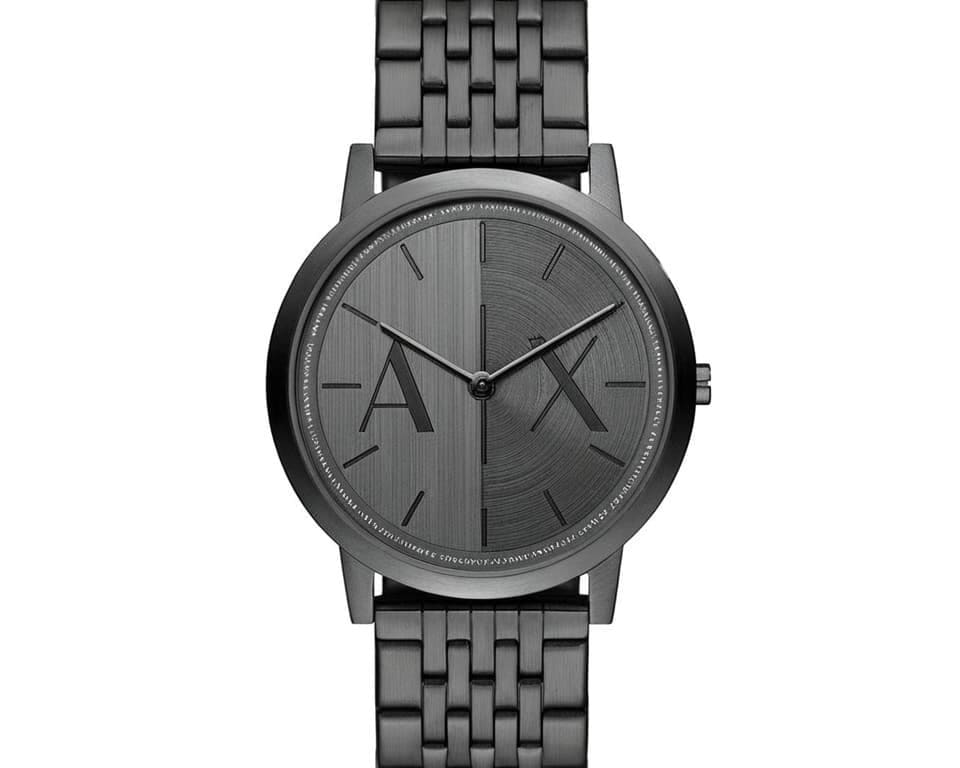
A|X watches follow a “fashion-first, function-second” philosophy that puts visual impact ahead of horological tradition. The design language centers on urban minimalism with youthful energy—clean lines, bold proportions, and heavy use of monochromatic color schemes dominated by black, gunmetal, and silver with occasional gold accents. Unlike competitors like Michael Kors that lean elegant or Fossil that channels vintage vibes, A|X pushes contemporary street style with textured dials, oversized cases, and prominent A|X branding on the dial, crown, and clasp. These are statement pieces meant to be noticed, not quiet classics that blend into your wardrobe.
- Cases use 316L stainless steel across most models, which is the same “surgical steel” grade found in quality watches and medical instruments. This alloy contains 16-18% chromium and 2-3% molybdenum, making it more resistant to corrosion and rust than cheaper 304 steel. However, watch enthusiasts note the steel often feels thin and lightweight compared to luxury brands—one expert described it as having a “tinny feeling that makes the piece immediately feel cheap in the hands.” Some entry-level models may use 304L steel despite marketing suggesting otherwise, though the difference mainly shows up in long-term tarnish resistance.
- Mineral crystal covers the dial on virtually every A|X watch, which measures 5.5-6.5 on the Mohs hardness scale. This material handles bumps and drops better than sapphire crystal (less likely to shatter from impact), but scratches easily from sand, keys, concrete, and other daily hazards. Once scratched, mineral crystal can’t be polished out—it needs full replacement. Sapphire crystal (hardness 9 on Mohs scale) appears on luxury watches costing much more, representing a significant material difference between fashion watches and premium timepieces.
- Straps come in three main types depending on the model. Stainless steel bracelets use brushed or polished finishes with removable links for sizing, though they’re typically folded-link construction rather than solid links found on expensive watches. Leather straps use genuine calfskin, but reviews consistently compare the quality to budget $10-15 straps with durability of only 1-2 years before cracking. Silicone and rubber straps appear on sport models, offering the most durability and water resistance but sometimes feeling plasticky.
- Price positioning puts A|X in the middle of the fashion watch market. Retail ranges from $100-$350, though actual street prices typically land between $100-$220 during frequent sales. This places them similar to DKNY, slightly above Fossil ($75-$250) and Guess ($80-$250), slightly below Michael Kors ($109-$550), and well below Emporio Armani ($165-$795). The critical insight: Fossil Group manufactures all these brands using similar components and facilities. Industry experts estimate production costs under $7-15 per watch, meaning most of the retail price funds marketing, distribution, and brand licensing rather than superior materials or craftsmanship.
- Movement specifications reveal 100% quartz technology with no mechanical or automatic options anywhere in the lineup. These are generic Japanese or Chinese calibers from mass-market suppliers that cost pennies to a few dollars per unit. They deliver standard quartz accuracy of ±15-30 seconds per month, basic timekeeping or chronograph functions, and typical battery life of 2-3 years. These are identical movements used across Fossil Group’s entire fashion watch portfolio—there’s no proprietary Armani technology or special engineering involved.
- Water resistance ratings require realistic expectations. Most A|X watches carry 5 ATM (50 meters) ratings found on chronographs and sport models, meaning they handle swimming in pools and showers but not diving or high-impact water sports. Some dress watches get 3 ATM (30 meters) for splash resistance only during hand washing and light rain. A few sport models reach 10 ATM (100 meters) for snorkeling and water sports. These ratings assume perfect conditions with intact seals—water resistance degrades as gaskets age, and leather straps should avoid water entirely.
- Quality control issues appear frequently in user reviews and forum discussions. Common complaints include misaligned date windows and hour markers, loose hands that occasionally fall off requiring repair, thin case construction lacking substantial weight, and basic folded-link bracelets that feel cheap. Independent watch experts consistently advise: “Don’t waste your money on anything other than Fossil if you’re getting a watch made by any of those [Fossil Group brands].” The consensus is clear—you’re paying primarily for the Armani logo rather than meaningfully better quality than other Fossil products or dedicated watchmakers like Seiko and Citizen at similar prices.
- Design features that differentiate A|X from competitors focus on aesthetics rather than function. Heavy use of textured dials (wave patterns, sunray brushing, geometric textures) creates visual interest up close. Prominent A|X logo integration appears on dials, crowns, and clasps as a brand identifier. Bold case sizes from 42-50mm for men’s models make strong wrist presence statements. Monochromatic color schemes with occasional vibrant accent colors (recent collections featured purple and green) keep looks contemporary and urban. The overall European sophistication positioning differs from American preppy brands like Tommy Hilfiger or glamorous competitors like Guess.
The honest assessment for the price point: adequate as fashion accessories, disappointing as horological pieces. Positive aspects include reliable quartz timekeeping that keeps accurate time, decent corrosion resistance from 316L steel in most models, a 2-year warranty from Fossil Group, and acceptable build quality for the $100-200 discounted price range. Problems include thin construction that lacks premium feel, scratch-prone mineral crystal requiring careful wear, leather quality that wears poorly within two years, and zero mechanical interest for watch enthusiasts. These watches serve one purpose well—delivering recognizable designer branding and contemporary style at accessible prices. They fail at everything else traditional watch buyers value, including craftsmanship, durability, value retention, and horological heritage.
Top 10 Best Armani Exchange Watches
Choosing the right A|X watch depends on your style preferences, wrist size, and intended occasions. The current 2025 lineup spans bold chronographs, minimalist dress pieces, and women’s designs across a wide size range. These ten models represent the strongest options available from authorized retailers right now, covering different aesthetics and price points while maintaining the quality standards typical of the brand.
- AX2144 Hampton Chronograph ($170-$215) delivers classic all-black sophistication in a 45mm case with black PVD coating. The textured dial features three chronograph sub-dials, luminescent markers for low-light visibility, and a five-link bracelet that works for both business casual and evening wear. Water resistance hits 50 meters, handling daily showers and swimming. This model represents the Hampton collection’s refined aesthetic—bold enough to make a statement but restrained enough for professional settings. The monochrome black design transitions seamlessly from office meetings to dinner dates.
- AX2164 Hampton Chronograph ($200-$240) steps up the contrast with 46mm black ion plating accented by gold-tone details on the pushers and crown. The brushed textured dial hosts three sub-dials for chronograph functionality, while the push-button deployment clasp adds convenience. At 50 meters water resistance, this handles everyday wear across casual to formal occasions. The black-and-gold combination creates a luxury aesthetic at a fraction of luxury prices, making it popular for those wanting maximum visual impact from a fashion watch.
- AX1752 Romulous Chronograph ($220-$260) makes the boldest statement with 50mm all-gold-tone construction that dominates any wrist. Large Arabic numerals and a luminous dial ensure readability, while three chronograph sub-dials add functionality. The chunky link bracelet and 100-meter water resistance support active wear despite the dressy gold aesthetic. This model suits buyers who want maximum presence and aren’t shy about oversized watches—it’s deliberately eye-catching and works best for those who can carry the bold look confidently in professional or social settings.
- AX2086 Outerbanks Chronograph ($180-$220, often discounted to $150) offers modern grey-on-grey sophistication with gunmetal stainless steel and rose gold accent details. The sunray dial creates light-play effects, while the sporty Outerbanks collection aesthetic keeps things contemporary. At 44-45mm, it provides bold presence without overwhelming smaller wrists. The 50-meter water resistance handles daily activities, and the grey palette works with virtually any casual outfit. This represents one of the better values when found on sale under $160.
- AX1513 Well Worn Chronograph ($180-$220) features striking 48mm black ion-plated construction with rose gold accents creating dramatic contrast. The brushed black dial hosts three sub-dials for chronograph timing, and the black bracelet maintains the monochrome theme. At 100 meters water resistance, this handles swimming and water sports better than most fashion watches. The oversized 48mm dimensions make a strong urban statement suited for casual everyday wear and smart-casual occasions where you want your watch noticed.
- AX2104 Hampton Classic ($170-$215) strips away complications for timeless all-black minimalism in a 46mm PVD-plated case. The textured dial features simple three-hand movement with date display at 4 o’clock, while the stainless steel bracelet keeps the look cohesive. This represents the ultimate versatile everyday accessory—clean enough for formal occasions, bold enough for casual wear, with 50-meter water resistance for daily life. The lack of chronograph sub-dials creates a cleaner dial that some buyers prefer for its uncluttered elegance.
- AX2189 Dress Watch ($180-$220) presents architectural modern style with sleek monochrome black and a unique Y-link bracelet that differentiates it from standard designs. The 46mm case includes a transparent case back (unusual for A|X), letting you see the quartz movement. The cut-through index ring and textured dial create contemporary statement-piece aesthetics suited for professional settings where you want subtle uniqueness. At 50 meters water resistance, it handles daily wear while maintaining a more refined look than chunky chronographs.
- AX2453 Two-Tone Classic ($160-$200) brings traditional elegance with 44mm silver and gold stainless steel construction that appeals to those who find all-black too severe. The three-hand movement with date display keeps things simple, while the mixed metal bracelet adds versatility to match both silver and gold jewelry or belt buckles. This represents classic business formal styling suited for special occasions and professional environments where traditional two-tone watches remain popular. The 50-meter water resistance maintains practicality.
- AX5548 Lola Women’s Watch ($140-$180) presents 36mm sleek black PVD-plated elegance with gold-tone accents creating feminine contrast. The sunray dial catches light beautifully, while the self-adjustable mesh strap eliminates the need for link removal and conforms to wrist size throughout the day. At 50 meters water resistance, this handles everyday professional wear from office to evening events. The 36mm size suits smaller wrists perfectly without looking oversized, and the minimalist Lola collection design works across casual to formal occasions.
- AX5258 Lady Hampton Women’s Watch ($160-$210) delivers elegant sophistication with 36mm polished stainless steel in two-tone silver and rose gold. The clean white/silver dial maintains minimalist aesthetics, while the mixed metal bracelet adds warmth through rose gold accents. This represents classic Lady Hampton styling—versatile enough for office wear, elegant enough for special events, with 50-meter water resistance for practical daily use. The traditional two-tone aesthetic appeals to those who prefer timeless designs over trend-driven all-black pieces.
These ten models cover the essential style categories: bold chronographs for statement-making (five models), minimalist dress watches for versatility (three models), and women’s designs for smaller wrists (two models). All feature reliable Japanese quartz movements that keep accurate time, scratch-resistant mineral crystal that handles normal wear, high-quality 316L stainless steel construction in cases and bracelets, and standard 50-100 meter water resistance for daily activities. Each comes with a 2-year international warranty from Fossil Group covering manufacturing defects. Prices range from $140-$260 retail, though street prices typically run 20-40% lower during sales. The key is choosing based on your wrist size (try before buying if possible, especially the 46-50mm models), intended occasions (chronographs read busier, three-hand watches cleaner), and personal style preferences (all-black modern versus two-tone traditional).
How to Choose the Right Armani Exchange Watch
Buying an A|X watch involves more than just picking a design you like—several practical factors affect how the watch will fit, perform, and hold up over time. Fashion watches come with specific limitations and characteristics that differ from traditional timepieces, and knowing what to expect prevents disappointment after purchase. These considerations apply whether you’re buying for yourself or as a gift.
- Case sizes run larger than traditional watch standards. Men’s A|X models typically range 42-50mm in diameter, with most popular options at 44-46mm. The AX1752 hits 50mm (very large), while the AX2164 sits at 46mm. Traditional watchmaking considers anything over 42mm as large or oversized. Women’s models span 36-42mm, most commonly 36-38mm. A 46-50mm watch will overhang smaller wrists under 6.5 inches, creating an unbalanced look. Most models include removable links for bracelet sizing, but trying before buying helps avoid size issues.
- Materials reflect the mid-range price point. The 316L stainless steel provides good corrosion resistance but feels thin and lightweight compared to luxury watches. Some budget models use 304-grade steel with lower rust resistance. Mineral crystal scratches more easily than sapphire, succumbing to sand, keys, and concrete—once scratched, it requires full replacement rather than polishing. Leather straps use standard-grade calfskin with 1-2 year durability before cracking, comparable to entry-level leather goods. Steel bracelets offer brushed or polished finishes with removable links, while silicone straps provide better water resistance.
- Water resistance ratings need proper interpretation. Most A|X watches carry 5 ATM (50 meters), handling swimming and showers but not diving or high-impact water sports. Some dress models get 3 ATM (30 meters) for splash resistance only—never submerge these. Sport models at 10 ATM (100 meters) support snorkeling and water sports but not deep diving. Never operate chronograph pushers underwater, avoid hot water that compromises gaskets, and remember resistance degrades as seals age. Leather straps aren’t water-resistant—avoid any water exposure or switch to rubber/steel straps for wet activities.
- Features range from practical to purely decorative. Chronograph complications offer three sub-dials with 60-second counter, 30-minute timer, and 24-hour indicator or date display. Three-hand models provide cleaner designs with basic timekeeping plus date windows. Limited luminous markers use basic phosphorescent paint inadequate for serious low-light reading. Multiple time zone sub-dials are aesthetic only—not true GMT function. Fixed tachymeter bezels serve as design elements rarely used practically. Missing features include automatic movements, moon phases, exhibition casebacks (except rare models), true GMT functions, and advanced complications.
- Pricing shows major gaps between retail and street prices. Retail spans $129-$339, but actual selling prices run 20-40% lower. Men’s chronographs retail $179-$269, women’s models $109-$219. Amazon and online retailers commonly discount 20-40%, outlet stores provide 30-50% off year-round, and Black Friday sales hit 50% off. Most models actually sell for $100-$200 online. The best value sits in the $100-150 range during sales—anything above $200 means you’re overpaying for basic A|X quality.
- Authentic packaging includes specific quality markers. Real boxes are sturdy with clear A|X logos, magnetic closures or quality hinges, warranty cards and manuals on good paper, and 2-year Fossil Group warranty booklets. Fake packaging uses cheap flimsy boxes or plastic bags, photocopied or missing documentation, blurry logos with misspellings, and generic warranties.
- Serial numbers provide the most reliable authentication. Authentic watches have 6-digit unique serials deeply engraved on casebacks and metal bracelet clasps, matching warranty cards and boxes. You can verify these with Armani Exchange customer service. Fakes have no serials, poorly scratched numbers, missing clasp engravings, or generic sequences like 000000 or 123456. Always check the caseback before purchasing from third-party sellers.
- Logo quality reveals authenticity instantly. Real watches feature sharp, crisp A|X logos with clean edges, evenly spaced text with consistent fonts, perfect alignment on every surface, and quality engraving on dial, crown, clasp, and caseback. Fakes show blurry printing, misspellings like “Armini” or “Exhange,” misaligned logos, inconsistent sizing, or “Made in China” stated on the dial—authentic watches never print the manufacturing location on the dial face.
- Build quality differences become apparent when handling. Authentic pieces have noticeable weight for steel watches, solid construction with smooth edges, quality 316L steel that feels substantial, securely attached straps, and crowns that screw smoothly. Fakes feel very light and hollow, show rough edges with visible imperfections, use thin metal that flexes, have rattling components, and feature sticky crowns. The weight test often spots fakes quickly—if it feels unusually light for steel, it’s probably not genuine.
Smart buying means managing expectations appropriately. These are fashion accessories with 3-7 year lifespans, not heirlooms or investments. Buy based on design preference at the lowest price from authorized sellers, plan for battery replacements every 2-3 years, expect leather strap replacement within two years, and treat the watch as a consumable fashion item. For the $100-150 sale range, A|X watches deliver adequate quality—just don’t pay full retail or expect performance beyond what fashion watches provide.
Where to Buy Armani Exchange Watches
Purchasing from authorized retailers guarantees authenticity, provides manufacturer warranty coverage, and ensures proper customer service if issues arise. The fashion watch market has significant counterfeit problems, making retailer verification crucial before buying. Several legitimate channels offer A|X watches with varying price points and shopping experiences.
- Official Armani channels provide guaranteed authenticity. The primary Armani website serves as the official online store with complete men’s and women’s collections, direct purchasing with full manufacturer warranty, and a store locator tool. Dedicated Armani Exchange stores operate at major U.S. locations including Houston, New York, Las Vegas, Atlanta, Dallas, Minneapolis, New Jersey, and various shopping malls nationwide. These physical locations let you try watches before buying and provide immediate service.
- Watch Station International operates as the primary authorized online retailer. Fossil Group owns this platform, making it the manufacturer’s direct-to-consumer channel. They offer full warranty support across U.S., Canada, UK, and international sites with free shipping and returns on most orders. This represents one of the safest online purchasing options since Fossil Group manufactures the watches and handles warranty service directly.
- Major department stores carry extensive selections as authorized retailers. National department store chains stock A|X watches both online and at select physical locations nationwide. These established retailers provide buyer protection, easy returns, and often run sales with 20-40% discounts during promotional periods. Department store jewelry counters also offer convenient battery replacement and basic service.
- Online marketplaces require careful seller verification. Some major e-commerce platforms sell authentic A|X watches when purchased directly from the platform itself or verified authorized sellers—always check the “Ships from and sold by” information carefully. Marketplace sellers may offer counterfeits at suspiciously low prices. Legitimate listings typically match department store pricing and come with clear warranty information. If the price seems too good to be true and the seller isn’t a recognized authorized retailer, avoid the listing entirely.
- International availability spans 270+ stores across 31 countries. Official Armani Exchange boutiques operate throughout Europe (UK, Germany, France, Italy, Spain, Netherlands, Switzerland), Asia (Japan, China, India, Singapore, South Korea, Thailand, Indonesia), Middle East (UAE, Saudi Arabia, Kuwait), Americas (Canada, Mexico, Brazil, Argentina), and Australia/New Zealand. Regional Armani Exchange websites serve local markets, Watch Station International ships to multiple countries, and regional department stores partner with the brand. Check the official Armani website for authorized retailers in your specific country.
- Warranty coverage provides two years from purchase date. Fossil Group serves as the warrantor under license from Armani. Coverage includes watch movement (internal mechanism), hands (hour, minute, second), and dial (watch face) for materials and manufacturing defects under normal use. Free repair or replacement of defective components is provided, and if the model is unavailable, equal value alternatives are offered. Replacement watches carry the remaining original warranty or 90 days, whichever is longer.
- Warranty exclusions are extensive and specific. Not covered: cases (watch housing), crystals (glass face covering), bracelets and straps (metal, leather, silicone), plating (gold/rose gold finishes), non-rechargeable batteries, and rechargeable batteries unless capacity falls below 80%. Also excluded: normal wear and tear (scratches, aging), water damage if instructions weren’t followed, abuse or misuse (drops, impacts, extreme conditions), unauthorized service or repairs, altered products (removed serial numbers, broken seals), products from unauthorized sellers, and accidents or improper storage.
- Warranty registration happens automatically at purchase. Keep original sales receipts or invoices, warranty cards with dealer stamps showing purchase date and serial number, and seller information. No online registration is required—warranty applies automatically from the purchase date. For service, contact authorized dealers or visit the Fossil Group website for warranty claim instructions. International service information is available through official A|X websites for nearest authorized service centers. Service typically requires sending watches in adequate protective packaging with proof of purchase, and average repair time runs 2-4 weeks after receipt.
- Grey market warnings highlight serious risks. Warranty is void if purchased from unauthorized sellers with no manufacturer support, risk of counterfeit products, no guarantee of authenticity, and potential for poor quality replicas. Online auction sites show many sellers offering counterfeits at prices significantly below retail—multiple watch enthusiasts report receiving fakes with proper-looking packaging. Marketplace sellers on various platforms require careful verification, as many offer counterfeits with customer complaints about authenticity. Social media marketplaces feature convincing photos but no buyer protection and impossible pre-purchase verification. Street vendors, unauthorized shops, and unverified online stores not listed on official Armani or Fossil sites with “too good to be true” pricing almost always sell counterfeits.
- Typical retail prices help identify suspicious deals. Authentic A|X watches range $140-$220 for basic three-hand models, $180-$370 for chronographs, and $250-$495 for premium materials. Prices 50% below retail without clear explanation (authorized sale, outlet store, end-of-season clearance) likely indicate fakes. “Wholesale” prices from non-authorized sellers raise red flags. Legitimate discounts include department store sales (20-40% off), outlet stores with authorized discounts up to 50%, end-of-season clearance from authorized retailers, and official Armani outlet stores.
The safest approach combines authorized retailer verification with price awareness. Buy from official Armani websites, Watch Station, major department stores, or verified physical A|X stores. Compare prices across authorized retailers to find legitimate sales rather than grey market “deals.” Keep all documentation including receipts, warranty cards, and packaging. Verify serial numbers match across the watch, warranty card, and box. If buying online, ensure the seller is explicitly listed as authorized on Armani or Fossil Group websites. The 2-year warranty only protects purchases from authorized channels—saving $30 buying grey market isn’t worth losing warranty coverage and risking counterfeits.
Armani Exchange Watch Investment and Resale Value
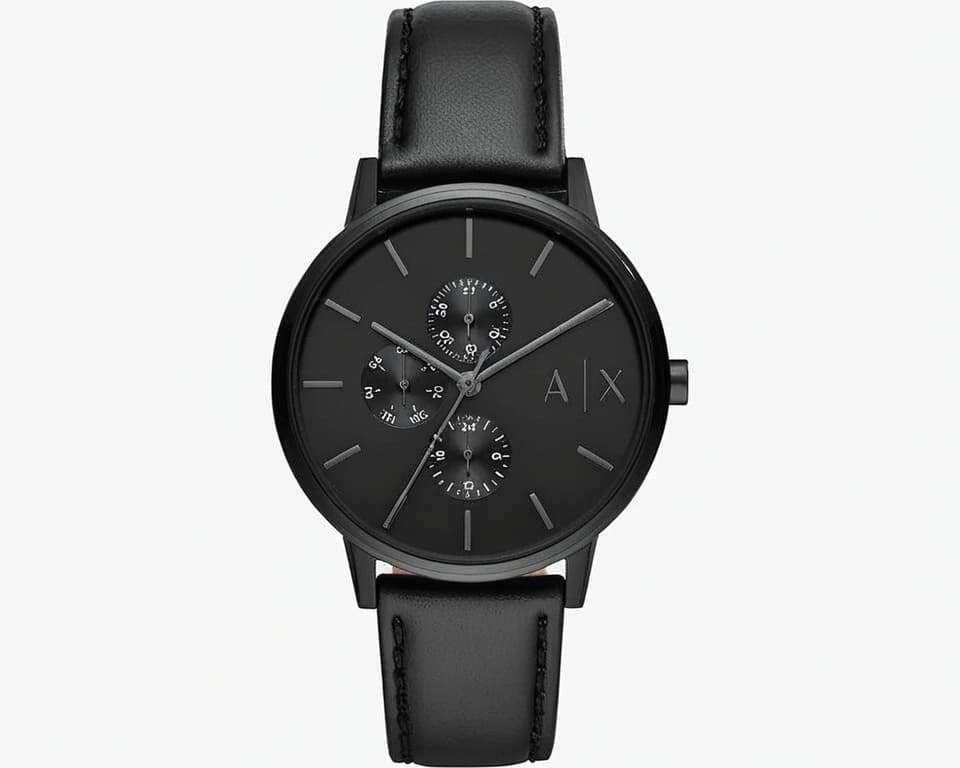
Armani Exchange watches depreciate significantly and quickly, behaving like most fashion accessories rather than collectible timepieces. Anyone considering an A|X watch as an investment or expecting to recoup their money later needs to understand the harsh reality of fashion watch resale markets. These are consumable style items, not financial assets.
- Depreciation hits immediately and continues over time. Fashion watches typically lose 40-60% of retail value the moment you walk out of the store. After 2-3 years of ownership, A|X watches retain approximately 20-40% of original retail price depending on condition. This pattern is standard across all fashion watches—Michael Kors, DKNY, Diesel, and Guess show identical depreciation curves. In contrast, luxury brands like Rolex lose only about 11% in the first year and may appreciate over decades, representing a completely different category. Most watches lose around 33% on average in year one, but fashion watches exceed this significantly because they’re trend-driven rather than timeless.
- Primary resale platforms show actual market prices. eBay serves as the most common marketplace, with used A|X watches currently listed at $25-$150 depending on condition and model. Poshmark, focused on fashion items, shows typical prices of $25-$135 for A|X watches. Chrono24, a specialist watch platform, lists A|X watches at $59-$175. Facebook Marketplace and local classifieds facilitate direct peer-to-peer sales at similar prices. These prices reflect real market demand—what buyers actually pay, not hopeful asking prices.
- Current resale observations reveal the value gap. Basic A|X analog watches sell for $25-$70 used, chronograph models fetch $50-$135, and near-new condition with original box and papers might reach $100-$175. Compare these to original retail prices of $150-$329, and the loss becomes clear. A watch purchased for $200 might sell for $80 two years later if you’re lucky. Most sellers struggle to find buyers even at these reduced prices because the used fashion watch market is flooded with similar pieces from people who moved on to new styles.
- No limited editions hold value better than standard models. A|X focuses on seasonal fashion pieces rather than collectible limited editions. All watches depreciate similarly regardless of model, with no collector market existing for the brand. The resale reality mirrors other fashion brands—Michael Kors, Diesel, DKNY, and Fossil show the same 40-60% depreciation patterns. Tommy Hilfiger watches depreciate comparably. Emporio Armani retains slightly better value due to higher-end positioning, keeping perhaps 5-10% more value than A|X, but still loses most retail price. Only luxury brands like Rolex, Omega, and Patek Philippe operate in a different category, retaining 60-95% of value or appreciating.
- The investment verdict is unequivocal: no. As one watch retailer stated directly: “As trendy fashion pieces, Armani Exchange watches are unlikely to experience significant appreciation in value. They do not retain value over time the same way that luxury watches do. If you’re purchasing an A|X watch with the hope of reselling it for a profit down the line, you may not see a return on your investment.” Fashion watches serve as accessories for current wear, entry-level designer pieces for younger consumers, and statement pieces for trendy outfits—never as financial investments or appreciating assets.
- Typical user experience confirms this pattern. One watch enthusiast described their A|X journey: “I wore it for about a year and then got into watches and it ended in some drawer totally forgotten.” This is common—fashion watches get replaced when trends change, not when they break. The watch still works fine, but the owner’s taste evolved and the watch no longer fits their style. Unlike luxury watches that develop sentimental value and get passed down generations, fashion watches become obsolete while still functioning.
The honest approach is treating A|X watches as you would clothing or accessories—purchase for enjoyment now, expect no resale value, and consider the full purchase price as the cost of ownership. If you can’t afford to lose the entire amount spent, don’t buy the watch. For $100-150 during sales, this represents reasonable money for 3-5 years of wear. At full retail of $250-350, you’re overpaying for something that will be worth $50-80 used. The watch serves its purpose as a stylish accessory during ownership, but plan to donate or discard it when you’re done rather than expecting to recover meaningful money through resale.
Armani Exchange Watch Maintenance and Service
Proper maintenance extends the lifespan of your A|X watch and keeps it looking presentable, though these fashion watches have inherent limitations that careful care can’t overcome. Basic daily habits prevent most damage, while periodic professional service maintains function. The goal is getting 5-7 years of good use rather than expecting decades of service.
- Daily care prevents most common damage. Wipe down with a soft, dry microfiber cloth after wearing to remove oils and sweat. Remove the watch when washing hands, showering, or applying lotions, perfumes, and colognes—these chemicals degrade seals and finishes. Avoid wearing during sports, manual labor, or heavy activity where impacts can damage components. Store in cool, dry places away from direct sunlight when not in use.
- Specific hazards require deliberate avoidance. Magnets from speakers, phone cases, and handbag clasps affect timekeeping. Extreme temperatures in hot cars or freezing conditions shorten battery life and damage seals. Chemicals including household cleaners and perfume sprayed directly on the watch corrode finishes. Water exposure beyond rated limits causes internal moisture damage that voids warranty.
- Cleaning methods vary by material. Stainless steel cases and bracelets clean with soft microfiber cloth or mild soap and warm water, using a soft toothbrush for crevices and drying thoroughly. Professional polishing removes surface scratches. Leather straps must avoid water entirely—wipe with dry cloth only and apply leather conditioner to prevent cracking. Silicone straps handle water well, cleaning with mild soap and rinsing thoroughly after saltwater or pool exposure. Mineral crystal cleans with soft, slightly damp cloth—minor scratches can be buffed professionally, deep scratches require replacement.
- Battery replacement follows predictable patterns. First batteries last 4-5 years, replacements last 1-3 years as movements age. Standard replacement costs $10-$25 at local jewelers, $15-$35 for standard service with seal checking, and $25-$60 with complete water resistance resealing including gasket replacement and pressure testing. Avoid DIY without proper tools as improper opening damages seals and voids warranty.
- Water resistance degrades over time. The 5 ATM/50m rating handles swimming and showers but not diving. The 3 ATM/30m rating means splash-proof only. The 10 ATM/100m rating supports swimming and snorkeling but not scuba diving. Never use chronograph pushers or crowns while wet. Rinse with fresh water after pool or saltwater exposure. Replace gaskets every 2 years to maintain rated resistance.
- Leather straps need specific care. Keep dry at all times, removing before hand washing. Apply leather conditioner every few months to maintain flexibility. Let cologne and perfume dry completely on skin before wearing. Avoid sun exposure that causes fading and cracking. Wipe away sweat promptly. Replace straps showing deep cracking, permanent staining, structural weakness, or persistent odor—typically after 1-2 years of regular wear.
- Proper storage prevents damage. Keep in cool, dry places at room temperature away from direct sunlight. Store separate from other watches using original boxes, watch rolls, or protective cases. Avoid extreme temperatures, high humidity, and magnetic sources. Don’t store loose in drawers with other items. For long-term storage, pull the crown out to save battery life and store with silica gel packets.
- Professional servicing follows recommended schedules. Routine maintenance every 3-5 years for general inspection, battery replacement every 2-5 years as needed, and seal replacement every 2 years on water-resistant models. Seek immediate service if the watch stops functioning, loses substantial time (more than few minutes daily), shows moisture inside, makes unusual sounds, has difficulty setting time, or has a loose crown. Service costs run $25-$75 for basic battery replacement, $75-$150 for complete service with polishing, and $100-$300 for major repairs—though for A|X watches, repairs exceeding 50% of new prices make replacement more economical.
The realistic maintenance expectation involves basic care to maximize 5-7 year lifespan, battery replacements every 2-3 years at $15-35 each, leather strap replacement after 1-2 years at $20-50, and accepting that mineral crystal scratches can’t be polished out. These aren’t watches that justify expensive repairs—when major problems occur, replacement usually costs less than fixing them. Treat them as medium-term accessories needing basic care but won’t last forever regardless of maintenance quality.
Frequently Asked Questions About Armani Exchange Watches
Potential buyers consistently ask similar questions about A|X watches before purchasing. These answers address the most common concerns with honest, straightforward information based on actual product characteristics and user experiences rather than marketing claims.
Are Armani Exchange watches good quality?
They’re fashion watches prioritizing style over watchmaking craftsmanship. Manufactured by Fossil Group in China using basic quartz movements, they feature decent 316L stainless steel, mineral crystal, and genuine or synthetic leather straps. Build quality is adequate for the price but quality control issues occur—misaligned date wheels, loose hands, thin cases. They work well as stylish accessories for 3-7 years but not as horological instruments or collector pieces. Good for fashion and everyday wear, not good for long-term investment or serious watch enthusiasts.
What’s the difference between Armani Exchange and Emporio Armani watches?
A|X targets ages 18-35 with bold, trendy designs at $100-$280. Emporio Armani targets young professionals with classic elegance at $200-$1,600. EA uses better materials (sapphire crystal on some models), superior quartz movements, and higher-quality leather. Both are made by Fossil Group but EA gets better components and finishing. EA retains slightly more resale value but both depreciate heavily. Choose A|X for budget fashion accessories, EA for more sophistication—neither is a true investment.
Are these watches made in Switzerland?
No. Designed with Italian aesthetic but manufactured in China by Fossil Group. They use Japanese-style quartz movements, not Swiss-made, despite marketing suggesting “Swiss design.” Standard quartz accuracy at ±15-30 seconds per month. These are mass-produced fashion watches. Some higher-end Emporio Armani models may use Swiss components, but standard A|X watches do not.
How long do Armani Exchange watches last?
First batteries last 4-5 years, replacements 1-3 years. Overall lifespan is 5-10 years with care, though most users replace them after 3-7 years due to fashion trends or visible wear. Quartz movements can potentially last 10-20 years, but most owners want new styles before mechanical failure. Lifespan depends on care quality, wear frequency, and proper maintenance.
Are Armani Exchange watches worth the money?
At $100-150 sale prices, yes if you want designer branding, trendy accessories, or bold modern designs. Not worth it for investment, craftsmanship, or resale value. Better horological alternatives include Citizen, Seiko, Casio G-Shock, or Timex at similar prices with superior quality. Worth buying if you prioritize fashion and brand recognition over watchmaking—just don’t pay full retail or expect luxury performance.
Do these watches hold their value?
No. They lose 40-60% immediately and retain only 20-40% after 2-3 years. Used A|X watches sell for $25-$150 versus $150-$329 retail. Treat as consumable fashion items like clothing—plan to lose the entire purchase amount rather than expecting resale recovery.
Can I shower or swim with my Armani Exchange watch?
Depends on rating. 5 ATM (50m)—most common—handles pools and showers but not diving. 3 ATM (30m) is splash-proof only. 10 ATM (100m) supports swimming and snorkeling but not scuba. Never use pushers or crowns while wet, avoid hot water, and remember resistance degrades over time. Leather straps avoid all water regardless of case rating.
Where are Armani Exchange watches manufactured?
Designed in Italy, manufactured in China by Fossil Group. Movements produced in China with some Swiss components. Fossil Group licenses all Armani watch manufacturing—the Armani brand provides designs and logos but doesn’t manufacture. Mass-produced alongside Michael Kors, DKNY, and Diesel watches in the same facilities.
What warranty comes with Armani Exchange watches?
Two years from Fossil Group covering movement, hands, and dial for manufacturing defects. Excludes cases, crystals, straps, plating, batteries, wear and tear, water damage, abuse, and unauthorized seller purchases. Keep receipts and warranty cards. U.S. service costs $8.50 shipping. Only applies to authorized retailer purchases—grey market gets no coverage.
How accurate are these watches?
Standard quartz accuracy of ±15-30 seconds per month, typical for fashion watches. Roughly 3-6 minutes per year variance—adequate for daily use but not precision timekeeping. If losing/gaining more than few minutes weekly, the movement needs service.
These answers reflect real performance rather than marketing. A|X watches serve one purpose well—affordable designer fashion accessories for younger buyers—at sale prices of $100-150. Don’t expect luxury performance or value retention.
Conclusion
Armani Exchange watches deliver exactly what they promise: accessible Italian designer aesthetics for fashion-conscious consumers aged 18-35 who prioritize style over horological substance. At realistic street prices of $100-$200 during sales, they provide adequate quartz timekeeping, recognizable brand prestige, and bold contemporary designs that make statements in casual-to-business-casual settings. The manufacturing reality—Fossil Group production using components identical to Michael Kors and DKNY watches—means you’re paying primarily for the Armani name and design aesthetic rather than superior craftsmanship. For buyers who understand this trade-off and want trendy accessories at accessible prices, A|X watches serve their purpose well during their 3-7 year practical lifespan.
The critical consideration is managing expectations appropriately. These are fashion accessories, not investment pieces or heirlooms. Mineral crystal will scratch from daily wear, leather straps will crack within two years, and resale value will plummet 40-60% immediately upon purchase. Quality control issues appear frequently enough in reviews to warrant caution, and serious watch enthusiasts consistently recommend spending similar money on Seiko, Citizen, or Orient for superior horological value. A|X watches make sense if you want recognizable designer branding, appreciate the specific urban aesthetic, and treat the purchase as a consumable fashion item rather than a durable good. They don’t make sense if you prioritize watchmaking quality, expect long-term value retention, need scratch-resistant materials, or want timepieces that transcend fashion trends.
The smart buying approach involves purchasing during 30-50% off sales from authorized retailers like Macy’s, Nordstrom, or Watch Station, targeting the $100-150 sweet spot where value feels reasonable. Verify authenticity through serial numbers and packaging, maintain realistic 3-5 year replacement expectations, and most importantly—buy the design you genuinely love. In fashion watches where internal quality is commoditized across brands, aesthetic appeal becomes the only meaningful differentiator. If an A|X watch matches your style and you understand what you’re getting—a stylish accessory with reliable timekeeping but no horological significance—then it can serve you well for several years of wear. Just never confuse fashion watches with serious timepieces, and you’ll avoid disappointment.