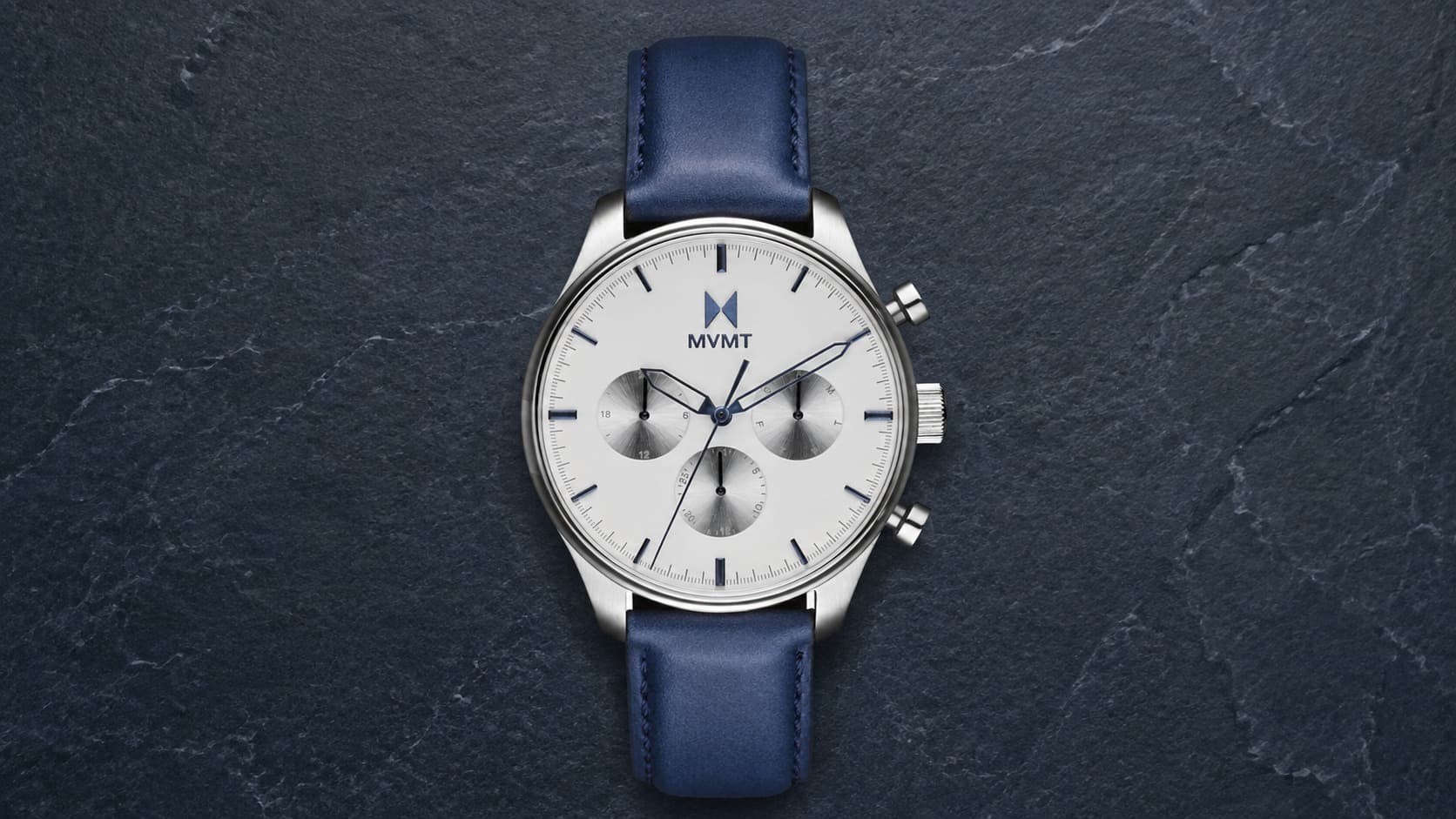
MVMT built its name on a simple idea: a watch can look expensive without costing a fortune. Since launching in 2013, the brand has grown from a small crowdfunded project into one of the most recognized names in affordable fashion watches, known for clean dials, bold cases, and a style that leans more streetwear than boardroom. Because MVMT now sells dozens of collections across men’s and women’s lines, choosing between them comes down mostly to materials, movement, and price rather than marketing language. Those are the details that actually decide how a watch performs and holds up over time.
What Is the MVMT Watch Brand?
MVMT (pronounced “movement”) is an American watch and accessories brand founded in Los Angeles in 2013. Two Southern California natives, Jacob Kassan and Kramer LaPlante, started the company after leaving college to build their own business, using around $300,000 in seed money they raised through crowdfunding campaigns on Indiegogo.
The brand grew fast by selling directly to customers online instead of through department stores, leaning heavily on social media to reach younger buyers. That approach worked well: within a few years both founders landed on Forbes’ “30 Under 30” list, and the company itself was valued at well over $100 million. MVMT started out selling watches only, then expanded into sunglasses and other accessories in 2017 as the brand grew.
Today, MVMT sells watches, sunglasses, jewelry, and small leather goods, all built around the same minimalist design language the brand launched with. The look hasn’t changed much over the years: oversized dials, neutral color palettes, and a case shape that reads as more fashion accessory than technical instrument.
The brand’s reach has grown right along with its product range. What started as a Los Angeles startup now ships to more than 160 countries, almost entirely through its own direct-to-consumer website rather than traditional retail partners.
What Company Owns MVMT?
MVMT is owned by Movado Group, the American company behind the Swiss heritage brand Movado. Movado Group announced the acquisition in August 2018, and the sale officially closed that October.
The deal was structured as an upfront payment of roughly $100 million, with two additional performance-based payments that could add up to $100 million more depending on how MVMT performed under its new owner. Movado’s reasoning was straightforward: the company wanted a stronger connection with younger shoppers and a bigger presence in digital, direct-to-consumer sales, an area where MVMT had already proven itself.
MVMT wasn’t an isolated purchase either. Around the same period, Movado Group also acquired Olivia Burton, another design-forward brand aimed at a younger audience, showing a clear pattern of buying up millennial-focused labels rather than trying to build one from scratch. The two MVMT founders stayed on to keep running the brand’s Los Angeles team after the sale went through, and MVMT has continued operating largely as its own brand rather than being folded into Movado’s traditional watch lines.
MVMT is a good example of how a brand can start on a crowdfunding platform and end up owned by a company with roots stretching back to 1881.
What Movement Powers MVMT Watches?
MVMT watches run on Japanese quartz movements, most commonly sourced from Miyota. Miyota isn’t an independent watchmaker on its own; it’s a movement manufacturer owned by Citizen Watch Co., one of Japan’s largest and longest-running watch companies, and it has been producing movements since 1959.
Quartz movements work by using a battery to vibrate a small quartz crystal at a fixed frequency, which keeps the watch accurate without ever needing to be wound. That’s different from a mechanical or automatic watch, which relies on gears and a spring instead of a battery. Because Miyota also supplies movements to brands like Bulova and Fossil, MVMT’s watches are running the same basic type of engine found across a wide range of budget-to-midrange fashion watches, not something built exclusively for MVMT.
While the movement design itself is Japanese, the watches carrying it are assembled in China. That’s a common and unremarkable practice across the fashion watch industry rather than something unique to MVMT, and it’s one of the main reasons the brand can keep prices as low as it does.
How Often Do MVMT Batteries Need Replacing?
Most MVMT batteries last around two to three years before they need to be swapped out. Outside of that occasional battery change, quartz movements like these require almost no other regular maintenance, which is part of why they’re popular for everyday, low-fuss watches.
What Materials Are Used in MVMT Watches?
MVMT builds most of its watches with stainless steel cases, mineral glass crystals, and straps in leather, silicone, or metal. The glass covering the dial is mineral crystal rather than sapphire crystal, which is the harder, more scratch-resistant glass typically found on higher-end watches.
This is one of the more significant trade-offs in the lineup. Mineral crystal holds up well against everyday impacts and resists shattering, but it will pick up small surface scratches more easily than sapphire over years of daily wear. For a watch in this price bracket, that’s a normal and expected trade-off rather than a flaw. The leather straps use a lower grade of genuine leather, so some owners notice the strap feels a bit stiff out of the box and takes a little time to soften up. Metal bracelets generally use standard push-pin links instead of the screw-style links found on premium watches, which makes strap swaps easy at home but slightly less secure over the long haul.
Case sizes vary quite a bit depending on who the watch is designed for. Men’s models generally run from about 39mm up to 47mm on the larger chronograph styles like Blacktop, while women’s models are considerably smaller, typically between 24mm and 39mm. That range matters more than it might seem, since a case that’s too large or small for a wrist changes how a watch actually looks day to day, not just how it fits on paper.
Is MVMT Water Resistant?
Most MVMT watches are rated for light water exposure only, not swimming. Water resistance across the lineup typically falls between 3 ATM and 5 ATM, or roughly 30 to 50 meters, though a few collections go higher.
A 3 ATM rating means the watch can handle rain, splashes, or hand-washing but should come off before a shower or swim. A 5 ATM rating adds a little more buffer, tolerating light rinsing but still not built for swimming or diving. The Voyager collection stands apart from the rest of the lineup here: it’s built to handle far deeper water exposure and adds a second time zone display for people who travel often, making it the most water-ready option among MVMT’s regular collections.
What Warranty Does MVMT Offer?
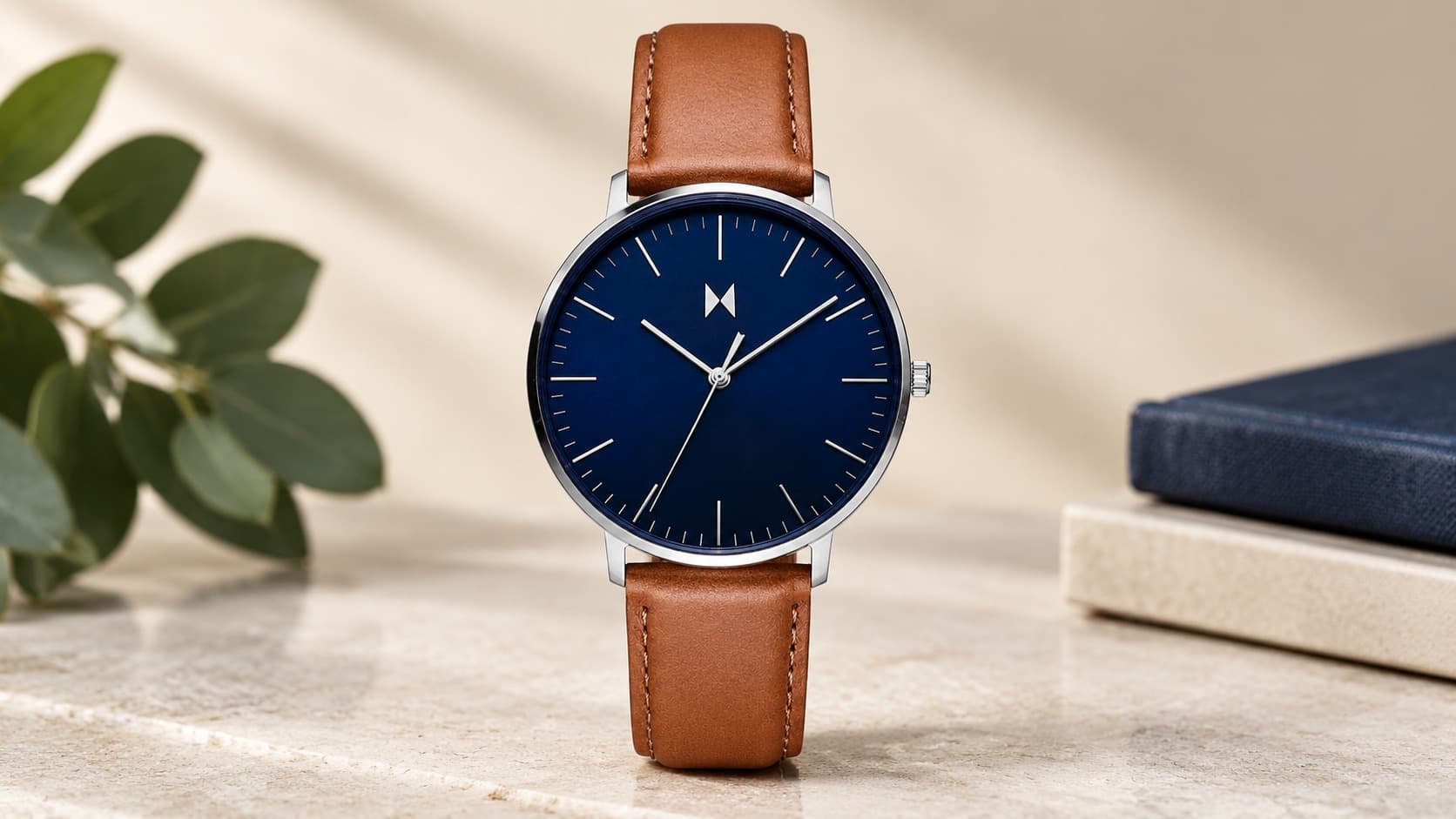
MVMT backs its watches with a two-year limited warranty against manufacturing defects. Every watch bought from the MVMT website or an authorized dealer is covered for two years from the original purchase date, and any covered defects are repaired or replaced at no cost.
That warranty doesn’t cover everyday wear and tear, accidental damage, or water damage caused by misuse, and it doesn’t cover the battery itself, though MVMT states batteries should last at least two years under normal use. On top of the standard warranty, MVMT also offers free returns and exchanges within 60 days on orders over $50, giving new buyers a real window to test a watch before fully committing to it.
Because MVMT is now part of Movado Group, any repair work handled through the company’s official service channels also carries its own one-year warranty on the repair itself. The rubber seals that keep a watch water-resistant also wear down over time, and MVMT suggests having them looked at roughly every couple of years so the water-resistance rating stays accurate rather than just theoretical.
Does MVMT Make Any Sustainable Watches?
Yes. MVMT’s Minimal Sport line includes an Ocean Plastic edition built from reclaimed ocean waste instead of new plastic or metal. The case, strap, and buckle on these watches are made through a partnership with #tide Ocean Material, a company that collects and repurposes plastic pollution from coastlines in Southeast Asia.
These models, sold under names like Pacific Blue and Atlantic Green, also run on a solar-powered movement rather than a standard battery, charging through a solar panel hidden beneath the dial. On top of the sustainable materials, MVMT donates 1% of all revenue from its Ocean Plastic designs to the Surfrider Foundation, a nonprofit focused on protecting oceans, beaches, and waves, as part of the brand’s membership in 1% for the Planet.
It’s a small part of MVMT’s overall lineup, but it’s a genuine point of difference in the affordable fashion watch space, where sustainable materials are still fairly rare.
MVMT’s Most Notable Collections
MVMT organizes its lineup into distinct collections, each built around a different look or use case. The differences between them become clearest when the standout options are compared side by side.
| Collection | Style | Typical Price | Notable Feature |
|---|---|---|---|
| Chrono | Aviation-inspired chronograph | ~$200–$260 | Styled after vintage pilot watches, sold with either a ceramic bracelet or a leather strap |
| Blacktop / Blacktop II | 1960s muscle car chronograph | ~$230–$360 | A large 47mm case with two sub-dials and a glossy finish meant to echo old car dashboards |
| Voyager | Travel and dual timezone | ~$300 | A 42mm case built to handle deeper water exposure and display a second time zone |
| Boulevard | Everyday women’s watch | ~$115–$150 | Slim 38mm case built for daily wear over technical features |
| Field | Military-style utility | ~$175 | Clean dial designed for a rugged, functional look |
| Classic / Classic II | Original flagship design | ~$130–$245 | The brand’s very first design, kept simple with an understated dial |
Which MVMT Watch Fits a Dress Setting?
For a more formal look, the Chrono and Legacy Slim collections lean closest to a dress watch feel. Their thinner cases and simpler dials sit lower on the wrist and pair more easily with a suit sleeve than bulkier styles like Blacktop or Airhawk, which are designed with a sportier, louder aesthetic in mind.
Which MVMT Watch Fits Everyday Casual Wear?
The Classic II and Field collections are the most versatile for daily use. They keep a simple dial layout without heavy detailing, so they work equally well with jeans or business casual, and their lighter cases make all-day wear more comfortable.
Frequently Asked Questions
Are MVMT watches actually good quality?
MVMT watches are considered solid for their price category, though not built to the standard of traditional watchmaking brands. Opinions tend to split along experience level: casual buyers are generally happy with how the watch looks compared to what they paid, while people who collect watches more seriously tend to be less impressed once they compare the construction to brands with decades of dedicated watchmaking behind them. For everyday fashion use, most owners report reliable performance for several years.
How long do MVMT watches typically last?
With normal care, most MVMT watches perform reliably for two to five years before needing repairs or replacement. That lifespan reflects the entry-level quartz movement and mineral glass construction used across the lineup, rather than any specific defect in the brand’s watches.
Is MVMT owned by a bigger company?
Yes. MVMT has been owned by Movado Group since 2018, following an acquisition that closed that October. Movado Group also owns the flagship Movado brand along with several licensed fashion watch lines, including brands like Coach, Tommy Hilfiger, and Hugo Boss.
What is the price range for MVMT watches?
Most MVMT watches sell in the range of roughly $100 to $300, depending on the collection and materials used. That keeps the brand solidly in the budget tier of fashion watches, well under what a comparable Swiss mechanical watch would typically cost.
Can MVMT watches be worn swimming?
It depends on the specific model’s water resistance rating. Most MVMT watches sit between 3 and 5 ATM, meaning they can handle splashes or rain but aren’t meant for swimming, while higher-rated models like the Voyager can tolerate more water exposure.
Conclusion
MVMT earned its place in the watch market by keeping things simple: a reliable Japanese quartz movement built by Citizen’s Miyota division, a recognizable design language, and prices that don’t require a second mortgage. The Chrono and Voyager collections stand out for buyers who want a bit more function alongside the style, while Blacktop and Boulevard lean fully into design-first appeal. None of these watches are built to compete with Swiss mechanical craftsmanship, and they were never meant to. What MVMT offers instead is a dependable, well-designed fashion watch backed by a two-year warranty, which is exactly what it set out to be back in 2013.