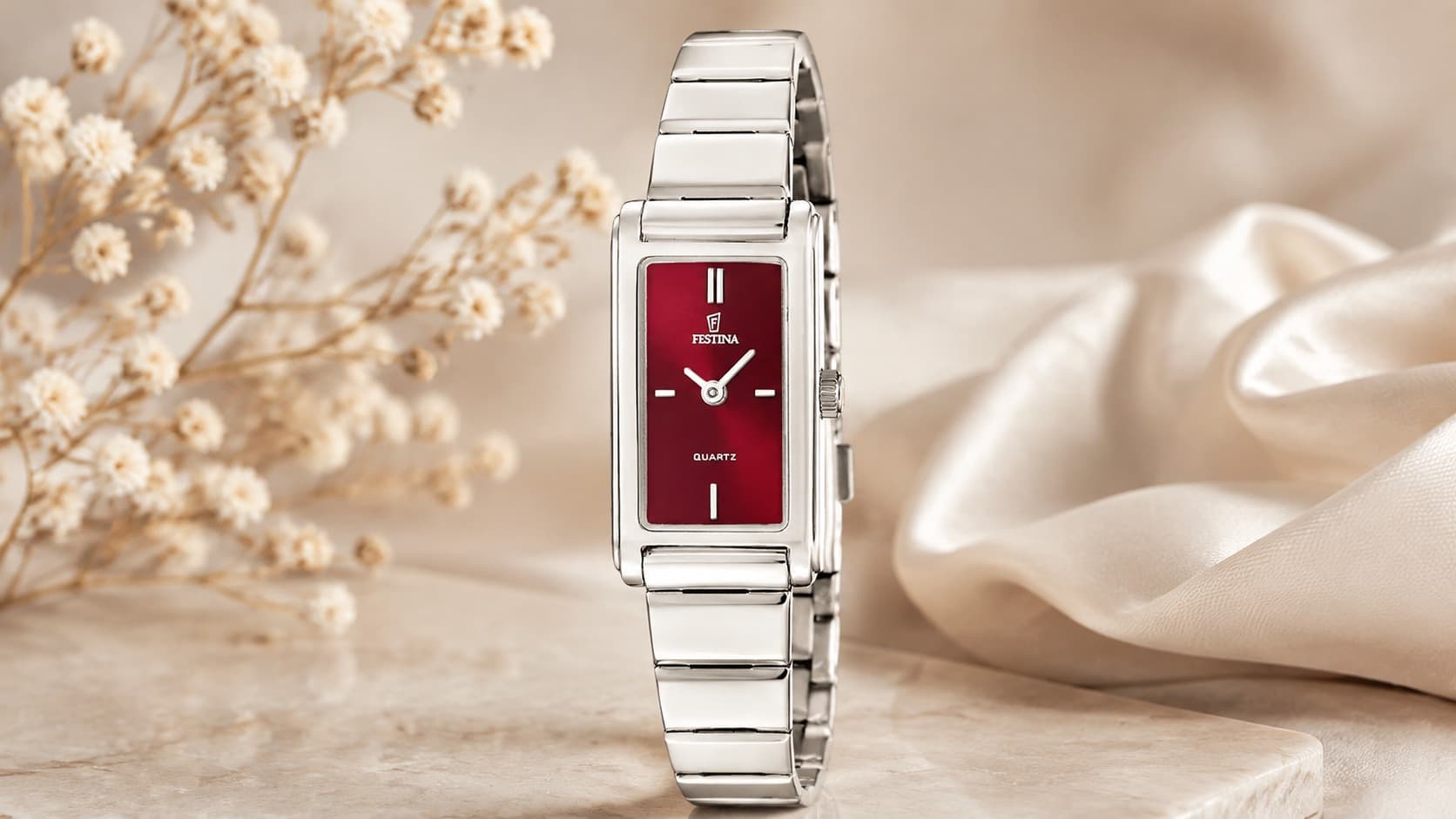
Best Festina Watches: Barcelona Design with Soprod Calibers

Discover the best Festina watches from Swiss Made automatics to affordable chronographs, including top models, prices, features, and expert buying advice.

We include products we think are useful for our readers. If you buy through links on this page, we may earn a small commission.

Read more

Affiliate Disclosure: This post may contain affiliate links, which means we may receive a commission if you click a link and purchase something that we have recommended. While clicking these links won't cost you any extra money, they help us keep this site up and running. We only recommend products or services that we genuinely believe will add value to our readers. Thank you for supporting us!

Transparency: We are a participant in various affiliate programs, including the Amazon Services LLC Associates Program, an affiliate advertising program designed to provide a means for us to earn fees by linking to Amazon.com and affiliated sites. Our editorial content is not influenced by affiliate partnerships, and we strive to provide honest and unbiased reviews and recommendations.

To learn more about our vetting process, please visit our Affiliate Disclosure Statement

Article Content

Festina dress watch with black dial, sapphire crystal, white stick indices, and black leather strap on white background

Festina stands as one of Europe’s most intriguing watch brands, born in the Swiss watchmaking heartland of La Chaux-de-Fonds in 1902 yet now thriving under Spanish ownership while producing millions of timepieces annually. With over 120 years of history, Festina evolved from a traditional Swiss manufacturer into a sports-focused brand that served as official Tour de France timekeeper for 24 consecutive years. The brand occupies a unique position by offering Swiss-made automatic movements through their ownership of Soprod manufacturing while maintaining accessible prices between $65 and $940. Whether you’re drawn to their iconic Chrono Bike collection, value-packed automatic divers with sapphire crystals, or premium Swiss Made pieces with genuine Soprod movements, Festina delivers reliable timepieces with European craftsmanship without the luxury price tags.

Festina Watch History: From Swiss Roots to Spanish Success

Festina’s journey from Swiss startup to Spanish powerhouse tells the story of a brand that survived world wars, multiple ownership changes, and dramatic strategic pivots while maintaining its commitment to accessible quality. The company’s transformation from traditional watchmaker to sports marketing innovator created the brand we know today, one that sells 5 million watches annually across 90 countries while controlling its own Swiss movement manufacturing.

  • The Stüdi family established Festina in 1902 in La Chaux-de-Fonds, Switzerland, placing the brand in one of watchmaking’s most prestigious locations. This Swiss mountain town housed the workshops of Rolex, Omega, Patek Philippe, and dozens of other respected manufacturers, with generations of specialized craftsmen, component suppliers, and technical expertise concentrated in a single region. Starting here gave Festina immediate legitimacy in an industry where geographic origin carries tremendous weight.
  • The name Festina comes from a Latin phrase “Festina lente,” meaning “make haste slowly.” Roman Emperor Augustus used this motto to describe the balance between speed and caution. The phrase became the company’s guiding philosophy during its early Swiss period, representing their approach to watchmaking: work efficiently but never sacrifice precision for the sake of rushing production.
  • Willy Burkhard von Wilhelm bought the company in 1935 and kept Swiss operations running through the uncertain years leading to World War II. Like many European businesses during the war, Festina faced major disruptions that forced difficult decisions. The company moved operations from Switzerland to Barcelona, Spain, a relocation that seemed temporary at the time but would permanently reshape the brand’s identity.
  • Georges Uhlmann took ownership in 1975, running Festina for nearly a decade. During the Uhlmann years, the brand continued traditional watchmaking approaches while the industry around it changed dramatically. Japanese quartz movements were flooding the market with accurate, affordable timepieces, and Swiss brands struggled to compete. Festina needed fresh thinking to survive this “Quartz Crisis” that destroyed countless traditional watchmakers.
  • Spanish entrepreneur Miguel Rodríguez purchased Festina in 1984 and immediately changed everything about how the brand operated. Instead of trying to compete with luxury Swiss makers or race to the bottom against cheap quartz watches, Rodríguez created a new position: sports-focused timepieces at prices regular people could afford. That same year, he introduced the Chrono Bike collection, making cycling the brand’s identity when most watch companies ignored sports entirely.
  • The Tour de France partnership began in 1992, making Festina the official timekeeper for cycling’s most famous race. This relationship lasted 24 years until 2016, giving the brand visibility in over 190 countries every July when millions watched the three-week race. Yellow Chrono Bike watches appeared on television screens worldwide, worn by cyclists and visible in timing equipment. The connection between Festina and the Tour’s yellow jersey became so strong that many cycling fans still associate the brand with professional racing.
  • Rodríguez expanded the company through smart acquisitions starting in the late 1980s. Jaguar watches joined in 1989, offering a different style and price point under a separate brand name. Candino came aboard in 2002, bringing additional Swiss-made products. Lotus watches, Calypso, and other brands followed, creating the Festina Group with multiple labels serving different customer types. Each brand maintained its own identity while sharing distribution networks and manufacturing resources.
  • Buying Soprod SA in 2008 changed Festina’s capabilities in fundamental ways. Soprod operated three Swiss factories in Tramelan, Sion, and Le Sentier, producing watch movements from raw components to finished calibers. Most affordable watch brands buy movements from outside suppliers like Miyota or Seiko Instruments, giving them no control over this critical component. Festina now owned the factories making their movements, controlling costs and quality in ways competitors couldn’t match.
  • The Soprod P024 movement powers Festina’s Swiss Made collection, built on the same design as the legendary ETA 2824-2 that runs inside thousands of Swiss watches. This automatic caliber achieves accuracy of 0 to +3 seconds per day, matching or beating movements found in watches costing three or four times more. Because Festina owns Soprod, they can offer genuine Swiss automatic movements at prices that undercut Tissot, Hamilton, and other established brands by hundreds of dollars.
  • Corporate headquarters sits in Madrid handling business operations, while Barcelona manages design and logistics. The company employs roughly 2,000 people worldwide across factories, design studios, marketing departments, and distribution centers. Financial analysts estimate annual revenue between $92 million and $256 million, though precise numbers stay private because the Festina Group remains family-owned and doesn’t publish detailed reports like publicly traded companies must.
  • Distribution reaches over 90 countries through authorized jewelers, watch specialty shops, department stores, and the brand’s own websites. Festina sells through physical retail partners who can show customers watches in person, plus growing online channels for buyers comfortable purchasing without seeing the actual timepiece first. The company expanded into jewelry, leather goods, and other fashion accessories, though watches remain the primary business and what the Festina name represents in most markets.
  • Sister brands operate independently with their own identities. Jaguar focuses on fashion-forward designs at entry-level prices. Candino emphasizes Swiss manufacturing credentials at slightly higher price points. Lotus targets younger customers with colorful, trendy styles. Each brand uses the Festina Group’s manufacturing and distribution infrastructure while maintaining separate design teams and marketing strategies. This multi-brand approach lets the company serve different customer segments without diluting the main Festina brand’s sports-focused identity.

The path from small Swiss workshop to international manufacturer shows how adaptability matters more than tradition alone. Festina could have disappeared during the Quartz Crisis like hundreds of Swiss brands did, or faded into irrelevance as just another forgotten nameplate. Instead, the Rodríguez family recognized that accessible sports watches represented an underserved market, that cycling offered authentic storytelling opportunities, and that owning movement manufacturing would provide competitive advantages. Today’s Festina combines genuine Swiss heritage with Spanish operational efficiency, offers both affordable quartz and Swiss automatic options, and controls more of its production than nearly any brand at comparable prices. For buyers wanting European watchmaking history without luxury markups, this background explains why Festina delivers exceptional value.

What Makes Festina Watches Different From Other Brands

Festina occupies an unusual space in the watch market that most brands can’t replicate. The combination of Swiss origins, Spanish ownership, cycling heritage, and owned movement manufacturing creates advantages that separate Festina from typical affordable brands. These factors explain why the watches offer more value than their modest prices might suggest.

  • Owning Soprod movement manufacturing gives Festina capabilities that competitors at similar prices simply don’t have. Most brands in the $100-$400 range buy movements from third-party suppliers like Miyota, Ronda, or Seiko Instruments, then assemble them into cases. Festina actually makes movements in their Swiss factories, controlling every step from producing balance springs and escapements to assembling complete calibers. This vertical integration means better quality control, lower costs, and the ability to customize movements for specific watch models.
  • The Soprod P024 automatic movement represents the clearest example of this advantage. Based on the proven ETA 2824-2 architecture that powers countless Swiss watches from brands like TAG Heuer, Oris, and Hamilton, the P024 delivers the same reliability and accuracy at a fraction of the cost. Specifications include 25 jewels, 28,800 vibrations per hour, and accuracy rated at 0 to +3 seconds per day. Most brands would charge $800-$1,200 for a watch with these specs; Festina’s Swiss Made collection starts around $500.
  • Japanese Miyota movements power the standard Festina collection, particularly the reliable Miyota 8215 automatic and various quartz calibers. Miyota, owned by Citizen, produces some of the most dependable movements in affordable watchmaking. The 8215 automatic features 21 jewels, beats at 21,600 vibrations per hour, and offers approximately 40 hours of power reserve. These movements cost significantly less than Swiss alternatives while providing excellent timekeeping and durability for daily wear.
  • Case construction uses 316L stainless steel across most of the collection, the same surgical-grade material found in watches costing thousands more. This alloy resists corrosion better than standard steel, won’t irritate skin, and maintains its appearance through years of wear. Some premium models add titanium cases for extreme lightness or ceramic bezels for scratch resistance. The tonneau-shaped cases in certain collections and integrated bracelet designs in the Rivé line show attention to aesthetics beyond basic round cases.
  • Crystal selection varies by price point in practical ways. Entry-level models use mineral glass, which resists scratches adequately for the price and costs much less to replace if damaged. Mid-range and premium watches feature sapphire crystal, the second-hardest transparent material after diamond. Sapphire virtually eliminates scratching from normal wear and often includes anti-reflective coating on the underside to improve dial visibility. This coating reduces glare significantly, making the watch easier to read in bright sunlight.
  • Water resistance ratings span from basic 30 meters on dress watches to 200 meters on dedicated dive models. The 30-meter rating handles splashes and brief water exposure but not swimming. 50-meter watches tolerate showering and surface swimming. 100-meter ratings suit recreational swimming and snorkeling. The 200-meter dive watches include features like screw-down crowns, unidirectional rotating bezels, and reinforced case construction that allow actual recreational diving. These ratings mean something because Festina tests them, unlike fashion brands that mark water resistance without proper testing.
  • Design philosophy balances sporty chronograph styling with European elegance. The Chrono Bike collection embraces bold colors, large cases in the 44-45mm range, and racing-inspired details like tachymeter bezels and perforated leather straps. Dress collections take the opposite approach with slim cases, minimalist dials, and refined proportions under 40mm. The Rivé collection splits the difference, featuring integrated bracelets similar to iconic designs like the Audemars Piguet Royal Oak or Tissot PRX but at a fraction of their cost.
  • Dial finishing includes techniques rarely seen at these prices. Guilloché patterns create textured surfaces through precise engraving, adding visual depth and light reflection. Sunburst finishing radiates from the dial center, changing appearance as light angles shift. Applied indices use metal markers attached to the dial rather than printed numerals, creating shadows and dimensionality. Some models feature open-heart designs that reveal the automatic movement through a window in the dial, letting wearers see the balance wheel oscillating.
  • The cycling heritage isn’t just marketing talk. Twenty-four years as Tour de France official timekeeper required Festina to develop accurate timing equipment and reliable chronographs that could handle the demands of professional sports. The Chrono Bike collection descended directly from these requirements, with stopwatch functions, tachymeter scales for calculating speed, and rugged construction that survives athletic use. Yellow dial variants deliberately reference the Tour’s famous yellow jersey, creating instant recognition among cycling enthusiasts.
  • Swiss Made certification on the premium line carries legal meaning under Swiss law. To use this designation, at least 60% of manufacturing costs must occur in Switzerland, the movement must be Swiss, and final inspection must happen in Switzerland. Festina’s Swiss Made watches meet these requirements through Soprod movements and Swiss assembly, giving them the same legal status as brands charging much more. The Swiss Made label appears on the dial and caseback, backed by actual Swiss manufacturing rather than just Swiss heritage claims.
  • Chronofiable certification marks certain Soprod movements, representing an independent quality standard. This certification requires movements to meet specific accuracy tolerances, reliability standards, and construction quality benchmarks. Not all Festina watches carry this certification, but models that do have passed third-party testing beyond basic manufacturer standards. The Newton movement introduced in 2020 earned Chronofiable status, showing Festina’s commitment to measurable quality rather than just marketing claims.
  • Bracelet and strap quality exceeds expectations for the price range. Metal bracelets use solid links rather than hollow construction on most models, with secure clasp mechanisms and multiple micro-adjustment holes for precise sizing. Leather straps come from genuine leather, not synthetic substitutes, with proper stitching and finishing. The integrated bracelet on the Rivé collection tapers from case to clasp and includes a butterfly deployment clasp, features typically found on much more expensive watches. Quick-release spring bars on many models let owners swap straps without tools.
  • Value proposition becomes obvious when comparing specifications to competitors. A Festina automatic diver with sapphire crystal, 200-meter water resistance, and reliable Miyota movement costs $150-$200. Comparable watches from Seiko or Citizen run $300-$400. The Swiss Made Rivé with Soprod automatic movement costs around $600-$700, while similar Swiss automatics from Tissot or Hamilton start at $800-$1,000. You’re getting 80% of the quality at 50% of the price, though resale value doesn’t match the initial purchase value.

What truly distinguishes Festina isn’t any single feature but the complete package. Swiss manufacturing heritage provides credibility and traditional watchmaking knowledge. Spanish ownership keeps costs reasonable and operations efficient. Soprod manufacturing enables genuine Swiss movements at accessible prices. Cycling partnerships created authentic sporting identity rather than generic “sport watch” marketing. The brand doesn’t try to compete with luxury watches or pretend to be something it isn’t. Instead, Festina focuses on delivering solid watches with good movements, decent materials, and practical features at prices that make sense for everyday buyers who want something better than fashion watches but can’t justify $2,000 on a timepiece.

Top 10 Best Festina Watches

Selecting the best Festina watches requires balancing price, features, movement quality, and intended use. This ranking considers value for money, build quality, versatility, and what each model does better than alternatives. Prices reflect current retail and typical discounted rates since Festina frequently runs promotions through authorized dealers.

  • Swiss Made Rivé F20030 Series: The premium flagship. Retail prices run $750-$940 depending on dial color, with street prices around $437-$650 during sales. This represents Festina’s highest achievement, combining Swiss automatic Soprod P024 movement with integrated bracelet design. The 40mm case size fits most wrists comfortably, constructed from 316L stainless steel with sapphire crystal and anti-reflective coating. Water resistance reaches 100 meters, adequate for swimming and water sports. Three dial variants include white (F20030/1), blue (F20030/2), and black with rose gold accents (F20030/3). The integrated bracelet styling echoes luxury sports watches like the Royal Oak or Nautilus at a tiny fraction of their cost. Exhibition casebacks reveal the decorated Soprod movement. This watch proves Festina can compete with Swiss brands costing twice as much when movement manufacturing advantages come into play.
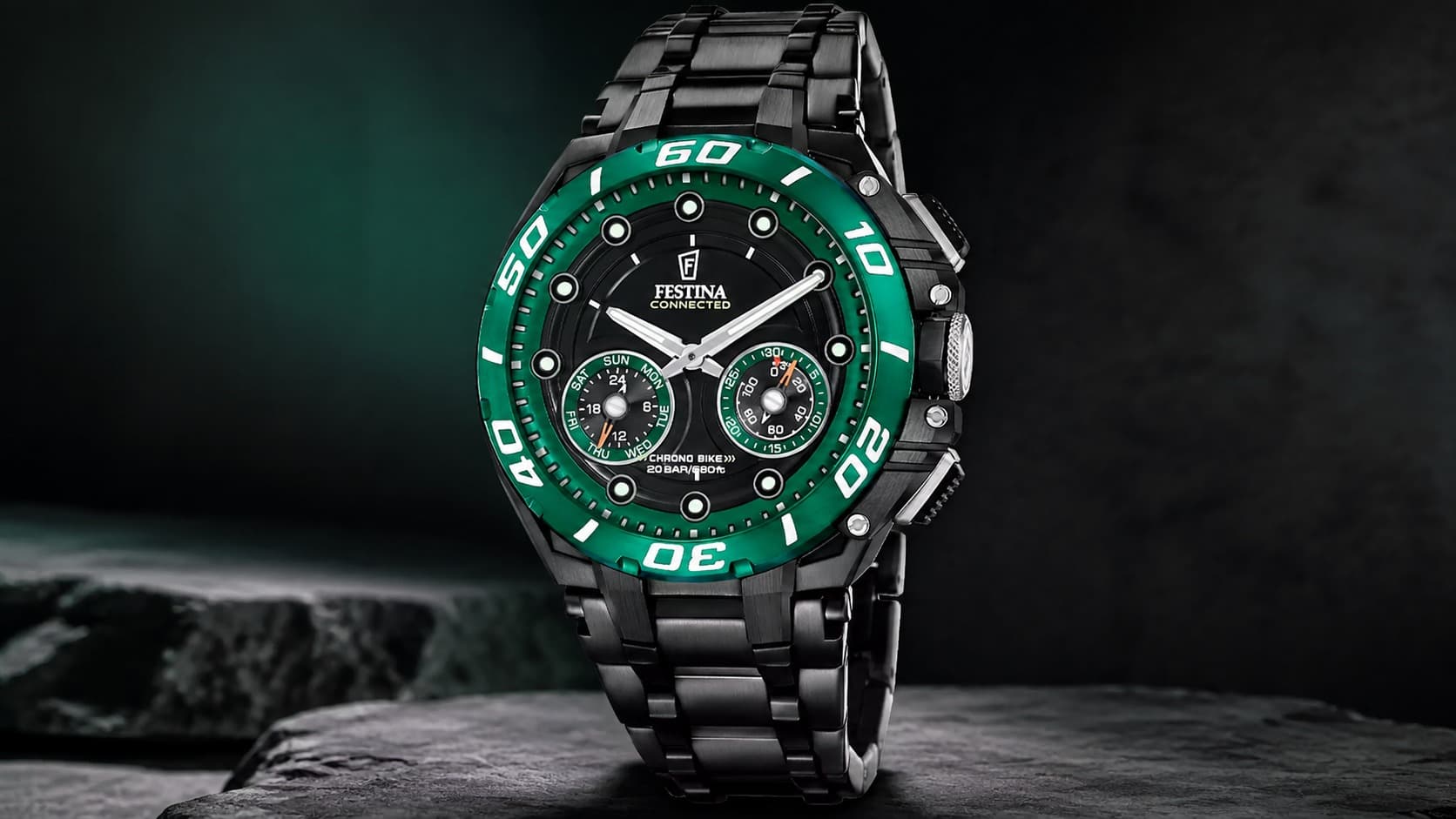
  • Chrono Bike F20670 and F20728 Series: The brand’s identity in watch form. Prices range from $199 to $380 depending on specific model and materials. These chronographs celebrate Festina’s 24-year Tour de France partnership with bold 44.5-45.5mm cases built for visibility and impact. Recent 2024 and 2025 editions upgraded water resistance to 200 meters from previous 100-meter ratings, adding genuine sports capability. Tachymeter bezels let wearers calculate speed, while chronograph subdials track elapsed time up to 12 or 24 hours depending on model. Quartz movements ensure accurate timekeeping and reliable chronograph function without the maintenance demands of mechanical chronographs. Yellow dial options reference the Tour’s yellow jersey. Bracelet models suit year-round wear, while leather strap versions with perforated racing-style patterns add vintage motorsport character. For buyers wanting Festina’s true heritage, this collection delivers authentic cycling DNA.
  • Automatic Diver F20480 Series: Exceptional value mechanical diving watch. Official retail sits around $150-$200, with sales dropping below $120 at authorized dealers. These specifications at this price point seem almost impossible: Miyota 8200 automatic movement with 40-hour power reserve, sapphire crystal, unidirectional rotating bezel, luminous hands and markers, and 200-meter water resistance suitable for recreational diving. The popular “Pepsi” bezel (F20480/1) in red and blue or “Coke” bezel (F20480/4) in red and black reference iconic Rolex GMT designs. The 42mm case wears comfortably without overwhelming smaller wrists. Day-date complications add practical functionality. Buyers wanting automatic movement, sapphire crystal, and serious water resistance typically spend $400-$600 from other brands. Festina delivers all three for a quarter of that typical cost.
  • Skeleton Automatic F20536 Series: Mechanical artistry on display. Retail prices around $300, commonly found at $199-$229 through authorized dealers. The partially skeletonized dial reveals the automatic movement’s inner workings, letting wearers watch the balance wheel oscillate and gears rotate. Exhibition casebacks provide another view of the decorated movement. The 42mm case houses a 21-jewel automatic with hand-winding capability and hacking seconds. Sapphire crystal protects the dial. Packages include both steel bracelet and spare leather strap for versatility. This watch suits buyers fascinated by mechanical movements who want to see the engineering rather than hiding it behind a solid dial. The skeleton design typically appears in watches costing $500-$800, making Festina’s version remarkable value for the visual complexity offered.
  • Timeless Chronograph F20684: Versatile everyday sports watch. Prices run $293-$345 at full retail, occasionally discounted 10-15%. The 43mm quartz chronograph transitions seamlessly from office to weekend with clean dial design that avoids excessive sportiness. Three chronograph subdials track elapsed time, date window sits at 4 o’clock, and 100-meter water resistance handles swimming. Multiple dial colors include silver, blue, and black, letting buyers match personal preference or wardrobe. The polished and brushed case finishing adds visual interest while hiding minor scratches. US retailers frequently list this as a bestseller, suggesting strong customer satisfaction. For buyers wanting one watch that handles multiple roles without specialized features limiting versatility, this chronograph delivers balanced capabilities at reasonable cost.
  • Titanium F20466: Lightweight comfort champion. Official prices around $129-$150, with retailer discounts bringing it to $105-$127. Full titanium construction in both case and bracelet creates remarkable lightness compared to steel watches. The 40mm case provides traditional sizing that suits business and casual wear equally. Titanium’s hypoallergenic properties benefit people with metal sensitivities who experience reactions to stainless steel. Water resistance reaches 100 meters for swimming capability. Quartz movement ensures accuracy and eliminates winding requirements. The gray titanium finish differs from typical steel watches, offering subtle distinction without loud styling. This watch targets buyers prioritizing all-day comfort and those needing hypoallergenic materials, delivering both at prices barely higher than standard steel models.
  • Classic F20512: Entry point to quality watches. Prices range $79-$99, making this Festina’s most accessible model. The 39mm stainless steel case works for smaller wrists and traditional dress watch sizing. Genuine leather straps in black or brown suit professional environments. Mineral crystal keeps costs down while still resisting scratches from normal use. Water resistance of 50 meters handles rain and handwashing. Dial designs use either Roman numerals or simple stick indices for clean legibility. This represents an ideal first “nice watch” for younger buyers or those exploring beyond fashion watches but not ready to spend several hundred dollars. The quality difference between this and department store fashion watches becomes obvious in person through better finishing, more reliable movement, and proper construction details.
  • Mademoiselle F20494: Refined women’s collection. Retail runs $95-$140 with frequent sales at $73-$99. The 30.2mm case size suits women’s wrists without going oversized or trendy. Stainless steel mesh bracelets create elegant appearance and comfortable fit. Zirconia stone bezels add sparkle without using diamonds or precious stones. Mother-of-pearl dial options reflect light beautifully with natural iridescence. Water resistance reaches 50 meters for daily wear protection. This collection serves as the official Miss France partnership timepiece, giving it French elegance associations. Women wanting jewelry-like appearance with actual watch functionality rather than pure fashion pieces find good value here. The mesh bracelets adjust easily and wear comfortably all day without the weight of solid link bracelets.
  • Chrono Bike 2025 F20728: Latest cycling heritage model. Full retail sits at $315, currently available at $267.75 through authorized dealers. This newest Chrono Bike iteration features perforated leather racing straps reminiscent of vintage driving gloves and motorsport steering wheels. The 45.5mm case makes a bold wrist statement suited to larger builds or those wanting maximum visibility. Upgraded 200-meter water resistance surpasses earlier Chrono Bike models limited to 100 meters. Blue dial with white subdials creates high contrast for easy reading. The leather strap gives this model more sophistication than bracelet versions, transitioning better to casual dressy occasions while maintaining sports character. Buyers wanting the latest Festina cycling design with premium materials should consider this over older Chrono Bike variants.
  • Retro Multifunction F16573: Vintage-inspired uniqueness. Prices range $99-$109, positioning this as an affordable specialty piece. The 44mm case features distinctive multi-layer dial construction with different levels and textures creating visual depth. Date window placement and design differs from typical watches, using a unique mechanism that shows through the dial layers. Genuine leather strap suits the vintage aesthetic. The 5-year warranty on mineral crystal demonstrates Festina’s confidence in durability and crystal quality. Customer reviews consistently praise the unusual appearance that stands out from generic chronographs and dive watches. This watch targets buyers wanting something different without entering weird or unwearable territory, offering conversation-starter design at accessible pricing.

Choosing among these ten depends on your priorities. The Swiss Made Rivé delivers maximum prestige and movement quality. Chrono Bike models provide authentic brand heritage and cycling identity. Automatic Divers offer remarkable specifications per dollar spent. The Timeless Chronograph handles the most situations with balanced features. Entry-level Classic and Titanium models serve buyers prioritizing affordability or comfort. Each represents genuine value in its category, though none will appreciate in value or become collectible. Buy Festina for what it offers on your wrist today, not for what it might be worth tomorrow.

Important Factors When Shopping for Festina Watches

Buying a Festina watch requires understanding several key factors that affect both immediate satisfaction and long-term ownership experience. These considerations help match the right model to your needs, budget, and expectations while avoiding common purchasing mistakes.

  • Movement type fundamentally changes ownership experience. Quartz movements dominate the Festina collection, powered by batteries that last 1.5 to 3 years depending on complications and usage. These movements keep time accurately within 15 seconds per month, require no winding, and cost $15-$40 for battery replacement at watch shops. Automatic movements in the higher-end models wind themselves through wrist motion, eliminating battery concerns but requiring regular wear or a watch winder. Automatics need full servicing every 3-5 years costing $80-$200 to maintain accuracy and prevent premature wear. Manual winding is rare in Festina’s current lineup. Choose quartz for convenience and accuracy, automatic for traditional mechanical appeal and the satisfaction of wearing a self-winding machine.
  • Water resistance ratings determine what activities your watch can handle safely. The 30-meter or 3 ATM rating found on dress models only protects against splashes and rain; never swim or shower with these watches. The 50-meter or 5 ATM rating allows handwashing, showering, and brief swimming but not diving or water sports. Watches rated 100 meters or 10 ATM handle swimming, snorkeling, and recreational water activities confidently. The 200-meter or 20 ATM rating on dive models permits serious swimming, water sports, and recreational scuba diving to appropriate depths. These ratings assume the watch is in good condition with intact gaskets; older watches or those with damaged seals won’t maintain their rated resistance. Never operate the crown or pushers underwater regardless of rating, as this lets water bypass the seals.
  • Case size affects both aesthetics and comfort significantly. Festina’s women’s watches range from 28mm to 40mm, with the Mademoiselle collection around 30mm for traditional feminine sizing and Boyfriend styles reaching 39mm for trendier oversized looks. Men’s collections span 38mm to 47mm, though most fall in the 42-45mm range popular for sports watches. Measure your wrist circumference to guide sizing: wrists under 6.5 inches suit cases under 42mm best, while wrists over 7 inches can handle 44-46mm comfortably. Chronographs and dive watches naturally run larger due to additional complications and bezel requirements. Try similar-sized watches in stores before buying online if possible, since photos can mislead about how cases wear on actual wrists.
  • Crystal material impacts scratch resistance and replacement costs. Mineral glass on entry-level and mid-range Festina models resists scratches from daily wear adequately and costs $30-$60 to replace if damaged. It will eventually show fine scratches after years of use, though these often buff out. Sapphire crystal on premium and automatic models virtually eliminates scratching from anything except diamond and other sapphire, maintaining clarity indefinitely. Sapphire replacement costs $100-$200 due to material expenses. Anti-reflective coating on sapphire crystals reduces glare substantially, improving dial visibility in sunlight but adding slight blue or purple tint at certain angles. Coating can wear off over many years, though this doesn’t affect scratch resistance. For watches you plan to keep long-term, sapphire justifies the higher initial cost through better appearance over time.
  • Strap and bracelet options change the watch’s character and versatility. Metal bracelets suit year-round wear, handle water exposure without damage, and project more formal appearance. They require occasional cleaning between links where dirt accumulates and may pull arm hair uncomfortably for some wearers. Leather straps look elegant and feel comfortable but degrade from water exposure and sweat, typically needing replacement every 18-24 months with daily wear. Rubber or silicone straps excel for sports and water activities, clean easily, but appear too casual for business settings. Some Festina models include extra straps, letting you switch between bracelet for work and leather for evenings. Quick-release spring bars on many models allow strap changes without tools in seconds.
  • Warranty coverage protects against manufacturing defects for two years from purchase through authorized dealers. This covers movement failures, case defects, crown problems, and other manufacturing issues. The warranty explicitly excludes batteries, straps and bracelets, crystals, water damage from misuse, and watches with altered or removed serial numbers. Some regional dealers extend coverage: Helveti.eu offers 5-year warranties while South African distributor Luxco provides 3 years. Gray market or unauthorized sellers often provide no warranty or limited coverage not backed by Festina directly. Keep your original purchase receipt and warranty card with official dealer stamp, as you’ll need both for warranty service. Register your watch on Festina’s website when prompted to establish purchase date proof.
  • Authentication matters less for Festina than luxury brands due to lower counterfeiting rates. The accessible pricing makes faking Festina watches economically impractical compared to copying Rolex or Omega. Still, verify several markers when buying: the serial number engraved on the caseback should match warranty documentation, the Festina logo should be crisply printed or applied without smudging, movement markings visible through exhibition casebacks should show Miyota or Soprod branding, and packaging should include proper documentation in correct languages for your region. Authorized dealer purchases eliminate authentication concerns entirely. Avoid marketplace sellers offering prices far below typical retail, missing original boxes and papers, or refusing return privileges.
  • Swiss Made designation on premium models carries legal meaning requiring specific manufacturing standards. Swiss law mandates that watches bearing “Swiss Made” must have at least 60% of manufacturing costs occur in Switzerland, Swiss movements, and final inspection in Switzerland. Festina’s Swiss Made collection meets these requirements through Soprod movements assembled in Swiss facilities. The designation appears on both dial and caseback. Standard Festina models use Japanese Miyota movements and don’t carry Swiss Made labeling, though they maintain Swiss design heritage. Don’t confuse “Swiss movement” with “Swiss Made,” as the former only requires the movement to be Swiss while case and assembly can occur anywhere.
  • Complications beyond basic timekeeping add functionality and visual interest but increase complexity. Chronographs measure elapsed time through pushers and subdials, useful for timing activities though most buyers rarely use this function practically. Date complications show the current date, requiring manual adjustment during short months. Day-date models add the weekday, convenient for those who lose track during busy periods. GMT or dual-time functions display second time zones for travelers. Moon phase complications track lunar cycles, mostly appreciated for aesthetic appeal. Chronograph quartz movements prove very reliable, while mechanical chronographs need more careful maintenance. Simple three-hand watches with date offer the best reliability and lowest service costs.
  • Price points within Festina’s range correspond to clear feature tiers. Models under $100 use mineral crystals, quartz movements, basic water resistance, and simpler dials. The $100-$300 range adds better finishing, sapphire crystals on some models, automatic movement options, and improved water resistance. Above $300 brings Swiss Made automatics, premium materials like titanium or ceramic, and refined design details. During sales, features from higher tiers become available at lower prices, making promotional periods ideal buying times. Compare full retail prices across dealers as they vary, with European retailers often pricing 10-20% below US MSRP even before promotions.
  • Personal style and intended use should drive the decision more than specifications alone. A sports chronograph looks out of place in conservative business settings regardless of its impressive features. Dress watches lack water resistance for active lifestyles. Consider your daily wardrobe colors, formality level, and activities. Festina’s range accommodates multiple needs, suggesting that owning different models for different contexts makes more sense than finding one perfect all-purpose watch. The Timeless Chronograph comes closest to genuine versatility, transitioning between casual and business-casual environments successfully. Very formal occasions demand dedicated dress watches, while serious sports require purpose-built dive or field watches.

Think through these factors before purchasing to avoid common regrets. Buyers often choose chronographs for appearance then realize they never use the timing functions. Others select large cases because they look impressive in photos, then find them uncomfortable for all-day wear. Some purchase automatic movements for the romance of mechanical watchmaking, then abandon them after realizing winding and servicing requirements exceed their interest. Match the watch to your actual life rather than an idealized version, and your Festina will serve you well for years.

Where to Buy Authentic Festina Watches

Finding the right retailer affects price, warranty coverage, return options, and purchase confidence. Festina’s wide distribution creates multiple buying channels with different advantages and potential pitfalls that buyers should understand before committing to a purchase.

  • The official Festina website at festina.com serves as the primary corporate portal but doesn’t sell directly in most markets. Instead, it redirects customers to regional distributors and authorized dealers based on location. The site provides valuable resources including the complete current collection, technical specifications, authorized dealer locators, and warranty registration. Use this site to research models and find legitimate retailers rather than purchasing directly. The website clearly shows which models carry Swiss Made designation and which use standard movements, helping buyers understand exactly what they’re considering.
  • Official regional distributor websites operate in major markets with full manufacturer backing and transparent pricing. These sites carry most current collection pieces at manufacturer suggested retail prices. Free shipping typically applies to domestic orders, with 30-day return windows for unworn watches in original packaging. Buying here guarantees authentic products with full manufacturer warranty coverage. These official channels run frequent promotional sales offering 15-25% discounts, particularly around holidays and during summer clearance periods. Sign up for email lists to receive notification of sales and occasional exclusive discount codes for subscribers.
  • Authorized watch retailers operate both online and through physical stores with official manufacturer relationships. These retailers stock extensive Festina inventory including current releases and some previous year models at discounted prices. Their pricing typically runs 10-20% below official MSRP even before sales, making them consistently competitive. International authorized retailers often offer shipping to multiple countries, sometimes at better prices than local options even including customs duties. Verify authorization status through the dealer locator on Festina’s official website before purchasing.
  • Major online marketplaces host official brand storefronts alongside third-party sellers. Look for verified seller badges or official brand designations that confirm you’re buying from the manufacturer’s authorized presence rather than random resellers. These official marketplace presences maintain proper warranty support and authentic products. Fast shipping programs apply to many models when buying from authorized sellers. Return systems through major marketplaces make exchanges simple, though you must keep all original packaging and documentation. Check seller identity carefully before purchasing since marketplace search results mix authorized and unauthorized sellers.
  • European authorized dealers frequently offer better pricing than US retailers even after currency conversion and international shipping. Some provide extended return periods of 60-100 days, extremely generous compared to typical 30-day windows. Certain European retailers offer warranties extending beyond Festina’s standard 2-year coverage. International buyers should confirm that shipped watches will include proper documentation and whether customs duties apply to watch imports in their country, as this can eliminate pricing advantages. Check exchange rates and total landed costs including shipping and potential duties before assuming international purchases save money.
  • Regional authorized jewelers and watch specialty stores provide hands-on buying experiences where you can try watches before purchasing. These local retailers often negotiate on price, particularly for higher-end Swiss Made models, though their advertised prices may start higher than online-only sellers. The advantage comes from seeing actual size, weight, and appearance rather than relying on photos. Local jewelers also provide convenient locations for battery changes, strap adjustments, and warranty service without shipping watches. Use the authorized dealer locator on festina.com to find legitimate local retailers rather than risking unauthorized sellers.
  • Department stores including major national chains occasionally stock Festina in their watch departments, usually focusing on popular styles like Chrono Bike and Timeless collections. These stores run their own promotional calendars with different timing than watch-specific retailers, sometimes creating unique buying opportunities. Department store return policies tend to be generous, and their credit card promotions can reduce effective prices further. Selection is typically limited compared to dedicated watch retailers, focusing on bestselling models rather than full range. These represent safe authorized purchase channels with familiar return policies.
  • Gray market sellers operate outside official distribution channels and this route carries significant risks. Gray market means the watches are genuine but imported through unofficial channels, often lacking manufacturer warranty coverage. These sellers provide their own limited warranties instead of Festina’s official protection. Prices may appear attractive, but the warranty trade-off makes this option questionable for mechanical watches that might need service. For simple quartz models with minimal mechanical complexity, gray market risk decreases since there’s less to go wrong. Always verify exactly what warranty coverage applies before purchasing through gray market channels.
  • Auction sites and peer-to-peer marketplaces contain mixtures of legitimate dealers, private sellers, and potential problems. Some authorized dealers list inventory on these platforms, providing the same products and support as their own websites. Private sellers often list used Festina watches at significant discounts, though buyers must assess condition carefully through photos and descriptions. Check seller ratings, return policies, and whether original boxes and papers come with the watch. Missing documentation makes warranty claims impossible and suggests potential authentication concerns. New-in-box watches at suspiciously low prices warrant extra caution, as they may be gray market pieces or potentially counterfeit though Festina counterfeiting remains rare.
  • Pricing strategies and promotional timing affect what you actually pay substantially. Official MSRP serves as the starting point, but expect to pay 10-30% less through authorized dealers running normal promotions. Holiday periods including Black Friday, Cyber Monday, Christmas, and end-of-summer clearances bring the deepest discounts. New model releases often trigger sales on previous year models as retailers clear inventory. Sign up for multiple authorized dealer email lists to track promotional patterns and compare prices across retailers. Some dealers will price-match competitors if you provide proof of lower pricing from another authorized seller.
  • International purchases require checking customs and import duty regulations for your country. Watch imports often face duties and taxes that eliminate savings from lower foreign prices. Some countries set minimum thresholds below which no duties apply. European Union countries trade freely within the EU but charge customs when importing from outside. US customs currently applies duties to watch imports depending on case material and movement type, with rates varying significantly. Factor these costs into price comparisons before assuming international purchases save money. Duties can add 10-30% to the purchase price depending on your location.
  • Return policies and exchange procedures vary dramatically between retailers and should influence where you buy. Thirty-day returns represent the standard, with some retailers extending to 60 or 100 days. Read the specific terms carefully since many exclude worn watches or require original plastic wrapping intact. Bracelet sizing adjustments typically must happen before wearing the watch. Some retailers charge restocking fees of 10-20% on returned items. Free return shipping makes the process much easier than paying to ship watches back at your expense. Consider return-friendly policies essential when buying online since watches wear differently than photos suggest.
  • Warranty service location matters for mechanical watches needing eventual maintenance. Authorized dealers can send watches directly to Festina service centers in Switzerland or regional facilities. Unauthorized purchases may require you to pay shipping to Switzerland yourself and deal directly with service centers rather than through a retailer relationship. For quartz watches requiring only battery changes, this matters less. For automatic or Swiss Made models that will eventually need servicing, buying through authorized dealers simplifies the process significantly and may reduce total service costs over the watch’s lifetime.
  • New versus pre-owned purchasing decisions depend on your priorities and risk tolerance. New watches from authorized dealers include full warranty, unworn condition, and current models with latest features. Pre-owned Festina watches sell at 40-70% discounts compared to new retail but come with unknown service history, potential hidden wear, and typically no warranty coverage. The affordable pricing of new Festina watches makes pre-owned purchases less attractive than with luxury brands where savings reach thousands of dollars. Unless you find a specific discontinued model unavailable new, buying pre-owned Festina makes limited financial sense given the modest new prices.

Avoid sellers offering prices far below all authorized dealers, websites with poor translation suggesting foreign drop-shippers, retailers refusing to provide serial numbers before purchase, and anyone pressuring immediate purchase decisions. The modest cost of Festina watches means counterfeit risk stays low, but unauthorized dealers and gray market goods create warranty complications not worth the minor savings. Stick with clearly authorized retailers found through Festina’s official dealer locator, compare prices across several legitimate options, and time purchases around promotional periods to maximize value while maintaining full warranty protection and return privileges. The difference between authorized and unauthorized purchase prices rarely exceeds 20-30%, while the warranty and service support differences can become significant over years of ownership.

Do Festina Watches Hold Their Value Over Time?

Festina rectangular quartz watch with black dial, date window, stainless steel integrated bracelet, and luminous hands

Festina watches should be purchased for personal enjoyment and daily wear rather than financial investment. The brand occupies the affordable tier of watchmaking where depreciation happens quickly and secondary markets offer limited demand. Buyers need realistic expectations about what their watch will be worth years after purchase.

  • Festina watches depreciate significantly from retail prices once purchased and worn. Modern quartz models typically sell for 30-50% of original retail on secondary markets, with many examples listed at $30-$100 regardless of original $150-$300 purchase prices. This depreciation happens immediately after purchase and continues as the watch ages. Unlike luxury brands where certain models hold value or appreciate, Festina exists in a market segment where functionality and current style matter more than brand prestige or collectibility. Expect to recover at most one-third of your purchase price if selling within a few years.
  • The brand ranks in the fourth tier of watchmaking hierarchy alongside other affordable brands focused on value rather than prestige. First tier includes Patek Philippe, Rolex, and Audemars Piguet where watches often appreciate. Second tier covers Omega, TAG Heuer, and Breitling where popular models hold reasonable value. Third tier contains Tissot, Hamilton, and Seiko where some value retention occurs. Fourth tier includes Festina, Citizen, and fashion brands where depreciation dominates. This positioning reflects market reality rather than quality criticism, as Festina delivers solid watches at their price points but lacks the brand cachet that supports resale values.
  • Secondary market platforms show limited Festina inventory compared to luxury brands because owners either keep wearing affordable watches until they break or discard them rather than bothering to sell low-value items. Online marketplaces and watch forums contain some listings, typically priced at $50-$150 for standard models in good condition. Vintage pieces from the Swiss manufacturing era before 1984 appear occasionally at $150-$400 when equipped with ETA or Valjoux movements, though these attract mainly collectors interested in historical Festina rather than mainstream buyers. Current production models flood the market as owners upgrade, creating oversupply that depresses prices.
  • Swiss Made models with Soprod movements retain slightly better value than standard quartz pieces due to genuine Swiss manufacturing and mechanical movements. These might sell for 40-50% of original retail compared to 30-40% for quartz models. The automatic diver with sapphire crystal holds value better than basic three-hand quartz watches because buyers seeking used automatics appreciate the specifications. Still, even Swiss Made Festina watches lose most of their value quickly. A $700 Rivé might fetch $300-$350 after two years of wear, hardly an investment success.
  • Limited edition models and special releases generate modest collector interest but rarely command premiums worth pursuing. Tour de France commemorative pieces from the 1990s and 2000s attract cycling enthusiasts, though prices stay in the $200-$500 range for pieces originally costing similar amounts. The Richard Virenque 2000 limited edition appears in collector discussions occasionally. Century Edition automatics receive some attention. These represent exceptions proving the rule rather than reliable investment categories. Don’t purchase limited editions expecting future appreciation.
  • Vintage Festina watches from the pre-1984 Swiss era carry different value dynamics because they represent true Swiss manufacturing before the Spanish acquisition. Models with ETA 2824, Valjoux 7750, or other quality Swiss movements can sell for $300-$800 depending on condition, original complications, and case materials. Gold-cased vintage Festina watches in 18K reach $1,000-$2,000 but this reflects gold content more than watch value. These vintage pieces interest collectors studying Swiss watchmaking history and affordable vintage options. Modern Festina watches will not become valuable vintage pieces because current production volumes and brand positioning differ completely from the original Swiss manufacturer.
  • Condition dramatically affects resale prices in this market segment. Scratched crystals, worn cases, faded dials, and damaged straps cut already-low values further. Buyers shopping affordable used watches expect near-perfect condition since buying new costs relatively little more. Missing boxes, papers, and warranty cards eliminate 20-30% of potential value because buyers can’t verify authenticity or purchase date easily. Keep all original packaging and documentation if you might ever sell. Service history documentation helps for automatic models, showing the watch received proper maintenance rather than suffering neglect.
  • Comparing Festina to alternatives reveals the value retention picture. Tissot watches at similar initial prices hold 50-60% of retail value due to stronger brand recognition and genuine Swiss ETA movements throughout their range. Seiko watches, particularly automatic models, maintain 40-50% of value because the brand carries horological respect and in-house movement manufacturing. Citizen Eco-Drive models depreciate similarly to Festina since both brands occupy comparable market positions. Fashion brands like Michael Kors or Fossil depreciate even faster than Festina, often selling used for 20-30% of retail. Within its market segment, Festina performs averagely for value retention, neither better nor worse than direct competitors.
  • The initial purchase value proposition matters more than resale considerations. Festina offers considerable watch for the money when buying new at promotional prices. A $150 automatic diver with sapphire crystal and 200-meter water resistance delivers $400 worth of specifications. Even losing 60% of value means you paid $150 for several years of ownership, reasonable cost for daily wear. Focus on cost per year of ownership rather than resale value. If a watch costs $200 and lasts five years, that’s $40 annually for a quality timepiece. This perspective makes Festina’s depreciation less concerning than treating watches as investments.
  • Emotional value and personal significance exceed financial considerations for most buyers. Watches mark important life events, represent gifts from loved ones, or remind wearers of achievements and memories. A Festina received for graduation or purchased during a special trip carries value beyond resale price. The Tour de France connection means something to cycling enthusiasts regardless of market value. If you love the watch and wear it regularly, depreciation becomes irrelevant. Only consider resale value if you frequently flip watches or purchase specifically for investment purposes.
  • Market trends suggest continued depreciation for modern affordable watches. Smartwatches capture younger buyers who might have purchased traditional watches previously. Luxury watch investment hype pushes serious collectors toward Rolex, Omega, and higher tiers. The middle market where Festina exists faces pressure from both directions. Additionally, increased production volumes and global distribution mean more Festina watches enter circulation, creating supply that exceeds demand on secondary markets. These trends won’t reverse in the foreseeable future.
  • Selling used Festina watches presents practical challenges beyond just low prices. Online marketplaces charge selling fees of 10-15% that eat into already-slim proceeds. Shipping insured watches costs $15-$30, further reducing net returns. Local sales through classifieds or watch forums require meeting strangers and accepting lowball offers. Watch buyers shopping in Festina’s price range can easily buy new with warranty for modest premiums over used prices, reducing incentive to buy secondhand. Many owners ultimately give watches to family members or donate them rather than dealing with selling hassles for minimal money.
  • Insurance and loss considerations tie to replacement value rather than resale value. Homeowner’s or renter’s insurance typically covers watches up to policy limits, reimbursing replacement cost for lost or stolen items. Document your Festina purchases with receipts and photos for insurance claims. The affordable prices mean most Festina watches fall well within standard policy coverage without requiring additional scheduled jewelry insurance. This differs from luxury watches needing separate policies. If you lose a $300 Festina, insurance should cover replacement without drama.

The investment and resale reality shouldn’t discourage Festina purchases if you understand what you’re buying. These watches deliver quality, reliability, and style at accessible prices. You’re paying for several years of daily wear and enjoyment, not purchasing a store of value or investment vehicle. The Tour de France heritage, Swiss movement manufacturing through Soprod, and solid construction justify purchase prices when viewed as tools for timekeeping and style rather than financial assets. Buy Festina because you like the watch and the price fits your budget, not because you expect to recoup your investment later. Treat the purchase price as money spent on a useful object you’ll enjoy wearing, similar to buying quality shoes or a good jacket. If you later recover anything when selling, consider it a bonus rather than an expectation.

Festina Watch Maintenance: Service, Cleaning, and Care Tips

Proper care extends your Festina watch’s lifespan significantly while maintaining appearance and functionality. Different movement types require different maintenance approaches, but all watches benefit from regular attention and careful handling. These practices prevent expensive repairs and keep your timepiece running accurately for years.

  • Quartz models require battery replacement every 1.5 to 3 years depending on complications and usage. Simple three-hand watches last toward the upper end of this range, while chronographs with multiple functions drain batteries faster. Watch the second hand for signs of dying batteries; many quartz movements jump in two or four-second intervals when power runs low instead of ticking smoothly every second. Replace batteries promptly because depleted batteries can leak corrosive chemicals that destroy movements permanently. Battery replacement costs $15-$40 at watch repair shops or jewelers. Request gasket replacement and pressure testing during battery changes to maintain water resistance, adding $20-$40 to the service but protecting against water damage.
  • Automatic watches need wearing regularly to keep running or use a watch winder for storage. These self-winding movements wind through wrist motion during daily wear. If you wear your automatic Festina daily, it stays fully wound. For occasional wear, wind it manually before putting it on by turning the crown clockwise 20-30 times. Watch winders rotate stored watches to keep them running, costing $50-$200 for basic models. Letting automatic watches stop completely doesn’t harm them, but you’ll need to reset time and date when restarting. Full service every 3-5 years maintains automatic movements properly, addressing lubrication, worn parts, and timing accuracy.
  • Service intervals for automatic and mechanical watches should happen every 3 to 5 years similar to car oil changes. Movement lubricants dry out and thicken over time, causing increased friction and wear. Service includes disassembling the movement, cleaning all parts ultrasonically, replacing worn components, fresh lubrication, reassembly, and timing adjustment. Costs run $80-$200 for standard Festina automatics with Miyota movements, potentially $150-$250 for Swiss Made models with Soprod calibers. Skipping service saves money short-term but leads to expensive movement damage long-term when dried lubricants cause pivots and jewels to wear excessively.
  • Daily cleaning prevents dirt buildup and maintains appearance. Wipe your watch with a soft microfiber cloth after wearing to remove skin oils, sweat, and dust. For deeper cleaning on water-resistant models rated 50 meters or higher, use a soft-bristled brush with mild soapy water to scrub case, bezel, and bracelet. Rinse thoroughly under running water and dry completely. Never use soap on leather straps; damp cloth only. Clean between bracelet links monthly because dirt accumulates in these tight spaces, causing corrosion and skin irritation. Avoid harsh chemicals, solvents, and abrasive cleaners that damage finishes and gaskets.
  • Metal bracelets require specific care to prevent wear and maintain comfort. Remove the bracelet periodically for thorough cleaning, scrubbing between all links where grime hides. Solid link bracelets prove more durable than hollow links found on cheaper watches. Clasp mechanisms need occasional drops of light machine oil on pivot points to prevent stiffness, though use sparingly to avoid attracting dirt. Stretched bracelets from years of wear can be tightened by jewelers replacing worn pins, costing $30-$60 depending on complexity. Polish scratches from bracelets using jewelry polishing cloths for minor marks or professional buffing for deeper scratches.
  • Leather straps degrade faster than bracelets and need replacement every 18-24 months with regular wear. Sweat, water exposure, skin oils, and flexing all break down leather. Wipe straps with slightly damp cloths after sweaty activities but never soak them. Let leather dry completely before wearing again; putting on damp straps accelerates deterioration. Store watches with leather straps in cool, dry places away from direct sunlight that fades and cracks leather. Replacement straps cost $15-$40 for quality options, less for basic leather, more for exotic materials. Many Festina models use standard 20mm or 22mm lug widths, making replacement straps easy to find.
  • Rubber and silicone straps handle water and sweat better than leather but still need regular cleaning. Wash these straps with soap and water after workouts or swimming to prevent odor buildup. Rinse thoroughly because soap residue attracts dirt. These materials eventually degrade from UV exposure and oils, typically lasting 2-4 years before becoming brittle or developing cracks. Replacement costs $10-$30 for quality rubber straps. The synthetic materials resist most chemicals but avoid prolonged contact with DEET insect repellent and certain sunscreens that can melt or discolor rubber.
  • Crown operation requires care to prevent damage and maintain water resistance. Never pull the crown while wearing the watch underwater regardless of water resistance rating, as this bypasses seals and floods the movement. Unscrew screw-down crowns counterclockwise before pulling to set time, then push in and screw down clockwise after adjustments. Regular crowns pull straight out without unscrewing. Avoid forcing crowns in either direction; they should move smoothly. If the crown feels stuck or gritty, get it serviced before forcing it and causing expensive damage. Operating crowns with wet hands or dirty fingers transfers moisture and grime into the case.
  • Water resistance degrades over time as gaskets age and lose elasticity. Gaskets should be replaced during every battery change on quartz watches or every service interval on automatics. Heat accelerates gasket degradation, so avoid hot showers, saunas, and hot tubs even if your watch claims adequate water resistance. Temperature changes cause case materials to expand and contract at different rates than gaskets, potentially creating temporary gaps that let water enter. Pressure testing after gasket replacement confirms water resistance ratings still hold. Many watch repair shops offer pressure testing for $10-$20, worthwhile before beach vacations if you plan water activities.
  • Magnetic fields can affect mechanical watch accuracy significantly. Modern life surrounds us with magnetic sources: smartphones, laptop speakers, stereo speakers, refrigerator magnets, magnetic purse clasps, and iPad covers. While brief exposure rarely causes problems, prolonged contact can magnetize movement parts, causing erratic timekeeping. If your automatic Festina suddenly gains or loses hours per day, magnetization might be the cause. Demagnetization takes seconds at watch repair shops using specialized equipment, typically costing $15-$30. Prevent problems by storing watches away from strong magnetic sources and not resting your watch directly on electronic devices.
  • Temperature extremes stress watches and should be avoided when possible. Freezing temperatures can affect lubricants and battery performance. Extreme heat above 140°F damages movements and melts synthetic parts. Don’t leave watches in cars during summer where interior temperatures exceed 150°F. Rapid temperature changes cause condensation inside cases even in water-resistant models. If moisture appears under the crystal, get the watch serviced immediately before rust forms on movement parts. Some condensation may evaporate naturally in dry environments, but don’t risk permanent damage waiting.
  • Impact and shock protection matters despite shock-resistant claims. Modern watches use shock-absorbing systems protecting balance staff pivots, the movement’s most fragile parts. These systems handle normal daily bumps but not hard impacts from dropping watches or hitting them against solid objects. Remove watches before activities involving potential impacts: weightlifting, construction work, chopping wood, or contact sports. Chronograph pushers are particularly vulnerable to side impacts that can bend pusher stems or damage internal mechanisms. Dive watches generally handle impacts better than dress watches due to more robust construction.
  • Chemical exposure damages watches in ways often not immediately obvious. Perfumes, colognes, hairspray, and cosmetics contain solvents that degrade gaskets and damage case finishes over time. Apply these products before putting on your watch, letting them dry completely. Chlorine from pools corrodes metals and damages gaskets; rinse watches thoroughly with fresh water after pool swimming. Saltwater proves even more corrosive; again rinse immediately and dry completely. Avoid contact with household cleaners, paint thinners, acetone, and other solvents. Hand sanitizer contains alcohol that dries out gaskets and can discolor some materials, though brief exposure during hand cleaning generally proves safe.
  • Storage practices protect watches when not wearing them. Keep watches in original boxes or watch cases that protect from dust, moisture, and light exposure. Avoid storage in bathrooms where humidity fluctuates dramatically. Separate watches from each other to prevent scratching, particularly avoiding metal bracelets scratching polished cases. For long-term storage of quartz watches, pull the crown out to stop the movement and preserve battery life. Automatic watches can rest without harm when not worn. Silica gel packets in storage boxes absorb moisture in humid climates. Store watches away from direct sunlight that fades dials and straps over years.
  • Crystal scratches can often be improved though not always completely removed. Mineral crystal scratches can be polished out using specialized compounds or toothpaste in gentle circular motions, though deep scratches may remain visible. This DIY approach risks creating uneven surfaces or scratching bezel edges if you’re not careful. Professional crystal polishing costs $30-$60. Sapphire crystal resists scratching so effectively that it rarely needs attention, but if somehow scratched, sapphire can’t be polished and requires replacement at $100-$200. Acrylic crystals on vintage watches polish easily with polyWatch or similar products available for $8-$15, removing scratches completely in minutes.
  • Professional inspections every few years catch developing problems before they become expensive. Watchmakers can spot issues like degrading gaskets, loose crown tubes, or worn movement parts during inspections costing $30-$50. Finding problems early prevents water damage, movement failure, and other catastrophic issues. Consider inspection before warranty expires to document any manufacturing defects requiring warranty service. Even if your watch seems fine, gaskets age invisibly and movements develop wear that you won’t notice until the watch stops completely.

Treat your Festina with reasonable care and it will serve you reliably for many years. The affordable pricing shouldn’t suggest careless treatment, as proper maintenance costs far less than replacement. Battery changes, occasional cleaning, and careful handling represent minimal effort that preserves both function and appearance. For automatic models, budget for servicing every 3-5 years as preventive maintenance rather than waiting for failure. These practices apply to all mechanical watches regardless of price, protecting your investment whether you spent $100 or $10,000. The difference is that with affordable Festina watches, the maintenance and care become proportionally more important since replacement costs less than accumulated neglect repair bills.

Festina Watch FAQs: Price, Quality, and Features

Common questions about Festina watches reveal what buyers want to know before purchasing. These answers address the most frequent concerns, confusion points, and decision factors that come up repeatedly in watch forums, retailer questions, and customer reviews.

Are Festina watches Swiss Made?

Only models specifically marked “Swiss Made” on the dial and caseback carry this legal designation. The standard Festina collection uses Japanese Miyota movements assembled in Spain, combining Swiss design heritage with Spanish manufacturing. The premium Swiss Made line features genuine Soprod movements manufactured in Switzerland with Swiss assembly, meeting the legal requirements that at least 60% of manufacturing costs occur in Switzerland. Sister brands under the Festina Group including Candino and certain Jaguar models offer fully Swiss Made options throughout their ranges. Check the dial carefully because Festina clearly marks which models qualify as Swiss Made versus standard production.

What is the complete price range for Festina watches?

Entry-level quartz models start around $65-$100 for simple three-hand watches with leather straps and mineral crystals. Mid-range chronographs and automatic watches run $150-$350, representing the bulk of the collection where most buyers shop. Premium Swiss Made automatic pieces reach $500-$940 at full retail, though sales frequently drop these to $400-$700. The sweet spot for value sits between $150-$300 where you get automatic movements, sapphire crystals, and solid construction. Most Festina purchases fall in the $100-$250 range where the brand offers maximum value compared to competitors charging significantly more for similar specifications.

How does Festina quality compare to other affordable watch brands?

Festina ranks below Tissot and Hamilton in overall prestige and finishing but delivers comparable or better value considering price differences. Quality matches Citizen and Seiko in the affordable automatic segment, with all three brands using reliable movements and decent materials. Festina surpasses typical fashion brands significantly through better movements, superior water resistance testing, and more durable construction. The Swiss Made collection with Soprod movements punches well above its price class, offering genuine Swiss automatic quality that competitors can’t match without charging $800-$1,200. Materials including 316L stainless steel, sapphire crystals on premium models, and proper water resistance testing demonstrate legitimate watch manufacturing rather than fashion accessories with watch functions added.

What are the best Festina models for beginners?

The Classic collection around $79-$99 offers timeless three-hand designs with date complications, suitable for anyone wanting their first quality watch without major investment. The Timeless Chronograph at $165-$345 adds sporty versatility while maintaining enough refinement for business casual wear. For buyers specifically wanting automatic movements as their first mechanical watch, the Automatic Diver F20480 at $150-$200 delivers remarkable value with sapphire crystal, 200-meter water resistance, and reliable Miyota automatic movement. These three options cover different style preferences while sharing solid construction, clear brand identity, and prices that won’t cause regret if tastes change or watches get damaged.

Where exactly are Festina watches manufactured?

Manufacturing happens in multiple locations depending on model type. Swiss Made watches come from Switzerland where Soprod produces movements at facilities in Tramelan, Sion, and Le Sentier, with final assembly also in Switzerland meeting legal requirements. Standard collection watches use Japanese Miyota movements from Citizen’s manufacturing network, with cases sourced from various suppliers and final assembly in Barcelona, Spain. Corporate headquarters operates from Madrid handling business functions, while Barcelona manages design studios and logistics operations. This distributed manufacturing approach keeps costs reasonable while maintaining quality control through the company’s ownership of critical components like movements.

What does the Festina warranty cover and how long does it last?

Standard warranty coverage extends two years from purchase date through authorized dealers, protecting against manufacturing defects and operational failures. Coverage includes movement problems, case defects, crown issues, and other manufacturing faults. The warranty explicitly excludes normal wear items including batteries, straps, bracelets, crystals, and water damage resulting from misuse or degraded gaskets. Watches with removed or altered serial numbers void warranty coverage completely. Some regional authorized dealers extend coverage beyond the standard two years, with certain European retailers offering up to five years. Keep original purchase receipts and warranty cards with official dealer stamps, as both are required for warranty service. Register your watch on Festina’s website when prompted to establish clear purchase date documentation.

Do Festina watches hold their value over time?

No, Festina watches depreciate significantly like most affordable brands, typically retaining only 30-50% of original retail value on secondary markets. These watches should be purchased for personal wear and enjoyment rather than investment purposes. The affordable initial pricing means buyers aren’t losing thousands of dollars to depreciation like luxury watch buyers experience, but don’t expect to recoup your purchase price if selling later. Swiss Made models with Soprod movements hold slightly better value than standard quartz pieces due to mechanical movements and genuine Swiss manufacturing, but even these lose most value quickly. Vintage Festina from the pre-1984 Swiss manufacturing era commands modest collector interest, though prices rarely exceed $300-$800 for pieces with quality ETA movements.

How often do Festina watches need servicing?

Quartz models need battery replacement every 1.5-3 years plus gasket replacement and pressure testing to maintain water resistance. Beyond battery changes, quartz movements typically run 8-10 years before needing overhaul, though many owners simply replace the entire watch at that point given affordable pricing. Automatic models require full service every 3-5 years including movement disassembly, cleaning, lubrication, and timing adjustment. Service costs run $80-$200 for Miyota automatic movements and $150-$250 for Swiss Made Soprod calibers. Skipping automatic service causes premature wear and eventual movement failure, making regular maintenance essential. All watches benefit from gasket replacement and pressure testing every 2-3 years if you regularly expose them to water.

Can I swim or shower with my Festina watch?

This depends entirely on the water resistance rating marked on the caseback. Watches rated 30 meters or 3 ATM should avoid water beyond hand washing and rain exposure. Models rated 50 meters or 5 ATM can handle showering and brief swimming but not diving or extended water immersion. Watches with 100 meters or 10 ATM ratings suit swimming, snorkeling, and water sports confidently. The 200-meter or 20 ATM dive models allow recreational scuba diving to appropriate depths. Never operate the crown or pushers while underwater regardless of rating, as this bypasses water seals. Hot water accelerates gasket degradation, so even high-rated watches should avoid hot showers long-term. Have gaskets replaced and pressure tested every few years to maintain rated water resistance as seals degrade over time.

What size Festina watch should I buy?

Measure your wrist circumference first as a guide. Wrists under 6.5 inches generally suit cases under 40-42mm, while wrists over 7 inches can comfortably wear 44-46mm watches. Women’s Festina models range 28-40mm with most around 30-36mm for traditional feminine sizing. Men’s collections span 38-47mm with chronographs typically at 44-45mm. Case thickness matters as much as diameter; thick watches wear larger than dimensions suggest. Try similar-sized watches in stores before buying online if possible, since photos mislead about how cases actually wear. Chronographs and dive watches naturally run larger due to bezels and complications. Dress watches stay slimmer and smaller. Your wrist size, personal preference, and intended use all factor into ideal sizing.

Are Festina watches good for daily wear?

Yes, most Festina models handle daily wear well through adequate water resistance, durable construction, and reliable movements. The 100-meter water resistance found on many models tolerates hand washing, rain, and accidental splashes without concern. Sapphire crystals on premium and automatic models resist scratching from normal contact. Stainless steel cases withstand daily bumps and wear. Quartz movements run accurately without attention beyond battery changes. Automatic models need daily wearing to stay wound or manual winding before use. Remove watches before activities involving hard impacts, chemical exposure, or extreme temperatures. With reasonable care, Festina watches serve as dependable daily companions for years, which is exactly what they’re designed to do at accessible price points.

What movements do Festina watches use?

The standard collection predominantly uses Japanese Miyota movements including the Miyota 8215 automatic with 21 jewels and 40-hour power reserve, plus various Miyota quartz calibers for three-hand and chronograph models. The Swiss Made line features Soprod automatic movements manufactured in Switzerland, particularly the Soprod P024 based on ETA 2824-2 architecture with 25 jewels and accuracy rated 0 to +3 seconds per day. Some models use the Soprod A10-2 and the newer Newton movement introduced in 2020. All movements come from established manufacturers with proven reliability rather than generic no-name calibers, ensuring parts availability and service capability. The movement type significantly affects price, with Miyota models starting around $100-$300 and Soprod Swiss Made pieces running $500-$900.

Can I replace the strap or bracelet on my Festina watch?

Most Festina watches use standard lug widths of 18mm, 20mm, or 22mm, making replacement straps easy to find from numerous suppliers. Many models include quick-release spring bars that let you swap straps without tools in seconds. Models without quick-release require spring bar tools costing $5-$10 to change straps, a simple process watchmakers can teach you or perform for minimal fees. Aftermarket straps range from $10 basic leather to $100+ premium options, letting you customize appearance without buying new watches. The integrated bracelet on the Rivé collection can’t be replaced with standard straps due to its design, limiting that model to its original bracelet. Replacement bracelets for other models are available through authorized dealers, though these cost more than aftermarket straps.

These answers cover the most common questions, but individual models may have specific features or limitations worth researching before purchase. Authorized dealers can answer model-specific questions about particular watches you’re considering. Online watch forums contain detailed discussions about specific Festina collections from owners who have worn them for years. The key is understanding that Festina occupies the affordable quality segment where you get solid watches at fair prices rather than luxury timepieces or pure fashion accessories.

Conclusion

Festina represents a compelling option in the affordable watch market for buyers who value genuine manufacturing heritage, reliable movements, and practical specifications over brand prestige or investment potential. The 120-year history from Swiss origins to Spanish ownership created a unique brand identity that most competitors can’t replicate, while the ownership of Soprod movement manufacturing delivers capabilities that separate Festina from typical affordable brands simply assembling purchased components. The Tour de France partnership established authentic sporting credentials rather than generic marketing claims, and the current collection spans from $65 entry-level pieces to $940 Swiss Made automatics, covering nearly every budget and style preference. You’re getting real watchmaking with proper water resistance testing, quality materials like 316L stainless steel and sapphire crystals, and movements from established manufacturers rather than fashion accessories with watch functions added as afterthoughts.

The sweet spot for value lies in the $150-$350 range where automatic divers offer sapphire crystals and 200-meter water resistance, skeleton automatics reveal mechanical artistry, and sporty chronographs deliver genuine cycling heritage. The Swiss Made Rivé collection at $500-$700 demonstrates what Festina achieves when leveraging Soprod ownership, offering genuine Swiss automatic quality at prices that undercut Tissot and Hamilton by hundreds of dollars for comparable specifications. Buyers should understand that these watches depreciate significantly and won’t become valuable collectibles, but this shouldn’t discourage purchases if you’re buying for personal wear rather than investment. The initial value proposition remains strong when judged by specifications per dollar spent, and proper maintenance through regular battery changes for quartz or servicing for automatics ensures years of reliable daily wear.

Festina succeeds by knowing exactly what it is and not pretending otherwise. The brand doesn’t claim luxury status, doesn’t target collectors seeking appreciation, and doesn’t price watches beyond their actual manufacturing costs plus reasonable margins. Instead, Festina focuses on delivering solid timepieces with good movements, decent materials, practical features, and distinctive European character at prices that make sense for everyday buyers who want something better than fashion watches but can’t justify thousands on wrist jewelry. For cycling enthusiasts, the Tour de France connection adds genuine meaning beyond marketing. For mechanical watch fans on budgets, the automatic collection offers entry into traditional watchmaking. For anyone simply wanting a reliable, attractive timepiece that won’t break the bank, Festina delivers exactly that with over a century of watchmaking knowledge backing every piece.

Nobbier logo

Subscribe To Our Weekly Newsletter

Get notified about new articles