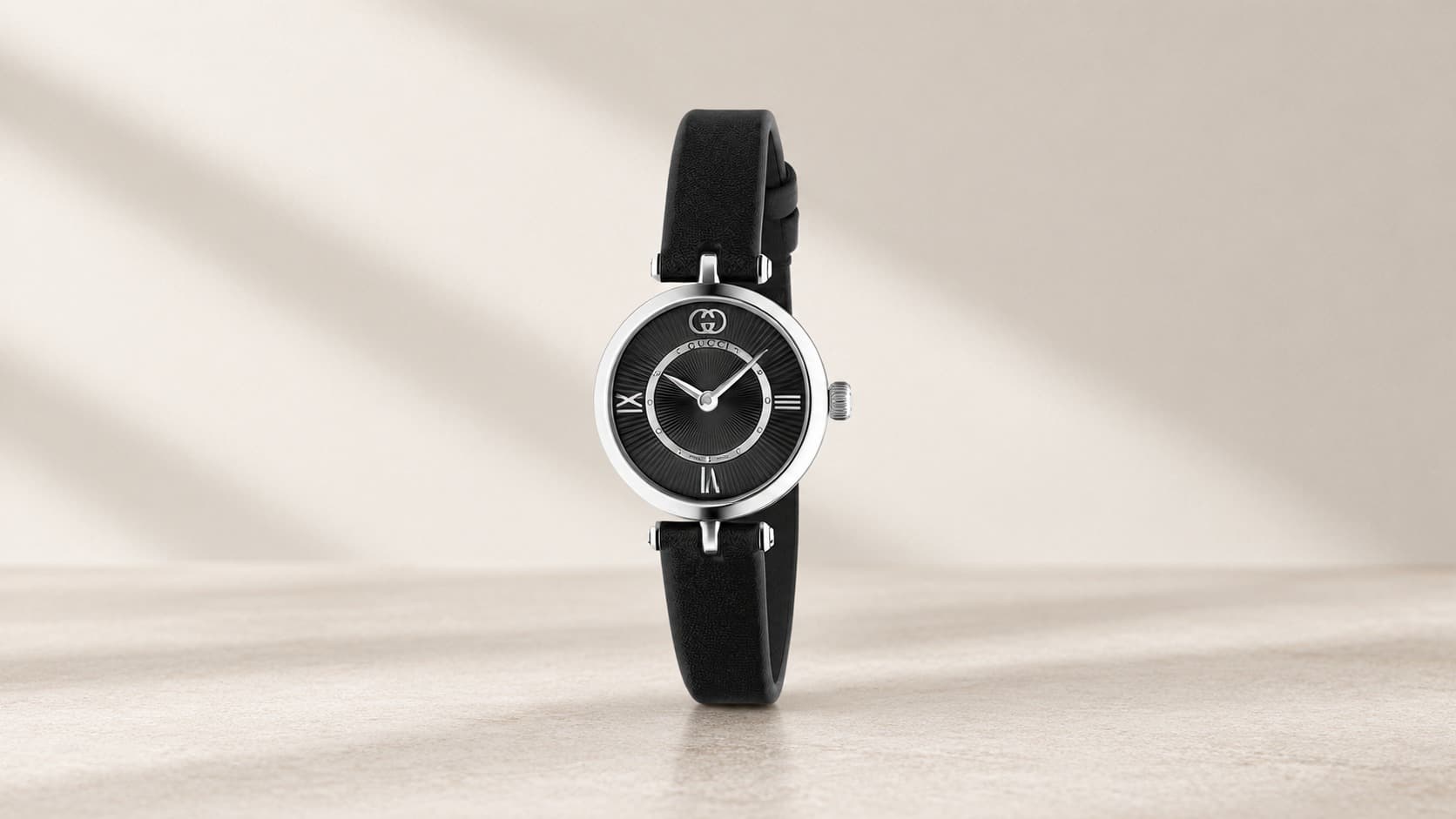
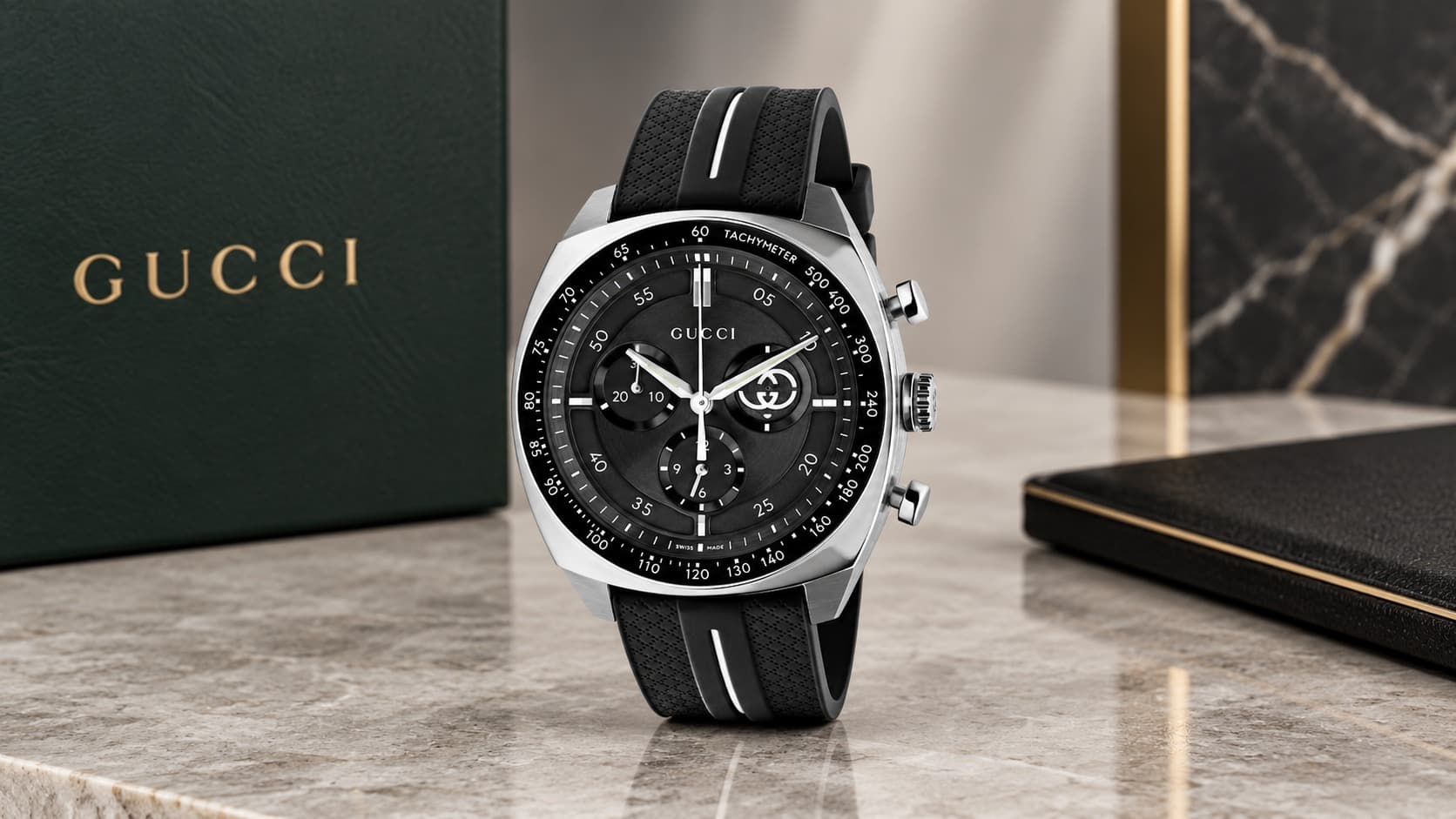
Gucci watches sit at the intersection where high fashion meets serious watchmaking, offering something that neither traditional Swiss brands nor typical fashion watches can match. Since entering horology in 1972, Gucci became the first major fashion house to establish genuine Swiss manufacturing, and today they produce everything from $670 quartz models to six-figure tourbillons with their own in-house movements. The watches are instantly recognizable through signature elements like the interlocking double-G logo, playful bee motifs, equestrian-inspired horsebit hardware, and the iconic green-red-green web stripe. Beyond the obvious fashion appeal, these timepieces use reliable Swiss movements, proper materials, and construction quality that matches their $1,000-3,000 price positioning. The catch is significant depreciation, with most models losing 50-70% of their value immediately, making them excellent purchases for style-conscious buyers who want Italian design flair but questionable choices for anyone seeking investment-grade timepieces.
The History of Gucci Watches Since 1972
Gucci’s journey from a small Florence leather shop to a global luxury powerhouse with serious watchmaking credentials spans over a century. The brand’s entrance into horology wasn’t just a fashion accessory afterthought. It was a calculated move that made Gucci the first fashion house to establish genuine Swiss manufacturing capabilities. What happened between 1921 and today explains why Gucci watches blend unmistakable Italian style with legitimate Swiss craftsmanship, and why the brand recently invested millions in developing its own watch movements.
- Guccio Gucci opened his first shop in 1921 on Via della Vigna Nuova in Florence, Italy, selling imported leather luggage and high-end accessories. Before starting his business, he worked as a bellhop at London’s Savoy Hotel where he observed wealthy European travelers and their expensive belongings. This experience shaped his vision for creating luxury goods that matched the quality and elegance he saw among the British upper class. The shop started small, focusing purely on leather craftsmanship with no involvement in watches, jewelry, or clothing at this early stage.
- Between 1947 and 1960, the company created the signature design elements that would later define every Gucci product including their watches. The bamboo-handled handbag arrived in 1947 as an innovative response to leather shortages following World War II. Workers discovered they could heat and shape bamboo imported from Japan into curved handles, creating a distinctive look that became instantly recognizable. The horsebit loafer debuted in 1953 with metal hardware inspired by horse bridles connecting two leather straps across the top. Famous customers like John F. Kennedy and Clark Gable wore these shoes regularly, helping establish Gucci as a status symbol among wealthy Americans and Europeans. Aldo Gucci, one of Guccio’s sons, designed the interlocking GG logo in 1960 as a tribute to his father. He created two overlapping capital G letters facing opposite directions that resembled chain links, and this symbol eventually appeared on everything from handbags to watch dials.
- The company made its first move into watchmaking in 1972 by partnering with Severin Wunderman, a Belgian entrepreneur who owned Severin Montres with manufacturing facilities in La Chaux-de-Fonds, Switzerland. This wasn’t a simple licensing deal where Gucci just put their name on existing watches made by someone else. Wunderman built dedicated production lines specifically for Gucci products and hired Swiss watchmakers to work exclusively on their designs. La Chaux-de-Fonds sits in the Jura Mountains and has been a center of Swiss watchmaking since the 1700s, home to brands like Breitling, TAG Heuer, and Zenith. By manufacturing there instead of importing watches from Asia or outsourcing to generic suppliers, Gucci became the first fashion house to produce genuine Swiss-made timepieces.
- Gucci released the Model 2000 in 1974, and it exploded in popularity so quickly that it earned a Guinness World Record for selling over one million pieces in just two years. The watch’s success came from Severin Wunderman’s controversial decision to combine stainless steel cases with diamond hour markers. Traditional Swiss watchmakers believed diamonds should only be set in precious metals like gold or platinum, never in steel which they considered too common. Wunderman ignored this rule and created watches that looked luxurious with sparkling diamonds but cost much less than solid gold alternatives. Middle-class buyers who couldn’t afford $5,000 gold watches could suddenly own a diamond-set timepiece for under $1,000. This pricing strategy established Gucci as a major player in the accessible luxury watch market.
- The Gucci family lost control of their company during the 1980s and 1990s through a series of internal conflicts, hostile takeovers, and financial troubles. By 1999, the brand was vulnerable to acquisition by LVMH, the French luxury giant that owns Louis Vuitton, Dior, and TAG Heuer. Instead, competing French conglomerate Pinault-Printemps-Redoute (PPR) stepped in and purchased a 42% stake for $3 billion in March 1999, eventually buying the rest to gain full control. PPR later changed its name to Kering, and the acquisition brought Gucci into a portfolio alongside Bottega Veneta, Saint Laurent, Balenciaga, and Breguet. For the watch division, this meant access to Kering’s Swiss manufacturing plants, relationships with movement suppliers like ETA and Sellita, and technical knowledge from Kering’s existing watch brands Girard-Perregaux and Ulysse Nardin.
- Kering reorganized Gucci’s watch operations in 2011 by creating a standalone division called Gucci Timepieces and moving production to a new facility in La Chaux-de-Fonds built specifically for the brand. The company spent additional money opening a dial manufacturing workshop in Besazio, Switzerland, a small town near the Italian border known for specialized dial makers. Before this investment, Gucci bought pre-made dials from suppliers and simply assembled them into cases. Owning their own dial workshop meant designers could experiment with techniques like guilloche engraving, hand-painted enamel, and semi-precious stone inlays without relying on external suppliers who might also work for competitors. These changes cost Kering over $50 million but transformed Gucci from a brand that assembled Swiss-made components into one that actually manufactured major parts in-house.
- Alessandro Michele became creative director in 2015 and completely changed Gucci’s design language by pulling inspiration from the brand’s 1970s era. He reintroduced animal motifs like bees, tigers, and snakes that original designer Vittorio Accornero had created for Gucci silk scarves in the 1960s and 1970s but that had been mostly abandoned by the 1990s. His aesthetic emphasized maximalism over the minimalism that dominated fashion at the time, mixing vintage patterns with modern cuts and bold colors. The watch division adopted this same approach with collections like Le Marché des Merveilles (Market of Marvels) featuring embroidered fabric dials showing bees and tigers. The G-Timeless collection gained skeleton dial options that exposed the movement’s gears and bridges, decorated with Gucci’s signature patterns. Michele’s work attracted younger customers who wanted personality and storytelling in their luxury goods rather than just status symbols, and watch sales increased significantly during his tenure from 2015 to 2022.
- The launch of caliber GG727.25 in 2021 marked Gucci’s biggest technical achievement in watchmaking. This automatic movement was designed and assembled at Kering’s La Chaux-de-Fonds manufacture rather than being purchased from suppliers like ETA or Sellita. The movement measures only 3.7mm thick, making it one of the thinnest automatic calibers available and allowing Gucci to build dress watches with ultra-slim profiles under 8mm total thickness. It runs at 28,800 vibrations per hour (standard for quality Swiss movements) and stores enough energy for 60 hours of running time when fully wound. The same year Gucci released this movement, they also unveiled tourbillon models priced above $100,000 featuring hand-finishing techniques like anglage, perlage, and Geneva stripes that match what you’d find in Patek Philippe or Audemars Piguet. Creating your own movements instead of buying them off the shelf is considered the ultimate achievement in watchmaking because it requires massive investment in machinery, skilled watchmakers, and years of testing.
- Kering made a surprising decision in 2022 to sell Girard-Perregaux and Ulysse Nardin to their respective management teams rather than keeping them in the corporate portfolio. Both brands were traditional Swiss manufactures with histories dating back to the 1700s and 1800s, and many industry observers expected Kering to position them as the group’s high-end watch brands while Gucci handled the fashion watch segment. Instead, Kering chose to make Gucci their sole watch brand and transfer all resources, expertise, and production capacity to that single division. This meant Gucci inherited manufacturing equipment, watchmaker talent, and technical knowledge that had been spread across three brands. In February 2025, Kering appointed Demna (who goes by one name professionally) as Gucci’s new creative director after his successful reinvention of Balenciaga. He replaced Sabato De Sarno, who had briefly taken over after Alessandro Michele’s departure. Demna’s first watch designs are expected to debut in late 2025 or early 2026, and fashion industry analysts predict he’ll bring a more minimalist, conceptual approach compared to Michele’s ornate maximalism.
The evolution from a single Florence shop selling leather luggage to a vertically integrated Swiss watch manufacturer demonstrates serious commitment to horology. Fifty years of continuous production, recent investments in proprietary movements, and haute horlogerie complications position Gucci differently than brands like Michael Kors or Fossil that simply license their names to watch manufacturers. The company maintains bold Italian design sensibility while developing technical capabilities that took traditional Swiss brands centuries to refine. This dual identity attracts fashion-conscious buyers who want recognizable style but also appeals to watch enthusiasts who appreciate in-house movements and complications. The skepticism Gucci sometimes faces from traditional collectors reflects an outdated assumption that fashion houses can’t make “real” watches, even though the brand now operates manufacturing facilities and develops movements just like Omega, IWC, or Jaeger-LeCoultre.
Gucci Watch Features: Design, Quality, and Craftsmanship
Gucci watches stand out in the luxury market because they offer something different from both traditional Swiss brands and other fashion watches. While brands like Rolex focus on technical precision and heritage, and fashion competitors often just license their names to generic manufacturers, Gucci occupies a middle ground with genuine Swiss production combined with instantly recognizable Italian design. The watches feature bold visual symbols developed over decades, Swiss-made movements and construction, and price points that make luxury accessible without sacrificing quality. Bold designs and cultural relevance separate these timepieces from understated traditional watchmaking.
- The double-G logo serves as the foundation of Gucci’s visual identity across all watch collections. Created by Aldo Gucci in 1960, the interlocking GG represents two mirrored capital letters that overlap like chain links. On watches, this symbol appears engraved on crowns, stamped into case backs, printed on dials, and even formed into bracelet links on certain models. The logo is so recognizable that many people can identify a Gucci watch from across a room just by spotting the double-G on the dial. Unlike subtle logos from brands like Patek Philippe or Vacheron Constantin that only watch enthusiasts notice, Gucci’s prominent branding appeals to buyers who want others to know they’re wearing a luxury timepiece.
- The green-red-green web stripe runs through Gucci’s entire product line including many watch straps and dial accents. This three-color ribbon pattern originated from the brand’s equestrian heritage, inspired by the saddle girths and ribbons used in horse riding. The specific shades are forest green and bright red separated by thin beige lines, creating a pattern that appears on everything from handbag straps to sneaker sides. On watches, the web stripe typically shows up on NATO-style fabric straps, leather strap stitching, or as decorative elements around the dial edge. Some models like the G-Timeless feature the stripe running vertically down the dial center, making it impossible to miss.
- The horsebit motif transforms equestrian hardware into watch case architecture on the Horsebit collection. The original horsebit design from 1953 featured two metal rings connected by a bar, mimicking the metal pieces that attach to a horse’s bridle. On watches, this same shape forms the lugs where straps connect to the case, creating distinctive curved metal pieces on both sides of the watch. The horsebit appears in polished steel, yellow gold plating, or rose gold depending on the model. This design element is 70 years old but still looks modern, and it gives Gucci watches a sculptural quality that flat-lugged watches from other brands can’t match.
- Bee symbols appear throughout the G-Timeless collection and several haute horlogerie pieces as both decorative elements and mechanical features. Alessandro Michele revived the bee from Gucci’s 1970s archives when he became creative director in 2015. On standard models, small golden bees replace hour markers at certain positions on the dial or appear as applied decorations on the dial center. On high-end pieces like the “Dancing Bees” G-Timeless, twelve three-dimensional gold bees are mounted on tiny pivots and swing with wrist movement, creating a kinetic sculpture effect. The bee choice isn’t random but connects to Italian symbolism where bees represent hard work, community, and nobility dating back to Renaissance city-states.
- Every Gucci watch carries “Swiss Made” on the dial, which legally means at least 60% of manufacturing costs occurred in Switzerland, the movement is Swiss, and final assembly happened in Switzerland. Gucci meets these requirements by producing watches at their La Chaux-de-Fonds facility and sourcing movements from Swiss suppliers. Standard collections use quartz movements from Ronda (a major Swiss quartz manufacturer) or mechanical movements from ETA and Sellita (the two largest Swiss movement suppliers). Premium models feature the in-house GG727.25 automatic caliber assembled at Kering’s manufacture. This Swiss production distinguishes Gucci from fashion brands like Michael Kors, Armani, or Hugo Boss that typically use Asian-made movements and only perform final assembly in Switzerland to claim Swiss Made status.
- The proprietary GG727.25 movement represents Gucci’s entry into true manufacture status where a brand makes its own calibers. Introduced in 2021, this ultra-thin automatic movement measures just 3.7mm in height compared to the standard ETA 2824 at 4.6mm. The reduced thickness allows Gucci to build elegant dress watches under 8mm total case thickness, slim enough to slide under a shirt cuff comfortably. The movement beats at 28,800 vibrations per hour (4Hz frequency) which is standard for quality Swiss automatics and provides smooth second hand motion. It stores 60 hours of power reserve when fully wound, meaning the watch keeps running for two and a half days if you take it off. The movement features rhodium-plated bridges, circular graining decoration, and blued screws visible through exhibition case backs. Developing this caliber cost Kering millions of dollars and several years of engineering, but it gives Gucci technical credibility that fashion watch brands buying off-the-shelf movements can never achieve.
- Celebrity endorsements and brand ambassadors focus heavily on Asian markets where Gucci watch sales are strongest. The brand partners with K-pop stars including Jin from BTS, Hanni from NewJeans, KAI from EXO, and Lee Know from Stray Kids. Chinese actors Xiao Zhan and Ni Ni serve as ambassadors for mainland China, while Indian actress Alia Bhatt became the brand’s first Indian global ambassador in May 2023. For watches specifically, British singer Florence Welch represented Gucci timepieces during Alessandro Michele’s creative director tenure. These partnerships target younger luxury buyers aged 25 to 40 who follow pop culture and social media, unlike traditional watch brands that partner with athletes or film stars from older generations.
- Pricing positions Gucci watches in the accessible luxury segment below Chanel, Hermès, and Dior but above mass-market fashion brands. Entry-level models like the Sync start around $670, making them cheaper than many Tissot or Hamilton Swiss watches. Most collections fall between $1,000 and $2,500, which is less than half what Chanel charges for their J12 ceramic watches (starting at $5,000) or what Dior asks for timepieces (starting around $3,000). The automatic 25H collection reaches $6,000 to $7,500, competing with entry-level Omega or TAG Heuer chronographs. High watchmaking pieces with tourbillons climb above $100,000 but represent a tiny fraction of sales. This pricing strategy makes Gucci the most affordable way to buy a Swiss-made luxury fashion watch from a major designer brand.
- Design philosophy emphasizes bold statements over subtle elegance, which separates Gucci from traditional Swiss watchmakers. Where brands like Jaeger-LeCoultre or Vacheron Constantin use restrained dials with minimal text and small logos, Gucci embraces large double-G symbols, colorful web stripes, embroidered animals, and eye-catching case shapes. The Grip collection displays time through rotating discs instead of hands, with the GG logo engraved repeatedly around the case edge. The G-Frame uses a rectangular case shape that looks nothing like round traditional watches. This maximalist approach attracts buyers who see watches as fashion accessories and conversation starters rather than purely functional tools or investment pieces.
- Jewelry-making expertise influences watch design more than pure horology at Gucci. The company built its reputation on leather goods and jewelry before entering watchmaking, so designers approach watches as wearable art objects rather than precision instruments. This shows in details like the Le Marché des Merveilles collection with hand-embroidered dials showing tigers and bees stitched onto fabric, a technique borrowed from haute couture. Diamond-set models use gem-setting skills from Gucci’s fine jewelry division rather than just sending watches to third-party setters. Mother-of-pearl dials cut from shells show colors and iridescence that jewelry customers appreciate. This jewelry perspective explains why Gucci watches often feel more like bracelets or necklaces that happen to tell time rather than sports tools or dress instruments.
The combination of recognizable symbols, genuine Swiss manufacturing, celebrity cultural relevance, and accessible pricing creates a unique market position. Gucci watches give buyers fashion credibility from a 100-year-old Italian luxury house plus technical legitimacy from Swiss production and in-house movements. They cost less than Chanel or Hermès timepieces while offering better quality than Fossil or Michael Kors fashion watches. The bold designs won’t appeal to purist watch collectors who prefer Rolex or Patek Philippe, but that’s intentional because Gucci targets fashion-conscious consumers who want their watch to complement their outfit rather than disappear under a sleeve. This clear identity helps Gucci sell hundreds of thousands of watches annually while maintaining luxury brand status.
Top 10 Best Gucci Watches
Gucci’s current collection spans from affordable quartz models under $700 to six-figure haute horlogerie pieces with complications that rival traditional Swiss manufactures. The brand organizes watches into distinct collections rather than releasing random individual models, which makes shopping easier because each collection has a clear design identity and target customer. Some collections focus on sport functionality with dive bezels and high water resistance, while others prioritize elegance with slim cases and dress watch proportions. Here are the ten most important Gucci watch collections with detailed specifications, pricing, and what makes each one worth considering.
- Gucci Dive delivers genuine dive watch capabilities with 200 meters of water resistance, unidirectional rotating bezels, and luminescent markers for underwater readability. Case sizes include 40mm, 45mm, and 41mm chronograph versions built from stainless steel with screw-down crowns creating watertight seals. Rotating bezels feature 60-minute markings with luminous pips at 12 o’clock for tracking dive times. Most models run on Swiss quartz movements though select references use automatics. Gucci offers eco-conscious variants with cases made from bio-based materials derived from castor oil plants. Bracelets include three-link stainless steel, rubber straps in various colors, and NATO fabric options. Prices range from $1,700 for basic quartz models to $2,500 for chronographs and automatics. Best for buyers who want recognizable luxury during beach vacations, swimming, or water sports without worrying about damage.
- G-Timeless serves as Gucci’s flagship collection with the widest variety from simple three-hand quartz to elaborate skeleton automatics with visible movements. Case sizes span 27mm for women’s models up to 42mm for men’s versions. The collection showcases Gucci’s signature motifs including bees as hour markers, stars scattered across dials, interlocking GG logos, and green-red-green web stripes. Entry-level quartz models start around $1,400 with stainless steel cases and leather straps. Mid-range automatics using the GG727.25 in-house movement cost $2,500 to $3,900 with exhibition case backs. High-end skeleton models expose entire movements through openworked dials revealing gears and bridges. Diamond-set variants replace hour markers with brilliant-cut stones. The extreme Planetarium haute horlogerie model exceeds $50,000 featuring a miniature solar system rotating to show planetary positions. Water resistance stays at 50 meters suitable for handwashing and rain but not swimming. Best for dress occasions, business casual wear, and everyday use with classic round proportions.
- Grip displays time using three rotating discs instead of traditional hands, with cases measuring 35mm or 38mm. The GG logo is engraved repeatedly around the bezel and case sides creating textured grip patterns inspired by skateboard tape. Three windows show rotating discs for hours, minutes, and seconds using jump-hour complications that update instantly rather than gradually. The design references 1970s digital watches but uses mechanical discs instead of LCD screens. Cases come in stainless steel, yellow gold PVD, or two-tone combinations powered by Swiss quartz movements. Water resistance reaches only 30 meters suitable for splashes but not swimming. Prices range from $1,050 to $1,450 depending on materials. Best for fashion-forward buyers who want unconventional design that doesn’t look like standard round watches, though the unusual time display takes adjustment.
- Gucci 25H represents the brand’s push into serious watchmaking with ultra-thin cases and integrated bracelets inspired by 1970s luxury sports watches. The name references the 25th hour symbolizing extra time that luxury provides. Case sizes include 34mm, 38mm, and 40mm with heights from 4mm for quartz to 7.4mm for automatics. The defining feature is a layered bezel with concentric circles and a five-link integrated bracelet flowing seamlessly from the case. Quartz models achieve impossibly slim 4mm profiles while automatics house the proprietary GG727.25 caliber visible through exhibition case backs. Cases come in stainless steel, yellow gold PVD, or rose gold PVD. The collection recently added exotic complications including minute repeaters priced over $100,000. Standard models cost $1,380 for quartz up to $6,000 for automatics. Best for buyers wanting contemporary dress watch elegance with retro styling and in-house movement credibility.
- Le Marché des Merveilles translates to “Marketplace of Marvels” featuring whimsical dials with embroidered animals including bees, tigers, and snakes stitched onto fabric backgrounds. The 38mm unisex case houses actual embroidered fabric created by specialized artisans then sealed under sapphire crystal. Bezels feature the double-G logo at 12 o’clock with decorative studs around the edge. Swiss ETA quartz movements provide reliability while protecting delicate dial materials. Water resistance reaches 50 meters despite fabric dials. Some variants add mother-of-pearl backgrounds behind embroidered animals. Gucci reduced production since Alessandro Michele’s departure, making remaining pieces somewhat collectible. Original retail was $880 to $1,100 with many dealers now offering discounts on remaining inventory. Best for buyers seeing watches as artistic accessories who don’t mind designs that won’t age as timelessly as simpler collections.
- Horsebit builds watches around Gucci’s iconic 1953 equestrian hardware, using curved metal shapes as lug connections between case and strap. Available in women’s sizes of 28mm, 30mm, and 34mm with rectangular proportions. Horsebit lugs extend from case sides in polished metal curves mirroring original bridle hardware. Dials are minimal with applied markers and either mother-of-pearl or sunburst finishes. Swiss quartz movements keep watches thin with 50 meters water resistance. Cases come in stainless steel, yellow gold PVD, or rose gold PVD with matching horsebit lugs. Straps include thin leather in multiple colors plus interchangeable options. Some models feature diamond markers or full diamond-set bezels. Prices range from $680 for basic steel to $2,500 for gold-plated versions with diamonds. Best for buyers wanting obvious Gucci heritage in elegant packages sized for smaller wrists.
- G-Frame revives 1970s rectangular designs with cases from tiny 14x18mm up to 14x34mm elongated styles. The case shape forms a subtle “G” outline through asymmetric lugs and curved sides. Dials showcase bee motifs, web stripe patterns, or sunburst finishes with applied markers. Swiss quartz movements power the slim rectangular cases with 30 meters water resistance. Cases come in stainless steel, yellow gold PVD, rose gold PVD, or two-tone combinations. Straps are interchangeable with quick-release mechanisms including leather, metal mesh, and fabric with web stripes. Gucci markets strap versatility heavily suggesting multiple bands for different occasions. Prices range from $695 for steel with leather to $2,500 for gold-plated with diamonds and metal bracelets. Best for buyers wanting watches that look different from typical rounds who don’t mind reading time on smaller rectangular dials.
- Interlocking makes the double-G logo central across styles from basic quartz to chronographs and flying tourbillons. Case sizes span 29mm to 42mm for women’s and men’s proportions. Entry-level quartz models feature large interlocking GG symbols on dial centers or as 12 o’clock markers. Chronograph versions add subdials for timing while maintaining GG branding. Cases are primarily stainless steel with some ceramic bezels for scratch resistance. Water resistance reaches 50 meters with straps including steel bracelets featuring engraved GG patterns, leather, and rubber. Limited-edition flying tourbillons exceed $150,000 featuring visible escapements surrounded by hand-engraved GG patterns on movement bridges. Standard models cost $1,100 to $2,500 making them accessible daily wearers. Best for buyers wanting prominent Gucci branding in traditional formats without unusual complications or case shapes.
- Sync targets entry-level buyers with sport styling and translucent colored case overlays giving contemporary streetwear aesthetics. Available in 36mm and 46mm sizes with transparent colored nylon overlays surrounding stainless steel inner cases creating two-layer effects. Colors include electric blue, neon yellow, red, green, black, and white. Dials feature web stripe patterns and luminescent markers. Swiss quartz movements include date complications with 50 meters water resistance. Rubber or silicone straps match case colors with signed Gucci buckles. Prices run $670 to $770 depending on size and color, undercutting many Swatch models while maintaining Swiss Made status. Best for casual wear, gym use, and situations avoiding expensive watch risks. Bright colors and plastic construction won’t suit business or formal settings.
- Model 2000 (2025 Reissue) brings back Gucci’s 1974 bestseller celebrating watchmaking heritage. The reissue debuted in the Cruise 2025 collection with 30mm cases appealing to vintage enthusiasts and smaller wrists. Design stays faithful to 1970s aesthetics with clean dials, minimal branding, and simple markers rather than elaborate contemporary motifs. Stainless steel cases feature polished finishes and thin profiles under 8mm. Swiss quartz movements provide original reliability. Dials come in silver, black, or champagne with applied markers and Gucci wordmarks. Leather straps in brown or black complete vintage looks. Pricing starts around $1,870 reflecting current Swiss manufacturing costs. Limited production makes this potentially collectible. Best for buyers preferring understated elegance and vintage sensibility without servicing risks of actual 50-year-old watches.
These ten collections cover nearly every watch category from affordable quartz to haute horlogerie complications, giving Gucci one of the most diverse ranges among fashion watch brands. The variety means almost anyone can find a Gucci watch matching their needs whether they want dive capability, dress elegance, vintage charm, or contemporary streetwear styling. Price accessibility remains consistent with entry points under $1,000 and most models staying under $3,000, making Swiss-made luxury attainable without mortgage-level budgets.
What to Look for When Buying a Gucci Watch
Buying a Gucci watch requires different considerations than purchasing traditional Swiss brands because the purchase involves paying for fashion design and brand recognition alongside watchmaking quality. The decisions about movement type, case size, materials, and intended use determine whether a watch serves well for years or ends up sitting in a drawer. Smart buyers look past the appealing designs and celebrity endorsements to evaluate practical factors like water resistance needs, maintenance requirements, and whether quartz or automatic better suits their lifestyle. Several essential questions should be answered before spending anywhere from $700 to several thousand dollars on a Gucci timepiece.
- Budget considerations start with Gucci’s entry point around $670 for the Sync collection and climb to over $100,000 for haute horlogerie tourbillons, though most buyers shop in the $1,000 to $3,000 range. Entry-level collections like Sync and basic G-Frame models stay under $1,000 with quartz movements and minimal complications. Mid-range options including G-Timeless automatics, Dive chronographs, and Horsebit diamond models fall between $1,500 and $3,500. The 25H collection with in-house movements reaches $6,000 to $7,500 competing with brands like TAG Heuer and Omega. Limited haute horlogerie pieces exceed $50,000 but represent a tiny fraction of sales aimed at serious collectors. Your budget should account for not just purchase price but ongoing costs including battery replacements every 2-3 years for quartz ($15-45), annual water resistance testing if you swim with the watch ($30-60), and complete servicing every 3-5 years for automatics ($200-400). Setting a realistic budget prevents overspending on features you don’t need while ensuring you get quality construction that lasts.
- Style preferences determine which collection suits your wardrobe and wearing occasions best. Dress watch collections like the 25H and G-Frame work for business settings with slim profiles under 8mm sliding easily under shirt cuffs, minimal complications showing just time or time-and-date, and elegant materials like polished steel or gold plating. Sport collections including Dive and Sync handle active lifestyles with rubber straps that tolerate sweat, larger cases offering better visibility, and water resistance supporting swimming or water sports. Fashion-forward designs like Grip with unconventional time displays or Le Marché des Merveilles with embroidered dials make bold statements but won’t suit conservative office environments. Consider whether you want one versatile watch for all occasions or multiple pieces for different situations, though Gucci’s $1,000-2,500 pricing makes owning several more feasible than with brands charging $5,000-10,000 per watch.
- Size and fit matter significantly since cases ranging from 14mm to 46mm accommodate vastly different wrist proportions. Measure your wrist circumference with a flexible tape measure to determine appropriate case sizes. Wrists under 6.5 inches typically look best with cases 38mm or smaller like the G-Timeless 38mm, Grip 35mm, or Horsebit 30mm. Medium wrists from 6.5 to 7.5 inches can wear 38mm to 42mm cases comfortably including G-Timeless 42mm, Dive 40mm, or 25H 40mm. Larger wrists over 7.5 inches need 42mm or bigger to avoid watches looking too small, making Dive 45mm or Sync 46mm appropriate choices. Lug-to-lug distance matters as much as diameter since long lugs extending past your wrist edge create uncomfortable overhang. Try watches in person when possible or carefully check specifications if buying online, and remember that integrated bracelet designs like the 25H can’t be adjusted as easily as watches with traditional lugs accepting any strap width.
- Movement type splits between Swiss quartz for accuracy and convenience versus automatic for mechanical appreciation and traditional watchmaking. Quartz movements using battery power offer accuracy within 15 seconds per month, require minimal maintenance beyond battery changes every 2-3 years, cost less both initially and long-term, and keep cases thinner since quartz calibers measure around 2-3mm versus 4-7mm for automatics. Automatic movements using mainspring power wound by wrist motion appeal to enthusiasts who appreciate mechanical engineering, require no batteries but need wearing regularly or use of a watch winder, demand complete servicing every 3-5 years costing $200-400, and allow exhibition case backs showing the decorated movement. Gucci’s proprietary GG727.25 automatic adds value through in-house manufacturing rather than using off-the-shelf ETA or Sellita movements, though this matters more to watch collectors than casual buyers. Choose quartz for accuracy and ease, choose automatic for appreciation of traditional watchmaking and if you enjoy the ritual of wearing and winding mechanical watches.
- Gender-specific versus unisex models appear throughout Gucci’s collections though marketing often targets specific audiences. Traditional gender sizing suggests women’s watches under 34mm and men’s watches 38mm and larger, but these rules increasingly blur as personal preference dominates. Collections explicitly marketed to women include Horsebit with 28-34mm cases and delicate proportions, smaller G-Frame variants under 20mm, and certain G-Timeless models with mother-of-pearl dials and diamond bezels. Men’s specific collections include larger Dive models at 45mm, Sync at 46mm, and 25H at 40mm. True unisex options include G-Timeless 38mm, Grip 35-38mm, Le Marché des Merveilles 38mm, and Interlocking 34-38mm that work on various wrist sizes regardless of gender. Focus on case proportions relative to your wrist rather than marketing categories, and recognize that current trends favor larger watches on women and accept smaller vintage-sized pieces on men compared to previous decades.
- Material choices affect durability, appearance, and price across Gucci’s collections. Stainless steel cases offer the best value with excellent corrosion resistance, scratch durability better than precious metals, hypoallergenic properties for most wearers, and lower prices than gold alternatives. Yellow gold PVD (Physical Vapor Deposition) coating applies a thin gold layer over stainless steel creating gold appearance at fraction of solid gold cost, though coating can wear through at contact points after years of use. Rose gold PVD follows the same process with pinkish gold tones popular in contemporary jewelry. Solid 18k gold appears only on ultra-premium haute horlogerie pieces priced over $50,000. Ceramic bezels on some Interlocking and G-Timeless models resist scratching better than any metal and maintain color permanently but can crack if subjected to sharp impacts. Bio-based materials in eco Dive variants reduce petroleum dependence though long-term durability remains unproven compared to traditional materials. Consider your lifestyle and whether gold plating will wear acceptably or if you need stainless steel’s durability.
- Strap options influence comfort and versatility with choices including leather for dress occasions, metal bracelets for integrated looks, rubber for sports use, and fabric NATO straps for casual wear. Leather straps in calfskin, alligator, or ostrich provide traditional elegance and comfort but require replacement every 1-3 years depending on wear frequency and sweat exposure, cost $100-300 for genuine Gucci replacements, and can’t tolerate water without damage and odor development. Metal bracelets in stainless steel or gold-plated finishes last indefinitely with proper care, adjust easily for wrist size changes, and handle all weather conditions though they can pinch wrist hair and feel cold initially. Rubber straps suit active lifestyles with sweat resistance, water tolerance, and flexibility but may look too casual for business settings and can degrade after years of UV exposure. NATO fabric straps offer the most versatility with easy changes, numerous color options, and affordable prices ($30-80) though they add thickness between case and wrist. Some Gucci collections like G-Frame and 25H use proprietary attachment systems limiting aftermarket strap options while others accept standard spring bar widths allowing endless customization.
- Occasion and lifestyle matching ensures your watch suits actual wearing situations rather than sitting unused. Daily office wear demands moderate sizes (38-40mm), professional appearance without flashy complications, scratch-resistant materials since desk work causes case wear, and enough water resistance (50m minimum) for handwashing. Weekend casual use allows larger sport models, colorful straps, and bolder designs like Grip or Sync that might seem inappropriate in conservative business settings. Special events including weddings, galas, and formal dinners call for dress watches like 25H or slim G-Timeless with leather straps, precious metal finishes, and understated elegance. Active lifestyles involving swimming, hiking, or gym workouts require genuine water resistance (200m for Dive collection), rubber or NATO straps that handle sweat and water, and durable cases that survive impacts. Consider whether you need one versatile watch serving multiple roles or can dedicate specific pieces to different parts of your life.
- Water resistance ratings indicate theoretical depth limits but require understanding practical applications. 30 meters (3 ATM) on Grip, G-Frame, and 25H models protects against rain and handwashing splashes but absolutely cannot go swimming or showering since water pressure and temperature changes exceed testing conditions. 50 meters (5 ATM) on G-Timeless, Horsebit, Interlocking, and Sync allows brief swimming in pools or calm water but isn’t suitable for diving, snorkeling, or water sports. 200 meters (20 ATM) on Dive collection provides genuine dive watch capability for recreational scuba diving, snorkeling, and serious water sports. Water resistance degrades over time as gaskets dry out and lose elasticity, requiring annual pressure testing and gasket replacement every 2-3 years or whenever the case gets opened for battery changes. Never operate crowns or pushers while underwater regardless of rating, avoid hot showers or saunas even with high water resistance since thermal expansion compromises seals, and rinse watches with fresh water after ocean swimming to prevent salt corrosion.
- Authenticity verification protects against the massive counterfeit market targeting Gucci’s brand recognition. Genuine Gucci watches display clearly engraved serial numbers on case backs alongside model numbers, while counterfeits show only a crest or blurry stampings. All authentic pieces include “Swiss Made” text below 6 o’clock on the dial, properly spelled and precisely printed. Movement quality reveals fakes through cheap ticking sounds in quartz models or visible plastic gears in automatics, while genuine Gucci watches use proper Swiss movements from Ronda, ETA, or their in-house caliber. Weight provides another indicator since authentic watches use solid metal links and quality materials feeling substantial, while counterfeits use hollow lightweight construction. Packaging should include a Gucci-branded box, warranty card with matching serial numbers, instruction manual in multiple languages, and often a certificate of authenticity. When buying from unauthorized sellers or private parties, verify serial numbers with Gucci customer service at 877-482-2499 or visit a boutique for in-person authentication before completing purchase.
Smart buying decisions balance the emotional appeal of Gucci’s designs with practical evaluation of specifications and your actual needs. Many buyers overspend on features they never use like chronograph complications they don’t time anything with, or under-buy on water resistance then damage watches during routine activities. Taking time to honestly assess your lifestyle, trying different sizes to find proper fit, and choosing movement types matching your maintenance preferences results in watches that get worn regularly rather than becoming expensive drawer jewelry. The $1,000-3,000 Gucci spends represents significant money for most buyers, making informed decisions essential to long-term satisfaction.
Where to Buy Authentic Gucci Watches

Purchasing a Gucci watch through the right channel determines whether the product is genuine with valid warranties or a counterfeit with no manufacturer support. The global counterfeit watch market specifically targets recognizable brands like Gucci, making authentication and authorized dealer verification critical before spending hundreds or thousands of dollars. Beyond authenticity concerns, different retailers offer varying price points, return policies, and customer service experiences that significantly impact overall satisfaction. Official channels, authorized retailers, and pre-owned marketplaces each present different advantages and risks worth evaluating.
- Gucci.com serves as the official direct channel offering the complete current collection with guaranteed authenticity and full manufacturer support. The website displays all available models with detailed specifications, high-resolution images showing watches from multiple angles, and accurate pricing without dealer markups. Online purchases include free standard shipping on all orders, complimentary gift packaging, and 30-day returns for unworn watches with original packaging and tags. The website accepts major credit cards and financing options allowing payment plans spreading costs over several months. Customer service operates through live chat, email, or phone at 877-482-2430 during business hours for sizing questions, specification clarifications, or order tracking. Buying directly from Gucci eliminates any authenticity concerns and provides the fullest warranty coverage, though you sacrifice the ability to negotiate prices or receive personalized in-store service. Limited edition or new release models often appear on the official website weeks before reaching authorized retailers.
- Gucci boutiques provide in-person shopping with the ability to try multiple sizes and models before purchasing. Flagship stores in major cities including New York, Los Angeles, London, Paris, Milan, Tokyo, and Hong Kong carry the most extensive watch selections while smaller boutiques may stock only popular core models. Store associates can measure your wrist properly, demonstrate features like chronograph pushers or rotating bezels, and explain differences between quartz and automatic movements. Boutiques offer the same 30-day return policy as the website though the window shortens to 14 days for in-store purchases. Some locations provide complimentary bracelet sizing and strap changes while you wait rather than requiring shipping watches back for adjustments. Boutique purchases occasionally include exclusive packaging or small gifts not available through other channels. Shopping in person does mean paying full retail without discounts, but the experience helps especially for first-time Gucci watch buyers unfamiliar with the brand’s sizing and collections.
- Authorized retailers include major jewelry chains and luxury watch dealers who carry Gucci through official partnerships. National jewelry chains operate locations across the United States stocking Gucci alongside brands like Omega and TAG Heuer, and some provide additional extended warranties beyond Gucci’s standard coverage when you purchase through them. Regional jewelers run stores in specific areas with competitive pricing and frequent sales events offering 10-20% discounts on select Gucci models. Specialty watch retailers operate both physical stores and robust online presences with customer reviews and detailed product descriptions. Department stores carry Gucci watches in their fine jewelry sections, often with seasonal sales during major shopping holidays like Black Friday, Memorial Day, and year-end clearance events. Buying from authorized retailers provides authentic watches with valid warranties plus opportunities for price negotiation or catching seasonal discounts that official Gucci channels never offer.
- Verifying retailer authorization prevents purchasing from unauthorized dealers selling genuine watches without manufacturer support or selling counterfeits entirely. Contact Gucci directly at 877-482-2499 and provide the retailer’s name to confirm their authorized status before making purchases. Authorized dealers receive official certificates from Gucci displaying their partnership and are listed on Gucci’s internal databases accessible to customer service representatives. The Gucci website includes a store locator tool showing all boutiques and authorized retailers by city, though this list isn’t always complete for smaller regional jewelers. Unauthorized dealers often advertise significantly below market prices (30-50% off retail) which seems appealing but means watches lack valid warranties, may have been gray market imports from other countries, or could be counterfeits. Even if the watch itself is genuine, Gucci will not honor warranties or provide service for watches purchased through unauthorized channels.
- Pre-owned platforms offer significant discounts on discontinued models and current collections at 30-70% below retail prices. Major online marketplaces for pre-owned luxury watches host hundreds of thousands of listings from dealers and private sellers worldwide. Some platforms offer authentication services where experts examine watches and provide money-back guarantees if any issues arise, typically charging fees around $200-300 for this verification. Gucci watches in the pre-owned market typically range from $120 for older quartz models to $3,750 for recent automatics depending on condition and rarity. Luxury consignment specialists focus on authenticated pre-owned goods with in-house experts examining every watch before listing, offering 45-75% discounts off original retail. Higher-end pre-owned watch dealers carry fewer Gucci watches compared to traditional Swiss brands but provide detailed condition reports, professional photography, and trade-in programs. General auction and marketplace sites remain options though buyer beware applies heavily since individual sellers vary wildly in knowledge and honesty about condition or authenticity.
- Pre-owned considerations require accepting what you sacrifice by buying used watches. Manufacturer warranties only transfer if the watch was originally purchased from authorized dealers and the full warranty period hasn’t expired, meaning most pre-owned Gucci watches come without any manufacturer coverage. Sellers may offer their own limited warranties (30-90 days typically) but these don’t compare to Gucci’s comprehensive coverage. Condition varies from mint unworn pieces with full packaging to heavily worn watches with scratches, dings, and missing accessories. Always request detailed photographs showing case, dial, bracelet, and movement if it has an exhibition caseback, plus ask about service history and whether the watch currently runs properly. Pre-owned quartz models may need immediate battery replacement while automatics might require full servicing costing $200-400 if the seller doesn’t know when it was last maintained. Factor these additional costs into your budget when comparing pre-owned savings against buying new with warranty coverage.
- Warranty details from authorized purchases provide 2-year international coverage on all Gucci watches protecting against manufacturing defects. The warranty covers movement malfunctions, case defects, crown issues, and crystal damage that occurs from factory faults rather than user damage. Warranty cards must be completed at time of purchase with model number, serial number, purchase date, and dealer stamp to remain valid. Gucci requires presenting both the warranty card and original purchase receipt when making warranty claims. Premium collections including some 25H models and all haute horlogerie pieces come with extended warranties ranging from 5 to 8 years depending on the specific model and complications. Warranties specifically exclude normal wear items including batteries, leather straps, bracelet stretch, and crystal scratches from regular use. Accidental damage from drops, impacts, or water ingress from improper use also falls outside coverage. Any servicing or repairs performed by non-authorized watchmakers immediately voids the warranty even if problems existed before the unauthorized work.
- Return policies vary by channel with online purchases generally offering more flexibility than in-store buying. The official website provides 30 days for returns on unworn watches in original condition with all packaging, tags, and accessories included. Watches showing any signs of wear including strap adjustments, bracelet sizing, or minor scratches get rejected for return. Boutiques limit returns to 14 days for in-store purchases with the same unworn condition requirements. Authorized retailers set their own policies though most major chains offer 30-day returns, while smaller independent jewelers may have stricter 7-14 day windows or charge restocking fees of 10-20%. Pre-owned dealers typically provide much shorter return periods of 3-7 days and may only accept returns if the watch arrives significantly different from described condition. Always clarify return terms before purchasing and inspect watches immediately upon arrival to identify any issues within the return window.
- Avoiding counterfeits and scams requires skepticism toward deals seeming too good to be true and verification of seller credibility. Counterfeits appear most commonly through unauthorized websites advertising 40-70% discounts, social media marketplace listings from individuals with no selling history, and street vendors in tourist areas. Red flags include prices significantly below market value even for used watches, sellers refusing to provide serial numbers or additional photographs, and websites with poor English or unprofessional layouts. Legitimate pre-owned dealers provide detailed condition descriptions, multiple high-resolution photos, return policies, and responsive customer service answering questions. Payment methods matter since credit cards offer chargeback protection if you receive counterfeits while wire transfers, cryptocurrency, and peer-to-peer payment apps provide no recourse for fraud. Never purchase Gucci watches through social media marketplaces unless meeting in person and bringing watches to an authorized Gucci boutique or jeweler for authentication before exchanging money.
Choosing where to buy balances priorities between guaranteed authenticity, warranty coverage, pricing, and convenience. Buyers who value absolute certainty and full manufacturer support should stick with official channels despite paying full retail. Those willing to research and verify authorization can save 10-30% through seasonal sales at department stores and authorized jewelers. Adventurous buyers comfortable with risks can find the deepest discounts of 50-70% in the pre-owned market but must accept warranty limitations and authentication responsibilities. The right channel depends on your budget flexibility, knowledge level about watches, and comfort with potential complications from unauthorized or pre-owned purchases.
Are Gucci Watches a Good Investment?
Gucci watches should not be purchased expecting financial returns or strong value retention like traditional Swiss luxury brands. The reality is that fashion watches depreciate significantly and quickly, losing 50-70% of retail value within the first year of ownership regardless of condition. Depreciation happens because Gucci operates primarily as a fashion brand where designs change with trends, not as a heritage watchmaker building timepieces that appreciate over decades. Honest expectations about what watches will be worth years later, which models hold value best, and whether any Gucci timepieces qualify as legitimate investments matter before making purchases.
- Realistic depreciation expectations show that most Gucci watches lose half their value immediately after purchase. A Horsebit model retailing at $750 typically resells for $250-350 in the pre-owned market even if barely worn with complete packaging. G-Timeless quartz watches purchased for $1,400 might fetch $500-700 when resold months later. Even automatic models with the in-house GG727.25 movement depreciate 40-50% from their $3,000-6,000 retail prices. This steep value loss occurs because watch collectors and enthusiasts prioritize traditional Swiss brands with longer histories and stronger secondary markets. Fashion-conscious buyers who want Gucci typically prefer purchasing new models with current designs rather than older pre-owned pieces, further limiting resale demand. The depreciation curve is steepest in the first year then stabilizes somewhat, meaning a watch that dropped from $1,500 to $700 in year one might only decline to $600 over the next several years if well maintained.
- Fashion watches versus traditional timepieces explains why Gucci can’t compete with Rolex, Omega, or Patek Philippe for value retention. Traditional Swiss brands built reputations over 100-200 years focused exclusively on watchmaking, creating heritage and collector demand that supports strong resale markets. Rolex Submariners often sell for 80-120% of retail on the secondary market, sometimes appreciating above original purchase price for discontinued references. Even mid-tier Swiss brands like Omega and TAG Heuer retain 50-70% of value, significantly better than Gucci’s 30-50% retention. The difference comes down to brand positioning where Rolex sells itself as an investment-grade instrument and status symbol, while Gucci markets watches as fashion accessories complementing clothing and handbags. Collectors seek out vintage Rolex, Omega, and Patek Philippe from decades past, but few people actively hunt for 20-year-old Gucci watches since fashion trends make older designs look dated rather than classic.
- Limited editions and collaborations occasionally buck depreciation trends if they achieve genuine collectibility through scarcity and desirability. Gucci releases limited production runs for certain models, restricting availability to 50-500 pieces worldwide depending on the complication and price point. The 25H Minute Repeater limited to single-digit production numbers might maintain value better than mass-produced models simply because so few exist and the $100,000+ price point attracts serious collectors rather than casual fashion buyers. Collaboration pieces with artists or other brands sometimes achieve cult status driving secondary market premiums, though Gucci has done fewer watch collaborations than brands like Swatch or Casio. The 2021 centenary collection celebrating Gucci’s 100th anniversary included special editions that sold out quickly, and these pieces currently trade slightly above original retail in rare cases. However, betting on limited editions as investments remains risky since most still depreciate 30-40% even with artificial scarcity.
- Factors affecting resale value include condition, documentation, rarity, and timing. Watches in mint unworn condition with stickers still on cases and bracelets command 20-30% premiums over worn examples showing scratches and strap creasing. Complete documentation including original box, warranty card, instruction manual, and purchase receipt adds 15-25% to resale value since buyers want proof of authenticity and original purchase details. Rare discontinued models that are no longer in production sometimes see appreciation as enthusiasts hunt for specific references, though this typically takes 10-20 years to develop. Timing affects value with holiday seasons (November-December) bringing higher demand as buyers seek gifts, while summer months see softer markets. Economic conditions matter significantly with luxury watches performing poorly during recessions when discretionary spending drops.
- Best models for value retention within Gucci’s lineup show slightly less dramatic depreciation though none truly hold value well. The G-Timeless collection enjoys the strongest secondary market because the clean classic design doesn’t look as dated as fashion-forward pieces, and the broad range of sizes and styles means more potential buyers. Automatic G-Timeless models with the in-house GG727.25 movement retain value marginally better than quartz versions since mechanical watch enthusiasts appreciate the proprietary caliber. Vintage pieces from the 1970s-1990s including the original Model 2000, Bamboo collection, and early 3000M sport watches attract collectors interested in Gucci’s watchmaking history rather than current fashion trends. The Horsebit collection maintains demand because the iconic hardware connects directly to Gucci’s core brand identity dating back 70 years. The new 25H automatic collection is too recent for established depreciation patterns, but early indicators suggest 40-45% value loss rather than the 60-70% seen in basic quartz models.
- Market demand realities show that Gucci watches appeal primarily to buyers wanting new pieces rather than pre-owned alternatives. The pre-owned luxury watch market is dominated by traditional Swiss brands with established collector bases, dealer networks, and pricing guides. Gucci represents a tiny fraction of pre-owned sales with limited dealer interest and few private collectors actively seeking specific references. Online marketplaces list thousands of pre-owned Gucci watches sitting unsold for months because asking prices remain too high relative to what buyers will pay. Sellers often start at 60-70% of retail hoping to recoup more of their initial investment, but realistic sale prices typically settle at 30-50% of retail after months of price reductions. This weak secondary market means selling Gucci watches requires patience, flexibility on price, and acceptance of significant losses.
- When to buy for best value depends on your priorities between having newest designs versus saving money. Buying new from authorized retailers during seasonal sales (typically November-January and May-July) can save 10-20% off retail while maintaining full warranty coverage. Pre-owned purchases obviously offer the deepest discounts at 50-70% off retail, with best values coming from private sellers rather than dealers who add markup. Vintage Gucci watches from the 1970s-1990s represent interesting value since they’re already fully depreciated at $200-600 regardless of original retail prices, and vintage fashion watch collecting is a small but growing niche. Avoid buying right after major collection launches when excitement drives premium pricing, and consider waiting 6-12 months for initial demand to cool and early adopters to start selling their pieces.
- Comparison to other fashion watch brands shows Gucci performs similarly to competitors in depreciation. Designer fashion watches from brands that primarily make clothing, handbags, and accessories all suffer steep depreciation regardless of Swiss Made status or quality construction. The depreciation stems from brand positioning as fashion rather than horology, with designs changing to match clothing trends instead of pursuing timeless aesthetics. Gucci actually holds value slightly better than some competitors because of its 50-year watchmaking history and recent investments in proprietary movements, but the difference amounts to retaining 35% of value versus 25% for brands with shorter watch histories. Jewelry-focused luxury brands that also make watches tend to depreciate less severely at 40-50% losses because buyers perceive them as jewelry items rather than fashion accessories.
- Investment alternatives exist for buyers specifically seeking watches as financial assets rather than fashion accessories. Traditional Swiss brands at various price points offer dramatically better value retention. Japanese brands from makers focused exclusively on watches also hold value better than fashion brands despite lower initial prices. Even microbrand independent watchmakers sometimes maintain 60-70% of retail value if they build cult followings and limit production. The key difference is that these brands sell themselves as watchmakers first, while Gucci sells fashion first with watches as one category among many products.
The bottom line is that Gucci watches make poor financial investments but excellent purchases for buyers who value the design, brand prestige, and wearing experience. If you want a watch that might appreciate or at least hold most of its value, buy Rolex, Omega, or traditional Swiss brands. If you want Italian fashion elegance with Swiss quality at accessible prices and accept losing half your money immediately, Gucci delivers exactly what it promises. The worst approach is buying Gucci expecting investment returns then feeling disappointed years later when your $2,000 watch sells for $700. Buy Gucci because you love wearing it, not because you think it will fund retirement.
Keeping Your Gucci Watch in Perfect Condition
Proper care extends the lifespan of Gucci watches from a few years of troubled ownership to decades of reliable service. The difference between watches that look pristine after ten years versus those showing heavy wear comes down to daily habits, regular maintenance schedules, and knowing when professional service is necessary. Gucci watches use the same Swiss movements and construction methods as other luxury brands, meaning they require similar care routines regardless of fashion brand positioning. Everything from daily cleaning to professional servicing intervals, storage recommendations, and handling common problems determines long-term satisfaction.
- Daily care basics start with simple wiping using a soft lint-free cloth after each wearing to remove dirt, sweat, and skin oils before they build up. Microfiber cloths work best for this purpose, available cheaply in bulk packs and washable for repeated use. Wipe the entire case including the back, sides, crown, and especially areas where the case meets the bracelet or strap since dirt accumulates in crevices. For watches worn during exercise or in hot weather, rinse quickly under lukewarm tap water if the watch has at least 50 meters water resistance, then dry thoroughly with a cloth. Never use paper towels, tissues, or rough fabrics that can create microscopic scratches on polished surfaces. Avoid wearing watches during activities involving harsh chemicals including cleaning products, paint, solvents, or pesticides since these substances can damage gaskets, deteriorate straps, and discolor metal finishes.
- Deep cleaning methods for more thorough maintenance involve mild soap and water for cases and bracelets but never for leather straps. Mix a few drops of dish soap in a bowl of lukewarm water, dip a soft brush in the solution, and gently scrub the bracelet links, case sides, and bezel to remove accumulated grime. Pay attention to the spaces between bracelet links where dirt hides and causes wear. Rinse the watch under running water to remove all soap residue, then dry completely with a cloth and let it air dry for 30 minutes before wearing. This deep cleaning should happen monthly for watches worn daily or quarterly for occasional pieces. Never submerge leather-strapped watches in water regardless of case water resistance since moisture destroys leather causing cracking, odors, and premature deterioration. For leather straps, wipe only the case and use a slightly damp cloth on the strap if absolutely necessary.
- Leather strap maintenance requires specific care since leather is organic material that degrades from moisture, oils, and UV exposure. Avoid getting leather straps wet from washing hands, rain, or swimming since water penetration causes stiffening and cracking as the leather dries. If straps get wet accidentally, pat dry immediately with an absorbent cloth and let air dry completely before wearing again. Apply leather conditioner every 3-6 months using products designed for fine leather goods, rubbing small amounts into the strap with a soft cloth to maintain suppleness. Keep leather straps away from direct sunlight during storage since UV rays fade colors and dry out natural oils. Rotate between multiple straps if possible to extend lifespan, as leather needs rest periods between wearings to release absorbed moisture and oils. Even with perfect care, leather straps need replacement every 1-3 years depending on wearing frequency, making them consumable items rather than permanent components.
- Metal bracelet care focuses on preventing scratches and maintaining clasp mechanisms that loosen over time. Polished metal shows scratches more obviously than brushed finishes, so consider having bracelets refinished professionally every few years to remove accumulated wear. Some jewelers offer brushing and polishing services for $50-100 restoring factory finishes. Clean bracelet clasps specifically since they collect dirt and skin cells in the folding mechanisms, eventually causing stiff operation or failure to lock properly. Apply tiny amounts of watchmaker’s lubricant to clasp pivot points if they feel rough, though most people should have jewelers do this during regular servicing. Check bracelet screws monthly since vibrations can loosen them over time, potentially causing link separation and watch loss. Small screwdrivers designed for watch bracelets cost under $10 and prevent stripped screws from improper tools.
- Water resistance maintenance requires annual pressure testing and gasket replacement every 2-3 years to maintain rated depth capabilities. Water resistance isn’t permanent because rubber gaskets around the crown, case back, and crystal dry out losing elasticity, while temperature changes expand and contract metal creating microscopic gaps. Take watches to authorized Gucci service centers or qualified watchmakers annually for pressure testing costing $30-60, which involves placing watches in specialized machines simulating underwater pressure. If testing reveals leaks, gasket replacement fixes the problem for $50-100 depending on how many gaskets need changing. Any time a case gets opened for battery replacement or servicing, new gaskets should be installed and pressure tested before returning the watch. Never assume water resistance remains intact on watches over three years old without recent testing, as gasket failure can allow water damage even on watches rated to 200 meters.
- Battery replacement for quartz models becomes necessary every 2-3 years when the second hand starts jumping in 2-4 second intervals or the watch stops completely. Authorized Gucci service centers charge $50-80 for battery replacement including new gaskets and pressure testing. Independent jewelers and watch repair shops charge less at $15-45 but may not replace gaskets or test water resistance properly. Battery replacement seems simple but improper technique can scratch case backs, strip threads, or compress gaskets incorrectly ruining water resistance. If you wear your watch daily and depend on it, spending extra for authorized service provides peace of mind. Keep spare batteries on hand if you own multiple Gucci quartz watches since they often need replacement around the same time if purchased together.
- Automatic watch care involves different maintenance than quartz since self-winding movements need regular motion to stay running. Automatic watches stop after 40-60 hours without wrist motion depending on the specific movement’s power reserve. The GG727.25 caliber offers 60 hours meaning watches run for two and a half days when fully wound. If you wear your automatic Gucci daily, it stays wound from normal wrist motion. For watches worn occasionally, either accept that they’ll stop and need resetting, or invest in a watch winder that rotates watches simulating wrist motion. Watch winders range from $50 for basic single-watch units to thousands for elaborate multi-watch cabinets. Setting stopped automatic watches is straightforward by pulling the crown out and rotating it until the correct time appears, then pushing the crown back in. Avoid setting the date between 9 PM and 3 AM when date mechanisms are engaged since forcing date changes during this window can damage gears.
- Storage recommendations protect watches during periods of non-wearing from dust, moisture, magnetism, and physical damage. Store watches in their original boxes if you have space, or invest in dedicated watch boxes with individual cushioned slots preventing watches from touching each other. Avoid storing watches in bathrooms where humidity from showers can cause moisture damage even inside closed boxes. Keep watches away from speakers, tablet covers with magnetic clasps, and electronics that generate magnetic fields potentially magnetizing movements and causing inaccuracy. For automatic watches in long-term storage, wind them manually once monthly by rotating the crown 20-30 times to circulate lubricants and prevent them from congealing. Room temperature storage between 60-75°F is ideal, avoiding hot attics or cold garages where temperature extremes can affect lubricants and seals.
- Professional servicing schedule depends on movement type with automatics needing complete overhauls every 3-5 years while quartz movements can go longer. Automatic movement servicing costs $200-400 at authorized service centers and involves complete disassembly, cleaning all parts in ultrasonic baths, replacing worn components, re-lubricating with fresh oils, reassembly, and timing adjustment. This process takes 4-8 weeks since watches often ship to central service facilities rather than being serviced at local boutiques. Signs that automatic watches need immediate servicing include running fast or slow by more than 10 seconds daily, making unusual noises like grinding or rattling, or stopping despite regular wearing. Quartz movements are more reliable but still benefit from servicing every 5-7 years to replace dried lubricants and worn parts, though many people simply replace quartz watches rather than servicing them since repair costs approach replacement costs.
- Common issues and solutions help address problems without always requiring professional service. Watches running fast or slow within 5-10 seconds daily fall within normal mechanical movement tolerances and don’t require adjustment. Foggy crystals indicate water intrusion requiring immediate professional service to prevent rust damage to movements and dials. Loose crowns that spin without engaging winding or setting mechanisms mean stripped crown threads needing replacement by watchmakers. Bracelets or straps developing squeaks typically just need cleaning to remove accumulated dirt, or small amounts of lubricant at pivot points. Watches stopping despite good batteries might have magnetized movements from exposure to magnetic fields, fixable by demagnetization taking 30 seconds at any watchmaker using demagnetizing equipment.
- Authorized service centers provide the highest quality service but cost more and take longer than independent watchmakers. Contact Gucci customer service at 877-482-2430 to locate the nearest authorized service center or arrange mail-in service. Authorized centers use genuine Gucci parts, follow factory specifications exactly, and maintain detailed service records in Gucci’s systems. Service typically costs 30-50% more than independent watchmakers but includes warranty on work performed, usually 1-2 years depending on the service type. For watches still under manufacturer warranty, always use authorized service since independent repairs void remaining warranty coverage. For out-of-warranty watches where you want to minimize costs, qualified independent watchmakers with good reputations can service Gucci watches competently since they use standard Swiss movements available to all watchmakers.
Taking care of Gucci watches follows the same principles as maintaining any Swiss timepiece, with regular cleaning, appropriate storage, timely servicing, and respecting water resistance limitations. The investment in proper maintenance pays off through extended lifespan, maintained appearance, and reliable performance. Many people skip maintenance thinking they’re saving money, then face expensive repairs when neglect causes preventable damage. Spending $50-100 annually on cleaning and testing prevents $500-1000 repair bills later, making proper care an obvious financial decision beyond just preserving the watch’s condition and enjoyment.
Frequently Asked Questions About Gucci Watches
Buyers researching Gucci watches consistently ask the same questions about manufacturing origins, quality standards, value propositions, and practical ownership concerns. These frequently asked questions reveal common misconceptions about fashion watch brands, unrealistic expectations about investment potential, and legitimate concerns about authenticity and durability. Answering these questions directly helps cut through marketing language and provides the factual information needed to make smart purchasing decisions.
Are Gucci watches made in Switzerland?
Yes, all Gucci watches carry Swiss Made designation and are assembled in La Chaux-de-Fonds, Switzerland. The brand meets Swiss legal requirements meaning at least 60% of manufacturing costs occur in Switzerland, movements are Swiss-made, and final assembly happens in Switzerland. Gucci sources quartz movements from Ronda and mechanical movements from ETA or Sellita, while premium models use the proprietary GG727.25 automatic caliber assembled at Kering’s manufacture. Cases, dials, and components come from Swiss and international suppliers, then undergo assembly and quality control in Switzerland.
Are Gucci watches worth the money?
It depends on priorities. For brand recognition, Italian fashion design, and visual statements, Gucci watches deliver good value at $1,000-3,000 with genuine Swiss manufacturing and quality materials. For horological merit, investment potential, or value retention, traditional Swiss brands at similar prices offer better long-term value. The worth comes down to whether paying premium prices for fashion brand prestige and accepting steep depreciation aligns with what matters most.
Do Gucci watches hold their value?
No, Gucci watches depreciate heavily losing 50-70% of retail value within the first year. A watch purchased for $1,500 typically resells for $500-750 even with minimal wear and complete packaging. The secondary market is weak with limited collector interest. G-Timeless automatics with in-house movements, vintage 1970s-1990s pieces, and limited editions depreciate slightly less at 40-50% but still lose significant value. These watches should be purchased for wearing enjoyment, not investment returns.
What is the most popular Gucci watch?
The G-Timeless collection represents the bestselling line, particularly 38mm models featuring bee motifs as hour markers. Automatic versions with exhibition case backs attract serious watch buyers while quartz models appeal to fashion-focused customers. The Dive collection sells strongly for sport functionality. For women, the Horsebit collection remains popular for its direct connection to Gucci’s equestrian heritage. The 25H ultra-thin collection generates interest among enthusiasts for its in-house movement.
Are Gucci watches good quality?
Yes, Gucci watches offer good construction quality using Swiss movements, sapphire crystals, and solid materials comparable to other brands in the $1,000-3,000 range. Cases are properly machined stainless steel with correct finishing. Movements are reliable Swiss calibers or Gucci’s own manufacture. Water resistance testing follows proper procedures. Bracelets use solid links with signed clasps. The quality doesn’t match ultra-premium brands charging $10,000-50,000, but for their price positioning, Gucci watches deliver appropriate quality for years of reliable service.
How can I tell if a Gucci watch is authentic?
Check the case back for clearly engraved serial numbers with sharp, precise characters rather than blurry stampings. All genuine pieces display “Swiss Made” below 6 o’clock on the dial with perfect spelling. Examine movements through exhibition case backs for proper finishing rather than plastic gears. Authentic watches feel substantial with solid construction while counterfeits feel lightweight and hollow. Packaging should include branded box, warranty card with matching serial numbers, instruction manual, and authenticity certificates. Verify serial numbers with Gucci customer service at 877-482-2499 or visit authorized boutiques for authentication.
What type of movement do Gucci watches use?
Most standard models use Swiss quartz movements from Ronda requiring battery changes every 2-3 years. Mid-range automatic models use Swiss mechanical movements from ETA or Sellita with self-winding mechanisms and 38-48 hour power reserves. Premium collections use the proprietary GG727.25 caliber measuring 3.7mm thick with 60 hours power reserve and decorative finishing. Haute horlogerie pieces above $50,000 use exotic complications including tourbillons and minute repeaters.
Does Gucci offer watch warranties?
All Gucci watches from authorized dealers include 2-year international warranties covering manufacturing defects. Premium collections receive extended warranties of 5 to 8 years. Warranties exclude batteries, leather straps, bracelet stretch, crystal scratches, and accidental damage. Servicing by unauthorized watchmakers voids coverage. Warranty cards must be completed at purchase with model number, serial number, date, and dealer stamp. Claims require both warranty card and original purchase receipt.
Can I wear a Gucci watch every day?
Yes, most Gucci watches handle daily wearing in normal conditions. Dive models with 200 meters water resistance handle swimming and water sports. Standard collections with 50 meters water resistance suit daily office wear and light water exposure. Dress collections with 30 meters water resistance work daily but avoid swimming. Stainless steel resists scratches better than gold plating. Quartz movements need only battery changes while automatics require regular wearing or watch winders. Daily wear will accumulate minor scratches over time regardless of care.
Where are Gucci watches serviced?
Authorized service centers in major cities handle repairs, or arrange mail-in service through customer service at 877-482-2430. Authorized centers use genuine parts and trained watchmakers with services costing $50-80 for battery replacement and $200-400 for automatic overhauls. Turnaround takes 4-8 weeks. Independent watchmakers offer lower costs and faster service but void manufacturer warranties. Always use authorized service for watches still under warranty.
These answers address the most common concerns when evaluating Gucci watches, from manufacturing legitimacy to ownership realities. The information provides honest assessments helping set appropriate expectations about strengths in design and brand prestige versus weaknesses in value retention compared to traditional Swiss watchmakers.
Conclusion
Gucci watches occupy a distinctive space in the luxury market that won’t appeal to everyone but serves specific buyers extremely well. The brand combines over 100 years of Italian fashion heritage with 50 years of Swiss watchmaking experience, resulting in timepieces that prioritize bold design and brand recognition over horological purity. From affordable $670 quartz models to $100,000+ tourbillons with in-house movements, the range covers nearly every price point and style preference. The 2021 introduction of the proprietary GG727.25 movement signals genuine technical ambitions beyond simply assembling purchased components, though most buyers will choose Gucci for the iconic double-G logo, bee motifs, and web stripe patterns rather than movement specifications.
The harsh reality of 50-70% depreciation means these watches make terrible financial investments but excellent purchases for fashion-conscious consumers who value wearing experience over resale value. Buyers choosing Gucci understand they’re paying premium prices for Italian design wrapped around reliable Swiss mechanics, accepting that traditional watch collectors may dismiss fashion watches while fashion enthusiasts immediately recognize and appreciate the brand. Collections like G-Timeless, Dive, and 25H offer genuine quality with Swiss movements, sapphire crystals, and proper construction that should provide decades of service with appropriate maintenance. The key is setting realistic expectations about what these watches are and aren’t, then deciding if bold fashion statements and luxury brand prestige justify the purchase price.
For those drawn to Gucci’s aesthetic and willing to accept depreciation as the cost of wearing recognizable luxury, the current collections offer strong options across sport, dress, and fashion-forward categories. Stick with authorized dealers to ensure warranty coverage, choose quartz for minimal maintenance or automatics for mechanical appreciation, and select water resistance appropriate for intended activities. The appointment of Demna as creative director in February 2025 promises fresh design directions beginning late 2025, potentially transforming the brand’s watch aesthetic as dramatically as Alessandro Michele did a decade earlier. Whether these changes enhance or detract from current collections remains to be seen, but Gucci’s commitment to watchmaking through proprietary movements and manufacturing investments suggests the brand will continue occupying its unique position between pure fashion accessories and traditional Swiss horology.